
Control Unit
What is a Control Unit? An In-depth Look at Its Functions and Principles of Operation
In industrial systems and computer technology, the term "Control Unit" is often discussed in two important contexts: as a "control panel," which serves as the central power distribution hub in a factory, and as a "controller unit," an essential component of the central processing unit (CPU). This article by SCMA will guide you through understanding the structure of Control Units both physically, such as control panel equipment, and logically, like the internal workings of the CPU, to provide engineers and technicians with a comprehensive overview.
Popular Control Unit Equipment Used in Control Panels
There are numerous devices used alongside Control Units, each designed to enhance control efficiency. This ensures that during operational periods, factory electrical systems, machinery, or various automation systems can operate at full capacity. The commonly used equipment includes the following:
- Control Devices
- Relay / Timer for operating devices based on time or conditions
- Contactor for opening/closing power circuits
- Overload Relay to prevent motor overcurrent
- Push Button / Selector Switch for pressing or rotating switches to control equipment
- Monitoring Devices
- Multimeter / Amp meter / Volt meter to check the status of electrical systems
- Phase Sequence Meter to verify phase sequence
- Indicator Lamp (status indicator) to show operational or fault conditions
- Automatic Control Devices
- PLC (Programmable Logic Controller) for controlling sequence operations
- Inverter (VFD) to control motor speed
- Temperature Controller for temperature control tasks, such as ovens or heaters
- Accessories
- Terminal Block for wiring connections
- Din Rail for mounting various devices
- Cooling Fan / Exhaust Fan to dissipate heat in the panel
- MCB / MCCB circuit breakers for overcurrent protection
- Surge Protector to prevent voltage spikes
View the Control Unit Catalog Click Here
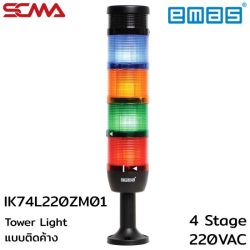 IK74L220ZM01 Tower Light 4 Stage,Buzzer,220VAC,70mmSpecial Price THB 3,360.00 Regular Price THB 4,200.00
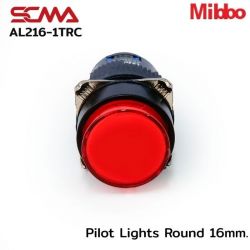 AL216-1TRC Pilot Lights Round 16mm. 24VDC RedSpecial Price THB 52.50 Regular Price THB 70.00
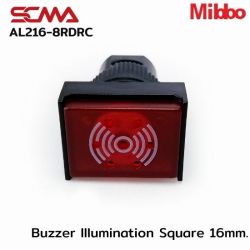 AL216-8RDRC 24VDC Red Buzzer Illumination Square 16mmSpecial Price THB 135.00 Regular Price THB 180.00
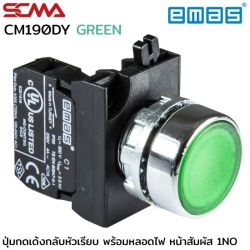 CM190DY 12-30VAC/DC 1NO GREEN EMAS Push Button Momentary Illumination 22mmSpecial Price THB 336.00 Regular Price THB 420.00
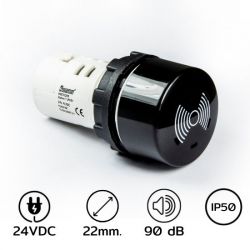 MBZX024S Buzzer 22mm. 24VDC BLACKSpecial Price THB 184.00 Regular Price THB 230.00
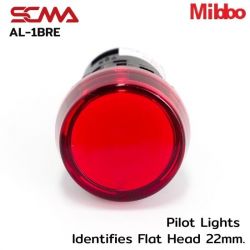 AL-1BRE Pilot Lights Identifies Flat Head 22mm. 220VAC/DC RedSpecial Price THB 45.00 Regular Price THB 60.00
 AL-1BGE Pilot Lights Identifies Flat Head 22mm. 220VAC/DC GreenSpecial Price THB 45.00 Regular Price THB 60.00
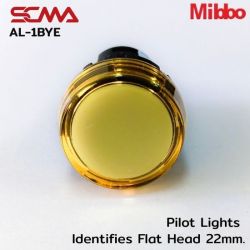 AL-1BYE Pilot Lights Identifies Flat Head 22mm. 220VAC/DC YellowSpecial Price THB 45.00 Regular Price THB 60.00
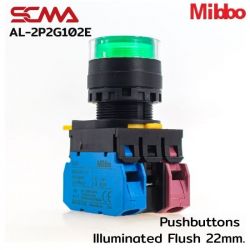 AL-2P2G102E 220VAC/DC Green Pushbuttons Illuminated Flush 22mm. Maintained MibboSpecial Price THB 128.00 Regular Price THB 170.00
What is a Control Unit (Control Equipment for Electrical Control Cabinet)?
In the context of electrical engineering and industrial plants, a Control Unit or what we commonly refer to as a control cabinet/control panel is an equipment that serves as the central hub for managing the electrical system. It controls and distributes electricity to various machines in production lines or buildings, acting like the brain and heart of the factory's electrical system which cannot be overlooked.
The primary functions of a control cabinet include 5 important aspects:
- Control operation: Command motors and machinery to operate according to specified conditions (such as speed, time)
- Distribute power: Spread electricity evenly across all devices in the system
- Prevent damage: Cut off circuits immediately when a short circuit or overcurrent occurs to protect expensive equipment
- Organize: Combine all control devices into one location for easy monitoring and maintenance
- Protect equipment: The cabinet helps shield electronic components from dust, moisture, and impact that could otherwise cause damage
Frequently Used Control Unit Equipment in Control Cabinets
To ensure a control unit in the form of an electrical cabinet operates perfectly, it must be equipped with basic devices that work together. If any one is missing, the system may malfunction or become dangerous. Commonly used equipment includes:
- Circuit Breaker: The front line for safety protection, including main breakers to cut off power to the entire system and sub-breakers to isolate zones
- Contactors: Electromagnetic switches that function to switch high-power circuits, commonly paired with industrial motors
- Relays: Small circuit control devices that relay commands in electrical circuits
- PLCs (Programmable Logic Controllers): Or small industrial computers that process complex instructions, acting like the brain of a control cabinet. Inside this PLC is a processing unit similar to a central processing unit, meaning it has computing and controlling units within.
- Other accessories: Such as air cooling fans to reduce heat accumulation, push buttons for manual operation commands, and pilot lights to indicate operational status
The Four Main Functions of Control Unit
(Instruction Cycle) In computer architecture, the Control Unit is a part of the CPU that oversees the flow of data and operations of other units such as ALU (Arithmetic Logic Unit) and Registers. It works in cycles called Instruction Cycles which consist of 4 main steps:
1. Fetch
In the first step, the Control Unit orders to fetch the next set of instructions from memory into a register known as the Instruction Register (IR) within the CPU to prepare for processing.
2. Decode
After obtaining the instruction, CU decodes or translates it to understand what action is required (such as addition, data transfer, or stop operation) and checks which components in the CPU are needed to complete this task successfully.
3. Execute
Once understood, CU sends control signals to relevant units such as sending data for ALU to perform mathematical calculations or signaling logical comparisons. This step involves executing actual work according to received instructions.
4. Store
In the final step, after processing is complete, Control Unit controls the retrieval of results (such as sum of numbers) back into memory or registers for use in subsequent commands or display on screen.
If you wish to learn more about the structure and design of Control Units in depth, you can read further at Study.com Lesson on Control Unit Design.
If you are interested in Control Units, SCMA is ready to serve you today!
Whether you're looking for control cabinet equipment or world-class automatic systems, SCMA is your reliable technical partner. We offer high-quality products from leading brands and a team of expert engineers specializing in design and installation (Projects & Solutions) to meet all your industrial needs Learn more about our services and products here to elevate the efficiency and safety of your production line above competitors immediately.
Summary
A Control Unit encompasses both the "body" and "brain" of an industrial system. Physically, it is a control cabinet that gathers circuit switching and electrical protection equipment for safe machine operation. Logically, it is the control unit within CPU that oversees the correct execution of Fetch-Decode-Execute-Store cycles. Choosing quality equipment and understanding both aspects will help engineers design and maintain production systems with maximum efficiency.
Frequently Asked Questions
How does a Control Unit differ from an ALU?
The Control Unit (CU) acts as the manager overseeing data flow, while the Arithmetic Logic Unit (ALU) performs mathematical and logical calculations based on instructions received from CU.
What is the most important equipment in a control cabinet?
While every piece is crucial, PLCs (Programmable Logic Controllers) are often considered the heart of modern control cabinets as they process and command all automatic systems. Next would be Circuit Breakers which ensure overall system safety.
🤖 IFM Product Assistant
Ask about products, specs and replacement models
Hello 👋 I can answer your questions about IFM efector products.
Examples:
• What is the replacement model for PN2021?
• Which pressure sensor models cover 250 bar?
Examples:
• What is the replacement model for PN2021?
• Which pressure sensor models cover 250 bar?
🗑 Clear history