
SPECIAL PROMOTION — Up to 40% off across many product groups, until 31 December 2026 · Click to see all promotion itemsIFM, Sensor, Automation SystemMeasuring / Testing InstrumentsTemp Indicator, Control, T/C, RTD, TimerHeater, SCR Control, Solid State, Power Supply, Control CabinetField Measuring Instruments, Pressure Gauge, Level Control, Flow MeasurementEMC, Pneumatic, Solenoid ValveInspection Test Lamp, Head Light, Automotive Measuring InstrumentWeighing Scales, Marking Machine, PrintersEducational Training SystemsHot Line Tools & Equipment SPECIAL PROMOTION — Up to 40% off across many product groups, until 31 December 2026 · Click to see all promotion itemsIFM, Sensor, Automation SystemMeasuring / Testing InstrumentsTemp Indicator, Control, T/C, RTD, TimerHeater, SCR Control, Solid State, Power Supply, Control CabinetField Measuring Instruments, Pressure Gauge, Level Control, Flow MeasurementEMC, Pneumatic, Solenoid ValveInspection Test Lamp, Head Light, Automotive Measuring InstrumentWeighing Scales, Marking Machine, PrintersEducational Training SystemsHot Line Tools & Equipment View promotion items View all
Pressure Transmitter
Pressure Transmitter (Pressure Transmitter)
A Pressure Transmitter is an intelligent device that converts physical pressure into standard electrical signals that can be immediately utilized by control systems in factories. In the era of rapidly advancing manufacturing technology, SCMA is committed to offering high-quality Pressure Transmitters from leading global brands and providing consultation with expert engineers to help you select the appropriate Pressure Transmitter for your needs across all industries.
Main Functions of a Pressure Transmitter
A Pressure Transmitter plays a crucial role in measuring, converting, and transmitting pressure data to automatic control systems in various industrial processes.
- Measuring Pressure in pipelines, tanks, pumps, or other industrial processes
- Converting Pressure into accurate and reliable electrical signals
- Sending Data to the control system for decision-making, such as opening/closing valves, shutting off pumps when pressure exceeds limits, or alerting of abnormalities
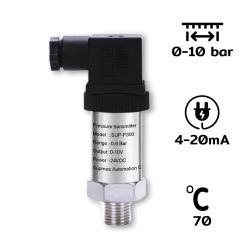 Pressure Transmitter SUP-P300 Series Range: 0-10 Bar / Output: 4-20mASpecial Price THB 2,520.00 Regular Price THB 3,150.00
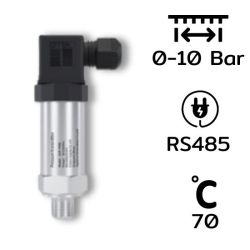 Pressure Transmitter SUP-P300 Series Range: 0-10 Bar / Output: RS485Special Price THB 3,200.00 Regular Price THB 4,000.00
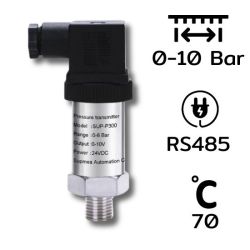 Pressure Transmitter SUP-P300 Series Range: 0-16 Bar / Output: RS485Special Price THB 3,200.00 Regular Price THB 4,000.00
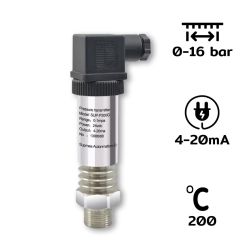 High Temperature Pressure Transmitter SUP-P300G Series Range: 0-16 Bar / Output: 4-20mASpecial Price THB 3,760.00 Regular Price THB 4,700.00
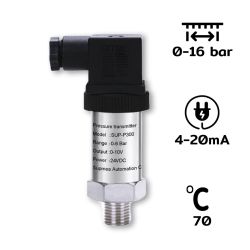 Pressure Transmitter SUP-P300 Series Range: 0-16 Bar / Output: 4-20mASpecial Price THB 2,520.00 Regular Price THB 3,150.00
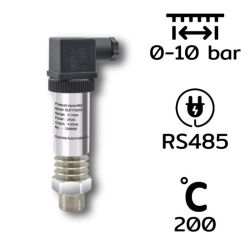 High Temperature Pressure Transmitter SUP-P300G Series Range: 0-10 Bar / Output: RS485Special Price THB 4,400.00 Regular Price THB 5,500.00
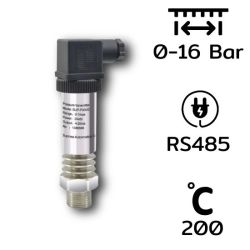 High Temperature Pressure Transmitter SUP-P300G Series Range: 0-16 Bar / Output: RS485Special Price THB 4,400.00 Regular Price THB 5,500.00
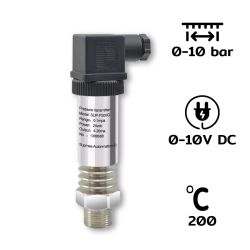 High Temperature Pressure Transmitter SUP-P300G Series Range: 0-10 Bar / Output: 0-10VDCSpecial Price THB 4,400.00 Regular Price THB 5,500.00
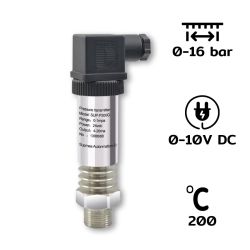 High Temperature Pressure Transmitter SUP-P300G Series Range: 0-16 Bar / Output: 0-10VDCSpecial Price THB 4,400.00 Regular Price THB 5,500.00
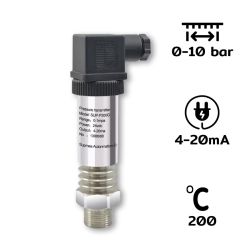 High Temperature Pressure Transmitter SUP-P300G Series Range: 0-10 Bar / Output: 4-20mASpecial Price THB 3,760.00 Regular Price THB 4,700.00
What is a Pressure Transmitter?
A Pressure Transmitter is an industrial pressure measuring device used to measure the pressure of various fluids such as water, air, liquids, or gases and convert that pressure into electrical signals (Analog Signal) like 4-20 mA or 0-10 V for transmission to control devices such as PLCs, controllers, or SCADA systems for automatic control and monitoring. Generally, a Transmitter is an instrument that converts physical variable signals into electrical signals, making pressure transmitters capable of measuring pressure in liquids, gases, or air, thus becoming crucial for controlling production processes across various industries.
How Does a Pressure Transmitter Work?
A Pressure Transmitter operates using different sensor technologies depending on the model and application. The working principle starts when fluid or gas enters the pressure sensor, which then detects the pressure and converts it into an electrical signal. The transmitter processes this information and outputs signals in 4-20 mA, 0-10 V, or digital formats (such as Modbus/RS485) to control systems.
The main sensor technologies used in pressure transmitters include:
- Strain Gauge - Uses the deformation of special materials under pressure and connects it with a Wheatstone Bridge circuit to convert into an electrical signal, suitable for general applications.
- Thin Film - Utilizes thin film to sense pressure, ideal for low-pressure measurements with high precision.
- Thick Film - Made from robust materials like ceramics, resistant to high pressures, suitable for hydraulic systems with intense pressure.
Types of Pressure Transmitters Based on Usage
Selecting the right pressure transmitter for specific applications is crucial for system control efficiency.
- Gauge Pressure Transmitter (G) - Measures pressure relative to atmospheric pressure (e.g., 0 bar = air pressure). Commonly used in general applications.
- Absolute Pressure Transmitter (A) - Measures pressure referenced to a perfect vacuum, suitable for industries requiring high accuracy.
- Differential Pressure Transmitter (ΔP) - Measures the difference in pressure between two points, widely used in filtration systems or flow rate measurements.
- Vacuum Pressure Transmitter - Measures pressures below atmospheric levels (negative values), specifically designed for vacuum work.
- Hydrostatic Pressure Transmitter - Used to measure liquid level in tanks by measuring the pressure of the liquid's weight.
Selecting a Suitable Pressure Transmitter for Your Application
To choose an appropriate pressure transmitter, several factors must be considered to ensure it meets your specific needs. Here are some considerations:
- Industry Type - Each industry has unique requirements such as food and pharmaceutical industries needing safe-to-contact materials.
- Type of Medium - Choose one suitable for measuring liquids, gases, or air with different properties.
- Measurement Range (Range) - Select a range that covers the pressure you need to measure, measured in units like Bar, KPa, PSI.
- Precision - Consider how detailed and accurate your process requires measurements to be.
- Output Signal - Check if you require signals such as 4-20 mA, 0-10 VDC or others.
- Thread Size - Choose a thread size that fits your existing system, like NPT, G1/8".
- Budget - Consider the cost and benefits for making an informed decision.
Applications of Pressure Transmitters in Various Industries
Pressure transmitters play a significant role across various industries. Their precise working principle enhances production efficiency and safety:
Food and Beverage Industry - Controls pressure during manufacturing, sterilization, and packaging processes.
Pharmaceutical Industry - Monitors pressure in high-precision manufacturing processes.
Petrochemical Industry - Tracks pressure in pipelines and storage tanks for safety.
Automotive Industry - Controls pressure in hydraulic and pneumatic systems.
Energy Industry - Checks pressure in boilers and pipeline systems.
Water Treatment Systems - Measures pressure in filtration and water distribution systems.
Maintenance and Calibration Services for Pressure Transmitters with SCMA
At SCMA, we not only sell high-quality Pressure Transmitters but also offer automation system services by certified professionals. We provide both in-lab (In Lab) and on-site (On Site) services to ensure your pressure transmitters continue to operate accurately according to international standards, reducing production risks and extending equipment lifespan.
Summary
Selecting the right Pressure Transmitter is crucial for enhancing the efficiency of your control systems. SCMA is ready to be your technical partner at every step, from consultation to selecting, installing, and maintaining pressure transmitters. With over 40 years of experience in industrial automation and as a representative for leading global brands, we provide tailored solutions that meet your specific needs. Contact us today for free consultations and elevate your production processes to international standards.
Frequently Asked Questions
What is the Difference Between Pressure Transmitter and Pressure Sensor?
A Pressure Sensor refers to a general pressure measuring device, while a Pressure Transmitter is a type of Pressure Sensor that can convert pressure into standard electrical signals (such as 4-20mA) for transmission to control systems, making it suitable for use in automatic systems.
How Often Should I Maintain My Pressure Transmitter?
Maintenance and calibration should be performed according to the manufacturer's recommendations, typically every 6-12 months. Regularly check for leaks and clean pressure ports to extend the lifespan of your pressure transmitter.
Which Type of Pressure Transmitter is Suitable for High-Temperature Work?
For high-temperature work, choose a Pressure Transmitter with cooling systems or remote seal technology which helps prevent damage from heat and extends equipment life.
This website uses cookies
We use cookies to make the site work properly, to understand how it is used, and to show content that is relevant to you. You choose which types to allow; strictly necessary cookies are always on. Privacy Policy
🤖 AI Assistant
Ask about products, specs and replacement models
Hello 👋 Ask us anything — find products, compare specs, or troubleshoot.
🗑 Clear history