
SPECIAL PROMOTION — Up to 40% off across many product groups, until 31 December 2026 · Click to see all promotion itemsIFM, Sensor, Automation SystemMeasuring / Testing InstrumentsTemp Indicator, Control, T/C, RTD, TimerHeater, SCR Control, Solid State, Power Supply, Control CabinetField Measuring Instruments, Pressure Gauge, Level Control, Flow MeasurementEMC, Pneumatic, Solenoid ValveInspection Test Lamp, Head Light, Automotive Measuring InstrumentWeighing Scales, Marking Machine, PrintersEducational Training SystemsHot Line Tools & Equipment SPECIAL PROMOTION — Up to 40% off across many product groups, until 31 December 2026 · Click to see all promotion itemsIFM, Sensor, Automation SystemMeasuring / Testing InstrumentsTemp Indicator, Control, T/C, RTD, TimerHeater, SCR Control, Solid State, Power Supply, Control CabinetField Measuring Instruments, Pressure Gauge, Level Control, Flow MeasurementEMC, Pneumatic, Solenoid ValveInspection Test Lamp, Head Light, Automotive Measuring InstrumentWeighing Scales, Marking Machine, PrintersEducational Training SystemsHot Line Tools & Equipment View promotion items View all
Data Loggers
Data Loggers What Are They?
Data loggers are electronic devices used to collect and record data from sensors or various sources continuously. They record data over specified periods and store it for extended durations, allowing for later analysis and monitoring of parameter changes.
Types of Data Loggers
- Temperature Data Loggers are used to record and measure temperature. Suitable for checking temperatures in storage rooms, refrigerators, or production processes.
- Humidity Data Loggers are used to record and measure humidity levels. Ideal for monitoring environmental conditions in food industries, pharmaceutical factories, and laboratories.
- Pressure Data Loggers are used to record and measure pressure. Suitable for checking hydraulic systems, water systems, and industrial processes involving pressure.
- Voltage and Current Data Loggers are used to record and measure voltage and current levels. Ideal for monitoring electrical systems and electronic equipment.
- Multi-Parameter Data Loggers can simultaneously log multiple parameters such as temperature, humidity, pressure, and voltage/current. Suitable for multi-dimensional environmental monitoring.
- Vibration Data Loggers are used to record vibrations. Ideal for checking machinery and equipment with movement.
Uses of Data Loggers
- Check temperature and humidity in storage areas and refrigerators to ensure products are stored in appropriate conditions.
- Monitor environmental conditions in factories and laboratories to control environments suitable for work and production.
- Check electrical systems and electronic equipment to prevent issues caused by abnormal voltage and current levels.
- Monitor machinery operation to analyze vibrations and machine performance.
Popular Data Logger Brands
- Fluke a renowned brand known for testing equipment and measurement tools.
- HOBO produced by Onset, a popular brand in the Data Logger market for environmental monitoring.
- KEPLER INSTRUMENTS offers a wide range of high-quality and reliable products.
- Lascar Electronics known for producing user-friendly and highly accurate Data Loggers.
- MadgeTech manufactures high-quality Data Loggers with diverse applications across various industries.
- Testo specializes in manufacturing measurement and testing tools for various industries.
View the Data Logger Catalog : Click Here
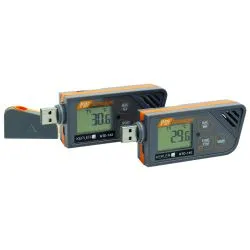 KEPLER Temperature & Humidity Data Logger KTD-162Special Price THB 3,375.00 Regular Price THB 4,500.00
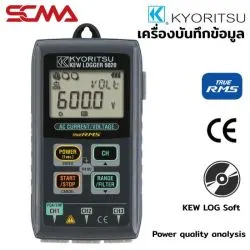 KEW 5020 KYORITSU LoggersSpecial Price THB 17,760.00 Regular Price THB 22,200.00
Delivery: 30 ต.ค. 2569
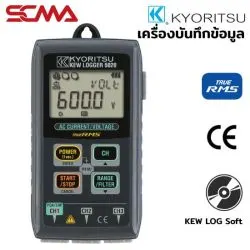 KEW 5010 KYORITSU LoggersSpecial Price THB 5,760.00 Regular Price THB 7,200.00
Delivery: 30 ต.ค. 2569
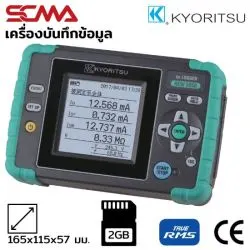 KEW 5050 KYORITSU LoggersSpecial Price THB 69,600.00 Regular Price THB 87,000.00
Delivery: 30 ต.ค. 2569
What is a Data Logger? A Complete Buying Guide for Professionals
What is a data logger, and why is this small device so crucial to modern quality control systems? Whether you're looking for precise recording equipment such as a temp data logger for cold rooms or a temperature data logger for production lines, this article will provide in-depth insights. Even if you are searching with terms like "data locker," you'll find the correct answers here. Reading this article will help you understand how these devices work, their types, and how to choose the best one that fits your needs most effectively.
What is a Data Logger?
A data logger or data recorder is a compact electronic device designed to measure and record various physical or electrical parameters such as temperature, humidity, pressure, or current automatically over specified time intervals. The collected data is stored in the internal memory of the device, which users can then transfer to a computer for trend analysis (Trend Analysis), retrospective environmental monitoring, or precise quality control decisions in industries, transportation, and research. For more information on the basics of this equipment, you can read here.
Basic Working Principles of Data Logger
The mechanism of a temperature data logger starts with receiving signals from environmental sensors, converting analog signals to digital data through an Analog-to-Digital Converter (A/D Converter). Then, the central processing unit (Microprocessor) records this information into memory at intervals set by the user, whether every second, minute, or hour. This ensures continuous and reliable data for retrospective checks.
Key Components to Know (Sensor, Memory, Processor)
The main structure of a temperature logger consists of three critical components: 1. Sensors (Sensors) which can be internal or external for parameter readings; 2. Processors that control the timing and management of data, and 3. Memory units with varying capacities for storing data. Additionally, there is a battery as the primary power source, allowing data loggers to operate independently in areas without access to electricity.
Differences Between Data Logger and SCADA System
While both collect data, data loggers are typically designed as small portable devices focusing on recording data internally for later analysis or wireless transmission in cycles. In contrast, a Supervisory Control and Data Acquisition (SCADA) system is a large-scale system emphasizing real-time data viewing on control screens and immediate machine operation commands, which is more complex and costly, suitable for large factories requiring constant monitoring. For further information, you can refer to this source.
Why are Data Loggers Important in Various Businesses and Industries?
In an era where data is a valuable asset, using Data Loggers helps businesses monitor efficiency and address issues precisely. Whether it's preventing warehouse product damage, confirming the quality of production processes, or adhering to international standards, having systematically recorded data reduces risks from human error (Human Error) and serves as legal evidence or quality verification.
Quality Control in Manufacturing
In electronic component or food production lines, maintaining constant temperature and humidity is critical. Temperature and humidity data loggers are used to confirm that conditions within the manufacturing line or oven meet specified standards (Specification). If measured values fall outside acceptable ranges, engineering teams can immediately trace back when anomalies occurred to isolate non-compliant products.
Monitoring and Tracking in Cold Chain Logistics
For temperature-sensitive shipments such as vaccines, medicines, or frozen seafood, using a temperature logger or fridge data logger with containers or product boxes ensures that the goods never encounter excessive temperatures during transit. Data from these devices is essential for proof of delivery (Proof of Delivery) to confirm quality to end customers.
R&D
Researchers need insightful data for developing new products, and electricity data loggers or voltage data loggers are used to test product performance in various conditions, such as battery life testing or material durability under alternating high and low temperatures. Detailed information helps researchers refine their products more accurately.
Environmental and Building Monitoring
In facility management (Facility Management), controlling appropriate temperature and humidity is crucial for occupant comfort and energy savings. Temperature and humidity data loggers are often placed at various points to analyze hotspots or excessively humid areas, which may lead to mold growth or building structure damage.
Popular Types of Data Loggers
Choosing the right type of device is crucial because data loggers come in various forms, ranging from basic and affordable models to complex ones with advanced features.
Categorized by Parameters Measured (Temperature, Humidity, Pressure, Voltage)
The most commonly seen type is the temperature and humidity data logger, widely used in general applications. However, there are specialized models such as electrical power data loggers for energy monitoring, pressure data loggers for gas or water pipelines, and light data loggers for museums or agriculture. The choice depends on what parameters need to be measured and how precise they must be. For more details,click here.
Categorized by Connectivity (USB, Bluetooth, Wi-Fi, Standalone)
Connectivity technology affects the ease of use. USB data loggers are traditional and easy to use by simply plugging into a computer to retrieve data. Wi-Fi or wireless data loggers allow real-time monitoring or online data logger through Cloud systems without physically collecting devices, ideal for hard-to-reach installation points. Bluetooth data loggers or temperature logger bluetooth and bluetooth 360 also enable checking values via smartphones in close range, convenient on-site.
Categorized by Usage (Portable, Fixed)
Portable data loggers are usually small, battery-powered, and easy to move around, suitable for temporary monitoring or transportation tasks. Fixed data loggers typically use external power sources, have high durability, and may be connected to alarm systems, ideal for round-the-clock surveillance in server rooms or storage areas.
How to Choose the Right Data Logger for Your Needs
When deciding on a data logger, it's not just about choosing one with the lowest price. You should also consider its value and technical capabilities to avoid issues like data loss or unacceptable errors later on.
7 Key Factors to Consider Before Buying
- Parameters you want to measure (temperature, humidity, etc.)
- Measurement Range that covers your needs
- Acceptable Accuracy
- Resolution of the readings
- Memory and data management
- Battery life
- Connectivity and alerts
Accuracy and Range
Accuracy is crucial. If you need to measure the temperature of a cold room at -20°C, ensure that your thermometer supports this range with low deviation (e.g., ±0.5°C). For high-precision work like in labs, higher accuracy devices may be necessary.
Memory Capacity and Battery Life
Memory determines how long data can be recorded before it fills up or gets overwritten. Frequent recording (e.g., every minute) will fill memory faster, as well as battery life. For long-distance transport, choose a temperature logger with a battery that lasts the entire journey without needing replacement.
Software and Data Management
The software should be user-friendly, displaying data as graphs (temperature and humidity graphs) or tables, and supporting file export to Excel or PDF for easy reporting. Some WiFi temperature loggers may come with mobile apps for remote monitoring.
Standards and Calibration Certificate
In strict control industries like food and pharmaceuticals, devices must have a calibration certificate according to ISO 17025 standards to ensure measured values are accurate and verifiable. For more information on related measuring instruments, see here.
Comparison of Popular Data Logger Brands
There are many brands available in the market, each with its own strengths and varying price levels. Comparing specifications clearly can help make decisions easier.
Main Function Comparison Table and Price
(Example comparison table - prices are estimates)
|
Brand |
Popular Model |
Connectivity |
Highlights |
Price Range (Estimated) |
|
Elitech |
RC-5 / RCW-360 |
USB / WiFi |
Affordable, easy to use |
500 - 3,xxx THB |
|
CEM |
DT-172 |
USB |
Durable, long recording time |
1,xxx - 2,xxx THB |
|
HUATO |
HE173 |
USB |
Large display, accurate |
2,xxx - 4,xxx THB |
|
Testo |
174T / Saveris |
USB / WiFi |
German standards, high accuracy |
3,xxx - 1x,xxx THB |
Brand Reviews (e.g., Elitech, CEM, HUATO)
Elitech stands out for its cost-effectiveness and ease of use, suitable for cold chain work. CEM and HUATO are known for their durability and suitability for general industrial applications. High-end brands like Testo or Hioki focus on high accuracy and efficient software but come with a higher price tag.
Recommendations for Each Industry
- Food/Pharmaceutical Transport: Recommend Elitech RC-5 or similar models due to their small size and affordability.
- Industrial Plants/Warehouses: Recommend mid-range temperature/humidity data loggers such as HUATO or CEM with clear display screens.
- Laboratories/Hospitals: Recommend models with WiFi or online data logger capabilities for immediate alerts when temperatures are abnormal, and high accuracy.
If you are looking for a Data Logger, think of SCMA!
Data accuracy is the foundation of quality control success. If you are searching for a reliable Data Logger or data recorder with technical consultation services from expert engineers, SCMA is ready to be your partner in selecting the best equipment for your business, whether portable models or online systems. We also offer calibration services to ensure confidence in all recorded values. Browse our products and serviceshere.
Summary
A Data Logger is an essential tool for quality assurance in many industries. Choosing the right device involves considering sensor type, accuracy, connectivity, and budget. Investing in high-quality temperature loggers or data recorders can help reduce risks and save costs over time. If you need further advice or standard calibration services, contact our SCMA team immediatelyhere to have us help perfect your quality control system.
Frequently Asked Questions
How often does a Data Logger need calibration?
Calibration frequency depends on industry standards and usage. Generally, it is recommended to calibrate temperature loggers at least once a year or every six months for high-precision work, or after any impact that may affect the sensor.
Can real-time data be viewed?
Yes, if you choose WiFi Data Logger, wireless Data Logger, or online Data Logger models which upload data to Cloud or Server systems. This allows for immediate viewing of current values through a website or app without waiting for USB data transfer.
How do I retrieve data and create reports?
For USB Data Logger models, simply plug the device into your computer's USB port. The management software will open to download data, which can be viewed as line graphs for trend analysis or exported as Excel/PDF files for easy reporting to customers or auditors. For further consultation, contact ushere.
This website uses cookies
We use cookies to make the site work properly, to understand how it is used, and to show content that is relevant to you. You choose which types to allow; strictly necessary cookies are always on. Privacy Policy
🤖 AI Assistant
Ask about products, specs and replacement models
Hello 👋 Ask us anything — find products, compare specs, or troubleshoot.
🗑 Clear history