
SPECIAL PROMOTION — Up to 40% off across many product groups, until 31 December 2026 · Click to see all promotion itemsIFM, Sensor, Automation SystemMeasuring / Testing InstrumentsTemp Indicator, Control, T/C, RTD, TimerHeater, SCR Control, Solid State, Power Supply, Control CabinetField Measuring Instruments, Pressure Gauge, Level Control, Flow MeasurementEMC, Pneumatic, Solenoid ValveInspection Test Lamp, Head Light, Automotive Measuring InstrumentWeighing Scales, Marking Machine, PrintersEducational Training SystemsHot Line Tools & Equipment SPECIAL PROMOTION — Up to 40% off across many product groups, until 31 December 2026 · Click to see all promotion itemsIFM, Sensor, Automation SystemMeasuring / Testing InstrumentsTemp Indicator, Control, T/C, RTD, TimerHeater, SCR Control, Solid State, Power Supply, Control CabinetField Measuring Instruments, Pressure Gauge, Level Control, Flow MeasurementEMC, Pneumatic, Solenoid ValveInspection Test Lamp, Head Light, Automotive Measuring InstrumentWeighing Scales, Marking Machine, PrintersEducational Training SystemsHot Line Tools & Equipment View promotion items View all
Laser Marking
What is Laser Marking? How It Works, Types, and Choosing the Right One for Your Industry
In today's fast-paced manufacturing era that emphasizes traceability (Traceability), laser marking technology has become increasingly important as a replacement for traditional methods. Permanent, precise, and verifiable marking is at the heart of quality control. Whether you are an engineer in automotive parts production lines or a business owner looking for cost-effective laser markers to boost your operations, understanding the workings of laser marking thoroughly will help you make smart investment decisions, reduce risks, and enhance manufacturing efficiency.
Benefits of Laser Marking
- High Precision - Lasers can mark with high accuracy without distortion or peeling.
- No Consumables Required - No ink or other materials are needed for marking.
- Durability - Laser markings are resistant to scratches and peeling.
- Clean and Safe Process - Laser marking does not produce dust or harmful chemicals.
- Non-Contact Process - The use of laser light for marking means no direct contact with materials, eliminating the risk of altering material properties.
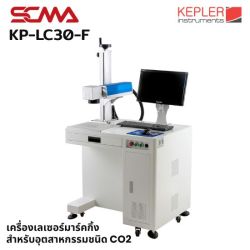 KP-LC30-F 30Watt CO2 Laser Marking Machine (Floor Type)Special Price THB 259,040.00 Regular Price THB 323,800.00
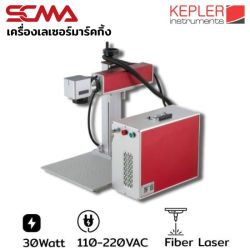 Fiber Laser Industrial Marking Machine Model KP-LF30-D Desktop Type (30Watt)Special Price THB 145,500.00 Regular Price THB 194,000.00
What is Laser Marking?
Laser Marking is a process that uses high-intensity laser beams to engrave symbols, letters, logos, barcodes, or QR Codes permanently onto the surface of materials by utilizing thermal energy from the laser beam to alter the properties of the material's surface. The key difference between Laser Marking and laser engravers (engraving) or ink-based printing methods is that Laser Marking offers extremely high precision without touching the workpiece (non-contact), thus not damaging or distorting the material. It is ideal for industries requiring micron-level accuracy and needing information on parts to remain intact throughout their lifespan, even in harsh industrial environments.
Basic Working Principle of Laser Marking Technology
The core principle involves controlling "light" to become an efficient cutting tool. The laser generator emits a beam that passes through focusing lenses to concentrate onto the material's surface. This intense energy triggers three main physical reactions: 1) Melting, 2) Ablation, or 3) Color Change/Annealing, depending on the wavelength and wattage used. For metal marking, it typically involves slightly etching the surface for a level difference or using heat to create black oxide (annealing) on stainless steel without roughening the surface, which requires precise parameter settings.
Advantages of Using Laser Marking in Industries
Based on SCMA's engineering team experience solving problems across various industries, switching to a laser system significantly reduces production downtime and waste. Key benefits include:
- High Precision and Clarity: The laser beam can create highly detailed patterns, even tiny letters or complex QR Codes that barcode readers can read accurately 100%, reducing errors in traceability processes.
- Durability and Permanence: Laser marks are resistant to heat, chemicals, abrasion, and weather conditions, unlike ink printing or stickers which may peel off over time.
- Increased Production Speed and Lower Long-Term Costs: Although initial equipment investment might seem high compared to traditional methods, in the long run, Laser Marking reduces material waste costs (consumables) such as ink and solvents, and maintenance downtime, lowering total ownership cost.
- Environmentally Friendly (No Consumables): This process is clean with no hazardous chemical waste, making it a sustainable choice aligning with modern factory environmental standards.
Selecting the Right Laser Marking Machine for Your Business
Selecting a laser machine involves more than just wattage; consider these guidelines:
1. Analyze Material Compatibility
This is crucial as materials absorb wavelengths differently:
- Fiber Laser: Best suited for metal marking (steel, stainless steel, aluminum, brass) and some hard plastics, offering high clarity and durability.
- CO2 Laser: Suitable for non-metals like wood, paper, leather, fabric, acrylics, and glass.
- UV Laser: Ideal for highly detailed work or heat-sensitive materials (some plastics, silicone, or glass) as UV is "cold marking" without burning the piece.
2. Work Area Size and Production Volume Requirements
Evaluate your production line type; continuous conveyor-based lines need high-speed scanning machines with automation support, while batch processes may opt for flexible station setups.
3. Budget and Cost Factors
Laser marking machine prices vary by "laser source" and lens quality. Cheaper units might work initially but can degrade over time affecting mark consistency and lifespan; investing in higher-quality machines saves on maintenance costs long-term.
4. After-Sales Service and Warranty
Industrial machinery needs care; choosing from suppliers with expert engineering teams for consultation and calibration services is crucial to avoid production line disruptions due to lack of spare parts or repair technicians.
If unsure about material compatibility, explore detailed comparisons between marking methods from leading industry sources comparing Laser Marking with other methods to find the best fit for your application.
Laser Marking Applications in Various Industries
This technology extends beyond heavy industries into everyday products:
- Automotive Industry (Automotive Parts): Marks VIN numbers, QR codes on engine parts, bearings, and car structures for traceability and safety.
- Electronics and Semiconductors: Marks logos and model codes on PCBs, IC chips, and electronic device casings requiring high precision without damaging internal circuits.
- MEDICAL DEVICES: Marks surgical tools or implants needing repeated sterilization without becoming bacterial reservoirs; lasers excel here due to no residue.
- Promotional Items: Adds value to products like metal pens, keychains, or phone cases with personalized engravings.
Interested in Laser Marking? Buy from SCMA Today!
At SCMA, we're not just suppliers but technical partners providing tailored laser marking solutions for industries. Our expert engineers offer high-quality machinery selection, sample testing, and automation system design to fit your existing production lines, with comprehensive after-sales service covering EEC and northern regions for maximum peace of mind. If you aim to elevate manufacturing standards, explore our services or consult us for the best advice.
Summary
Investing in a Laser Marking machine is crucial for elevating production standards globally; precision, durability, and traceability build customer confidence. Choosing the right equipment isn't just about lowest cost but selecting technology suited to materials and reliable service partners throughout the machinery's lifespan.
Frequently Asked Questions
How does Laser Marking differ from Laser Engraving?
Laser Marking alters surface or color with minimal contact (smooth), while Laser Engraving removes material for depth clarity. Both use similar machines but require different parameter settings.
What is the cost of a laser marking machine, and how soon does it pay off?
Pricing varies by wattage and type (Fiber, CO2, UV); typically Fiber Lasers are pricier but last longer (up to 100,000 hours). Payback usually occurs within 1-2 years due to reduced material waste costs and production scrap.
Is laser marking safe?
Industrial lasers (Class 4) can harm eyes and skin upon direct contact; thus, machines should have safety enclosures or operators wear laser safety glasses during use. SCMA prioritizes safety with proper training for all clients.
This website uses cookies
We use cookies to make the site work properly, to understand how it is used, and to show content that is relevant to you. You choose which types to allow; strictly necessary cookies are always on. Privacy Policy
🤖 AI Assistant
Ask about products, specs and replacement models
Hello 👋 Ask us anything — find products, compare specs, or troubleshoot.
🗑 Clear history