
SPECIAL PROMOTION — Up to 40% off across many product groups, until 31 December 2026 · Click to see all promotion itemsIFM, Sensor, Automation SystemMeasuring / Testing InstrumentsTemp Indicator, Control, T/C, RTD, TimerHeater, SCR Control, Solid State, Power Supply, Control CabinetField Measuring Instruments, Pressure Gauge, Level Control, Flow MeasurementEMC, Pneumatic, Solenoid ValveInspection Test Lamp, Head Light, Automotive Measuring InstrumentWeighing Scales, Marking Machine, PrintersEducational Training SystemsHot Line Tools & Equipment SPECIAL PROMOTION — Up to 40% off across many product groups, until 31 December 2026 · Click to see all promotion itemsIFM, Sensor, Automation SystemMeasuring / Testing InstrumentsTemp Indicator, Control, T/C, RTD, TimerHeater, SCR Control, Solid State, Power Supply, Control CabinetField Measuring Instruments, Pressure Gauge, Level Control, Flow MeasurementEMC, Pneumatic, Solenoid ValveInspection Test Lamp, Head Light, Automotive Measuring InstrumentWeighing Scales, Marking Machine, PrintersEducational Training SystemsHot Line Tools & Equipment View promotion items View all
Spectrum Analyzers
What are Spectrum Analyzers?
Spectrum Analyzers are high-frequency signal measurement tools with the special ability to adjust IQ levels accurately and diagnose issues precisely by separating various frequency components of a signal and displaying them as graphs, where the X-axis represents frequency and the Y-axis represents amplitude for clear visualization and analysis.
Types of Spectrum Analyzers
- Digital Spectrum Analyzers use digital signal processing (DSP) to analyze signals and offer a variety of analytical functions for accuracy.
- Real-Time Spectrum Analyzers (RTSA) can display and analyze signals in real-time, suitable for capturing rapidly changing or transient signals.
Notable Spectrum Analyzer Brands
- AEROPAK is a brand known for its highly efficient testing and signal analysis equipment, suitable for both industrial and educational use.
- GW Instek is another well-known and popular brand in the production of electrical signal measurement and testing devices.
- KEPLER is recognized for its high-quality products, accurate measurements, and reliability.
- SANGI is renowned for producing precise measuring equipment that accurately analyzes signals with trustworthiness.
View the Spectrum Analyzers Catalog : click here
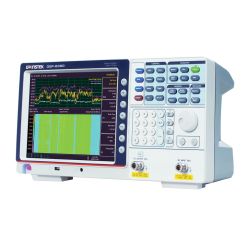 GSP-8800 SPECTRUM ANALYZER GW INSTEKSpecial Price THB 264,525.00 Regular Price THB 352,700.00
Delivery: 30 ต.ค. 2569
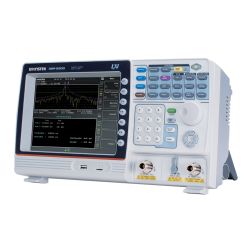 GSP-9330 SPECTRUM ANALYZER GW INSTEKSpecial Price THB 231,000.00 Regular Price THB 308,000.00
Delivery: 30 ต.ค. 2569
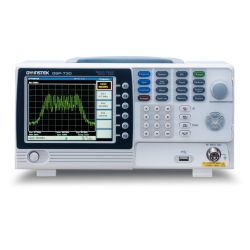 GSP-730 GW Instek Spectrum AnalyzerSpecial Price THB 38,400.00 Regular Price THB 48,000.00
What is a Spectrum Analyzer? A Guide for Beginners and Professionals
A spectrum analyzer is a standard tool used to inspect and identify the components of complex signals. This article will provide an in-depth understanding of what spectrum analyzers are, how they differ from other measurement tools, and why these analyzers are essential for communication system testing and maintenance. If you're looking for answers about what spectrum analyzers are or need signal measurement solutions, consult our team of expert engineershere.
What is a Spectrum Analyzer? Understanding the Frequency Measurement Tool
A spectrum analyzer is an electronic measuring instrument that displays signal amplitude as a function of frequency. Unlike oscilloscopes, which display signals relative to time, using a spectrum analyzer helps engineers clearly see the frequency components of RF (Radio Frequency) signals, audio signals, or noise. The screen shows a graph with the horizontal axis representing frequency and the vertical axis representing signal strength, allowing for accurate analysis of harmonics, bandwidth, and noise floor. Learn morehere.
The Difference Between Time Domain and Frequency Domain
An oscilloscope displays results in the time domain (X-axis is time), suitable for viewing waveform shapes, while a spectrum analyzer displays results in the frequency domain (X-axis is frequency), allowing you to see the "mix" of that signal. It's like separating white light into its component colors to see what hues are present. Using this type of analyzer is crucial for checking signal interference in the air.
Why Use a Spectrum Analyzer in Industry?
In today's wireless era, Wi-Fi, Bluetooth, and various radio signals float through the air. Using an online spectrum analyzer or simulation software may be sufficient for initial learning, but in real industrial applications requiring high accuracy, using standard measuring equipment (Hardware) is necessary to check EMC/EMI standards and ensure communication system quality.
How Spectrum Analyzers Work
The operation of spectrum analyzers can be divided into two main types: swept-tuned and real-time (Real-Time / FFT), each with its strengths in capturing different signals.
Swept-Tuned Analyzer
It works by using a superheterodyne circuit to sweep through frequencies via an RBW filter to measure signal levels one frequency band at a time. This method is ideal for continuous wave signals and wide frequency ranges, commonly used in basic RF testing. For more detailshere.
Real-Time Spectrum Analyzer (RTSA)
It uses FFT (Fast Fourier Transform) techniques to convert analog signals into digital and calculate the frequency spectrum across the entire band quickly. It's suitable for capturing transient or rapidly changing signals, which swept analyzers might miss. This technology is similar to pure analysis in high-end sound analysis software requiring high precision.
Benefits and Applications in Industry
The use of frequency analyzers extends beyond research labs to field installation and maintenance work.
Telcom and Wireless Systems (RF & Wireless)
Engineers use spectrum analyzers to check the transmission signals from cell phone towers, Wi-Fi, and communication radios to ensure they comply with specified frequencies and do not interfere with adjacent channels. They also measure Phase Noise and Modulation Quality.
EMI/EMC Testing (Pre-compliance)
Before electronic products are released to market, they must undergo EMI testing. Using a spectrum analyzer for preliminary checks helps manufacturers address issues before sending them to actual compliance tests, saving significant time and costs.
Audio Systems and Acoustics (Audio Analysis)
In audio systems, this tool analyzes frequency response and identifies feedback points or noise. While there are bitrate viewers or equalizer software for computers today, professional PA sound systems still rely on specialized hardware for the highest reliability.
How to Choose a Spectrum Analyzer Wisely
Choosing a spectrum analyzer requires considering specifications that match your work needs to get the most suitable and cost-effective tool. Read the full buying guidehere.
Frequency Range (Frequency Range)
It must cover the highest frequency of signals you need to measure. For Wi-Fi work, it may require a device that measures up to 6 GHz or for radar work, it might need to go up to 26 GHz or higher.
Resolution Bandwidth (RBW)
RBW is the ability to distinguish between two closely spaced signals. The lower the RBW value (e.g., 1 Hz or 10 Hz), the higher the resolution and lower noise floor, allowing you to see smaller signals more clearly but will take longer to sweep.
Displayed Average Noise Level (DANL)
The DANL indicates the sensitivity of the device. The higher the negative value (e.g., -160 dBm), the better it can detect very weak signals, suitable for finding hidden noise.
Additional Features and Connectivity
Consider additional features such as Tracking Generator for measuring filters, LAN/USB connectivity to pull data, or PC analysis software. Some models may have oscilloscope simulator-like features to help simulate signal patterns before actual measurement.
When Looking for a Spectrum Analyzer, Think SCMA!
If your factory or organization is looking for high-quality and accurate spectrum analyzers, SCMA is ready to provide engineering consultation. Our expert team offers advice on selecting the right specifications, demonstrates usage, and provides quick after-sales service. Trust in our world-class brand standards. Browse all productshere.
Summary
A spectrum analyzer is a powerful tool for viewing the world of signals in frequency perspective. Understanding what spectrum analyzers are and using them correctly will elevate engineering quality, reduce signal interference issues, and significantly improve communication system efficiency. SCMA hopes this article has been helpful to your decision-making process. If you have further questions, contact our team for consultation immediatelyhere.
Frequently Asked Questions
How is a Spectrum Analyzer Different from a Network Analyzer?
A spectrum analyzer measures signal size relative to frequency (focusing on analyzing existing signals), while a network analyzer (VNA) measures device properties by sending signals in and measuring the reflected ones (S-Parameters).
Is a Tracking Generator Necessary?
If your work involves measuring frequency response of passive devices like filters, amplifiers, or cables, having a tracking generator is essential as it creates the swept-frequency signal source needed for testing.
Can Software SDR Replace a Spectrum Analyzer?
Software Defined Radio (SDR) or online spectrum analyzer tools can be used to view basic spectra and are cost-effective, but they have limitations in accuracy, dynamic range, and sensitivity compared to industrial-grade measuring equipment. Therefore, they're not suitable for compliance work or measurements requiring reliable results.
This website uses cookies
We use cookies to make the site work properly, to understand how it is used, and to show content that is relevant to you. You choose which types to allow; strictly necessary cookies are always on. Privacy Policy
🤖 AI Assistant
Ask about products, specs and replacement models
Hello 👋 Ask us anything — find products, compare specs, or troubleshoot.
🗑 Clear history