
SPECIAL PROMOTION — Up to 40% off across many product groups, until 31 December 2026 · Click to see all promotion itemsIFM, Sensor, Automation SystemMeasuring / Testing InstrumentsTemp Indicator, Control, T/C, RTD, TimerHeater, SCR Control, Solid State, Power Supply, Control CabinetField Measuring Instruments, Pressure Gauge, Level Control, Flow MeasurementEMC, Pneumatic, Solenoid ValveInspection Test Lamp, Head Light, Automotive Measuring InstrumentWeighing Scales, Marking Machine, PrintersEducational Training SystemsHot Line Tools & Equipment SPECIAL PROMOTION — Up to 40% off across many product groups, until 31 December 2026 · Click to see all promotion itemsIFM, Sensor, Automation SystemMeasuring / Testing InstrumentsTemp Indicator, Control, T/C, RTD, TimerHeater, SCR Control, Solid State, Power Supply, Control CabinetField Measuring Instruments, Pressure Gauge, Level Control, Flow MeasurementEMC, Pneumatic, Solenoid ValveInspection Test Lamp, Head Light, Automotive Measuring InstrumentWeighing Scales, Marking Machine, PrintersEducational Training SystemsHot Line Tools & Equipment View promotion items View all
Shore Hardness Testers
What are Shore Hardness Testers?
Shore Hardness Testers are instruments used to measure the hardness of flexible materials such as rubber and plastic by measuring the indentation made when a material is pressed with a specified needle. The measured hardness value is expressed in Shore units, which were developed by Albert Ferdinand Shore in 1920 and have since become an industry standard.
Types of Shore Hardness Testers
- Shore A measures softer materials such as natural rubber, silicone, and flexible polymers.
- Shore D measures harder materials such as rigid plastics, thermoplastics, and high-density polymers.
- Shore O measures very soft materials like foam rubber, sponge, and highly compressible materials.
Uses of Shore Hardness Testers
- Testing the hardness of tires, seals, and other rubber parts in the automotive industry to ensure quality and durability.
- In manufacturing industries, they are used to test plastic materials, seals, O-rings, or other rubber products to check for quality and consistency.
- In the medical industry, they are used to test silicone used in medical device production to ensure safety and effectiveness.
- In the electronics industry, they are used to test materials for electronic component manufacturing such as buttons, seals, and wire insulation.
Renowned Brands of Shore Hardness Testers
- KEPLER INSTRUMENTS offers a wide range of high-quality and reliable products.
- Mitutoyo is renowned for its highly accurate and durable measuring tools.
- PCE Instruments produces various hardness testers with user-friendly designs and high accuracy.
- Rex Gauge focuses on producing high-quality and reliable Shore Hardness Testers.
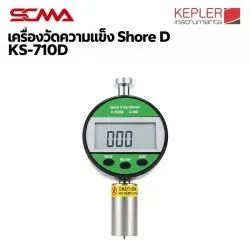 KS-710D SHORE D HARDNESS TESTER KEPLERSpecial Price THB 3,000.00 Regular Price THB 4,000.00
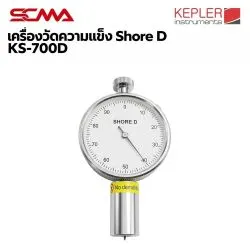 KS-700D SHORE D HARDNESS TESTER KEPLERSpecial Price THB 3,750.00 Regular Price THB 5,000.00
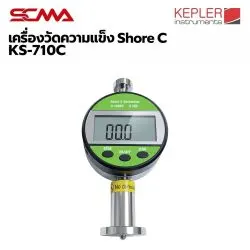 KS-710C SHORE C HARDNESS TESTER KEPLERSpecial Price THB 2,700.00 Regular Price THB 3,600.00
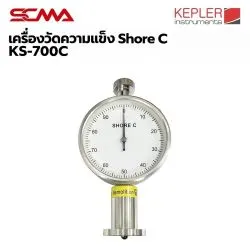 KS-700C SHORE C HARDNESS TESTER KEPLERSpecial Price THB 2,700.00 Regular Price THB 3,600.00
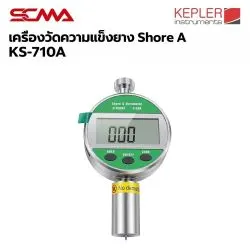 KS-710A SHORE A HARDNESS TESTER KEPLERSpecial Price THB 2,025.00 Regular Price THB 2,700.00
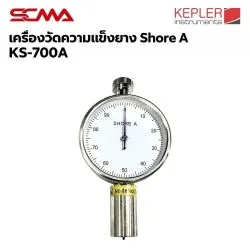 KS-700A SHORE A HARDNESS TESTER KEPLERSpecial Price THB 1,725.00 Regular Price THB 2,300.00
Delivery: 30 ต.ค. 2569
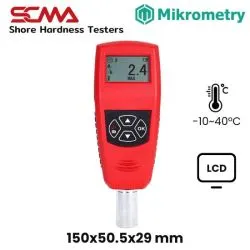 Mikrometry EHSoo (Type OO) Hardness TesterSpecial Price THB 20,400.00 Regular Price THB 25,500.00
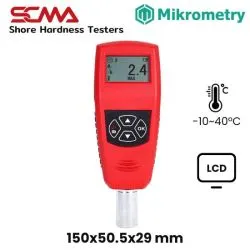 Mikrometry EHSo (Type O) Shore Hardness TesterSpecial Price THB 20,400.00 Regular Price THB 25,500.00
Shore Hardness Tester (Shore Hardness Tester)
The Shore Hardness Tester, or Shore Hardness Tester, is a specialized testing instrument designed to measure the hardness of flexible materials such as rubber, plastic, and various polymers. It measures the surface resistance of the material when pressed by a standard indenter tip. At SCMA, we offer Shore hardness testers from leading global brands and a team of experts ready to advise you on selecting the right testing equipment for your industry needs.
What is a Shore Hardness Tester?
A Shore Hardness Tester, or Shore hardness tester, is an international standard device used to assess the hardness of flexible materials such as rubber, plastic, silicone, and other polymers. This measuring tool works on the principle of assessing surface resistance to indentation by a standardized indenter tip. The measured value is displayed on the Shore scale, with higher numbers indicating greater material hardness.
What is Material Hardness?
Hardness refers to a material's ability to resist deformation or shape change when subjected to external force. Materials with high hardness are less prone to denting, scratches, or changes in form, while softer materials are more flexible and easier to deform.
How to Test Material Hardness
The material testing industry has developed various methods for appropriately measuring the hardness of different types of materials. To learn more aboutdifferent hardness tests, you can explore additional information:
Rockwell Hardness Test
This is the most popular method for testing metals and alloys. It measures the depth of indentation made by a standard indenter tip, with metal hardness displayed on the Rockwell scale based on chemical composition and manufacturing processes.
Brinell Hardness Test
This method uses a hardened steel ball to press into the material's surface, then measures the diameter of the resulting indentation. It is suitable for rough or unevenly structured metals and is commonly used in heavy metal industries.
Vickers Hardness Test
It uses a diamond pyramid indenter tip to press into the surface, then measures the size of the resulting indentation under a microscope. This method offers high accuracy and is applicable for various types of materials.
Knoop Hardness Test
Similar to the Vickers test but uses an elongated pyramid indenter tip, suitable for testing brittle or very thin materials.
Shore Hardness Test
This method is specifically designed for flexible materials such as rubber, plastic, and elastomers. It measures the resistance to penetration by a special indenter tip. It is highly popular due to its ease of use, speed, and non-destructive nature.
Types of Shore Hardness Tester
Shore hardness testers come in several scales designed for materials with varying degrees of hardness. At SCMA, we offer every scale to meet your specific needs:
Shore A (for soft materials)
This scale is used for moderately soft materials and has a measurement range of 0-100. It is suitable for natural rubber, synthetic rubber, silicone, and flexible polymers. Examples include rubber seals, vibration dampening pads, and automotive rubber parts.
Shore D (for hard materials)
Used for harder materials such as rigid plastics like ABS, acrylics, polycarbonate thermoplastics, and high-density polymers. Materials measured with Shore D typically have values ranging from 30-95 Shore D.
Shore O or Shore 00 (for extremely soft materials)
This scale is for very soft materials such as foam rubber, gel, and highly flexible materials. It is commonly used in industries requiring impact-resistant or protective packaging.
Selecting the Right Shore Scale
Choosing the appropriate scale depends on the type of material. If the material has a hardness below 20 Shore A, it is recommended to use Shore 00, and if above 90 Shore A, switching to Shore D will provide better accuracy.
Key Features of Shore Hardness Tester
SCMA selects high-quality shore hardness testers from leading manufacturers worldwide to ensure our customers can use them confidently and achieve reliable results:
High Precision
Our hardness testers feature international standard calibration systems, providing accurate and repeatable results suitable for high-precision quality control applications.
User-Friendly and Quick Operation
Designed for ease of use without requiring special expertise. Immediate measurement and reading saves time in production and quality inspection processes.
Durable and Long-Lasting
Constructed from high-quality materials, they are durable for heavy industrial use environments. The Shore hardness tester probe is robust and withstands repeated use.
Clear Readability
Equipped with digital displays or analog gauges that are easy to read. Some models feature data logging systems and computer connectivity for further analysis.
Variety of Models to Suit Your Needs
Available in portable (Portable) versions for field measurements and benchtop (Benchtop) models for high-precision laboratory requirements.
Usage of Shore Hardness Tester
Shore hardness tester is an essential tool in various industries that use flexible materials in production processes. At SCMA, we have Shore hardness testers for every application:
Automotive Industry - Testing the hardness of tires, seals, vibration dampers, steering boots, and other rubber parts to ensure quality and durability according to standards.
Plastics and Polymer Industries - Testing plastic materials, seals, O-rings, and other rubber materials to check the quality and consistency of products during production processes.
Sports and Leather Goods Manufacturing - Testing the hardness of shoe soles, heel straps, and rubber materials in leather goods products for appropriate comfort and durability.
Electronics Industry - Testing materials used to produce electronic components such as buttons, seals, wire insulation, and vibration dampers.
Printing Industry - Measuring the hardness of printing roller rubber to ensure consistent and efficient print quality.
MEDICAL AND PHARMACEUTICAL INDUSTRY - Testing medical silicone, bottle cap seals, and materials used in medical products to ensure safety and effectiveness.
Packaging Industry - Checking the hardness of rubber lids, gaskets, and rubber parts in packaging to maintain product freshness.
Comprehensive Solutions for Material Hardness Testing by SCMA
SCMA is not just a Shore hardness tester supplier but we are your technical partner every step of the way, from consulting on selecting the right equipment to demonstrations and training sessions. We also offer after-sales services that cover calibration, maintenance, and technical advice. With over 40 years of experience, we understand that testing material quality with hardness testers is crucial for high-quality production.
Summary
The Shore hardness tester is an indispensable tool for industries requiring precise and reliable control over flexible materials. Choosing the right measuring device and using it correctly will help ensure consistent product quality that meets international standards. SCMA Company Limited is ready to be your trusted partner in providing high-quality Shore hardness testers from leading brands, along with comprehensive services and a team of expert engineers. Contact us today for free consultation and elevate your production process quality control to international standards.
Frequently Asked Questions
What does a Shore Hardness Tester measure and why is it important?
A Shore hardness tester measures the hardness of flexible materials such as rubber, plastic, and polymers by measuring the surface indentation resistance when pressed with a standard probe. This tool is crucial for quality control in manufacturing because material hardness directly affects product performance, durability, and safety.
Should I use Shore A or Shore D?
Shore A is suitable for soft to medium materials such as natural rubber and silicone. Shore D is appropriate for hard plastics like ABS and polycarbonate. If the material has a value below 20 Shore A, it's recommended to use Shore 00, and if above 90 Shore A, switch to Shore D. The SCMA expert team can recommend an appropriate scale.
How does a Shore Hardness Tester differ from a Rockwell Hardness Tester?
A Shore Hardness Tester is specifically designed for flexible materials like rubber and plastic, using the principle of measuring surface indentation. A Rockwell Hardness Tester measures metal hardness by assessing the depth of an indentation, each with different probe heads and measurement standards according to material type.
What are the benefits of purchasing a Shore Hardness Tester from SCMA?
SCMA sells hardness testers from leading global brands such as KEPLER INSTRUMENTS, Mitutoyo, PCE Instruments, and Rex Gauge. They offer comprehensive services including consultation for selecting the right equipment, training on usage, calibration to standards, and after-sales service by expert engineers.
This website uses cookies
We use cookies to make the site work properly, to understand how it is used, and to show content that is relevant to you. You choose which types to allow; strictly necessary cookies are always on. Privacy Policy
🤖 AI Assistant
Ask about products, specs and replacement models
Hello 👋 Ask us anything — find products, compare specs, or troubleshoot.
🗑 Clear history