
SPECIAL PROMOTION — Up to 40% off across many product groups, until 31 December 2026 · Click to see all promotion itemsIFM, Sensor, Automation SystemMeasuring / Testing InstrumentsTemp Indicator, Control, T/C, RTD, TimerHeater, SCR Control, Solid State, Power Supply, Control CabinetField Measuring Instruments, Pressure Gauge, Level Control, Flow MeasurementEMC, Pneumatic, Solenoid ValveInspection Test Lamp, Head Light, Automotive Measuring InstrumentWeighing Scales, Marking Machine, PrintersEducational Training SystemsHot Line Tools & Equipment SPECIAL PROMOTION — Up to 40% off across many product groups, until 31 December 2026 · Click to see all promotion itemsIFM, Sensor, Automation SystemMeasuring / Testing InstrumentsTemp Indicator, Control, T/C, RTD, TimerHeater, SCR Control, Solid State, Power Supply, Control CabinetField Measuring Instruments, Pressure Gauge, Level Control, Flow MeasurementEMC, Pneumatic, Solenoid ValveInspection Test Lamp, Head Light, Automotive Measuring InstrumentWeighing Scales, Marking Machine, PrintersEducational Training SystemsHot Line Tools & Equipment View promotion items View all
Thickness Gauge
What is a Thickness Gauge?
A thickness gauge is an instrument used to measure and inspect the thickness of materials accurately. It is crucial for quality control and safety in various industries such as metals, plastics, glass, and other materials.
Types of Thickness Gauges
- Ultrasonic Thickness Gauge measures thickness using high-frequency sound waves. It can be used with a variety of materials including metal, plastic, or ceramic.
- Magnetic Thickness Gauge uses magnetism to measure the thickness of magnetic materials such as steel.
- Eddy Current Thickness Gauge uses electrical current for measuring the thickness of non-magnetic materials like aluminum.
- Mechanical Thickness Gauge measures thickness using physical mechanisms such as a micrometer-type gauge.
Applications of Thickness Gauges
- Used to inspect the thickness of parts and products in manufacturing industries, such as automotive, electrical appliances, and electronic devices.
- Used to check the thickness of construction materials like reinforcing steel, concrete, and walls in the construction industry.
- Used to inspect the thickness of pipes and tanks to prevent leaks and accidents in the petroleum and gas industries.
- Used in aerospace for checking the thickness of materials used in aircraft and spacecraft, ensuring safety and operational efficiency.
Famous Brands of Thickness Gauges
- Elcometer offers thickness gauges used in coating and paint industries.
- Fischer provides Eddy Current and Magnetic Thickness Gauges for various industries.
- KEPLER INSTRUMENTS is a brand with a wide range of high-quality, reliable products.
- Mitutoyo is renowned for mechanical measuring tools and offers high-quality Mechanical Thickness Gauges.
- Olympus is a leading brand with highly accurate and reliable Ultrasonic Thickness Gauges.
View the Thickness Gauge Catalogue : Click here
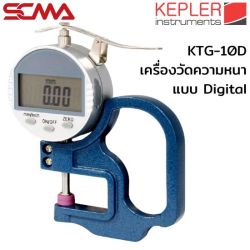 KTG-10D Digital Thickness Gauge KEPLERSpecial Price THB 2,816.00 Regular Price THB 3,520.00
Delivery: 30 ต.ค. 2569
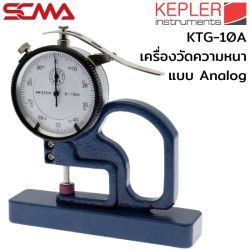 KTG-10A Analog Thickness Gauge KEPLERSpecial Price THB 2,480.00 Regular Price THB 3,100.00
Delivery: 30 ต.ค. 2569
Thickness Gauge (Thickness Gauge)
A thickness gauge, or Thickness Gauge, is a crucial tool that accurately and quickly measures the thickness of materials without damaging them. It is suitable for quality control in various industries. At SCMA, we offer high-quality thickness gauges from leading global brands, along with a team of expert engineers to provide consultation and help you choose the most suitable measuring tool for your needs.
What is a Thickness Gauge?
A thickness gauge or Thickness Gauge is an instrument used to measure the thickness of various materials such as metals, plastics, glass, coatings, and films. It works through different technologies depending on the material type. If you ask what thickness means, it refers to the precise measurement of a material's thickness without damaging the workpiece. This measuring tool has become popular in quality control, standard checking, and condition assessment across all industries.
Types of Thickness Gauges
To cater to different applications, SCMA offers various types of thickness gauges according to material characteristics and purposes. Each type has unique working principles and applications. For more information about thickness gauges, please refer to reliable sources:
Ultrasonic Thickness Gauge
It works by sending high-frequency sound waves through the material and measuring the time it takes for the sound wave to travel back. Then, it calculates thickness based on the speed of sound in that particular material. Suitable for metals, plastics, ceramics, and glass, especially when access is limited to one side. It's commonly used to inspect pipes, tanks, and large structures to detect corrosion.
Magnetic Thickness Gauge
It operates by using a magnetic field to measure the thickness of non-magnetic coatings on magnetic surfaces such as measuring paint thickness, zinc plating, or other coatings on steel. It detects changes in the magnetic field when the probe is brought close to the coating surface for quick and accurate measurements. For car paint inspection, learn more from Paint Thickness Gauge.
Eddy Current Thickness Gauge
It uses the principle of eddy currents to measure the thickness of non-conductive coatings on non-ferrous metal surfaces. It creates an eddy current in the base metal layer and measures impedance changes to calculate thickness. Suitable for measuring anodized layers, paint coatings, or other coatings on aluminum, copper, and non-magnetic metals.
Mechanical Thickness Gauge
It measures thickness by applying physical pressure such as micrometers, calipers, or filler gauges. It directly measures the distance between two points on a material's surface. Suitable for measuring thin materials like paper, plastic film, thin metal sheets, or work requiring high accuracy and manual inspection.
Features of Thickness Gauges
SCMA selects high-quality thickness gauges with outstanding features to provide the best user experience:
- High Accuracy and Reliability - Thickness gauges provide accurate and consistent measurements suitable for high-standard quality control work, reducing production errors.
- Non-Destructive Testing (NDT) - Thickness gauges can measure without damaging the material, saving testing costs and time. Suitable for high-value workpieces.
- User-Friendly and Fast - Easy-to-read display screens and convenient button operations allow quick measurement and data recording, suitable for multi-point inspections.
- Durable and Long-Lasting - Designed to withstand industrial environments, thickness gauges are robust against heavy use and challenging conditions.
- Data Storage and Connectivity - Capable of recording measurements, exporting data for analysis, and connecting to computers or other systems.
Applications of Thickness Gauges
Thickness gauges are essential tools in various industries, enhancing work efficiency and safety:
- Automotive Industry - Use thickness gauges to measure the thickness of car paint layers for detecting repairs in used cars, checking metal parts' thickness for safety, and ensuring production quality meets standards.
- Manufacturing Industry - Inspect the thickness of raw materials and finished products, control coating and plating processes with thickness gauges to ensure product quality meets requirements.
- Aerospace Industry - Use high-precision thickness gauges to inspect the thickness of aircraft components, detect corrosion or unseen damage for maximum safety assurance.
- Construction and Structural Works - Use measuring tools to check pipes, beams, and steel structures, assess the condition of buildings and bridges for compliance with safety standards.
- Petroleum and Gas Industry - Inspect the thickness of oil pipelines, gas pipes, and tanks using thickness gauges to prevent leaks, detect corrosion, and reduce accident risks.
- Energy Industry - Inspect steam pipelines, boilers, and energy transport systems with thickness gauges to detect corrosion in power plants and refineries for preventing production downtime.
- Food and Beverage Industry - Inspect the thickness of packaging, control quality of internal coating in cans with thickness gauges to ensure food safety standards.
- Electronics and Electrical Appliances Industry - Inspect the thickness of various components and products to meet quality and international standard requirements, ensuring product durability and performance.
Comprehensive Thickness Gauge Solutions from SCMA
SCMA is more than just a thickness gauge supplier; we are your technical partner at every step. With over 40 years of experience in automation systems, our expert engineers provide consultation on selecting the right measuring tools for your needs, including calibration services, training, and maintenance to ensure accurate measurement systems continuously. See our full-service offerings for more details.
Summary
Choosing the right thickness gauge is crucial to ensuring product quality and safety in industries. SCMA Company Limited is a reliable partner providing high-quality thickness gauges from leading global brands, along with comprehensive services including consultation, installation, and maintenance. With over four decades of experience and a dedicated support team, contact us today for free consultation and elevate your measurement standards to international levels.
Frequently Asked Questions
Which Thickness Gauge is Suitable for Measuring Paint Thickness on Steel?
For measuring paint thickness on steel surfaces, we recommend using a magnetic thickness gauge (Magnetic Thickness Gauge) as it can quickly and accurately measure non-magnetic coatings on steel surfaces. It is suitable for quality control of painting and plating work.
What Surface Preparation is Required Before Using a Thickness Gauge?
Before measuring thickness, ensure the material surface is clean and free from debris or contaminants that may affect measurements. Also, calibrate the instrument according to manufacturer instructions before each use for the most accurate results.
What Materials Can an Ultrasonic Thickness Gauge Measure?
An ultrasonic thickness gauge can measure the thickness of various metals such as cast iron, steel, aluminum, and non-metallic materials like plastics, ceramics, and glass. It is suitable for inspecting pipes, tanks, and structures accessible from one side.
This website uses cookies
We use cookies to make the site work properly, to understand how it is used, and to show content that is relevant to you. You choose which types to allow; strictly necessary cookies are always on. Privacy Policy
🤖 AI Assistant
Ask about products, specs and replacement models
Hello 👋 Ask us anything — find products, compare specs, or troubleshoot.
🗑 Clear history