
SPECIAL PROMOTION — Up to 40% off across many product groups, until 31 December 2026 · Click to see all promotion itemsIFM, Sensor, Automation SystemMeasuring / Testing InstrumentsTemp Indicator, Control, T/C, RTD, TimerHeater, SCR Control, Solid State, Power Supply, Control CabinetField Measuring Instruments, Pressure Gauge, Level Control, Flow MeasurementEMC, Pneumatic, Solenoid ValveInspection Test Lamp, Head Light, Automotive Measuring InstrumentWeighing Scales, Marking Machine, PrintersEducational Training SystemsHot Line Tools & Equipment SPECIAL PROMOTION — Up to 40% off across many product groups, until 31 December 2026 · Click to see all promotion itemsIFM, Sensor, Automation SystemMeasuring / Testing InstrumentsTemp Indicator, Control, T/C, RTD, TimerHeater, SCR Control, Solid State, Power Supply, Control CabinetField Measuring Instruments, Pressure Gauge, Level Control, Flow MeasurementEMC, Pneumatic, Solenoid ValveInspection Test Lamp, Head Light, Automotive Measuring InstrumentWeighing Scales, Marking Machine, PrintersEducational Training SystemsHot Line Tools & Equipment View promotion items View all
Leakage Current Tester
What is a Leakage Current Tester?
A Leakage Current Tester is an instrument used to check and measure electrical leakage current from systems or electrical equipment. Testing for leakage current is crucial in ensuring safety by preventing risks such as short circuits or electric shocks.
Types of Leakage Current Testers
- AC Leakage Current Tester - used to measure leakage current in alternating current (AC) systems.
- DC Leakage Current Tester - used to measure leakage current in direct current (DC) systems.
- Digital Leakage Current Tester - a device that displays accurate measurement results and is easy to read from a digital screen.
- Clamp Meter Leakage Current Tester - uses a clamp to measure leakage current without cutting wires, making it convenient for use.
Uses of Leakage Current Testers
- Checking electrical leakage in devices, machinery, production equipment, and household appliances such as computers, home appliances, and electronics to ensure safety.
- Used for maintaining electrical systems in industrial plants, office buildings, and other locations to ensure the safety of electrical equipment.
- Checking electrical systems in vehicles to reduce risks from leakage current such as electric cars, buses, and trains.
Popular Brands of Leakage Current Testers
- Chauvin Arnoux - a European brand with extensive experience in manufacturing electrical testing equipment.
- Fluke - a leading brand renowned for its electrical test instruments and measurement tools.
- Hioki - a Japanese brand specializing in high-quality measuring and testing equipment.
- KEPLER INSTRUMENTS - a brand with a wide range of products to choose from, offering quality options.
- Keysight (formerly Agilent) - a brand recognized for its measurement and testing technology in electrical systems.
- Kyoritsu - a brand known for producing portable electrical test equipment.
View the Leakage Current Tester Catalogue : Click here
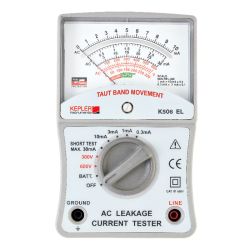 K506 EL AC ANALOG LEAKAGE METERS KEPLERSpecial Price THB 4,125.00 Regular Price THB 5,500.00
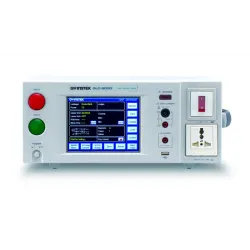 GLC-9000 GW Instek Leakage Current TesterSpecial Price THB 104,400.00 Regular Price THB 130,500.00
Delivery: 30 ต.ค. 2569
What is a Leakage Current Tester? Usage Guide and Selection Tips
How important is the Leakage Current Tester in preventing electrical hazards? This article will take readers through every aspect of the leakage current tester, from basic definitions such as what is leakage current, how dangerous it can be, to selecting the right testing equipment for various applications, whether it's maintenance work in industries or general safety checks. Understanding this device can significantly enhance safety and prevent losses effectively. If you need consultation or electrical system inspection services, please contact our expert engineers from SCMA here.
Understanding 'Leakage Current': What is it? How Dangerous?
Leakage current, or leakage current, refers to the electrical current that flows through deteriorated insulation or moisture into the metallic parts of an electrical device and discharges into the ground along the path of least resistance, which can include human bodies. This phenomenon is extremely dangerous and often overlooked until accidents occur. Recognizing that a test for leaks checks the integrity of the system is critical in electrical engineering because if leakage currents accumulate unchecked, they may lead to property damage or even loss of life.
Definition of Leakage Current
Technically, leakage current refers to the electrical current that flows out of a normal conductor circuit through insulation with non-infinite resistance values or through parasitic capacitance (Capacitance) to machinery frames, ground wires, or surrounding environments. Even if an electrical system is grounded, excessive leakage currents can create dangerous touch voltages. Measuring this requires specialized tools like high-precision leakage current testers.
Main Causes of Leakage Current
The main causes often stem from insulation breakdown due to aging, heat, moisture, or accumulated dust on equipment. Additionally, improper installation or the use of low-quality components are significant factors. Inspecting insulation conditions with insulation tester principles is a primary preventive measure that should be done alongside leakage current testing.
Impact and Risks to Users and Equipment
The impacts of leakage currents range from minor issues like unnecessary increases in electricity bills, to severe consequences such as electric shock leading to death if protective systems like ELCB fail. Additionally, leakage currents can disrupt the operation of sensitive electronic devices and are one cause of fires due to heat accumulation at leak points.
What is a Leakage Current Tester? Why is it an Important Tool?
A Leakage Current Tester, or a leakage current measuring instrument, is an electrical measurement tool designed to detect and measure the amount of leaking electric current in highly sensitive systems (at levels of milliamps or microamps), which ordinary multimeters cannot accurately measure. This device is crucial for leakage control or managing and preventing electrical safety risks to ensure that electrical equipment and machinery operate under international safety standards.
Basic Principle of Operation
The operation principle of this tool relies on detecting the magnetic field generated by the difference between incoming (Line) and outgoing (Neutral) currents. Normally, these currents should be equal and cancel out each other's magnetic fields to zero. However, if there is leaking current escaping from the system, the sensor will detect the excess magnetic field and convert it into a measure of leakage current. This principle is similar to that ofclamp meters, but with much higher sensitivity.
Differences from Ordinary Multimeters
Ordinary multimeters are designed to measure high currents in main circuits and require circuit interruption for series connection measurement, which is inconvenient and dangerous for leakage testing. In contrast, Leakage Current Testers, especially clamp types, can measure immediately without touching the conductors and have much better sensitivity for low current measurements, making them ideal for true safety testing.
Importance in Electrical Safety Inspection According to Standards
International standards such as IEC 60601 for medical equipment or general industry standards mandate leakage current tests as part of quality control (QC) and maintenance checks to ensure product safety for users and to prevent legal liability in case of accidents.
Types of Leakage Current Tester You Should Know About
Leakage current testers in the market are mainly divided into two types based on their usage characteristics, which users should choose according to their specific needs.
Clamp Meter Type (Leakage Clamp Meter)
This is the most popular type for field maintenance. It resembles a clamp meter but with specially designed jaws that close tightly to reduce interference signals, and an extremely sensitive internal sensor. It can be clamped around main power cables (both L and N simultaneously) to measure total leakage current or around ground wires to directly measure currents flowing into the earth.
Dedicated Leakage Current Tester
These are usually benchtop or portable testers that require direct connection to equipment. They are used in production lines or laboratories for safety compliance testing, such as wet leakage current tests which simulate wet conditions to check insulation leakage.
Comparison Table of Advantages and Disadvantages for Each Type
|
Type |
Advantages |
Disadvantages |
Suitable For |
|
Leakage Clamp Meter |
Easy to use, no need to break the circuit, portable |
Accuracy may decrease with high magnetic field interference |
Maintenance work, building inspections, factories |
|
Dedicated Tester |
High accuracy, tests multiple standards, detailed data logging |
Expensive, requires direct connection to the system, more complex to use |
Production lines, labs, QA/QC |
Correct and Safe Usage Steps for Leakage Current Tester
Using electrical measuring tools requires caution and strict adherence to procedures to ensure accurate readings and safety for the operator.
Preliminary Checks and Preparation Before Use
The user must inspect the condition of the tester, leads, and clamp jaws to ensure they are clean and free from cracks. Clamp jaws should be closed tightly without any dust obstructing them. Select an appropriate measurement range (Range) or set it to Auto, and personal protective equipment (PPE), such as electrical gloves, should be worn before starting work.
How to Measure Leakage Current in Various Electrical Equipment (Step-by-Step)
For clamp meter measurement, encircle the jaws around both wires (Line and Neutral) for a single-phase system or all three/four wires for a three-phase system without including the ground wire. The reading obtained is the total leakage current of the circuit. If measuring the leakage current of a specific device, you can directly encircle its ground wire (Ground Wire). However, ensure there are no other parallel grounding paths. Measuring with an Earth Tester alongside will aid in better problem analysis.
Safety Precautions to Maximize Safety During Measurement
Be cautious not to touch exposed electrical conductors with your hands, avoid measuring in wet areas unless the tool is designed for that purpose, and be aware that even a small leakage current can cause harm if touched directly. Work should always have an observer present.
Guide to Selecting the Right Leakage Current Tester for Your Needs
Choosing a leakage current tester that meets your actual needs is crucial to ensure you get a tool that fits your requirements and provides sufficient accuracy.
Factors to Consider: Measurement Range (Range), Accuracy
You need to determine what level of leakage current measurement is required for the job. For medical equipment, a microampere (uA) resolution might be necessary, whereas general factory work may suffice with milliampere (mA). The accuracy of the tester should meet standard specifications and have a good enough resolution to distinguish issues.
Additional Features Such as True RMS, Low Pass Filter
True RMS functionality is crucial for measuring current in systems with inverters or electronic devices that distort the waveform. A Low Pass Filter (LPF) or Frequency Filter helps filter out high-frequency noise signals, allowing accurate measurement of leakage current at 50Hz/60Hz frequencies and reducing false breaker trips.
Safety Standards to Look for (e.g., CAT III, CAT IV)
The tester must meet the appropriate CAT Rating safety standards for the location being measured. For example, use CAT IV if measuring at a main distribution board (MDB), and CAT II or III for standard outlets. Choosing an unqualified tool may pose risks of explosion during electrical surges.
Recommended Popular Brands in the Market
Brands known for accuracy and durability include Kyoritsu, Hioki, Fluke, which offer a range of models from portable to professional with data logging functions. Selecting a brand with reliable Thai distributors like SCMA can help with warranty and after-sales service.
Applications in Industries and Homes
Leakage Current Testers can be applied in various ways to ensure safety and energy efficiency.
Checking Household Appliances
Use it to check if old appliances like refrigerators, washing machines, or water heaters have any leakage current to prevent danger to family members and reduce wasted electricity due to leaks.
Maintenance of Industrial Electrical Systems
In industrial settings, using a leakage current tester aids in predictive maintenance by monitoring the leakage current levels of motors and machinery. If higher values are detected, it indicates deteriorating insulation, allowing for planned repairs before breakdowns occur.
Testing Medical Equipment
Patient safety is paramount; all medical equipment must pass leakage current testing according to strict IEC 60601 standards to prevent electrical shock for vulnerable patients. The tester used here needs to be highly accurate and have a function to simulate human body resistance.
If you are looking for a Leakage Current Tester, think of SCMA!
Electrical safety is non-negotiable. If you are searching for high-quality Leakage Current Testers that meet international standards and need expert advice, SCMA is the answer for you. We offer a wide selection of leading brands to choose from, along with demonstration services and an engineering team ready to consult, ensuring you get the tool that best fits your needs and budget. You can view all productshere.
Summary
A Leakage Current Tester, or a device for testing leakage current, is an essential tool that helps protect lives and property from electrical hazards. Understanding how it works and choosing the right equipment can help detect abnormalities before they become serious incidents. SCMA is ready to advise and support your electrical safety systems with quality products and services. If you need more information or calibration services, contact ushere.
Frequently Asked Questions
What is the acceptable value for leakage current?
The acceptable value of leakage current depends on the type of equipment and the standards being referenced. Generally, for electrical appliances with a grounding wire, leakage current should not exceed 3.5 mA. However, for medical devices or patient-contacting equipment, the acceptable value is much lower (such as no more than 0.1 mA or 0.5 mA).
How often should leakage current testing be performed?
The frequency of testing depends on the risk and usage. In industrial plants, it is recommended to check at least once a year or every time there are repairs, maintenance, and new machinery installations. For residential buildings, checks should be performed when abnormalities are observed or if electricity bills unexpectedly increase.
Does a Leakage Current Tester need calibration?
Absolutely necessary. Measurement tools used for safety must undergo calibration at regular intervals (typically once a year) to ensure the accuracy of readings and comply with ISO quality system requirements or other safety standards.
This website uses cookies
We use cookies to make the site work properly, to understand how it is used, and to show content that is relevant to you. You choose which types to allow; strictly necessary cookies are always on. Privacy Policy
🤖 AI Assistant
Ask about products, specs and replacement models
Hello 👋 Ask us anything — find products, compare specs, or troubleshoot.
🗑 Clear history