
SPECIAL PROMOTION — Up to 40% off across many product groups, until 31 December 2026 · Click to see all promotion itemsIFM, Sensor, Automation SystemMeasuring / Testing InstrumentsTemp Indicator, Control, T/C, RTD, TimerHeater, SCR Control, Solid State, Power Supply, Control CabinetField Measuring Instruments, Pressure Gauge, Level Control, Flow MeasurementEMC, Pneumatic, Solenoid ValveInspection Test Lamp, Head Light, Automotive Measuring InstrumentWeighing Scales, Marking Machine, PrintersEducational Training SystemsHot Line Tools & Equipment SPECIAL PROMOTION — Up to 40% off across many product groups, until 31 December 2026 · Click to see all promotion itemsIFM, Sensor, Automation SystemMeasuring / Testing InstrumentsTemp Indicator, Control, T/C, RTD, TimerHeater, SCR Control, Solid State, Power Supply, Control CabinetField Measuring Instruments, Pressure Gauge, Level Control, Flow MeasurementEMC, Pneumatic, Solenoid ValveInspection Test Lamp, Head Light, Automotive Measuring InstrumentWeighing Scales, Marking Machine, PrintersEducational Training SystemsHot Line Tools & Equipment View promotion items View all
Cable Heater
What is a Cable Heater? Understanding Industrial Tubing Heaters
In industrial production processes, maintaining the temperature of materials in pipelines or storage tanks is crucial, especially for high-viscosity liquids or those sensitive to temperature changes. A key tool that addresses this issue is the Cable Heater, also known as a tubing heater. This article will guide you through understanding its structure, operating principles, and how to select it effectively to minimize material damage due to solidification and extend the lifespan of pipeline systems.
Characteristics and Usage of Cable Heaters
- Used to prevent ice buildup on doors in cold rooms with sub-zero temperatures
- Suitable for applications requiring moderate temperature levels
- Can be cut to length according to application needs
- Flexible and can be bent to fit various installation requirements
Order directly from SCMA
View the Cable Heater Catalog Click Here
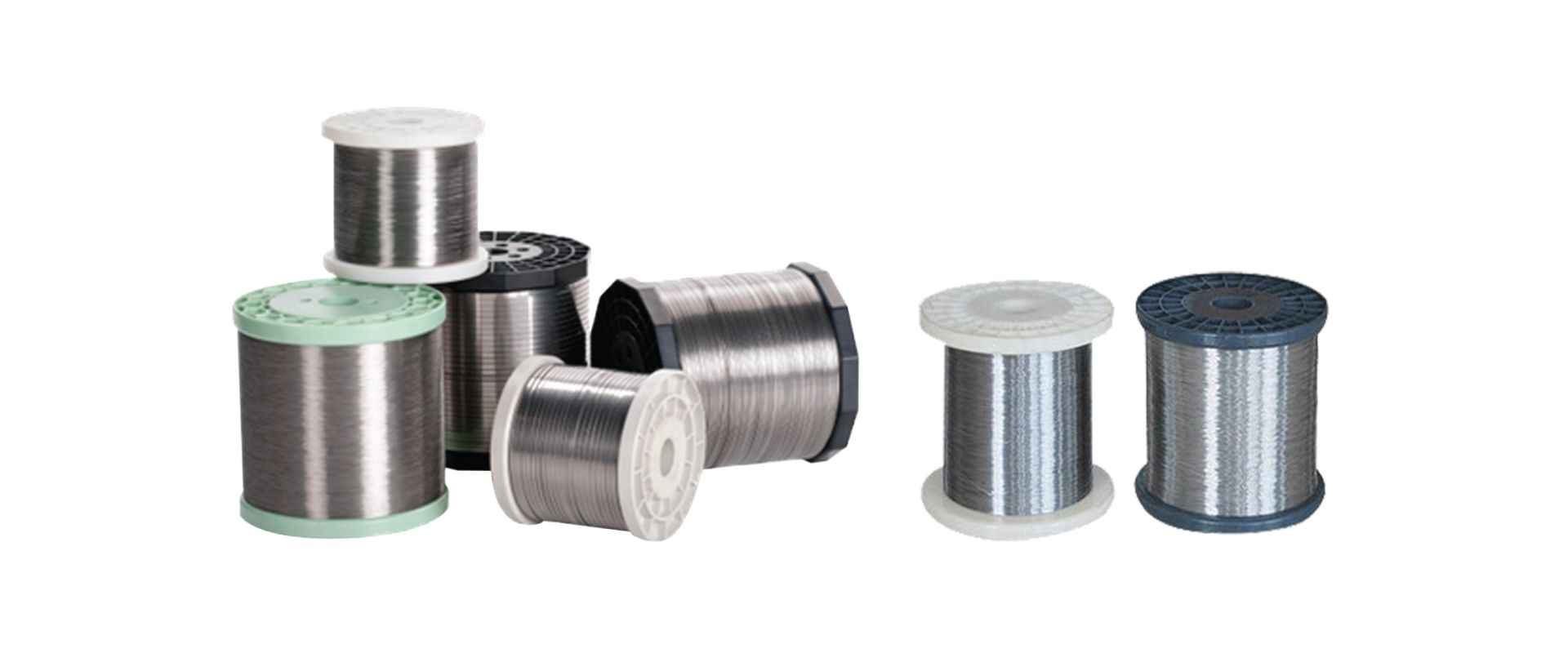
 FSO 40W/m CABLE HEATERS FLEXELECSpecial Price THB 975.00 Regular Price THB 1,300.00
- FSO 30W/m CABLE HEATERS FLEXELECSpecial Price THB 975.00 Regular Price THB 1,300.00
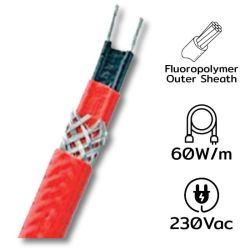 FSX/TF 60, 60W/230V FLUOROPOLYMER INSULATIONSpecial Price THB 5,352.00 Regular Price THB 6,690.00
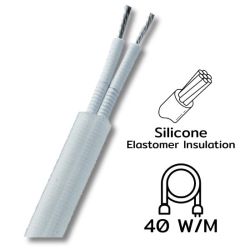 FTSH/40-2, 40W/m AC230V Heater CableSpecial Price THB 592.00 Regular Price THB 740.00
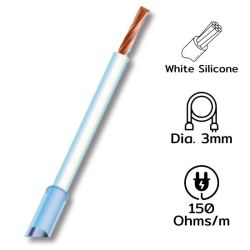 CS2 105 ohms/m, Dia. 3mm White SiliconeSpecial Price THB 120.00 Regular Price THB 150.00
Delivery: 30 ต.ค. 2569
What is a Cable Heater? Why is it Important in Industry?
A cable heater, also known as a heating wire or heat cable, is a heating device that resembles ordinary electrical wiring on the outside but contains resistance wires wrapped with high-quality insulation. Its key feature is its flexibility, allowing it to be bent and installed along pipelines, joints, valves, or complex-shaped surfaces of tanks easily, unlike rigid rod or plate electric heaters.
The importance of cable heaters in industry goes beyond just providing heat; they ensure the "stability of production processes." Imagine a petrochemical plant or food processing factory during winter or in cold rooms with sub-zero temperatures. If liquids in pipes freeze or become too viscous to flow, it could lead to production line shutdowns. Cable heaters act as protective armor, maintaining material temperature within optimal ranges, preventing pipe damage from ice expansion, and reducing the viscosity of thick fluids like engine oil, glue, or chocolate for smooth passage through piping systems.
How Does a Cable Heater Work?
The basic principle of operation for cable heaters involves converting electrical energy into thermal energy (Joule Heating). When electricity is supplied to the system, current flows through resistance wires (Resistance Wire) within the core of the cable. These wires are typically made from special alloys like nickel-chromium (Ni-Cr), which have high resistivity. As electrons move through the resistant conductor, they collide with atoms in the metal, generating heat that spreads along the length of the heating wire.
To ensure safety and efficient heat transfer, this type of electric heater is constructed with multiple layers:
- Heating Element: The source of heat generation
- Insulation: Such as silicone or fluoropolymer (Fluoropolymer) that withstands high temperatures to prevent electrical leakage
- Braided Shield: A braided metal shield for electromagnetic interference protection, increased mechanical strength, and grounding safety
- Outer Jacket: Protection against chemical corrosion, moisture, and abrasion
Types of Cable Heaters Currently in Use
Selecting the appropriate cable heater for a job is something that engineers must pay attention to. Generally, cable heaters are divided into two main types based on their heat distribution and control methods:
1. Self-Regulating Heater (Self-Controlled Temperature)
This is a modern technology that has gained high popularity in recent times. The internal structure consists of two parallel electrical conductors wrapped with polymer material mixed with carbon.
- How it works: When the surrounding temperature drops, the polymer body contracts, causing more contact between carbon flakes, creating an easier path for electricity to flow, resulting in the heater emitting more heat. Conversely, when the temperature rises, the polymer expands and breaks some of the carbon circuits, automatically reducing the amount of heat emitted.
- Advantages: In certain cases, a thermostat is not necessary (but recommended for accuracy), can be cut to length as needed without losing resistance per meter, and is safe from burning out even if cables overlap.
2. Constant Wattage or Zone-Parallel Heater
This is the traditional type of cable heater that provides constant wattage along its entire length, unaffected by external temperature changes.
- How it works: Heating wires are wound around an insulated core with electrical contact points in intervals (zones), creating a parallel circuit throughout the length of the wire.
- Advantages: Provides high and consistent heat, suitable for jobs requiring high process temperatures or precise heating needs.
- Cautions: Must be used with a thermostat or temperature controller to prevent overheating, and must never be installed with overlapping wires as it may cause hot spots that can melt insulation.
If you want to learn more about cable heaters on an international level, additional information is available at ZMS Cable
Applications of Cable Heaters in Various Industries
Due to their high flexibility as pipe heaters, they can be applied across various industries, including:
Food and Pharmaceutical Industry: Maintaining the viscosity of raw materials
Used to maintain the temperature of chocolate, syrup, or vegetable oil pipelines to keep them in a liquid state for easy entry into production processes, as well as warming storage tanks.
Chemical and Petrochemical Industry: Preventing chemical solidification in pipes
Many chemicals such as soda ash or paraffin will solidify at low temperatures. Using cable heaters wrapped around pipelines helps prevent clogging and pump damage.
Cooling Industry: Melting ice in drainage pipes
Installed inside the condenser water pipes (evaporator) or door edges of cold rooms to prevent ice buildup that may cause doors not to open or pipes to crack.
Building Applications: Preventing pipe freezing during winter
In factories with cooling towers or external building piping, cable heaters help prevent water in the pipes from freezing overnight when temperatures drop significantly.
Advantages of Cable Heater
Selecting a Cable heater or cable heater has clear advantages compared to other types of heaters:
- Flexibility in installation: It can be easily wrapped around valves, pumps, or pipes with curved sections without needing specially shaped heaters.
- Cut-to-length as needed: Especially for the Self-Regulating model, it allows cutting to length on-site immediately, making stock management and installation much more convenient.
- High safety: It has multi-layer insulation structures and built-in grounding (Ground) systems that prevent electrical hazards from leakage.
- Energy saving: The Self-Regulating model automatically reduces power consumption when the set temperature is reached, helping to reduce long-term electricity costs. Easy maintenance: If damage occurs
- It can be repaired or replaced at specific points more easily than a steam tracing system.
If you are interested in Cable Heater, you can purchase from SCMA today!
Selecting a Cable Heater is not just about buying wires to wrap around pipes; it requires calculating Heat Loss, selecting insulation types, and designing appropriate control systems. If the wrong type is chosen, it may lead to hazards or energy wastage. At SCMA, we are more than just suppliers; we are your engineering partners. We offer consultation services, heater sizing calculations, and proper installation recommendations according to safety standards. If you need precise and cost-effective heating solutions, you can view our Project & Solutions details or contact our team for free advice immediately.
Summary
A Cable Heater is a crucial device in preventing issues and maintaining efficiency in production processes. Choosing the right type of cable heater between Self-Regulating or Constant Wattage depends primarily on job characteristics, required temperature retention, and working environment conditions. Investing in high-quality heating cables and proper installation will extend system lifespan, reduce downtime risks, and save energy over the long term. If you need assurance, SCMA is ready to be your advisor and deliver the best technology for you.
Frequently Asked Questions
Can Cable Heater lengths be cut?
Cuttable or not depends on type; if it's Zone-Parallel or Self-regulating types, cutting can be done as needed. However, if it’s a Series (single wire) type, cutting is not possible because it will change resistance values and damage the heater.
Can heating cables be submerged in water?
Yes, but you must choose models with external waterproof insulation (such as Fluoropolymer) and properly seal both ends of the cable (End Termination) using standard waterproof kits.
Is it necessary to cover the heating cable with thermal insulation?
Vital. Covering pipes with insulation after wrapping them with heaters helps reduce heat loss, allowing the heater to work less and save up to 50-70% of electricity.
This website uses cookies
We use cookies to make the site work properly, to understand how it is used, and to show content that is relevant to you. You choose which types to allow; strictly necessary cookies are always on. Privacy Policy
🤖 AI Assistant
Ask about products, specs and replacement models
Hello 👋 Ask us anything — find products, compare specs, or troubleshoot.
🗑 Clear history