
SPECIAL PROMOTION — Up to 40% off across many product groups, until 31 December 2026 · Click to see all promotion itemsIFM, Sensor, Automation SystemMeasuring / Testing InstrumentsTemp Indicator, Control, T/C, RTD, TimerHeater, SCR Control, Solid State, Power Supply, Control CabinetField Measuring Instruments, Pressure Gauge, Level Control, Flow MeasurementEMC, Pneumatic, Solenoid ValveInspection Test Lamp, Head Light, Automotive Measuring InstrumentWeighing Scales, Marking Machine, PrintersEducational Training SystemsHot Line Tools & Equipment SPECIAL PROMOTION — Up to 40% off across many product groups, until 31 December 2026 · Click to see all promotion itemsIFM, Sensor, Automation SystemMeasuring / Testing InstrumentsTemp Indicator, Control, T/C, RTD, TimerHeater, SCR Control, Solid State, Power Supply, Control CabinetField Measuring Instruments, Pressure Gauge, Level Control, Flow MeasurementEMC, Pneumatic, Solenoid ValveInspection Test Lamp, Head Light, Automotive Measuring InstrumentWeighing Scales, Marking Machine, PrintersEducational Training SystemsHot Line Tools & Equipment View promotion items View all
Turbidity Meters
Turbidity Meters What Are They?
Turbidity Meters are instruments used to measure the turbidity of water or liquids. Turbidity is caused by suspended particles in the water, which may include soil, minerals, organic substances, or microorganisms. The measurement is expressed in NTU (Nephelometric Turbidity Units). They work on the principle of light scattering; when light passes through cloudy water, the particles scatter the light in various directions. The meter detects this scattered light and converts it into turbidity values that indicate the quantity and size of particles in the water.
Types of Turbidity Meters
- Portable Turbidity Meters for field use and various locations
- Benchtop Turbidity Meters used in laboratories requiring high accuracy and detailed analysis
- In-line Turbidity Meters installed in pipes or production systems for continuous turbidity measurement, suitable for industrial use
Industries Using Turbidity Meters
- For monitoring and controlling water quality during wastewater treatment processes in the wastewater industry
- Used to control drinking water quality in the bottled water industry, meeting safety standards
- Checking water quality on fish and aquatic animal farms in aquaculture industries
- Monitoring water quality used in food and beverage production processes within the food and beverage industry
- For research and study, they are used for environmental studies and water quality analysis
Famous Brands of Turbidity Meters
- Extech Instruments offers accurate and durable products
- Hach is renowned for its high-precision water quality measurement instruments
- Hanna Instruments is a reliable brand in the field of water quality measurement with high accuracy
- LaMotte offers durable and reliable products for turbidity measurement
- KEPLER INSTRUMENTS has a wide range of high-quality, reliable products
- Thermo Fisher Scientific is known for producing highly accurate and high-quality water quality measurement tools
View Turbidity Meters Catalog : Click Here
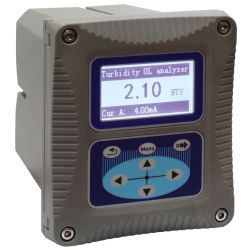 SUPMEA Turbidity Meters Model SUP-PTU200Special Price THB 24,800.00 Regular Price THB 31,000.00
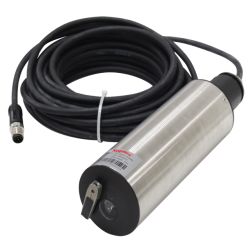 SUPMEA Turbidity Meters Model SUP-PTU-8011Special Price THB 67,040.00 Regular Price THB 83,800.00
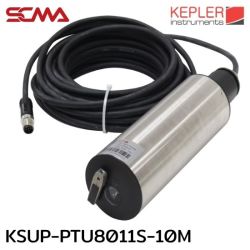 KSUP-PTU8011S-10M : 0.01~4000NTU, Cable TurbiditySpecial Price THB 67,040.00 Regular Price THB 83,800.00
Turbidity Meter (Turbidity Meter)
Water quality control in industrial production processes requires the use of a Turbidity meter, or turbidity meter, to accurately check the clarity of water. This equipment works with a turbidity sensor to measure the amount of suspended particles present in the water, which helps indicate the efficiency of the water treatment system and the final product quality, especially in food and beverage industries that require the highest cleanliness levels. The turbidity sensor is an essential tool for plant engineers.
What is a Turbidity Meter?
A turbidity meter (Turbidity Meter) is a scientific instrument used to measure the murkiness of liquids by measuring light scattering from small suspended particles such as sediment, soil, or microorganisms in water. The operation of a turbidity sensor measures the light that hits these particles, which is an important indicator of water quality during production processes. A turbidity sensor converts the measured light value into NTU (Nephelometric Turbidity Units), allowing users to clearly understand the level of contaminants in the water. This clarity measuring equipment is crucial for checking drinking and process water to ensure cleanliness, safety, and no impact on subsequent water treatment steps.
The Importance of a Turbidity Meter to Industry
The use of turbidity meters in industry plays a crucial role in controlling water quality to meet specified product standards. A turbidity meter helps prevent damage to machinery and pipelines from wear caused by suspended particles. Installing turbidity sensors at appropriate points can monitor the efficiency of wastewater treatment systems and maintain production process efficiency, such as filtration or heating and cooling processes. Turbidity sensors also provide assurance in the safety of water used in food and beverage industries. A clarity measuring device monitors real-time changes in water quality, allowing engineers to address issues promptly before severe damage occurs.
Types of Turbidity Meter
Turbidity meters available in the market can be categorized into several types based on their usage and installation location. Choosing the right type for your specific application will help ensure accurate measurements and a cost-effective investment. They are primarily divided into three main categories as follows:
- Portable Turbidity Meters (Handheld) These turbidity meters are designed for portability and ease of movement, making them ideal for field use or water quality checks at various points within a factory. The compact size, durability, and user-friendly design allow engineers to obtain immediate turbidity readings on-site without the need to bring samples back to the lab for analysis. They are suitable for wastewater treatment ponds or raw water sources.
- Benchtop Turbidity Meters (Tabletop) Turbidity meter This type emphasizes high accuracy and detailed analysis, commonly used in laboratories to check the quality of water samples collected from production processes. The unit supports more complex calibration functions compared to portable models and typically features highly sensitive turbidity sensors capable of detecting very small particles. They are ideal for industries requiring extremely clean water standards such as pharmaceuticals or beverages.
- In-line Turbidity Meters / Online Turbidity Sensors (Inline) These are turbidity sensors installed directly into production pipelines or tanks to continuously monitor turbidity levels. Data from the turbidity sensor is transmitted to a control room, allowing real-time tracking of water quality changes. They are suitable for wastewater treatment systems and production processes requiring automated control to minimize errors and reduce machine downtime.
Operation Principle of the Turbidity Meter
The basic operation of a turbidity meter relies on the physics of light to analyze the amount of particles in liquid. Understanding this principle helps users better diagnose problems that may occur during measurement. The steps involved are as follows:
- Light Emission & Scattering A turbidity meter starts by emitting a light beam (usually infrared) through the water sample. When this light hits suspended particles such as sediment or soil, it scatters in various directions. The turbidity meter uses this phenomenon to detect scattered light; the more particles there are, the more scattering occurs, which directly correlates with the water's turbidity.How turbidity meters work
- Detection & Conversion Photodetector (turbidity sensor) positioned at a 90-degree angle from the light beam detects the intensity of scattered light. The signal is then sent to electronic circuits for processing and conversion into turbidity values in NTU units (Nephelometric Turbidity Units). This Nephelometry technique allows turbidity sensors to accurately measure low turbidity levels, suitable for drinking water quality checks and industrial water use.What is a turbidity sensor
Initial Use and Maintenance to Extend Lifespan
To ensure that the turbidity meter operates accurately and has a long service life, proper maintenance should not be overlooked by repair engineers. Regular cleaning and calibration of the turbidity meter directly affect the reliability of data:
- Sample Preparation & Cleaning The sample container (Cuvette) should be rinsed with distilled water and dried with a microfiber cloth to avoid fingerprints or dirt on the glass surface that could obstruct light. Removing air bubbles from the water sample before testing is also important, as air bubbles can cause inaccurate readings.
- Calibration & Storage The turbidity sensor should be calibrated with a standard solution at least once a month or according to usage frequency, to ensure accuracy. Proper storage of the instrument and sensors in a clean and dry place helps prevent moisture buildup on lenses or sensors, extending their lifespan and reducing long-term maintenance costs. Turbidity Meters Selection Guide
All-inclusive Turbidity meter Solutions from SCMA for Every Industry
If you are looking for a suitable turbidity meter or turbidity sensor for your production line, SCMA is more than just a supplier. We have a team of expert engineers who provide consultation from selecting the right turbidity sensor to fit your specifications all the way through on-site installation system design. With offices in EEC (Chonburi) and the North (Lamphun), our team can quickly service or calibrate equipment, reducing downtime risks and enhancing production efficiency for your factory sustainably.View Our Products and Services
If you need consultation on turbidity meters or require an engineering team to assess the site urgently in EEC or the North, Contact SCMA experts immediately Our team is ready to serve for the continuity of your production.
This website uses cookies
We use cookies to make the site work properly, to understand how it is used, and to show content that is relevant to you. You choose which types to allow; strictly necessary cookies are always on. Privacy Policy
🤖 AI Assistant
Ask about products, specs and replacement models
Hello 👋 Ask us anything — find products, compare specs, or troubleshoot.
🗑 Clear history