
SPECIAL PROMOTION — Up to 40% off across many product groups, until 31 December 2026 · Click to see all promotion itemsIFM, Sensor, Automation SystemMeasuring / Testing InstrumentsTemp Indicator, Control, T/C, RTD, TimerHeater, SCR Control, Solid State, Power Supply, Control CabinetField Measuring Instruments, Pressure Gauge, Level Control, Flow MeasurementEMC, Pneumatic, Solenoid ValveInspection Test Lamp, Head Light, Automotive Measuring InstrumentWeighing Scales, Marking Machine, PrintersEducational Training SystemsHot Line Tools & Equipment SPECIAL PROMOTION — Up to 40% off across many product groups, until 31 December 2026 · Click to see all promotion itemsIFM, Sensor, Automation SystemMeasuring / Testing InstrumentsTemp Indicator, Control, T/C, RTD, TimerHeater, SCR Control, Solid State, Power Supply, Control CabinetField Measuring Instruments, Pressure Gauge, Level Control, Flow MeasurementEMC, Pneumatic, Solenoid ValveInspection Test Lamp, Head Light, Automotive Measuring InstrumentWeighing Scales, Marking Machine, PrintersEducational Training SystemsHot Line Tools & Equipment View promotion items View all
Oscilloscopes
Oscilloscopes What Are Oscilloscopes?
Oscilloscopes are measurement instruments that display electrical signal graphs. They have a vertical axis (Y) representing voltage, a horizontal axis (X) representing time, and a Z axis representing intensity or brightness on the screen. Oscilloscopes are used to measure voltage values relative to time intervals.
Types of Oscilloscopes
- Cathode-ray Oscilloscope (OCR) is one of the earliest types and easiest to use, consisting of a cathode ray tube, vertical amplifier, time base, horizontal amplifier, and power supply.
- Dual-beam Oscilloscope is an analog dual beam type that can display two signals simultaneously by using specially designed dual tubes with separate deflection of the beams.
- Digital Oscilloscope uses an Analog-to-Digital Converter (ADC) to convert measured voltage into digital data.
- Mixed-Signal Oscilloscopes (MSO) are mixed signal types with two input categories: a few analog channels and many more digital channels.
- Mixed-domain oscilloscopes (MDO) are hybrid domain types with three input categories: a few analog channels, many more digital channels, and one RF channel. They can accurately synchronize analog, digital, and RF signals with time.
- Handheld oscilloscopes are portable devices suitable for field testing and use.
- PC-based oscilloscopes connect via USB or LAN to separate computers or laptops.
Oscilloscope Waveforms
- Sine Wave is a curved waveform.
- Square Wave is a rectangular waveform.
- Sawtooth Wave is a sawtooth waveform.
- Triangle Wave is an upright triangular waveform.
- Pulse Wave is a rectangular pulse waveform.
View Oscilloscopes Catalog : Click Here
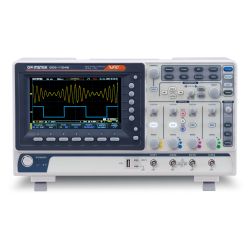 GW INSTEK GDS-1072B Digital Storage OscilloscopeSpecial Price THB 13,875.00 Regular Price THB 18,500.00
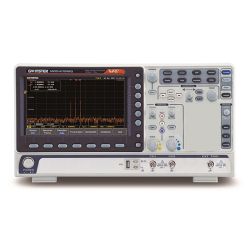 MDO-2102EG GW instek Digital Storage Oscilloscope Mixed-signal OscilloscopesSpecial Price THB 58,400.00 Regular Price THB 73,000.00
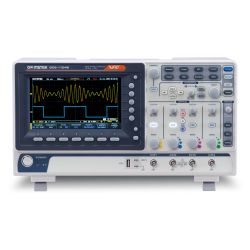 GW INSTEK GDS-1104B Digital Storage OscilloscopeSpecial Price THB 30,960.00 Regular Price THB 38,700.00
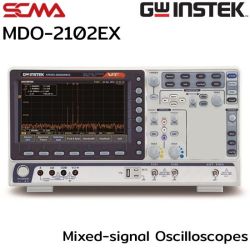 MDO-2102EX GW instek Digital Storage Oscilloscope Mixed-signal OscilloscopesSpecial Price THB 64,880.00 Regular Price THB 81,100.00
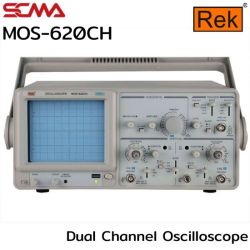 MOS-620CH Dual Channel Oscilloscope 20M Analog OscilloscopeSpecial Price THB 16,880.00 Regular Price THB 21,100.00
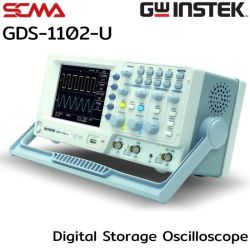 GDS-1102-U GW instek Digital Storage OscilloscopeSpecial Price THB 19,888.00 Regular Price THB 24,860.00
Delivery: 30 ต.ค. 2569
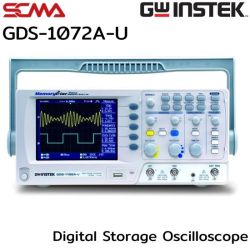 GDS-1072A-U GW instek Digital Storage OscilloscopeSpecial Price THB 16,368.00 Regular Price THB 20,460.00
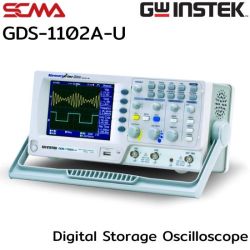 GW INSTEK GDS-1102A-U Digital Storage OscilloscopeSpecial Price THB 18,744.00 Regular Price THB 23,430.00
Delivery: 30 ต.ค. 2569
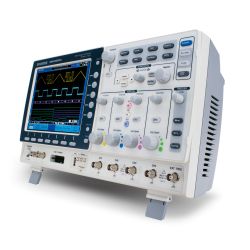 GW INSTEK GDS-2204A Digital Storage OscilloscopeSpecial Price THB 122,250.00 Regular Price THB 163,000.00
Delivery: 30 ต.ค. 2569
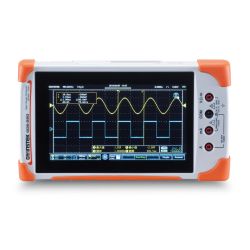 GDS-207 GW instek Handheld Digital OscilloscopeSpecial Price THB 54,960.00 Regular Price THB 68,700.00
Delivery: 30 ต.ค. 2569
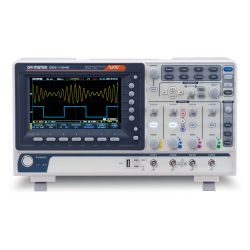 GW INSTEK GDS-1102B Digital Storage OscilloscopeSpecial Price THB 18,375.00 Regular Price THB 24,500.00
Delivery: 30 ต.ค. 2569
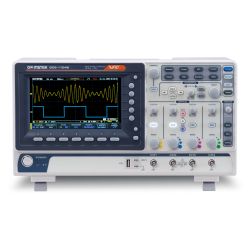 GW INSTEK GDS-1074B Digital Storage OscilloscopeSpecial Price THB 37,200.00 Regular Price THB 46,500.00
Delivery: 30 ต.ค. 2569
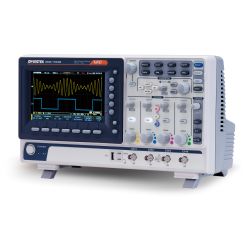 GW INSTEK GDS-1054B Digital Storage OscilloscopeSpecial Price THB 18,720.00 Regular Price THB 23,400.00
Delivery: 30 ต.ค. 2569
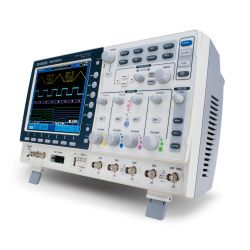 GW instek GDS-2074A Digital Storage OscilloscopesSpecial Price THB 51,040.00 Regular Price THB 63,800.00
Delivery: 30 ต.ค. 2569
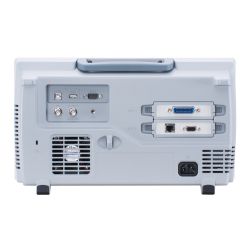 GW INSTEK GDS-2102A Digital Storage OscilloscopeSpecial Price THB 84,000.00 Regular Price THB 105,000.00
Delivery: 30 ต.ค. 2569
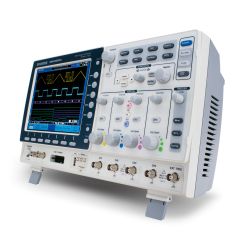 GDS-2104A GW instek Digital Storage OscilloscopeSpecial Price THB 108,000.00 Regular Price THB 144,000.00
Delivery: 30 ต.ค. 2569
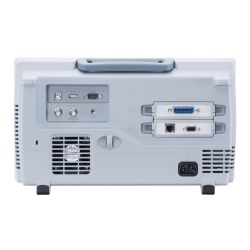 GDS-2202A GW instek Digital Storage Oscilloscope Digital Storage OscilloscopesSpecial Price THB 111,200.00 Regular Price THB 139,000.00
Delivery: 30 ต.ค. 2569
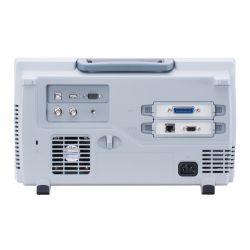 GW INSTEK GDS-2302A Digital Storage OscilloscopeSpecial Price THB 154,400.00 Regular Price THB 193,000.00
Delivery: 30 ต.ค. 2569
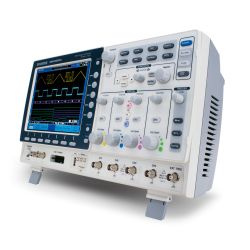 GDS-2304A GW instek Digital Storage Oscilloscope Digital Storage OscilloscopesSpecial Price THB 171,000.00 Regular Price THB 228,000.00
Delivery: 30 ต.ค. 2569
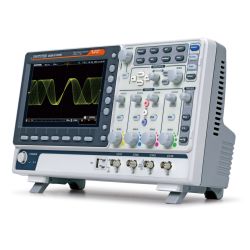 GW INSTEK GDS-2204E Digital Storage OscilloscopeSpecial Price THB 90,800.00 Regular Price THB 113,500.00
Delivery: 30 ต.ค. 2569
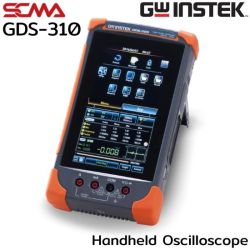 GDS-310 GW instek Handheld Digital OscilloscopeSpecial Price THB 48,560.00 Regular Price THB 60,700.00
Delivery: 30 ต.ค. 2569
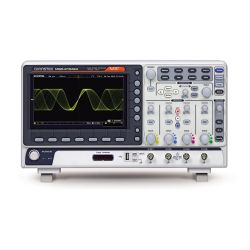 MSO-2072EA GW Instek Mixed-signal OscilloscopesSpecial Price THB 39,360.00 Regular Price THB 49,200.00
Delivery: 30 ต.ค. 2569
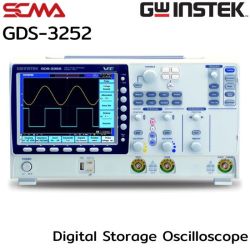 GDS-3252 GW instek Digital Storage Oscilloscope Digital Storage OscilloscopesSpecial Price THB 79,200.00 Regular Price THB 99,000.00
Delivery: 30 ต.ค. 2569
What is an Oscilloscope? How to Use and Choose One
What is an oscilloscope, and why can't professional engineers or electronics technicians do without this tool? An oscilloscope, also known as an oscilloscope or osiloskop, acts like the eyes of a technician to see the behavior of electrical signals that change over time, which ordinary multimeters cannot display. This article will take you through a deep understanding of how an oscilloscope works, what types there are, and how to choose one for the best value, along with basic usage techniques. If you are looking for experts to consult on measuring equipment or need engineering solutions, please see our serviceshere.
What is an Oscilloscope?
An oscilloscope (Oscilloscope) or simply called a scope, is one of the most important electronic measuring tools. It displays the waveform of electrical signals (Waveform), with the vertical axis (Y-axis) showing voltage (Voltage) and the horizontal axis (X-axis) showing time (Time). This graphical representation helps users analyze circuit behavior in detail, whether it's noise, signal distortion, or changing frequency, which numbers on a multimeter screen cannot tell. Understanding what an oscilloscope is thus marks the first step towards becoming a professional technician.
Basic Working Principle (Easy to Understand Version)
The working principle of an oscilloscope starts with receiving electrical signals through probes into the device. For digital oscilloscopes, analog signals are converted into digital data via ADC (Analog-to-Digital Converter) circuits. Then, the processor uses this data to create image points on the display screen, connecting them to form continuous graph lines called traces. Users can adjust Timebase settings to stretch or compress graphs horizontally and Volts/Div settings to expand or reduce vertical size, allowing for clear inspection of signals occurring at microsecond or nanosecond levels.
Benefits of Oscilloscopes in Electronics and Automotive Work
In electronics work, oscilloscopes are used for circuit design and debugging, such as monitoring microcontroller operation, checking clock pulses (Clock Pulse), or observing power supply ripple. In automotive work, modern automotive scopes are now being used to check signals from various sensors in cars, like crankshaft position sensors (Crankshaft Position Sensor) or fuel injectors, which help diagnose engine issues more accurately than using code scanners alone. Learn more about oscilloscopeshere.
What Can an Oscilloscope Measure?
The capabilities of an oscilloscope are extensive, covering a wide range of electrical parameter measurements. It's not just about viewing waveforms but also calculating various values automatically, which helps engineers save time in data analysis.
Voltage Measurement and Waveform
The most basic function is voltage measurement, including maximum-minimum voltage (Vmax, Vmin), peak-to-peak voltage (Vpp), and average voltage (Vavg). Viewing the waveform helps determine if the signal is a sine wave, square wave, or triangle wave, and whether there are abnormalities such as clipped peaks.
Frequency Measurement and Period
The oscilloscope provides more accurate frequency measurement than general multimeters, especially for complex signals. It can measure the period of one cycle and instantly calculate the frequency (Hz). Additionally, it can measure the duty cycle of PWM signals (Pulse Width Modulation), which is crucial in motor control and switching circuits.
Digital Signal Analysis and Noise Detection
In digital circuits, observing rising edges and falling edges of signals is important to check for delays. The oscilloscope is also the best tool for detecting noise embedded in power systems that may cause equipment malfunctions. Some people confuse it with an electroscope, which measures static electricity, whereas an oscilloscope measures time-varying signals. Read more about oscilloscopes here.
Types of Oscilloscopes: How Many Are There and What Are the Differences?
The market offers various types of oscilloscopes to suit different needs and budgets. Understanding these types can help you make a better purchasing decision.
Analog Oscilloscope
Analogue oscilloscopes use cathode-ray tubes (CRT) for display, offering real-time signal representation without processing delays and high image resolution. They are suitable for viewing complex or video signals but are large, heavy, cannot record screen images or perform automatic data analysis, and are increasingly difficult to find.
Digital Storage Oscilloscope (DSO)
Currently the most popular type, digital oscilloscopes convert signals into digital data stored in memory. This allows for image freezing, USB data logging, and automatic value measurements. They are more flexible, smaller than analog models, and feature advanced analysis tools like FFT (Fast Fourier Transform).
Benchtop vs Handheld
Benchtop oscilloscopes are ideal for lab or workbench use with large screens, good heat dissipation, and higher specifications. Handheld or scope meters combine the functions of an oscilloscope and multimeter, run on internal batteries, and are suitable for field service where climbing or accessing areas without power outlets is necessary.
How to Choose the Right Oscilloscope for Your Work (Buying Guide)
Choosing an oscilloscope involves considering several technical specifications to ensure that you get your money's worth and meet future work requirements.
Bandwidth: The Most Important Specification
Bandwidth is the highest frequency a device can measure accurately. A general rule of thumb is to choose an oscilloscope with at least five times the bandwidth of the signal's maximum frequency you want to measure, such as selecting one with 100MHz or higher for measuring a 20MHz signal to ensure waveform accuracy and avoid distortion.
Sample Rate: The Speed of Sampling
Sample rate is the number of times per second that the device reads the signal, measured in Samples per Second (S/s). A higher value allows for better capture of rapidly changing signals. It's recommended to focus on Real-time Sample Rate.
The Number of Channels Needed
For basic work, a two-channel oscilloscope (2 Channels) is sufficient. However, for analyzing three-phase systems or complex digital circuits, a four-channel or higher model may be necessary to compare multiple points simultaneously.
Memory Depth and Additional Features to Look For
Memory depth indicates the length of signal that can be recorded. The more memory, the longer you can review signals at high resolution in the past. Additionally, consider features such as PC connectivity, touch screen, or Serial Bus (I2C, SPI, UART) decoding if needed.
Recommended Oscilloscopes for Beginners and Specialized Work
Whether you are a beginner or professional, choosing the right tool for your level of work will help ensure smooth operation.
Recommended Models for Hobbyists
For beginners or students, entry-level digital oscilloscopes with a bandwidth of 50-100MHz and affordable prices are sufficient for learning and working on Arduino projects or basic circuits. Alternatively, consider used oscilloscopes in good condition to save money.
Recommended Models for Mobile/Computer Repair Work
High-resolution signal capture is required for motherboard repairs, so choose models with a Low Noise Floor and bandwidth of 100-200MHz or higher to clearly check clock signals and data lines.
Recommended Models for Automotive Work
For auto repair shops, it is recommended to use a durable automotive oscilloscope designed for shop environments with built-in batteries and trigger systems that support ignition or injector signals. See all our measuring tools here.
Basic Usage of Oscilloscope (Step-by-Step)
Using an oscilloscope may seem complex for beginners, but understanding the three main control sections can make it quite manageable.
Basic Settings: Vertical, Horizontal, Trigger
- Vertical (Y-axis): Adjust the Volts/Div button to expand or reduce the height of the wave to fit the screen.
- Horizontal (X-axis): Adjust the Sec/Div button to stretch or compress waves horizontally to view desired time intervals.
- Trigger: This is a crucial part that stabilizes the image. Adjust the Trigger Level within the signal's height range to lock the image for easy analysis.
Proper and Safe Use of Probes (Probe)
Before use, perform Probe Compensation by clipping the probe onto the test point (Probe Comp) on the instrument, then adjust the probe's capacitor until a perfect square wave is displayed (right angles, no rounded corners). Don't forget to check the probe ratio (e.g., 1x or 10x) and ensure it matches the instrument settings.
Tips for Reading Values from the Display Screen
Values can be read by counting divisions and multiplying by the set value (Volts/Div or Sec/Div) or using the automatic Measure function in modern digital oscilloscopes, which will display Vpp, Frequency, Period automatically on the screen.
If you are looking for an Oscilloscope, think SCMA!
Choosing a complex measuring tool like an oscilloscope requires confidence in both product quality and after-sales service. At SCMA, we are industrial measurement equipment experts ready to advise and provide products that meet your scope needs precisely, whether for maintenance, production, or education. We have a team of engineers dedicated to recommending the best value models. You can visit our websitehere.
Summary
An oscilloscope is an essential tool for analyzing and troubleshooting electrical and electronic systems. Understanding its operation and selecting the right device can significantly enhance a technician's or engineer's capabilities. We hope this article helps you understand what an oscilloscope is and how to confidently choose one. For more information or to place an order, contact SCMA immediately.
Frequently Asked Questions
What is the difference between an Oscilloscope and a Multimeter?
A multimeter displays values in numbers (such as average voltage or RMS) and is suitable for measuring steady or slowly changing values. On the other hand, an oscilloscope displays waveforms graphically, allowing you to see rapid changes, noise signals, and signal shapes. Learn more about the differenceshere.
How often should calibration be performed?
For maximum accuracy, it is recommended to send for calibration at least once a year, especially in industries that require ISO certification. However, for general use, you may calibrate when you notice inaccuracies or every two years.
Additional Learning Resources
You can find additional information from the user manual of the device, instructional videos on YouTube, or technical articles from the manufacturer's website. You can also follow good articles at the SCMA blog.
This website uses cookies
We use cookies to make the site work properly, to understand how it is used, and to show content that is relevant to you. You choose which types to allow; strictly necessary cookies are always on. Privacy Policy
🤖 AI Assistant
Ask about products, specs and replacement models
Hello 👋 Ask us anything — find products, compare specs, or troubleshoot.
🗑 Clear history