
SPECIAL PROMOTION — Up to 40% off across many product groups, until 31 December 2026 · Click to see all promotion itemsIFM, Sensor, Automation SystemMeasuring / Testing InstrumentsTemp Indicator, Control, T/C, RTD, TimerHeater, SCR Control, Solid State, Power Supply, Control CabinetField Measuring Instruments, Pressure Gauge, Level Control, Flow MeasurementEMC, Pneumatic, Solenoid ValveInspection Test Lamp, Head Light, Automotive Measuring InstrumentWeighing Scales, Marking Machine, PrintersEducational Training SystemsHot Line Tools & Equipment SPECIAL PROMOTION — Up to 40% off across many product groups, until 31 December 2026 · Click to see all promotion itemsIFM, Sensor, Automation SystemMeasuring / Testing InstrumentsTemp Indicator, Control, T/C, RTD, TimerHeater, SCR Control, Solid State, Power Supply, Control CabinetField Measuring Instruments, Pressure Gauge, Level Control, Flow MeasurementEMC, Pneumatic, Solenoid ValveInspection Test Lamp, Head Light, Automotive Measuring InstrumentWeighing Scales, Marking Machine, PrintersEducational Training SystemsHot Line Tools & Equipment View promotion items View all
Temperature & Humidity Sensor
What is a Temperature & Humidity Sensor?
A temperature and humidity sensor is an instrument used to measure and record the temperature and humidity in the environment. There are various types, each with different features and applications.
Types of Temperature & Humidity Sensors
- Digital Sensors read values accurately and transmit data as digital signals, making it easy to connect them to microcontrollers or computers. Examples include DHT11, DHT22.
- Analog Sensors output analog signals which require signal conversion before use. An example is the LM35.
- Wireless Sensors transmit data via wireless signals such as Wi-Fi or Bluetooth, suitable for hard-to-reach areas.
How to Choose a Temperature & Humidity Sensor
- Accuracy is crucial because the sensor must be precise, especially in high-detail applications such as medical research or agriculture.
- Measurement Range check if the sensor's measurement range covers the required values.
- Durability for use in harsh environments, like industries or farms.
- Installation and Connectivity ensure that the sensor can be easily installed and connected to existing systems.
- Applications of Temperature & Humidity Sensors
- Agriculture for controlling environmental conditions in greenhouses, promoting plant growth.
- Medical for maintaining temperature and humidity levels in laboratories and patient rooms.
- Industry for monitoring and controlling environmental conditions during production processes.
- Home Use to control indoor environments, enhancing comfort and health for residents.
View the Temperature & Humidity Sensor Catalog : Click Here
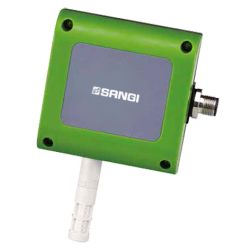 Temperature & Humidity transmitter Model : SHS301-T381H001-DNPU/Temperature : 0 ... 80?CSpecial Price THB 9,760.00 Regular Price THB 12,200.00
Temperature Humidity Sensor Type, Functionality, How to Choose
The Temperature Humidity Sensor is an essential and important device in today's era. Whether it’s for smart home applications, agriculture, or industries, if you are wondering what a humidity sensor is and how it differs from general humidity sensors, this article delves into all the details, starting from basics to selecting the right temperature & humidity meter that suits your needs, ensuring accurate and highly efficient measurements.
What is a Temperature Humidity Sensor?
A Temperature Humidity Sensor or as it's commonly referred to, the temperature and humidity sensor, is an electronic device designed to measure both temperature and moisture (humidity) levels in the air simultaneously within one module. It usually outputs digital or analog readings for control systems to use further. This equipment acts like a nose and skin of automated systems, constantly monitoring environmental conditions to ensure they remain optimal. In the market, such devices may also be called temperature humidity meters or humidity and temperature monitors.
Definition and Meaning of Temperature Humidity Sensor
If we delve deeper into what a temperature humidity sensor is, it involves combining a temperature sensing head (such as Thermistor) with a moisture detection element on the same chip or board, allowing simultaneous reading of both parameters. This saves space and simplifies installation compared to separate sensors. In heavy industries, they may use temperature & humidity transmitter sensors or temperature humidity transmitters which are more durable and can transmit signals over longer distances.
The Importance in Everyday Life and Industrial Environmental Control
Using a moisture sensor is crucial for maintaining the quality of products and equipment, such as:
- Medicine and Vaccine Storage: Strict temperature and humidity control is necessary.
- Warehouses and Food Industry: Air moisture sensors help prevent mold growth and spoilage of raw materials.
- Data Center Server Rooms: Using humidity and temperature monitors helps prevent static electricity (when air is too dry) and short circuits (when air is too humid).
Behind-the-Scenes Functionality of Temperature Humidity Sensors
To understand what a relative humidity measuring tool is and how it works, one must comprehend the internal mechanisms that convert physical environmental conditions into electrical signals. These sensors work by detecting changes in material properties when exposed to heat or moisture.
Temperature Measurement Principles (Thermistor, RTD)
For temperature measurement, thermistors (Thermistor) or RTDs (Resistance Temperature Detector) are commonly used. These materials have electrical resistance properties that change with temperature variations.
- NTC (Negative Temperature Coefficient): As the temperature increases, resistance decreases. This is commonly used in general sensors.
- RTD: Offers higher accuracy and is often used in industrial applications.
Mechanism of Humidity Measurement (Capacitive vs. Resistive)
For humidity sensors, the working principle can be divided into two main types:
- Capacitive Humidity Sensor: Measures changes in capacitance of a dielectric plate when moisture is absorbed. This method offers high accuracy and quick response, commonly used in quality temperature humidity sensors.
- Resistive Humidity Sensor: Measures changes in electrical resistance of polymer materials when moisture is present. This method is cheaper but may be less accurate than capacitive.
Learn more about the working principles of sensors at What is a humidity sensor
Types of Temperature Humidity Sensors You Should Know About
There are various types of humidity sensors available in the market, categorized by signal type and application.
Categorized by Signal Type (Analog vs. Digital)
- Analog Sensor: Outputs voltage that varies with humidity and temperature, requiring an analog-to-digital converter to read the values.
- Digital Sensor: Has built-in signal conversion circuitry, sending out digital data for easy use and high accuracy, reducing noise interference.
Categorized by Connection Type (I2C, SPI, 1-Wire)
Connection type is a crucial factor in choosing to work with microcontrollers:
- 1-Wire: Uses just one signal line, such as DHT series sensors.
- I2C (Inter-Integrated Circuit): Uses two lines (SDA, SCL) to connect multiple devices. Popular in modern sensors like SHT31, BME280.
- SPI: Communicates quickly but may use more lines.
Specialized Sensors (Industrial Grade, DIY Projects)
- Consumer Grade: For DIY projects and smart homes at affordable prices.
- Industrial Grade: Or temperature humidity transmitter designed to withstand dust, water, and chemicals. Often have output signals of 4-20mA or RS485 for heavy-duty use. Sometimes oil humidity sensors are found specifically for measuring moisture in machinery oils.
How to Choose the Right Temperature Humidity Sensor for Your Needs
Choosing the right temperature and humidity sensor will ensure accurate data collection and cost savings. Consider these factors:
Accuracy (Accuracy) and Resolution
For general use, ±2-5% RH deviation may be acceptable, but for labs or medicine storage, ±1-2% RH accuracy is required.
Operating Range of Temperature and Humidity
Check the humidity sensor specifications to ensure it can operate within your desired temperature range, especially for cold rooms or ovens.
Response Time
This is the time a sensor takes to read changing values. If environmental conditions change rapidly, choose sensors with low response times.
Size and Installation
For limited installation spaces, module size matters. For outdoor installations, opt for waterproof models.
Budget and Price
Sensor prices vary based on accuracy and durability. For initial projects, affordable sensors may suffice, but for critical work, investing in high-quality humidity measuring tools is worthwhile. Read more buying advice at Temperature /Humidity Sensor - What are they, types and how to choose?
Real-world Applications in Various Fields
Temperature humidity sensors are used across various industries and daily life:
Home and Smart Home Use
Used with air conditioning or air purifiers to control moisture levels for comfortable living, reducing allergies and preventing mold.
Agricultural Use (Greenhouses, Smart Farms)
Air humidity sensors help manage watering and ventilation systems in greenhouses for optimal plant growth.
Industrial Use (Warehouses, Server Rooms, Production Lines)
Used to monitor environmental conditions in electronic component production lines or moisture-sensitive warehouses.
Recommended Temperature Humidity Sensor Models
Models for Beginners and DIY Projects (DHT11, DHT22)
Popular models at affordable prices, easy to use with Arduino but may not be highly accurate. Suitable for learning.
Models for High Accuracy Requirements (SHT31, BME280)
Offer precise and stable readings, communicate via I2C suitable for weather stations or smart homes.
Industrial Models
Often come in temperature humidity transmitter form or industrial transmitters with robust structures, durable under harsh conditions. View product details at Temperature Humidity Sensor Products
When Looking for Temperature Humidity Sensors, Think SCMA!
If you're looking for high-quality temperature humidity sensors or industrial transmitters with accuracy, durability, and reliability, SCMA offers a wide range of models to meet every need from general use to heavy-duty industries. Our team of expert engineers is ready to provide advice on selecting the most suitable temperature humidity sensors. Browse all products at All Products
Summary
Choosing the right temperature humidity sensor is key to controlling quality and efficiency in work. Whether it's for small projects or industrial-grade humidity sensors, understanding functionality and types will help make informed decisions. For more insights, consult SCMA experts anytime or view services at SCMA Services
Frequently Asked Questions
Do Sensors Need Calibration?
For general use, factory settings are usually sufficient. However, for high-precision work, calibration is necessary to confirm the accuracy of readings.
How Long Do Sensors Last?
Depends on usage environment; lifespan may shorten in dusty or corrosive chemical environments. Generally, quality sensors last several years.
How to Read Values from a Sensor with Arduino or Raspberry Pi
Connect the data pin to the microcontroller board and use libraries specific to your sensor model (such as DHT Library, Adafruit Sensor Library, KEPLER) to read temperature and humidity values. Learn more about Thermometer and Hygrometer at What is Thermometer Hygrometer
Additional References: Veris Industries - What is a Humidity Sensor
This website uses cookies
We use cookies to make the site work properly, to understand how it is used, and to show content that is relevant to you. You choose which types to allow; strictly necessary cookies are always on. Privacy Policy
🤖 AI Assistant
Ask about products, specs and replacement models
Hello 👋 Ask us anything — find products, compare specs, or troubleshoot.
🗑 Clear history