
SPECIAL PROMOTION — Up to 40% off across many product groups, until 31 December 2026 · Click to see all promotion itemsIFM, Sensor, Automation SystemMeasuring / Testing InstrumentsTemp Indicator, Control, T/C, RTD, TimerHeater, SCR Control, Solid State, Power Supply, Control CabinetField Measuring Instruments, Pressure Gauge, Level Control, Flow MeasurementEMC, Pneumatic, Solenoid ValveInspection Test Lamp, Head Light, Automotive Measuring InstrumentWeighing Scales, Marking Machine, PrintersEducational Training SystemsHot Line Tools & Equipment SPECIAL PROMOTION — Up to 40% off across many product groups, until 31 December 2026 · Click to see all promotion itemsIFM, Sensor, Automation SystemMeasuring / Testing InstrumentsTemp Indicator, Control, T/C, RTD, TimerHeater, SCR Control, Solid State, Power Supply, Control CabinetField Measuring Instruments, Pressure Gauge, Level Control, Flow MeasurementEMC, Pneumatic, Solenoid ValveInspection Test Lamp, Head Light, Automotive Measuring InstrumentWeighing Scales, Marking Machine, PrintersEducational Training SystemsHot Line Tools & Equipment View promotion items View all
Thermocouple
What is a Thermocouple?
A thermocouple is an instrument used to measure temperature by converting analog voltage signals into digital signals in relation to the measured temperature. The principle behind it works as follows:
- A thermocouple consists of two different metal wires, such as stainless steel and nickel. When these metals are connected at one point, a voltage is generated due to the difference in temperature.
- The measurement of voltage occurs when there is a temperature difference between the measuring point (connection point) and other parts of the wire, resulting in a small voltage that can be measured using a voltmeter.
- The conversion of voltage into temperature involves calculating or referencing charts derived from testing and material standards to convert the measured voltage into a temperature value.
|
|
|
|
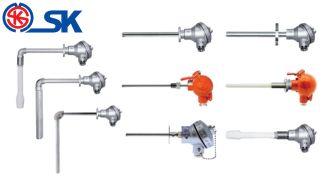
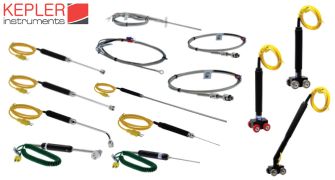
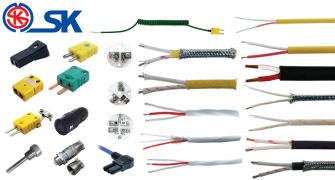
Types of Thermocouples
- Type K thermocouples are made from nickel-chromium (Nickel-Chromium) and nickel-aluminum (Nickel-Aluminium). They have a temperature range of -200°C to 1260°C for general and high-temperature measurements.
- Type J thermocouples consist of iron (Iron) and iron-constantan (Iron-Constantan), with a temperature range of -40°C to 750°C, suitable for measuring temperatures in the low to mid-range.
- Type T thermocouples are made from copper (Copper) and copper-nickel (Copper-Nickel). They have a temperature range of -200°C to 350°C, ideal for measuring low-temperature ranges.
- Type E thermocouples consist of nickel-chromium (Nickel-Chromium) and nickel-copper (Nickel-Copper), with a temperature range of -200°C to 900°C. They provide highly accurate measurements.
- Type N thermocouples are made from nickel-chromium-silicon (Nickel-Chromium-Silicon) and nickel-silicon (Nickel-Silicon). They have a temperature range of -200°C to 1300°C, suitable for high-temperature measurement in harsh environments.
- Type R, S, B thermocouples use platinum (Platinum) as the primary material. They support high-temperature measurements up to 1700°C and are ideal for precise high-temperature applications.
Industries Using Thermocouples
Thermocouples are widely used across various industries to control temperatures as required:
- Mfg. Industry
- Food & Beverage Industry
- Energy Industry
- Bldg. Automation Industry
- Water Treatment & Environmental Management
Prominent Thermocouple Brands
- Fluke, a leading American company in electronic measurement tools including thermocouples.
- Honeywell offers various products for measurement and control, including highly accurate thermocouples.
- National Instruments produces high-quality electronic measurement and testing equipment, suitable for laboratory use.
- KEPLER INSTRUMENTS provides a range of reliable and high-quality products.
- ThermoWorks specializes in producing versatile temperature and humidity measuring tools, including thermocouples.
View Thermocouple Catalog: Click Here
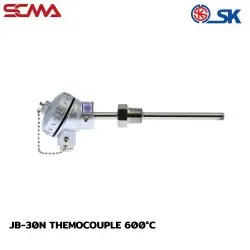 JB-30N THEMOCOUPLE 600°C อุณหภูมิสูงสุด SKราคาโปรดติดต่อเจ้าหน้าที่
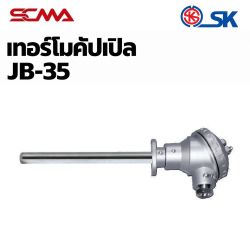 JB-35 THEMOCOUPLE 1,200°C อุณหภูมิสูงสุด SKราคาโปรดติดต่อเจ้าหน้าที่
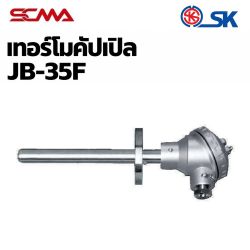 JB-35F THEMOCOUPLE 1,200°C อุณหภูมิสูงสุด SKSpecial Price THB 2,250.00 Regular Price THB 3,000.00
Delivery: 30 ต.ค. 2569
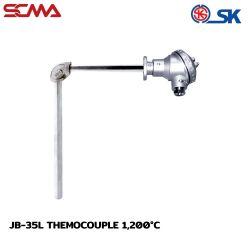 JB-35L THEMOCOUPLE ตัวแอลอุณหภูมิสูงสุด 1,200°C SKราคาโปรดติดต่อเจ้าหน้าที่
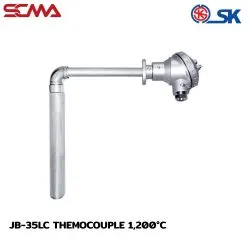 JB-35LC THEMOCOUPLE ตัวแอลปลอก 2 ชั้นอุณหภูมิสูงสุด 1,200°C SKราคาโปรดติดต่อเจ้าหน้าที่
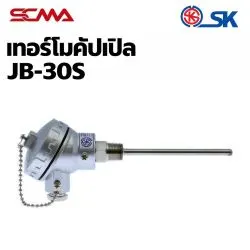 JB-30S THEMOCOUPLE 600°C อุณหภูมิสูงสุด SKSpecial Price THB 637.50 Regular Price THB 850.00
Delivery: 30 ต.ค. 2569
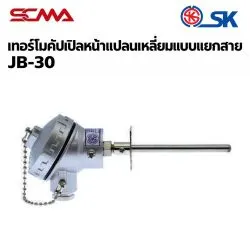 JB-30 THEMOCOUPLE หน้าแปลนเหลี่ยมแบบแยกสาย SKราคาโปรดติดต่อเจ้าหน้าที่
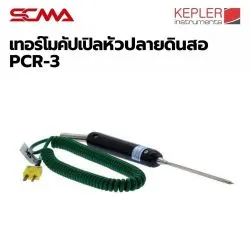 PCR-3 THEMOCOUPLE หัวปลายดินสอ KEPLERSpecial Price THB 1,650.00 Regular Price THB 2,200.00
Delivery: 30 ต.ค. 2569
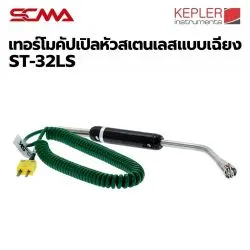 ST-32LS THEMOCOUPLE หัวสเตนเลสแบบเฉียง KEPLERราคาโปรดติดต่อเจ้าหน้าที่
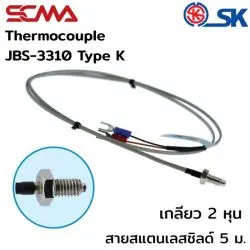 JBS-3310 2 BA 5M Type K(CA) SK ThermocoupleSpecial Price THB 320.00 Regular Price THB 400.00
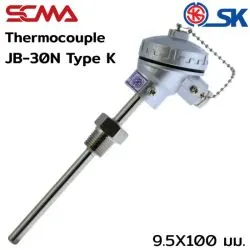 JB-30N 9.5X100mm 1/2" NPT Type K ThermocoupleSpecial Price THB 704.00 Regular Price THB 880.00
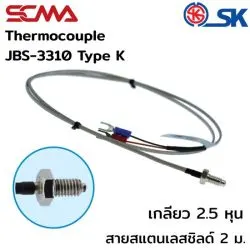 JBS-3310 Thread 2.5 UNF Stainless Steel Shielded 2M Type K(CA) SK ThermocoupleSpecial Price THB 216.00 Regular Price THB 270.00
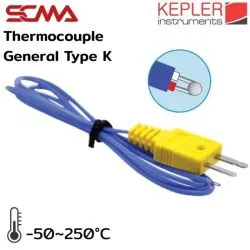 KTP-03G KEPLER Thermocouple TYPE K (CA) Ø0.3 mmSpecial Price THB 352.00 Regular Price THB 440.00
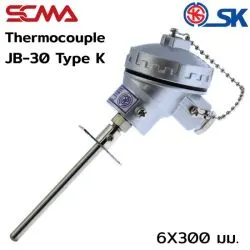 JB-30 6X300 mm Type K ThermocoupleSpecial Price THB 520.00 Regular Price THB 650.00
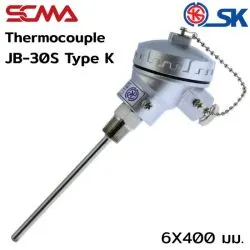 JB-30S 6X400 mm 3/8" NPT Type K(CA) ThermocoupleSpecial Price THB 680.00 Regular Price THB 850.00
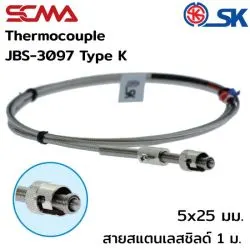 JBS-3097 5x25 mm Stainless Steel Shielded Thermocouple 1M Type K(CA) SKSpecial Price THB 328.00 Regular Price THB 410.00
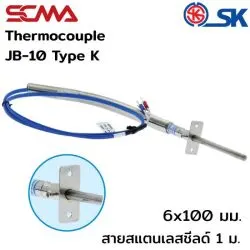 JB-10 6x100 mm Stainless Steel Shielded Thermocouple 1M Type K(CA) SKSpecial Price THB 312.00 Regular Price THB 390.00
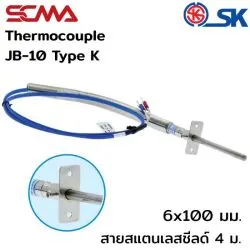 JB-10 6x100 mm Stainless Steel Shielded Thermocouple Type K(CA) SKSpecial Price THB 552.00 Regular Price THB 690.00
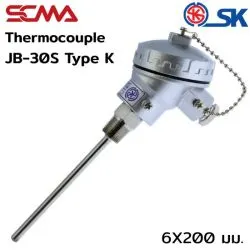 JB-30S 6X200 mm 3/8" NPT Type K(CA) ThermocoupleSpecial Price THB 616.00 Regular Price THB 770.00
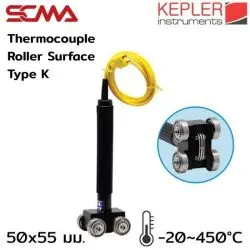 KTP-64 KEPLER Thermocouple TYPE K (CA) 50x55 mm.Special Price THB 3,696.00 Regular Price THB 4,620.00
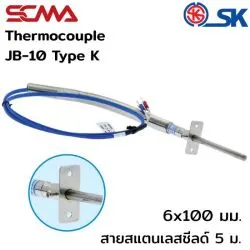 JB-10 6x100 mm Stainless Steel Shielded Thermocouple 5M Type K(CA) SKSpecial Price THB 632.00 Regular Price THB 790.00
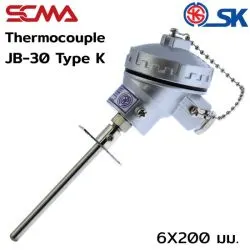 JB-30 6X200 mm Type K ThermocoupleSpecial Price THB 488.00 Regular Price THB 610.00
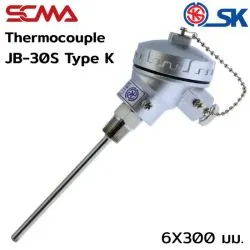 JB-30S 6X300 mm 3/8" NPT Type K(CA) ThermocoupleSpecial Price THB 648.00 Regular Price THB 810.00
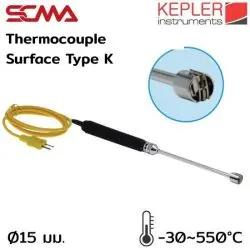 KTP-44 KEPLER Thermocouple TYPE K CA Ø15 mm 100 mmSpecial Price THB 1,672.00 Regular Price THB 2,090.00
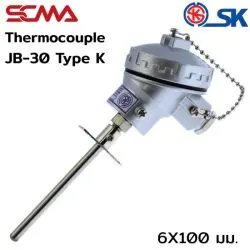 JB-30 6X100 mm Type K ThermocoupleSpecial Price THB 456.00 Regular Price THB 570.00
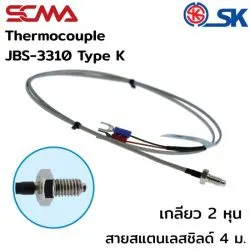 JBS-3310 2 BA 4M Type K(CA) SK ThermocoupleSpecial Price THB 272.00 Regular Price THB 340.00
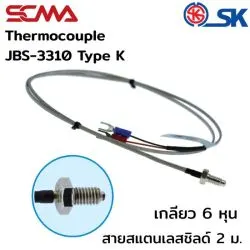 JBS-3310 M6 Stainless Steel Shielded Thermocouple Cable 2M Type K(CA) SK ThermocoupleSpecial Price THB 488.00 Regular Price THB 610.00
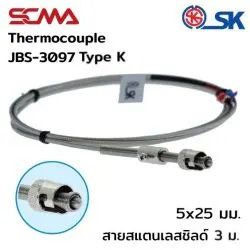 JBS-3097 5x25 mm Stainless Steel Shielded Thermocouple Type K(CA) SKSpecial Price THB 424.00 Regular Price THB 530.00
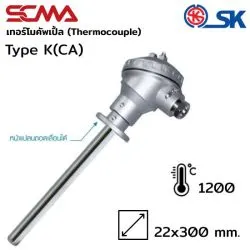 JB-35 SK Thermocouple 22X300 mm Type K(CA)Special Price THB 1,168.00 Regular Price THB 1,460.00
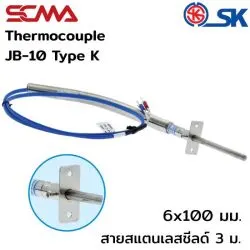 JB-10 6x100 mm Stainless Steel Shielded Thermocouple 3M Type K(CA) SKSpecial Price THB 472.00 Regular Price THB 590.00
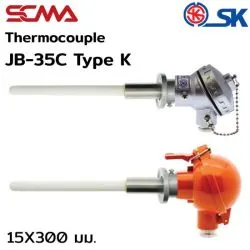 JB-35C 15X300mm Type K ThermocoupleSpecial Price THB 1,920.00 Regular Price THB 2,400.00
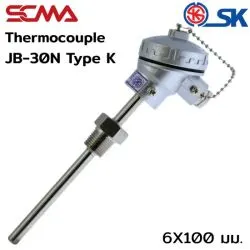 JB-30N 6X100 mm 3/8" NPT Type K ThermocoupleSpecial Price THB 672.00 Regular Price THB 840.00
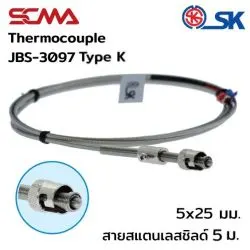 JBS-3097 5x25 mm Stainless Steel Shielded Thermocouple Type K(CA) SK 5MSpecial Price THB 520.00 Regular Price THB 650.00
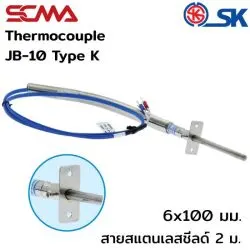 JB-10 6x100 mm Stainless Steel Shielded Thermocouple Type K(CA) SKSpecial Price THB 392.00 Regular Price THB 490.00
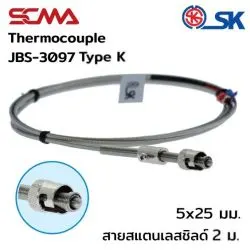 JBS-3097 5x25 mm Stainless Steel Shielded Thermocouple Type K(CA) SKSpecial Price THB 376.00 Regular Price THB 470.00
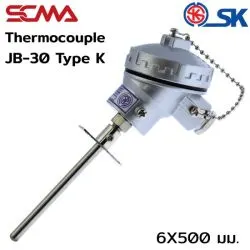 JB-30 6X500 mm Type K ThermocoupleSpecial Price THB 584.00 Regular Price THB 730.00
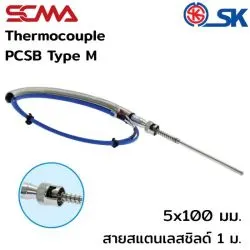 PCSB 5X100 mm Stainless Steel Shielded Thermocouple 1M Type K(CA) SKSpecial Price THB 375.00 Regular Price THB 500.00
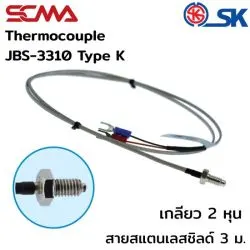 JBS-3310 2 BA 3M Type K(CA) SK ThermocoupleSpecial Price THB 224.00 Regular Price THB 280.00
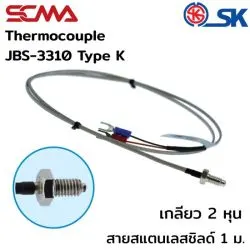 JBS-3310 Thread 2 BS 1M Type K(CA) SK ThermocoupleSpecial Price THB 128.00 Regular Price THB 160.00
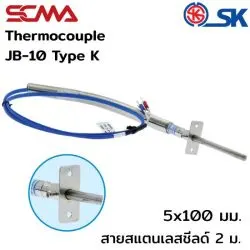 JB-10 5x100 mm Stainless Steel Shielded Thermocouple Type K(CA) SKSpecial Price THB 392.00 Regular Price THB 490.00
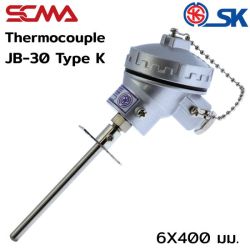 JB-30 6X400 mm Type K ThermocoupleSpecial Price THB 552.00 Regular Price THB 690.00
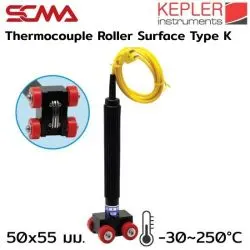 KTP-62 KEPLER Thermocouple TYPE K (CA) 50x55 mm.Special Price THB 3,256.00 Regular Price THB 4,070.00
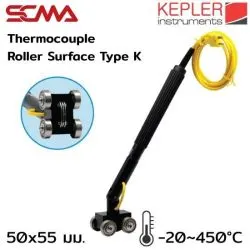 KTP-63 KEPLER Thermocouple TYPE K (CA) 50x55 mm.Special Price THB 4,312.00 Regular Price THB 5,390.00
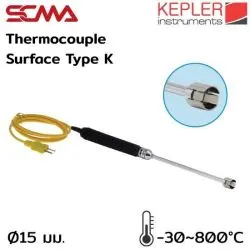 KTP-44H KEPLER Thermocouple TYPE K (CA) Ø15 mm. 150 mm.Special Price THB 1,672.00 Regular Price THB 2,090.00
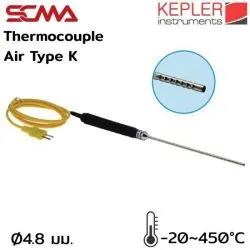 KTP-21 KEPLER ThermocoupleSpecial Price THB 1,408.00 Regular Price THB 1,760.00
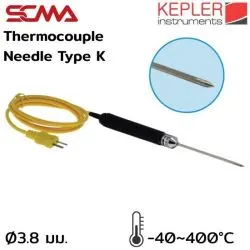 KTP-32 KEPLER ThermocoupleSpecial Price THB 968.00 Regular Price THB 1,210.00
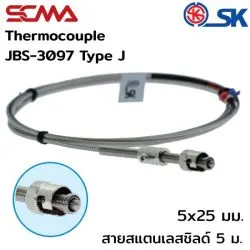 JBS-3097 5x25 mm Stainless Shield 5M Type J(IC) ThermocoupleSpecial Price THB 488.00 Regular Price THB 610.00
Delivery: 30 ต.ค. 2569
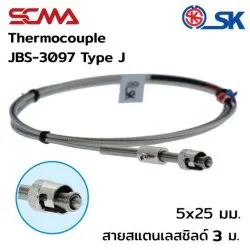 JBS-3097 5x25 mm Stainless Steel Shielded Thermocouple Type J(IC) SKSpecial Price THB 353.00 Regular Price THB 470.00
Delivery: 30 ต.ค. 2569
What is a Thermocouple? Types, How it Works, and Selection Criteria
What is a thermocouple (thermocouple)? Why do plant engineers and maintenance teams prioritize this type of temperature sensor? This article delves into the technical details of thermocouples from their basic structure, types, to how to select them for optimal accuracy in production processes, reducing machine damage risks and unwanted downtime. If you need expert advice or immediate product consultation, contact us here.
What is a Thermocouple?
A thermocouple, also known as a thermocouple, is an active sensor widely used in industry that converts thermal energy into electrical energy. It consists of two different metal wires connected at one end. This device stands out for its durability and wide temperature measurement range, from below freezing to extremely high temperatures like those found in steel furnaces.
Simplified Definition
In practice, a thermocouple is a "temperature probe" that sends an electrical signal to the controller indicating how hot it is so that the control system can continue functioning. It does not require direct power supply but uses voltage generated from its internal metal reactions. This simple yet highly effective device.
The Importance of Thermocouples in Industry
Automotive parts manufacturing, electronics, or food processing plants all require strict temperature control. If the set temp (target temperature) does not match the actual measured value, a batch may be rejected due to incorrect readings from the temperature sensor, or in the worst case, overheating could cause a fire if the heater thermocouple overloads. Choosing high-quality thermocouples is therefore an investment in safety that pays off.
How a Thermocouple Works (Seebeck Effect)
The operation of a thermocouple does not rely on complex mechanisms but rather utilizes a physical phenomenon known as the "Seebeck Effect." When two different metal conductors are joined at one end and heated at that junction, an electrical voltage (Voltage) is generated at the other end. This voltage varies directly with the temperature difference, allowing us to convert measured voltage back into temperature values. For more detailed information, see here.
What is the Thermoelectric Effect?
This phenomenon occurs due to the movement of free electrons in metals. When a metal is heated, its electrons gain kinetic energy and spread out more widely. Different types of metals have different electron densities; when joined together, this results in an electromotive force (EMF) flowing through thermocouple circuits. This property allows for rapid detection of temperature changes.
Thermocouple Circuit and Voltage Generation
The basic circuit consists of metal wire A and metal wire B connected together. The generated voltage is measured in millivolts (mV), which is a very small value. The relationship between voltage and temperature is not always linear, necessitating the use of electronic circuits or Temperature Transmitters to convert signals and adjust for linearity (Linearization) to ensure accurate readings.
Why Are There Two Junctions (Hot & Cold Junction)?
Thermocouple measurement involves measuring the "difference" in temperature. The point where the probe contacts the workpiece is called the hot junction (or Measuring Junction), while the point connected to the meter is known as the cold junction (or Reference Junction). The voltage reading comes from the difference in temperature between these two points. Modern measuring instruments automatically include Cold Junction Compensation systems at the cold junction to ensure the most accurate temperature readings.
How many types of thermocouples are there? Get to know the popular Types
Thermocouple types are classified based on the "metal alloy pairs" criteria, which directly affects the temperature measurement range and durability. Engineers must select a Type that matches the application characteristics to prevent errors. Using an incorrect type may cause the sensor to melt or give inaccurate readings. For detailed information about each type, seehere
Base Metal Thermocouples (Type K, J, T, E, N)
This group is cost-effective and the most commonly used. Type K thermocouple (Ni-Cr/Ni-Al) is universal, measuring from negative temperatures to 1250°C with good resistance to general atmospheres. Type J (Iron/Constantan) suits plastic work. Type T (Copper/Constantan) excels in moisture resistance and is popular in the food industry and refrigeration units. Meanwhile, Type N was developed for higher temperature stability than Type K.
Noble Metal Thermocouples (Type R, S, B, C)
This group combines platinum and is designed for high-temperature probes that measure heat above 1400°C, such as ceramic kilns, glass industry, or steel mills. Its standout feature is extremely high stability with excellent chemical corrosion resistance but has the drawback of being expensive and structurally fragile, requiring use with ceramic sleeves for protection.
Comparison Table of Thermocouple Types (Temperature Range, Material, Usage)
When selecting specifications, consider the thermocouple type K accuracy or acceptable deviation. The table below summarizes information to help with decision-making:
- Type K: -200 to 1250°C | General work, ovens, boilers
- Type J: 0 to 750°C | Plastic injection molding, rubber (not suitable for humid environments)
- Type T: -200 to 350°C | Food, refrigeration units (Food Grade)
- Type R/S: 0 to 1450°C | High-temperature kilns, standard calibration work
How to Select the Right Thermocouple for Your Application
Selecting a temperature probe is not just about choosing the right temperature range, but also considering the actual working environment, material compatibility, and installation method. Choosing incorrectly may void manufacturer warranties due to damage, so consulting an expert before purchasing is the best option.
Factors to Consider (Temperature Range, Environment, Accuracy, Response Time)
The first thing to look at is the Max Temperature of the process. Next is the atmospheric condition (Chemical resistance) to see if there are acids, bases, or corrosive gases present. The response time (Response time) is also important; for high sensitivity work, choose a smaller probe size. For in-depth comparisons with other sensors, checkhere.
Examples of Type Selection for Various Applications (Furnaces, Food Industry, Plastics)
For metal plating work at temperatures between 800-1000°C, a type K thermocouple is recommended due to its high heat resistance and cost-effectiveness. For plastic injection molding that uses up to 300-400°C of heat, Type J is commonly used as it provides higher voltage output for more precise readings. In food production lines, stainless steel sanitary probes (Sanitary Probe) are paired with Type T.
Probe Styles and Sheath Protection
The sheath material is crucial; stainless steel 304/316 is used for general applications, but Inconel 600 is required for high-temperature work. There are three types of probe termination:
- Grounded: The wire tip touches the sheath, providing fast response but may cause signal interference.
- Ungrounded: The wire tip floats and does not touch the sheath, preventing signal interference but measuring slower.
- Exposed: Exposed tip provides the fastest response but is fragile and less durable.
Advantages and Disadvantages of Thermocouples Compared to Other Sensors
Although thermocouples are well-known among electricians, they are not the best choice in every situation. Comparing advantages and disadvantages helps engineers choose the most appropriate technology for maximum machine efficiency and budget.
Comparison with RTD (Pt100)
Thermocouples excel in wider temperature ranges and better vibration resistance, but when it comes to accuracy and stability in low to moderate temperatures (-200 to 600°C), the RTD Pt100 performs much better. If high precision (decimal level) is required, consider an RTD. Read more about the comparisonhere.
Comparison with Thermistors
Thermistors have extremely high sensitivity, changing resistance quickly even for slight temperature changes. However, their limitation is a narrow measurement range (approximately -55 to 150°C) and highly non-linear values. Thermocouples are better suited for heavy industrial applications while thermistors are more suitable for HVAC or electrical appliances.
Comparison with Infrared Thermometers (IR Thermometer)
Non-contact measurement tools, sometimes called thermoscopes, were once ideal for moving objects, high voltage environments, or hard-to-reach areas. However, their drawback is that they only measure surface temperature and values may be skewed by the emissivity of the object. Thermocouples provide more accurate core temperature readings at a lower cost for permanent installation.
If You Are Looking for Thermocouples, Think SCMA!
If your factory needs high-quality and reliable thermocouples or is looking to replace faulty type K thermocouple parts, SCMA is ready to be your technical partner. We have dedicated engineering teams at EEC (Chonburi) and the North (Lamphun) branches, ready to assist on-site for specification comparisons and correct solution recommendations, reducing production line downtime. Trust in our global brand products and quick service. View all product offeringshere.
Summary
A proper understanding of thermocouples, including types, structure, and limitations, is crucial for production quality control. Choosing the wrong temperature probe can not only cause inaccuracies but also lead to significant damage. SCMA aims to be more than a supplier; we are your engineering partner helping you choose the best options, enhancing production efficiency, and providing close support with speed. For further consultation, contact our service teamhere.
Frequently Asked Questions
Is Extension Wire Necessary?
It is absolutely necessary. The extension wire must be made of the same metal as the thermocouple itself. If ordinary copper wire is used to extend its length, a new junction will form along the way, causing an additional voltage drop that can immediately skew the temperature reading. Only specific wires with the same code type as the probe should be used.
How Do You Calibrate a Thermocouple?
Calibration involves comparing the probe to a standard probe in a calibration oven (dry block or oil bath) to determine any deviation. It is recommended to do this at least once a year, or more frequently if used under harsh conditions. For reference standards, seehere for assurance in measurement accuracy.
How Do You Know If a Thermocouple Is Faulty?
The most common fault is an "open circuit." Initial checks can be done with a multimeter measuring resistance (Ohm). If the needle does not move or shows OL, it indicates that the internal wire has broken. In some cases, the thermostat may cut off the circuit and display an error code on the controller screen. Unusual temperature fluctuations could also indicate signal interference or loose connections.
This website uses cookies
We use cookies to make the site work properly, to understand how it is used, and to show content that is relevant to you. You choose which types to allow; strictly necessary cookies are always on. Privacy Policy
🤖 AI Assistant
Ask about products, specs and replacement models
Hello 👋 Ask us anything — find products, compare specs, or troubleshoot.
🗑 Clear history