
SPECIAL PROMOTION — Up to 40% off across many product groups, until 31 December 2026 · Click to see all promotion itemsIFM, Sensor, Automation SystemMeasuring / Testing InstrumentsTemp Indicator, Control, T/C, RTD, TimerHeater, SCR Control, Solid State, Power Supply, Control CabinetField Measuring Instruments, Pressure Gauge, Level Control, Flow MeasurementEMC, Pneumatic, Solenoid ValveInspection Test Lamp, Head Light, Automotive Measuring InstrumentWeighing Scales, Marking Machine, PrintersEducational Training SystemsHot Line Tools & Equipment SPECIAL PROMOTION — Up to 40% off across many product groups, until 31 December 2026 · Click to see all promotion itemsIFM, Sensor, Automation SystemMeasuring / Testing InstrumentsTemp Indicator, Control, T/C, RTD, TimerHeater, SCR Control, Solid State, Power Supply, Control CabinetField Measuring Instruments, Pressure Gauge, Level Control, Flow MeasurementEMC, Pneumatic, Solenoid ValveInspection Test Lamp, Head Light, Automotive Measuring InstrumentWeighing Scales, Marking Machine, PrintersEducational Training SystemsHot Line Tools & Equipment View promotion items View all
Infrared Thermometer
Infrared Thermometer: Usage and Benefits
The Importance of Infrared Thermometers
In today's era, temperature monitoring and control are crucial in various fields such as medicine, industry, or everyday life. The infrared thermometer has become an important and increasingly popular tool due to its ability to measure temperatures quickly without touching the object being measured.
How Infrared Thermometers Work
Infrared thermometers work by detecting infrared radiation emitted from all objects, which has wavelengths that humans cannot see but can be detected with special sensors in the thermometer.
When the thermometer receives infrared radiation, the sensor converts radiant energy into an electrical signal. This signal is then converted into temperature data and displayed on the screen.
Benefits of Using Infrared Thermometers
- No Contact Needed: Measuring temperature with an infrared thermometer does not require contact, making it possible to safely measure the temperature of hot objects or items that cannot be touched.
- High Accuracy: Infrared thermometers are highly accurate and can measure temperatures quickly.
- User-Friendly: Using an infrared thermometer is easy; simply point the device at the object to be measured and press the button.
- Diverse Applications: Infrared thermometers can be used in various situations, such as measuring body temperature for medical purposes, checking the temperature of machinery in industry, or monitoring food temperatures in kitchens.
How to Choose an Infrared Thermometer
When selecting an infrared thermometer, several factors should be considered:
- Temperature Range: Check the temperature range that the thermometer can measure to ensure it meets your needs.
- Accuracy: Choose a model with high accuracy by checking manufacturer information or user reviews.
- Metering Speed: A fast metering speed can save time and increase convenience in use.
- Additional Features: Some models have additional features such as data logging, smartphone connectivity, or average temperature measurement.
Maintenance of Infrared Thermometers
To ensure that an infrared thermometer operates efficiently and lasts long, the following maintenance should be performed:
- Store in a Dry Place: Avoid storing the thermometer in damp or hot areas.
- Clean Lenses: Use a soft, dry cloth to clean the lenses periodically to prevent dust or dirt that may affect measurement accuracy.
- Replace Batteries: Check and replace batteries according to the manufacturer's instructions to ensure optimal performance.
Infrared thermometers are highly useful in many areas due to their ability to measure temperatures quickly and accurately without contact. They are suitable for use in medicine, industry, and everyday life. Choosing the right thermometer and proper maintenance will help ensure that the tool operates efficiently and lasts long.
Related Keywords: Infrared Thermometer, Infrared Thermometer Usage, Best Temperature Meter, How to Choose an Infrared Thermometer
View Catalog Infrared Thermometer : Click Here
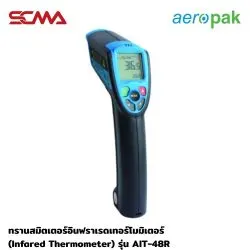 Aeropak Infared Thermometer Model AIT-48RSpecial Price THB 8,240.00 Regular Price THB 10,300.00
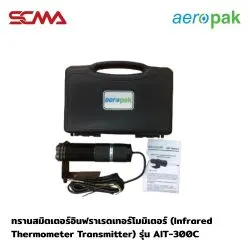 Aeropak Infrared Thermometer Transmitter Model AIT-300CSpecial Price THB 2,560.00 Regular Price THB 3,200.00
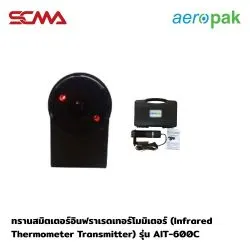 Aeropak Infrared Thermometer Transmitter Model AIT-600CSpecial Price THB 3,600.00 Regular Price THB 4,500.00
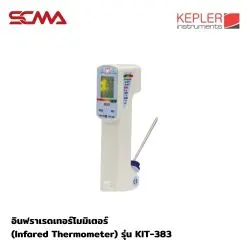 KEPLER Infared Thermometer Model KIT-383Special Price THB 4,125.00 Regular Price THB 5,500.00
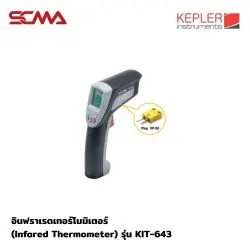 KEPLER Infared Thermometer Model KIT-643Special Price THB 3,600.00 Regular Price THB 4,500.00
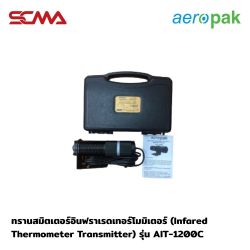 Aeropak Infared Thermometer Transmitter Model AIT-1200CSpecial Price THB 6,560.00 Regular Price THB 8,200.00
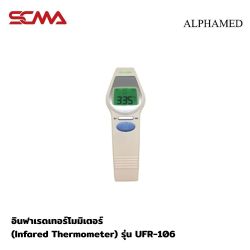 ALPHAMED UFR-106 Infared ThermometerSpecial Price THB 1,920.00 Regular Price THB 2,400.00
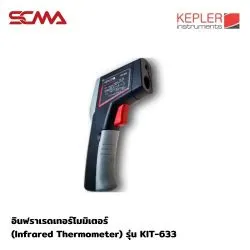 KEPLER Infrared Thermometer Model KIT-633Special Price THB 2,400.00 Regular Price THB 3,000.00
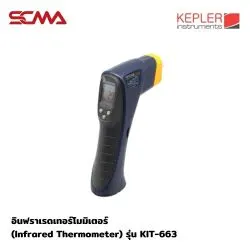 KEPLER KIT-663 Infrared ThermometerSpecial Price THB 5,600.00 Regular Price THB 7,000.00
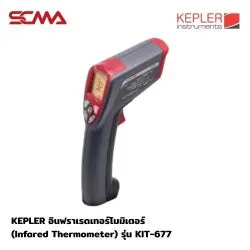 KEPLER Infared Thermometer Model KIT-677Special Price THB 10,800.00 Regular Price THB 13,500.00
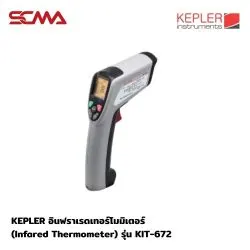 KEPLER Infared Thermometer Model KIT-672Special Price THB 9,200.00 Regular Price THB 11,500.00
Delivery: 30 ต.ค. 2569
What is an Infrared Thermometer? How to Choose and Use It
Have you ever wondered how accurate and reliable an Infrared Thermometer, commonly known as a temperature gun, really is? This article will introduce you to the infrared thermometer, a popular device that makes measuring temperatures easy and safe. It also provides tips on selecting an Infrared Thermometer for maximum value and compares prices of Infrared Thermometers so you can find the model best suited for your needs. For professional system monitoring services, please visit SCMA Services
What is an Infrared Thermometer? Why it's a Popular Tool
An Infrared Thermometer (Infrared thermometer) is a type of non-contact infrared temperature sensor that measures the surface temperature of objects by detecting their emitted infrared radiation. With its fast and safe readings, it has become widely popular across various industries, from machinery inspection to patient screening.
Simple Definition and Meaning
If asked what a thermometer is in this context, it's an instrument that converts thermal signals into digital numbers. For an infrared thermometer, its role is to measure the temperature by receiving infrared radiation from the target object and converting it into electrical signals displayed as temperature readings on an LCD screen, allowing users to know the heat level of objects instantly without touching them.
Advantages of Non-Contact Temperature Measurement
The standout feature that makes non-contact temperature measurement popular is its safety and convenience, especially when measuring highly heated, fast-moving objects or hard-to-reach dangerous areas. It also significantly reduces contamination risks in food and medical industries.
How an Infrared Thermometer Works: What You Need to Know
An Infrared Thermometer operates on the principle of physics that all objects with a temperature above absolute zero (-50…..2000 °C) emit infrared radiation. The device uses a lens system to focus these rays onto an internal detection sensor (Detector). Then, electronic circuits convert the received energy into readable temperature values.
Infrared Radiation Detection
This type of thermometer does not "shoot" a laser to measure temperature as many people misunderstand. The visible laser beam is only for "targeting" the position to be measured, while actual measurement occurs when the sensor "receives" infrared radiation from objects that humans cannot see.
What is Emissivity? Why Is It Important for Accuracy?
Emissivity refers to an object's ability to emit thermal radiation. Different materials have varying emissivity values, such as human skin, concrete, or shiny metal surfaces. Using an infrared thermometer that allows adjustment of the Emissivity value will help improve accuracy when measuring various surface materials.
What is Distance-to-Spot Ratio (D:S) Ratio?
The D:S ratio is a number indicating the size of the measurement spot area compared to the distance from the object. For example, 12:1 means that at a distance of 12 inches, the measurement spot has a diameter of 1 inch. If you need to measure small objects from a long distance, it's necessary to choose a device with a high D:S ratio so that the laser can focus accurately on the target without measuring background temperatures.
Types of Infrared Thermometer and Different Uses
What types of infrared temperature measuring tools are available in the market? They can be broadly categorized based on their usage as follows:
Handheld/Portable for General Use
They usually come in a gun shape (infrared thermometer) and are easy to use by simply pulling the trigger. Suitable for maintenance workers, engineers, or general household use. If you need a model with higher thermal imaging capabilities (Thermal Imaging) for more accurate diagnosis, consider models such as FLIR TG165 or the E2+, -20…550C.(256x192) Tool-like thermal camera, which clearly shows hot spots.
For Fever Measurement (Forehead Thermometer)
This type is specifically designed for measuring human body temperature with a narrow range (approximately 32-42 °C) but with very high accuracy, suitable for screening patients or thermal scanning in various locations.
For Industrial Use (Industrial Thermometer)
Industrial infrared thermometers have a wide temperature measurement range from negative to thousands of degrees Celsius. They are durable and often come with data logging or computer connectivity functions, commonly used in conjunction with advanced technology such as Thermal Imaging Camera for electrical system inspection.
For Food Temperature Measurement (Food Thermometer)
Designed to comply with HACCP standards for food safety, infrared thermometers for food allow quick surface temperature checks of ingredients without direct contact with the food, reducing cross-contamination.
How to Choose the Right Infrared Thermometer for Your Needs
Before making a purchase decision, consider the following factors to ensure you get the most suitable device:
Consider the Temperature Range You Need to Measure
For general use or as an air temperature measuring tool (measuring wall surfaces to check heat accumulation), a range of -50 to 400 °C is sufficient. However, for metal foundries, choose models that can measure up to 1000 °C and above. Selecting the right measurement range will help you get a reasonable thermometer price.
Adequate Accuracy (Accuracy) Required
For high-precision work such as laboratories or fever measurements, choose devices with low deviation values (such as ±1% or ±0.1 °C), which are usually specified in the Datasheet of each infrared thermometer model.
Appropriate D:S Ratio for Working Distance
Assess how far away you will be measuring objects. If the object is high up or hard to reach, use a device with a higher D:S ratio (such as 30:1 or 50:1) for accurate measurements at long distances.
Additional Features to Look For
- Emissivity Adjustment: To measure various materials accurately.
- Laser Pointer: Single point or circle type to clearly indicate the measurement position.
- Data Logging: To log data into memory.
- Backlit Display: For use in dark environments.
Compare Prices and Popular Brands
Infrared thermometers come at various price points, from hundreds to thousands of dollars, depending on the brand and features. For durability and good after-sales service, choosing a reputable international brand is worth it in the long run.
Review of the Top Infrared Thermometer Models for 2025
Choosing a cost-effective and high-quality thermometer this year involves considering models that cater to different usage groups as follows:
The Best Model for Industrial Use
These models emphasize durability, impact resistance, and the ability to measure high temperatures. They often come with an additional Thermocouple function to allow for accurate measurement of internal temperature points. Suitable for machinery maintenance and electrical system work. Read more about infrared sensors in our article Thermometer Infrared
The Best Value Model for Home and Cooking Use
These models focus on convenience, ease of use, compact size, and the ability to measure oven heat, oil temperature, or room temperature. They are essential infrared thermometers for home use.
The Most Accurate Model for Measuring Body Temperature
A good fever gun or infrared thermometer must meet medical standards and have separate modes for forehead measurement and object measurement to ensure maximum safety and accuracy.
Compare Specifications and Prices in a Table Format
|
Type of Use |
Temperature Range (Approx.) |
Accuracy |
Recommended D:S Ratio |
Starting Price (Approx.) |
|
Fever/Body Temperature Measurement |
32 °C to 42.5 °C |
Very High (±0.2 °C) |
1:1 to 5:1 |
500 - 2,000 THB |
|
General/Pantry Use |
-50 °C to 500 °C |
Moderate (±1.5 °C) |
10:1 to 12:1 |
800 - 3,000 THB |
|
Industrial Use |
-50 °C to 1500 °C+ |
High (±1% or better) |
30:1 to 50:1 |
4,000 - 20,000+ THB |
If you are looking for an Infrared Thermometer, think SCMA!
Choosing substandard measuring tools can negatively impact production processes and safety. If you are in search of high-quality Infrared Thermometers for industrial use or accurate infrared temperature sensors, SCMA offers carefully selected products from leading brands along with a team of engineers to consult on selecting the ir temp sensor that best fits your needs. For those interested in advanced technology such as thermal imaging cameras, more information can be found at What is Thermal Imaging Camera and browse all products at All Products
Summary
Infrared Thermometer is an essential tool in today's era, with its ability to measure temperature quickly, safely, and accurately. Understanding how it works and selecting the right one will maximize benefits from this device. For in-depth information or calibration services for measuring tools, contact experts at SCMA to ensure confidence in every measurement.
Frequently Asked Questions
How accurate is an Infrared Thermometer?
Accuracy depends on the specifications of the device and proper usage. Typically, industrial-grade infrared thermometers have a deviation of approximately ±1% to ±2%, while fever-measuring models have a deviation of ±0.2 °C.
Can it be used to measure air temperature?
In principle, Infrared Thermometers are designed to measure the "surface temperature" of objects rather than the mass air temperature. For room temperature measurement, a probe thermometer or ambient sensor would be more appropriate. However, it can be used to measure walls to observe heat accumulation.
How to maintain for long-term use?
Regularly clean the lens with compressed air or a soft cloth, avoid scratching the lens, and do not store infrared thermometers in excessively hot or humid environments.
Is the visible laser harmful?
The aiming laser used is of low intensity (Class 2), but it should not be stared at directly or shone into someone's eyes as it may irritate or harm the eye.
Learn more about Infrared Thermometer at Wikipedia
This website uses cookies
We use cookies to make the site work properly, to understand how it is used, and to show content that is relevant to you. You choose which types to allow; strictly necessary cookies are always on. Privacy Policy
🤖 AI Assistant
Ask about products, specs and replacement models
Hello 👋 Ask us anything — find products, compare specs, or troubleshoot.
🗑 Clear history