
SPECIAL PROMOTION — Up to 40% off across many product groups, until 31 December 2026 · Click to see all promotion itemsIFM, Sensor, Automation SystemMeasuring / Testing InstrumentsTemp Indicator, Control, T/C, RTD, TimerHeater, SCR Control, Solid State, Power Supply, Control CabinetField Measuring Instruments, Pressure Gauge, Level Control, Flow MeasurementEMC, Pneumatic, Solenoid ValveInspection Test Lamp, Head Light, Automotive Measuring InstrumentWeighing Scales, Marking Machine, PrintersEducational Training SystemsHot Line Tools & Equipment SPECIAL PROMOTION — Up to 40% off across many product groups, until 31 December 2026 · Click to see all promotion itemsIFM, Sensor, Automation SystemMeasuring / Testing InstrumentsTemp Indicator, Control, T/C, RTD, TimerHeater, SCR Control, Solid State, Power Supply, Control CabinetField Measuring Instruments, Pressure Gauge, Level Control, Flow MeasurementEMC, Pneumatic, Solenoid ValveInspection Test Lamp, Head Light, Automotive Measuring InstrumentWeighing Scales, Marking Machine, PrintersEducational Training SystemsHot Line Tools & Equipment View promotion items View all
Electrical Conductivity Meter
Details of Electrical Conductivity Meter (Water Electrical Conductivity Tester)
The Electrical Conductivity Meter or Water Electrical Conductivity Tester is considered an important tool for improving water quality. Using this device helps personnel responsible for water quality improvement to have crucial information for decision-making regarding water condition improvements and more efficient environmental management.
Water conductivity is significant in many aspects, such as assessing water quality, agricultural water use, and various environmental analyses in water. Additionally, water conductivity plays a vital role in scientific research and technology development related to water. Measuring this value helps us understand and improve the efficiency of water quality and usage. The unit for measuring electrical conductivity (EC) is commonly reported in mS/cm and µS/cm, which are internationally recognized units.
The ability of water to conduct electricity is often measured by Electrical Conductivity (EC), a measure of how much electric current can pass through the water. Water with high conductivity usually contains more dissolved substances like sodium chloride (NaCl) or other salts. Therefore, seawater typically has higher conductivity than freshwater due to the presence of many dissolved salts in seawater.
Types of Electrical Conductivity Meter (Water Electrical Conductivity Tester)
- Portable Electrical Conductivity Meters are small and easy to carry devices often used for measuring EC values in agricultural work or general measurements. They are user-friendly and affordable.
- Panel Electrical Conductivity Controllers are installed devices used for measuring and controlling conductivity levels in greenhouse water systems, industrial production processes, wastewater control.
- Bench-top Electrical Conductivity Meters are larger than portable ones, suitable for laboratory water quality analysis (Laboratory), research work, scientific fields. These meters have high accuracy and precision in measurement.
- Pen type Electrical Conductivity Meters are small, easy to carry devices that are user-friendly and inexpensive, but their accuracy or precision may not be very high.
View Catalog Electrical Conductivity Meter : Click here
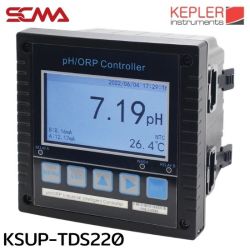 KSUP-TDS220 0.00uS/cm~20Special Price THB 13,600.00 Regular Price THB 17,000.00
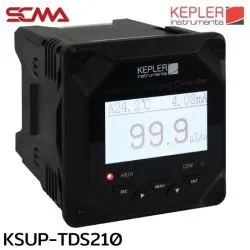 KSUP-TDS210 0~20mS/cm, 4Special Price THB 5,760.00 Regular Price THB 7,200.00
Frequently Asked Questions about Electrical Conductivity Meter (EC Meter)
1. What is EC?
The EC (Electrical Conductivity) measures the ability of water to conduct electrical current, which depends on the amount of ions or minerals dissolved in the water such as salt, minerals, or other chemicals.
2. What does EC tell about water quality?
The EC helps indicate the concentration level of dissolved substances in water. A high EC value indicates a higher concentration of dissolved substances which may affect water quality, such as salty water, polluted water, or suitability for use.
3. What are the units of EC measurement?
The units used to measure EC include:
- µS/cm (microsiemens per centimeter)
- mS/cm (millisiemens per centimeter)
4. How does EC differ from TDS?
EC measures "electrical conductivity"
TDS (Total Dissolved Solids) measures the amount of solids dissolved in water. Generally, TDS can be estimated from EC by multiplying a constant value (e.g., 0.5–0.7).
5. What is an appropriate EC level?
This depends on usage such as:
- Beverage water: approximately 50–500 µS/cm
- Agricultural water: 200–2,000 µS/cm
- Industrial water: varies according to production process
6. How does an EC meter work?
An EC meter works by measuring the electrical resistance of water through electrodes and calculating it as conductivity.
7. Does an EC meter need calibration?
Calibration is necessary regularly using standard solutions to ensure accurate measurements.
8. Does temperature affect EC readings?
It has a direct impact because higher temperatures increase the EC value. Good meters usually have automatic temperature compensation (ATC) systems.
9. In which industries is EC used?
- Water and wastewater industry
- Water treatment systems
- Agriculture and hydroponics
- Food and beverage industry
- General industrial plants
10. What are the effects of high or low EC levels?
- Too high: may cause corrosion, or negatively affect crops/production processes.
- Too low: may indicate a lack of essential minerals in water.
This website uses cookies
We use cookies to make the site work properly, to understand how it is used, and to show content that is relevant to you. You choose which types to allow; strictly necessary cookies are always on. Privacy Policy
🤖 AI Assistant
Ask about products, specs and replacement models
Hello 👋 Ask us anything — find products, compare specs, or troubleshoot.
🗑 Clear history