
SPECIAL PROMOTION — Up to 40% off across many product groups, until 31 December 2026 · Click to see all promotion itemsIFM, Sensor, Automation SystemMeasuring / Testing InstrumentsTemp Indicator, Control, T/C, RTD, TimerHeater, SCR Control, Solid State, Power Supply, Control CabinetField Measuring Instruments, Pressure Gauge, Level Control, Flow MeasurementEMC, Pneumatic, Solenoid ValveInspection Test Lamp, Head Light, Automotive Measuring InstrumentWeighing Scales, Marking Machine, PrintersEducational Training SystemsHot Line Tools & Equipment SPECIAL PROMOTION — Up to 40% off across many product groups, until 31 December 2026 · Click to see all promotion itemsIFM, Sensor, Automation SystemMeasuring / Testing InstrumentsTemp Indicator, Control, T/C, RTD, TimerHeater, SCR Control, Solid State, Power Supply, Control CabinetField Measuring Instruments, Pressure Gauge, Level Control, Flow MeasurementEMC, Pneumatic, Solenoid ValveInspection Test Lamp, Head Light, Automotive Measuring InstrumentWeighing Scales, Marking Machine, PrintersEducational Training SystemsHot Line Tools & Equipment View promotion items View all
Band heater
What is a Band Heater? A Complete Guide to Selecting Tubular Heaters
For plant engineers and maintenance teams, temperature control in plastic manufacturing processes and liquid pipelines is of utmost importance. Band heaters, or tubular heaters, are crucial for maintaining consistent heat. If you're looking for high-quality heaters or need guidance on selecting the right type of band heater for your application, this article compiles insights from SCMA engineers' real-world experience to help you make an informed decision.
Features of Band Heaters
- Used for heating plastic injection machines, oil pipelines, etc.
- Available in various types such as tin-coated, stainless steel, and ceramic
- Wiring options include high-temperature cables, terminal blocks, ceramic terminals, and plug-in connectors
Benefits of Using Band Heaters
- Keeps liquids warm in pipelines to prevent them from solidifying at lower temperatures, such as oil transfer lines
- Provides heat for all types of injection barrels, like plastic pellet injection machines
View the Band Heater Catalog Click Here
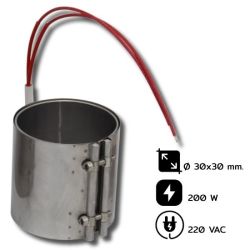 Ø 30x30 mm. 200 W 220 VAC Long Cord 300 Stainless Steel Band Heater SANGISpecial Price THB 616.00 Regular Price THB 770.00
Delivery: 30 ต.ค. 2569
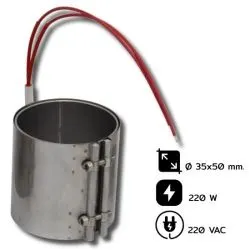 Band Heater SANGI Band Heater 300 mm. Size 35x50Special Price THB 640.00 Regular Price THB 800.00
Delivery: 30 ต.ค. 2569
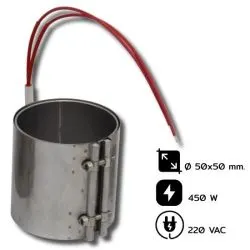 Band Heater SANGI Band Heater 300 mm. Size 50x50Special Price THB 672.00 Regular Price THB 840.00
Delivery: 30 ต.ค. 2569
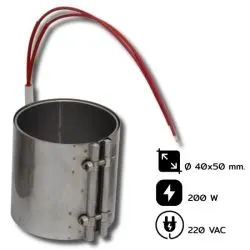 Band Heater SANGI Band Heater 300 mm. Size 40x50Special Price THB 656.00 Regular Price THB 820.00
Delivery: 30 ต.ค. 2569
What is a Band Heater or Tubing Heater?
A Band Heater is a type of heater designed in cylindrical form to wrap around pipes, nozzles, or tanks to transfer heat from the surface into the internal object. This equipment is commonly found in the plastic industry such as injection molding machines and bag blowing machines, as well as pipeline systems that require maintaining liquid temperature. A good Tubing Heater must be able to distribute heat evenly in a 360-degree direction to ensure complete melting of materials and reduce production waste.
Basic Principle of Heat Transfer
The mechanism starts with the supply of electrical current into high-resistance nichrome (Ni-Cr) wire inside the heater, which converts electrical energy into thermal energy. This heat is then transferred through an insulating layer (such as mica or ceramic) to a stainless steel plate or external material before being directly transmitted to the metal pipe surface or barrel via conduction. The efficiency of this heat transfer depends on tightly securing the Band Heater against the pipe surface; even slight gaps may cause hotspots, reducing its lifespan.
Why are Band Heaters Important in Industries?
From a production engineer's perspective, temperature stability is a quality indicator for products. Using Band Heaters helps ensure consistent melting of plastic pellets within the screw barrel, reducing issues like burnt or incomplete melting plastics, which are major causes of defective parts (NG). Additionally, in chemical and food industries using Tubing Heaters to warm viscous liquids, maintaining constant temperatures facilitates smoother liquid flow through pipes, reduces pump workload, and prevents solidification that could halt production lines (downtime), causing significant losses.
How Many Types of Band Heaters Are There? What are the Differences?
Selecting the correct type directly impacts lifespan and energy usage. We categorize them mainly based on insulation material and structure:
1. Mica Band Heaters
The most widely used due to their affordability, these heaters use mica sheets as high-temperature insulators sandwiched with flat wire coils for quick heat generation. Suitable for temperatures up to 300-350°C, they are cost-effective choices for general applications but may not be as durable as ceramic models over extended periods.
2. Ceramic Band Heaters
For high-temperature and long-lasting applications, ceramic band heaters are ideal. Constructed with wire wound through a ceramic heat-resistant core, they can reach temperatures up to 600-700°C. They retain heat well, reducing the heater's workload over time, making them more energy-efficient than mica models in the long run and offering greater installation flexibility.
3. Energy-Saving Band Heaters (Nano Infrared)
The latest innovation using infrared radiation and high-efficiency nano insulation can save up to 30-60% electricity compared to traditional heaters. The external surface has lower temperatures, reducing heat accumulation in the factory and enhancing worker safety. Though initially more expensive, their return on investment (ROI) is quick due to reduced energy costs.
For further insights into material insulation structures, refer to Thermal Corporation Guide on Mica Band Heaters for informed decision-making.
A Guide to Selecting the Right Band Heater
The most common mistake SCMA encounters during customer site visits is ordering specifications that do not match actual usage. To achieve maximum efficiency and longevity, engineers must consider four key factors before manufacturing or purchasing:
- Diameter: Accurately measure the outer diameter (OD) of the pipe or barrel in millimeters or inches when cold for precision. The heater should fit snugly without gaps that act as thermal insulators.
- Width: Consider actual installation space; limited areas may require narrower but more numerous heaters, or if replacing sheet heaters, ensure adequate spacing between units for even heat distribution.
- Wattage and Watt Density: Proper watt calculation is crucial. Excessive wattage (over-watt) drastically shortens lifespan. Mica Band Heaters typically support 3-4 watts per square centimeter, while Ceramic models can handle up to 6-8 watts per square centimeter.
- Voltage: Verify the machine's electrical system as either 220V (single phase) or 380V (three-phase). Incorrect voltage connection is a leading cause of immediate heater failure upon use.
Interested in Band Heaters? Purchase from SCMA Today!
If you're looking for high-quality, durable, and cost-effective Band Heaters, SCMA is your technical partner offering comprehensive services from consultation to custom production and quick after-sales support. We provide the best advice and solutions to ensure smooth operation without heat concerns. For more details and consult our engineering team here.
Summary
Selecting the right Band Heater isn't just about finding the cheapest option but considering material type (mica or ceramic), accurate sizing, and appropriate wattage for the workload. Investing in quality heaters and proper installation extends machine lifespan, reduces energy consumption, and ensures smooth production processes. Upgrading your heating system is a worthwhile investment to enhance productivity.
Frequently Asked Questions
Which Band Heater Type Should I Choose?
No single type suits all scenarios; it depends on usage needs. For high heat and long-term energy savings, Ceramic models are recommended, while Mica types suffice for lower temperatures with budget constraints.
Why Do Heaters Fail Often?
Main causes include 1) loose securing leading to hotspots, 2) excessive wattage (over-watt), and 3) plastic residue or dirt between the heater and pipe surface obstructing heat transfer.
How Should I Maintain Band Heaters?
Tighten mounting nuts regularly every 1-2 months due to metal expansion and contraction. Also, clean pipe surfaces before reinstallation to prevent debris buildup.
This website uses cookies
We use cookies to make the site work properly, to understand how it is used, and to show content that is relevant to you. You choose which types to allow; strictly necessary cookies are always on. Privacy Policy
🤖 AI Assistant
Ask about products, specs and replacement models
Hello 👋 Ask us anything — find products, compare specs, or troubleshoot.
🗑 Clear history