
SPECIAL PROMOTION — Up to 40% off across many product groups, until 31 December 2026 · Click to see all promotion itemsIFM, Sensor, Automation SystemMeasuring / Testing InstrumentsTemp Indicator, Control, T/C, RTD, TimerHeater, SCR Control, Solid State, Power Supply, Control CabinetField Measuring Instruments, Pressure Gauge, Level Control, Flow MeasurementEMC, Pneumatic, Solenoid ValveInspection Test Lamp, Head Light, Automotive Measuring InstrumentWeighing Scales, Marking Machine, PrintersEducational Training SystemsHot Line Tools & Equipment SPECIAL PROMOTION — Up to 40% off across many product groups, until 31 December 2026 · Click to see all promotion itemsIFM, Sensor, Automation SystemMeasuring / Testing InstrumentsTemp Indicator, Control, T/C, RTD, TimerHeater, SCR Control, Solid State, Power Supply, Control CabinetField Measuring Instruments, Pressure Gauge, Level Control, Flow MeasurementEMC, Pneumatic, Solenoid ValveInspection Test Lamp, Head Light, Automotive Measuring InstrumentWeighing Scales, Marking Machine, PrintersEducational Training SystemsHot Line Tools & Equipment View promotion items View all
Thermoscan
Infrared Thermometer / Thermal Imager (Thermoscan)
In today's world, where technology plays a crucial role in daily life, temperature monitoring and measurement are of utmost importance. Whether it is for medical purposes, industrial applications, or safety measures, infrared thermometers (Thermoscan) and thermal imagers have gained increasing popularity due to their convenience and high efficiency. In this article, we will explore the usage, benefits, and related technologies of these tools.
Thermoscan Thermal Imager
A Thermoscan thermal imager uses infrared technology to detect heat radiation emitted from objects and converts these signals into visible images, allowing for accurate temperature checks of various objects or areas.
Benefits and Usage
- Industrial Inspection: Used for inspecting electrical systems, machinery, and maintenance to detect potential overheating issues.
- Overheating Detection: Helps in detecting overheating in electrical equipment and machines immediately, preventing circuit overloads and possible damage.
- Predictive Maintenance: Used to inspect the condition of machinery and equipment to prevent future damages.
- Building Inspection: Used to check heat and cold within buildings, identifying energy leaks and improving energy efficiency.
- Wall and Roof Heat Detection: Helps in detecting thermal leaks which can help save on heating and cooling costs for buildings.
- Insulation System Inspection: Enables accurate and efficient inspection of insulation installation.
- Bodily Heat Detection: Used to detect body temperature for identifying infections or other abnormalities.
Key Features of Thermoscan Thermal Imager
-
High Image Resolution: With high sensor resolution, it can create clear and detailed images.
-
Real-time Display: Allows users to see inspection results immediately.
-
User-friendly Operation: Comes with an easy-to-use interface, no special knowledge required.
-
Durability: Built to withstand various environments and heavy use.
How to Choose a Thermoscan Thermal Imager
-
Consider Usage Requirements: Choose a model with features and functions that meet your needs.
-
Sensor Resolution: Select a device with high resolution for clear and accurate images.
-
Additional Functions: Check if it has additional functions for data analysis and recording.
-
Warranty and After-sales Service: Choose from manufacturers with good warranties and after-sales service.
Thermoscan thermal imagers are highly important and useful tools in various industries. With the ability to detect heat and display it as an image, inspection and data analysis become much easier and more accurate. Proper selection and use can greatly enhance work efficiency and safety.
Guide Sensmart specializes in producing and developing thermal imaging technology with a wide range of applications for industrial heat inspection and analysis.
View SCMA Thermoscan Catalog
View Thermoscan (Thermal Imager) from Guide Sensmart Click Here
Interesting Articles about SCMA Thermoscan
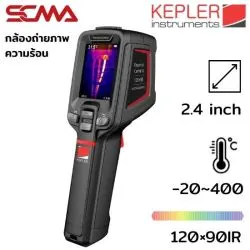 KTI-120V,-20...400C. 120x90 Pixel Thermal CameraSpecial Price THB 14,800.00 Regular Price THB 18,500.00
Delivery: 30 ต.ค. 2569
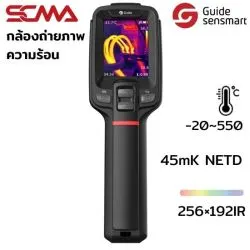 E2+, -20…550C.(256x192) Tool-like Thermal cameraSpecial Price THB 14,800.00 Regular Price THB 18,500.00
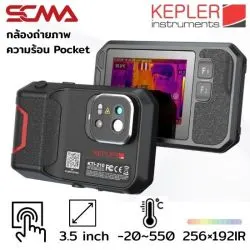 KTI-210, -20...550C./ 256X192 Pixel/Pocket Thermal CameraSpecial Price THB 22,000.00 Regular Price THB 27,500.00
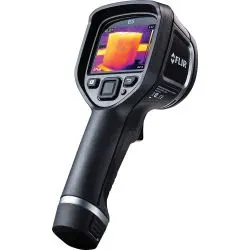 FLIR Imaging IR Thermometer Model E5Special Price THB 54,400.00 Regular Price THB 68,000.00
Delivery: 30 ต.ค. 2569
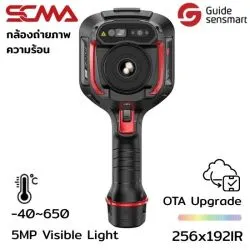 H2,-40…650C. 256x192 IR Intelligent Thermal CameraSpecial Price THB 73,920.00 Regular Price THB 92,400.00
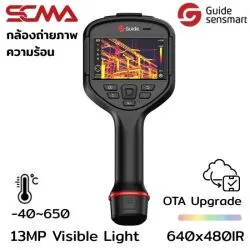 H6,-40…650C. 640X480 IR Resolution High performance Handheld Thermal CamerasSpecial Price THB 228,720.00 Regular Price THB 285,900.00
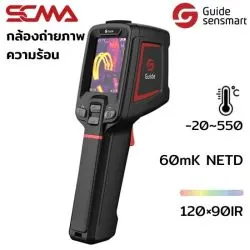 E1+, -20…550C.(120x90) Tool-like Thermal CameraSpecial Price THB 11,280.00 Regular Price THB 14,100.00
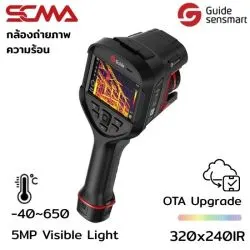 H3,-40…650C. 320x240 IR Intelligent Thermal CameraSpecial Price THB 137,280.00 Regular Price THB 171,600.00
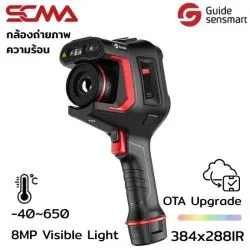 H3+, -40…650C. 384x288 IR Intelligent Thermal CameraSpecial Price THB 147,840.00 Regular Price THB 184,800.00
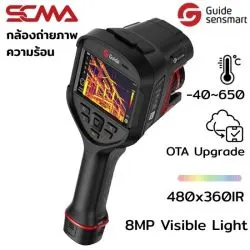 H4,-40…650C. 480x360 IR Resolution Intelligent Thermal CameraSpecial Price THB 165,440.00 Regular Price THB 206,800.00
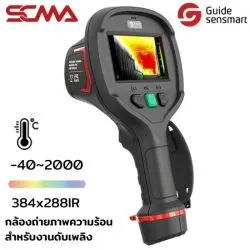 PR410,-40...2000C Ultra-Wide (384x288) Thermal Camera for Fire ServiceSpecial Price THB 116,160.00 Regular Price THB 145,200.00
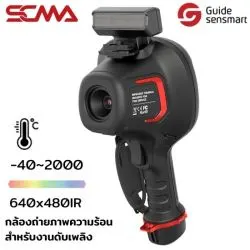 PR610,-40...2000C Ultra-Wide (640x480) Thermal Camera for Fire ServiceSpecial Price THB 137,280.00 Regular Price THB 171,600.00
Electrical Thermoscan System Fire Prevention Reduce Downtime How?
Factory fires caused by electrical short circuits or sudden machine failures are nightmares for everyone. However, these issues can be prevented with technology such as Thermoscan or thermal scanners. If you're wondering what a thermoscan is and how necessary it is for maintenance work, this article will delve into the use of temperature scanning to detect abnormalities in electrical systems before it's too late. It also provides ways to choose the most cost-effective service for maximum safety and efficiency of your business. For immediate consultation, see SCMA Services
What is Thermoscan?
Thermoscan (thermal scanner) or thermal imaging camera, is an advanced technological device used to detect infrared radiation emitted from various objects and convert the signal into visible images by displaying different shades of color according to temperature levels. This heat detector helps us "see" hidden heat within electrical equipment or machinery that would otherwise be invisible to the naked eye. The principle lies in converting thermal energy into image data to identify abnormally high-temperature spots, which often serve as early warning signs of impending damage.
How Does Infrared Thermography Work?
The operation of a thermal imager relies on highly sensitive infrared detectors. When an object heats up, it emits infrared radiation; the hotter it is, the more intense the radiation becomes. The camera captures this radiation and processes it into a heat image (thermogram) by assigning different colors to temperature ranges, such as red or white for hot spots and blue or black for cooler areas. This allows users to analyze thermal equipment conditions quickly and accurately. For further information, see What is Thermal Imaging Camera
Difference Between Thermoscan and Point Temperature Meters?
Many people may confuse thermoscans with infrared thermometers. The key difference is that point temperature meters measure the average temperature in a small circular area, while thermal imaging cameras can simultaneously measure tens of thousands of points in one image, clearly identifying heat distribution and pinpointing issues much more accurately without having to manually check each spot. For further reading, see Infrared Thermometer
What Can Thermal Images Tell Us?
High-quality thermal images from a thermoscan can reveal various abnormalities, such as loose electrical connections causing heat accumulation, unbalanced phases of electricity or motor overload. These are early warning signs before equipment failure or sparking occurs.
Why is Electrical Thermoscan Important?
Electrical thermoscan isn't just about taking pictures; it's a crucial part of preventive maintenance that reduces the risk of fires caused by electrical short circuits, one of the top causes of factory fires. It also helps reduce unplanned production downtime due to sudden equipment failure, allowing for better planned maintenance and energy savings since loose connections cause resistance and heat loss.
What is Predictive Maintenance?
Predictive maintenance uses tools and technology to measure the condition of machinery while in use, predicting when equipment will fail. Using a Fluke thermoscan for inspection helps us "know before it breaks" instead of waiting until failure occurs (breakdown maintenance) or performing unnecessary time-based maintenance. This significantly reduces overall repair costs.
Prevent Electrical Short Circuits and Fires
Heat accumulation at electrical connections or protective devices is a warning sign that insulation may be melting, leading to arcing. Using an infrared camera for inspection helps identify hotspots early on with thermoscan thermometer, allowing timely repairs and preventing fires that could cause irreparable damage.
Reduce Unplanned Machine Downtime
Sudden machine shutdowns due to breaker trips or motor failures can harm productivity and delay product delivery. Regular thermoscan inspections help detect abnormalities and plan maintenance during appropriate downtime, minimizing production impact.
Increase Efficiency and Safety in the Factory
Electrical systems with tight connections and functioning equipment waste less energy, saving electricity costs. It also increases safety for workers near electrical panels by reducing explosion or electric shock risks from faulty devices.
Which Areas in the Electrical System Should Be Inspected With Thermoscan?
Thermoscan inspections should cover key areas of the electrical system, from power intake to load usage, ensuring overall safety.
MDB (Main Distribution Board) and Switch Panels
MDB panels are crucial for power distribution. Inspections should focus on main connections, circuit breakers, and busbars to find hot spots caused by loose screws or dirty contacts.
Electric Transformers
Inspect high and low voltage terminals, cooling fins, and the transformer casing for proper heat dissipation. For oil-filled transformers, check the oil level for abnormal heating.
Motors and Drive Equipment
Check motor housings for overheating beyond capacity (overheat). Inspect bearings for heat buildup from friction and control panels.
Connections and Terminals
Every connection point is a risk, whether in control cabinets or junction boxes. Even slight looseness can cause excessive heating; scanning all connections is essential.
Purchase Your Own Camera vs Hire Thermoscan Service: Which Is More Cost-Effective?
Deciding to buy a thermal imaging camera or hire thermoscan services depends on the organization's size, usage frequency, and budget.
Pros and Cons of Owning Your Own Camera
Pros: Can inspect anytime without appointments; suitable for large factories with frequent inspections.
Cons: High initial cost (camera + training); annual calibration and maintenance costs.
Pros and Cons of Hiring Professional Services
Pros: Expert inspections by certified thermographers; high-resolution cameras used; standardized reports for reference, saving large upfront investments.
Cons: Per-inspection costs and scheduling required.
Cost Comparison Table
|
Factor |
Purchase Own |
Hire Service |
|
Initial Cost |
Very High (camera + training) |
Low (per-inspection/per-year) |
|
Maintenance Cost |
Yes (calibration, repairs) |
No |
|
Expertise |
Build internally/train staff |
Experts analyze for you |
|
Fitment |
Large factories, frequent inspections |
SMEs, general factories, yearly 1-2 times |
How to Choose a Quality and Reliable Thermoscan Service Provider?
Choosing the right provider is crucial as inspection accuracy depends on both people's skills and tools.
Certified Thermographer Engineer Qualities
Inspectors should be trained and certified according to international standards like ITC or ASNT levels 1-2, ensuring accurate thermal image analysis rather than guessing based on color alone.
Standards of Inspection Cameras Used
Cameras should have adequate resolution (e.g., 320x240 pixels or higher) and good thermal sensitivity to detect minor abnormalities clearly. See quality camera examples at Thermal Imaging Camera
What Should a Good Report Include?
Good reports should clearly specify problem locations, include real photos with thermal images, compare measured temperatures to standard criteria, and provide practical corrective advice.
Affiliations and International Standards (e.g., NETA)
Service providers should reference accepted inspection standards like NETA or NFPA for credible inspections.
Think of SCMA When You Need Thermoscan!
For high-quality thermoscan services or thermal scanners for your factory, SCMA offers expert engineers and modern tools. We have extensive experience inspecting electrical systems for leading factories, providing detailed, accurate reports ready for use to ensure maximum business safety. Explore our products and services at All Products
Summary
Thermoscan is a vital tool that elevates factory safety standards. Investing in thermal imaging camera inspections for electrical systems is a worthwhile risk prevention measure, reducing fire risks and unnecessary production downtime. Choosing an experienced service provider ensures your electrical system receives the best care.
Frequently Asked Questions
Do You Need to Turn Off Power Before Inspection?
No, and it's not recommended. Thermoscan should be done while the system is on load (at least 40% usage) for heat accumulation at abnormal spots; turning off power would cool down temperatures to undetectable levels.
How Often Should You Do a Thermoscan?
Recommended standards suggest once yearly for general factories, but high-risk or heavy-use factories may consider every six months.
Can Thermoscans Be Used For Other Than Electrical Systems?
Yes, they can be used to check building insulation, machinery operation (bearings, conveyor belts), pipe leaks, or even medical applications like blood flow.
Learn more about thermal imaging technology at Wikipedia - Thermal Imaging Camera
This website uses cookies
We use cookies to make the site work properly, to understand how it is used, and to show content that is relevant to you. You choose which types to allow; strictly necessary cookies are always on. Privacy Policy
🤖 AI Assistant
Ask about products, specs and replacement models
Hello 👋 Ask us anything — find products, compare specs, or troubleshoot.
🗑 Clear history