
SPECIAL PROMOTION — Up to 40% off across many product groups, until 31 December 2026 · Click to see all promotion itemsIFM, Sensor, Automation SystemMeasuring / Testing InstrumentsTemp Indicator, Control, T/C, RTD, TimerHeater, SCR Control, Solid State, Power Supply, Control CabinetField Measuring Instruments, Pressure Gauge, Level Control, Flow MeasurementEMC, Pneumatic, Solenoid ValveInspection Test Lamp, Head Light, Automotive Measuring InstrumentWeighing Scales, Marking Machine, PrintersEducational Training SystemsHot Line Tools & Equipment SPECIAL PROMOTION — Up to 40% off across many product groups, until 31 December 2026 · Click to see all promotion itemsIFM, Sensor, Automation SystemMeasuring / Testing InstrumentsTemp Indicator, Control, T/C, RTD, TimerHeater, SCR Control, Solid State, Power Supply, Control CabinetField Measuring Instruments, Pressure Gauge, Level Control, Flow MeasurementEMC, Pneumatic, Solenoid ValveInspection Test Lamp, Head Light, Automotive Measuring InstrumentWeighing Scales, Marking Machine, PrintersEducational Training SystemsHot Line Tools & Equipment View promotion items View all
Vacuum sensors
Vacuum sensors are?
Vacuum Sensor is a sensor used to measure low pressure or vacuum. It is typically used in processes that require controlling pressures below atmospheric levels, such as in manufacturing industries, food processing, laboratory technology, and semiconductor production.
How Vacuum Sensors Work
A vacuum sensor measures pressure levels and converts the data into electrical signals to send to a processor or control system. The measured pressures are usually in units such as Torr, Pascal (Pa), or mbar (millibar).
Types of Vacuum Sensors
- Capacitive Vacuum Sensor measures low pressure by detecting changes in capacitance and is highly accurate, suitable for high-precision work such as in laboratories.
- Piezoelectric Vacuum Sensor uses the Piezoelectric Effect principle where a change in pressure causes an electrical charge to be generated in materials. It is easy to use and durable under various conditions.
- Thermocouple Vacuum Sensor measures temperature changes along with pressure variations, suitable for low-pressure ranges commonly used in general industrial applications that do not require extremely high accuracy.
- Ionization Vacuum Sensor measures vacuum levels by passing an electric current through gas and detecting ionization. It is ideal for measuring the highest pressure ranges (Ultra-High Vacuum).
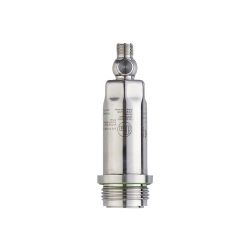 PM1709 efector 500 Pressure sensor PM-1-1BREA01-4-ZVG/US DESpecial Price THB 23,700.00 Regular Price THB 31,600.00
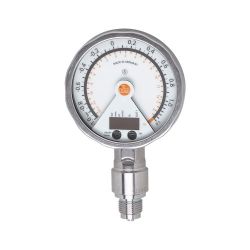 PG2409 \ efector 500 \ Pressure sensor \PG-1-1-REB12-MFRKG/US/\ P \ DESpecial Price THB 24,525.00 Regular Price THB 32,700.00
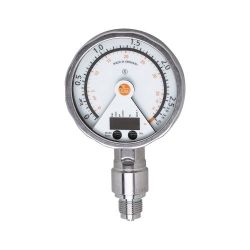 PG2456 \ efector 500 \ Pressure sensor \PG-2,5-REB12-MFRKG/US/ /P \ DESpecial Price THB 23,850.00 Regular Price THB 31,800.00
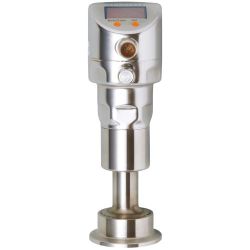 PI2209 \ efector 500 \ Pressure sensor \PI-1-1BREZ01-MFRKG/US/\ P \ DESpecial Price THB 39,600.00 Regular Price THB 52,800.00
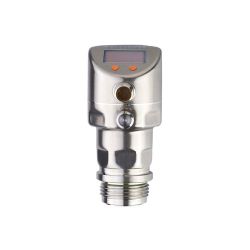 PI2799 \ efector 500 \ Pressure sensor \ PI-1-1BREA01-MFRKG/US/ \ P \ DESpecial Price THB 32,400.00 Regular Price THB 43,200.00
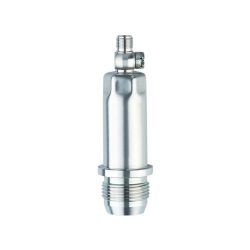 PM1609 efector 500 Pressure sensor PM-1-1BREA01-4-ZVG/US DESpecial Price THB 23,700.00 Regular Price THB 31,600.00
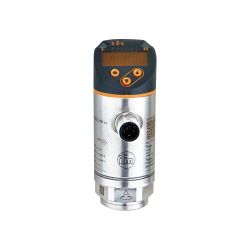 PN2099 \ efector 500 \ Pressure sensor \ PN-1-1BRER14-MFRKG/US/ /V \ DESpecial Price THB 20,250.00 Regular Price THB 27,000.00
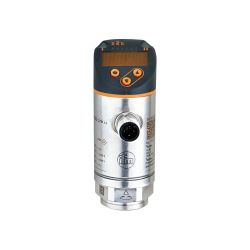 PN7099 \ efector 500 \ Pressure sensor \ PN-1-1BRER14-QFRKG/US/ /V \ DESpecial Price THB 15,000.00 Regular Price THB 20,000.00
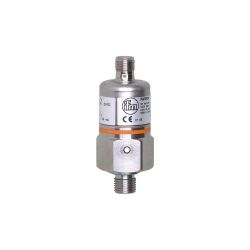 PA3509 \ efector 500 \ Pressure sensor \ PA-1-1-RBG14-A-ZVG/US/ V \ DESpecial Price THB 12,300.00 Regular Price THB 16,400.00
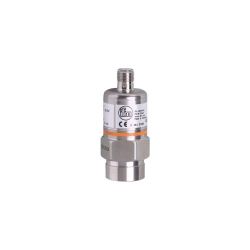 PA3029 \ efector 500 \ Pressure sensor \ PA-0-1-RBR14-A-ZVG/US/ V \ DESpecial Price THB 12,150.00 Regular Price THB 16,200.00
Delivery: 30 ต.ค. 2569
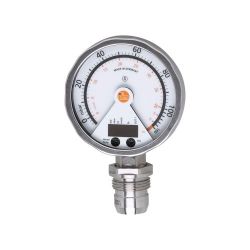 PG2889 \ efector 500 \ Pressure sensor \PG-,10BREA01-MFRKG/US/\ P \ DESpecial Price THB 32,700.00 Regular Price THB 43,600.00
Delivery: 30 ต.ค. 2569
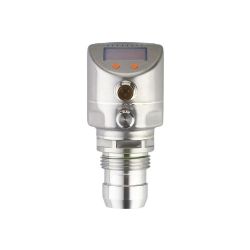 PI2899 \ efector 500 \ Pressure sensor \ PI-1-1BREA01-MFRKG/US/ \ P \ DESpecial Price THB 32,400.00 Regular Price THB 43,200.00
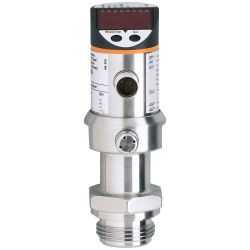 PI1099 \ efector 500 \ Pressure sensor \ PI-1-1BRES30-E-ZVG/US/ \ P \ DESpecial Price THB 37,575.00 Regular Price THB 50,100.00
Delivery: 30 ต.ค. 2569
What Are Vacuum Sensors? Get to Know the Device That Reduces Production Line Stoppages
How do vacuum sensors protect machines from mis-picking a workpiece? This article goes into detail, from the basics of what a vacuum sensor is through to using one together with a vacuum controller, so the maintenance team can genuinely set up a monitoring system on site. If you need an urgent specification check, use the online engineering consultation service from the SCMA engineering team straight away.
What Are Vacuum Sensors?
Maintenance engineers who often see the robot arm drop workpieces may ask whether the vacuum sensor is the key variable. Vacuum sensors are devices that detect pressure below atmospheric level. They assess the suction of a pneumatic system in real time. Working together with a processing device such as a vacuum controller, the system can read the suction level in finer detail, preventing the production line from stalling when air pressure suddenly drops.
How Vacuum Sensors Work
The heart of a vacuum sensor is the air pressure acting on a diaphragm inside the sensor. This diaphragm flexes according to the level of vacuum present, and an electronic circuit converts that flexing into an electrical signal. The signal is then compared against the set point that the user has configured on the vacuum controller. If suction drops or an air line leaks, the system triggers the PLC immediately. Understanding that a vacuum sensor is a highly sensitive device helps technicians set it accurately and reduces mistakes when a suction cup becomes blocked.
How Many Types of Vacuum Sensor Are There?
Choosing vacuum sensors must be based on the site conditions the maintenance team wants to monitor. Knowing the sensor types helps engineers solve problems at the root. The devices can be grouped by operating principle as follows.
Piezoresistive Sensors
This type uses a silicon element whose resistance changes when it bends. It suits systems that require a fast response and is popular on electronics assembly lines. Used together with a vacuum controller, it processes changes extremely quickly. Studying the basics helps answer whether a vacuum sensor is the right solution.
Capacitive Sensors
This system measures the change in capacitance as the diaphragm moves. Its advantage is good tolerance of fluctuating temperatures, meeting the needs of applications exposed to high heat at the machine. This device answers superbly what a vacuum sensor can do in harsh environments, and its signal to the vacuum controller is highly stable.
Three Monitoring Functions Every Maintenance Engineer Should Know
Using vacuum sensors to their full potential starts with understanding the basic functions. Correct settings let the site team set up monitoring accurately.
Detecting a Dropped Workpiece
This function assesses the suction level continuously. The system raises an alarm when the pressure falls below the value the technician has set, preventing the robot arm from moving when no workpiece is attached. It confirms that the vacuum sensor is the heart of safe handling. Configuring it through the vacuum controller keeps the operation running smoothly.
Checking for a Blocked Suction Cup
Dust or oil residue can block the suction pad. The vacuum controller reads an abnormally high suction value and alerts the maintenance technician to clean it before the production line stalls, clearly reducing damage to the process once you know that the vacuum sensor is the indicator of how clean the system is.
Checking for Leaks in the Air Line
Polyurethane air tubing that is kinked or cracked causes a loss of vacuum. The sensor detects the abnormality of the suction taking longer to build, and the vacuum controller stops the machine to prevent scrap. Checking whether the vacuum sensor is the source of the alarm helps technicians fix the problem quickly.
Key Features of Vacuum Sensors
A modern vacuum monitoring system must be intelligent and able to withstand harsh site conditions. The features of leading vacuum sensors have been developed specifically to solve downtime.
- High accuracy: Supports measurement down to millibar (mbar) resolution, working with the vacuum controller to verify signal correctness and prevent electrical interference
- Easy-to-set display: Standard models from leading brands such as ifm come with a numeric display, so technicians can set values quickly without the trouble of connecting a programming cable — confirming that the vacuum sensor is an easy device to use
- Durability: A strong body that resists impact, to IP65/IP67 standard, keeping coolant mist out of the internal circuit board
How to Put Vacuum Sensors into Service
Bringing vacuum sensors into service requires the correct parameter settings. Site technicians must know what suction value each type of workpiece needs, so the operation runs without error.
- Connecting the air line: Push the air tube firmly into the sensor port and check the fittings for leaks, to prevent distorted pressure readings
- Setting parameters: Enter the target vacuum value into the vacuum controller and adjust the hysteresis to stop the contact chattering when the pressure fluctuates
- Wiring the input signal: Check the specification to see whether the vacuum sensor is PNP or NPN type, wire it correctly according to the diagram, and feed the signal into the PLC to control the next step of the process
Industrial Applications of Vacuum Sensors
Almost every factory relies on pneumatics for handling. Applying vacuum sensors to machinery clearly reduces the maintenance team's workload.
- Packaging industry: Detecting the suction of the rubber cup when erecting cardboard boxes, preventing a box that fails to open from jamming machine parts
- Robotic palletising cells: Palletising robots lift heavy loads, and the sensor confirms safe suction before commanding the arm to lift, preventing the danger of goods falling onto staff. Using the vacuum controller to confirm the command is good safety practice
- Glass manufacturing: Glass sheets are heavy, so using a control system to manage suction at several points at once distributes the weight and reduces the risk of the glass cracking during transfer — clear proof that the vacuum sensor is an essential device in glass work
Choosing the Right Vacuum Sensors
Ordering a replacement requires a thorough specification analysis to prevent the control system misbehaving. Choosing vacuum sensors to match the site depends mainly on the measuring range.
- Assess the pressure range: Check the maximum vacuum the site's pump can generate; the sensor must cover that range without overpressure
- Look at the output format: Choose a model whose signal matches your PLC board — either a 4-20 mA analogue signal or an IO-Link communication port for pulling data into the vacuum controller for analysis
- Chemical resistance: In control cabinets with oil vapour or coolant, choose a model whose wetted material resists corrosion in order to extend service life. The team must understand that the vacuum sensor is a product whose material must be matched to the site
Maintaining Vacuum Sensors
Pressure sensing devices need maintenance to keep the diaphragm in good condition. Looking after vacuum sensors correctly keeps the system processing accurately throughout its service life.
- Change the dust filter: Dust is the great enemy of pneumatic systems. Blow it clean regularly or change the vacuum filter before debris gets in and blocks the sensor
- Check the air line connections: Vibration from the machine can loosen the fittings. Technicians must keep checking tightness to prevent leaks, which affect the calculations of the vacuum controller
- Verify accuracy: Compare the pressure reading against a standard gauge. If the value starts to drift, you can always consult the SCMA engineering team online to assess whether the vacuum sensor is the main cause of the fault
Summary
Preventing production line stoppages starts with having an accurate air pressure monitoring system. Vacuum sensors assess suction to prevent workpieces being dropped, and maintenance technicians can check for abnormalities immediately through the vacuum controller. If you are planning to replace a sensor, contact the online engineering consultation service at SCMA. We are ready to assess the specification and quickly identify which vacuum sensor model suits you, with no waiting for a technician to visit.
Frequently Asked Questions
Can a vacuum sensor also measure positive pressure?
Some models are designed as compound pressure sensors and can measure both vacuum (negative pressure) and normal pressure (positive) in the same unit, reducing the number of spare parts the plant must stock. Connecting it to the vacuum controller makes the signals clearly distinguishable.
Where in the system is the best place to mount the sensor?
The mounting point that gives the most accurate reading is as close as possible to the suction cup. Mounting it too far away creates a time lag in the reading at the vacuum controller. This confirms that the vacuum sensor is a device sensitive to distance.
What causes the sensor display to flicker frequently?
This happens when the suction value hovers exactly at the set point. The first step is to widen the hysteresis value on the sensor or the vacuum controller. If you would like us to assess whether the vacuum sensor is to blame, the SCMA team is ready to advise through our online channels immediately.
Looking for “Vacuum Sensors”? Think of SCMA!
If your site technicians often face dropping suction, upgrading to accurate vacuum sensors is the right answer. Using a standard-brand sensor together with a vacuum controller makes the vacuum system more stable and perfectly meets the goal of reducing downtime. SCMA offers a full online consultation service: although we do not have a team travelling to sites, we make up for it with the speed of matching specifications to identify which vacuum sensor is correct and compatible with your existing system. If you need to order a part urgently, contact our engineering team right away!
This website uses cookies
We use cookies to make the site work properly, to understand how it is used, and to show content that is relevant to you. You choose which types to allow; strictly necessary cookies are always on. Privacy Policy
🤖 AI Assistant
Ask about products, specs and replacement models
Hello 👋 Ask us anything — find products, compare specs, or troubleshoot.
🗑 Clear history