
SPECIAL PROMOTION — Up to 40% off across many product groups, until 31 December 2026 · Click to see all promotion itemsIFM, Sensor, Automation SystemMeasuring / Testing InstrumentsTemp Indicator, Control, T/C, RTD, TimerHeater, SCR Control, Solid State, Power Supply, Control CabinetField Measuring Instruments, Pressure Gauge, Level Control, Flow MeasurementEMC, Pneumatic, Solenoid ValveInspection Test Lamp, Head Light, Automotive Measuring InstrumentWeighing Scales, Marking Machine, PrintersEducational Training SystemsHot Line Tools & Equipment SPECIAL PROMOTION — Up to 40% off across many product groups, until 31 December 2026 · Click to see all promotion itemsIFM, Sensor, Automation SystemMeasuring / Testing InstrumentsTemp Indicator, Control, T/C, RTD, TimerHeater, SCR Control, Solid State, Power Supply, Control CabinetField Measuring Instruments, Pressure Gauge, Level Control, Flow MeasurementEMC, Pneumatic, Solenoid ValveInspection Test Lamp, Head Light, Automotive Measuring InstrumentWeighing Scales, Marking Machine, PrintersEducational Training SystemsHot Line Tools & Equipment View promotion items View all
Digital Humidity Controller
What is a Digital Humidity Controller?
A Digital Humidity Controller is an equipment used to control and adjust the humidity level in the air to desired values. It features a digital screen that allows precise setting and measurement of humidity levels. The operation of this device includes:
- A humidity sensor measures the moisture content in the air and sends data to the controller for processing.
- The desired humidity level can be set via the digital screen. The controller will turn on or off humidifiers or dehumidifiers as needed based on the settings.
- When the humidity in the area exceeds or falls below the set levels, the controller sends signals to the humidifier or dehumidifier to adjust the moisture level back to an appropriate range.
Industries Using Digital Humidity Controllers
- Manufacturing industries such as pharmaceuticals, electronics, and food production that require controlled environmental conditions to maintain product quality.
- Storage rooms to prevent damage to goods from excessive or insufficient humidity.
- Laboratories for creating suitable environments for experiments and measurements.
- Art storage facilities to protect valuable artworks and artifacts from moisture damage.
Popular Brands of Digital Humidity Controllers
- Aeropak, a brand with products designed for various industrial applications.
- Guide Sensmart, known for highly accurate and easy-to-use products that are also durable.
- Fluke, a leading American company in electronic measurement tools.
- KEPLER INSTRUMENTS, offering a wide range of high-quality and reliable products.
- Testo, a German brand renowned for environmental measurement tools, particularly in food production, medical applications, and quality control.
View the Digital Humidity Controller Catalogue: Click Here
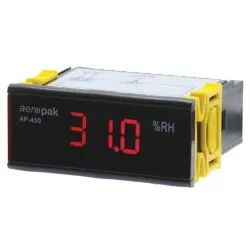 Aeropak Digital Humidity Model AP-450Special Price THB 1,440.00 Regular Price THB 1,800.00
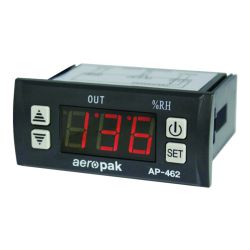 Aeropak Digital Humidity Controller Model AP-462Special Price THB 1,920.00 Regular Price THB 2,400.00
What is a Digital Humidity Controller? A Complete Buying Guide
In industrial production, agriculture, or even server room management, maintaining constant humidity levels is crucial. Choosing to use a Digital Humidity Controller can help reduce damage and increase productivity. This article will explain how these devices work, the different types available, and tips on selecting the best controller for your needs, along with information about humidity controller prices to assist in decision-making.
What is a Digital Humidity Controller? And Why Is It Important?
A digital humidity controller is an electronic device that measures relative humidity (%RH) through a humidity sensor and processes the data to control external devices, such as turning on humidifiers when humidity levels are too low or activating fans when they're too high. These controllers often come with built-in temperature and humidity sensors for comprehensive monitoring.
Basic Working Principles
The process starts with a sensor measuring the humidity level, converting it into an electrical signal sent to a microcontroller. The controller then compares this value against the set point established by the user. If conditions are not met, a relay will activate or deactivate external devices automatically. For more information on how these controllers work, see our article Temperature Humidity Controller
The Importance of Controlling Humidity in Various Applications
Inappropriate humidity levels can cause significant damage, such as mushrooms failing to grow if the humidity is too low or server rooms experiencing electrical shorts due to high humidity. In food manufacturing, controlling humidity helps prevent mold and spoilage.
Types of Digital Humidity Controllers You Should Know
There are various types of digital temperature and humidity controllers available in the market. Choosing the wrong type can lead to ineffective control.
On/Off Control Type
This is the simplest form of control, turning on when humidity levels are too low and off once they reach a set point. It's cost-effective and easy to use for general applications like egg incubators or greenhouses.
Proportional Control (PID) Type
This is a highly accurate control system that calculates the appropriate power output to maintain humidity levels without causing fluctuations. It's ideal for labs or rooms requiring high precision.
Integrated Sensor vs Separate Sensor Types
- Integrated: Easy to install and convenient, but the controller must be placed where humidity is measured.
- Sensor Separated: The controller remains outside while the sensor measures in specific areas. Ideal for ovens or hard-to-reach spaces. For more information on sensor types, see Temperature – Humidity Sensor
7 Key Factors to Consider When Buying a Digital Humidity Controller
To get the best temperature and humidity controllers, consider these factors:
1. Measurement Range & Accuracy
Check if the measurement range covers your needs (e.g., 0-99% RH) and ensure accuracy is acceptable, such as ±3% for agriculture or ±1% for research.
2. Output Type (Relay, SSR)
- Relay: Suitable for general loads with infrequent switching; cost-effective.
- SSR (Solid State Relay): Ideal for PID control requiring high-frequency switching, silent operation, and longer lifespan.
3. Additional Features (Timer, Alarm)
Some models come with timer or alarm functions to alert when humidity levels are abnormal, enhancing system safety.
4. Size & Installation Type (DIN Rail, Panel Mount)
Choose an installation type that fits your application, such as DIN rail for control panels or panel mount for aesthetic purposes.
5. Operating Environment (Temperature, Water Resistance)
If installed in high-humidity areas with water droplets, choose models with appropriate IP ratings for protection against moisture and dust.
6. Reliability & Brand
Selecting a brand with industry standards ensures durability and accuracy over DIY equipment.
7. Price & Budget
Humidity controller prices range from hundreds to thousands, depending on features and accuracy. Choose based on the importance of your application.
Recommended Models for Different Applications
Selecting a digital humidity controller that matches your needs will extend equipment lifespan.
Mushroom Farms and Agricultural Farms
Choose models resistant to high humidity with easily replaceable sensors if damaged.
Egg Incubators
Require high accuracy in the 50-70% RH range and should include temperature control functions. For more information, see our article on Temperature Humidity Meter
Server Rooms and Electronic Equipment Storage Areas
Choose models with alarm functions and central monitoring system compatibility.
Labs and Industries
Use PID control for maximum accuracy and calibration support.
Installation & Initial Setup Tips
Installing a digital humidity controller requires careful adherence to the user manual.
Safely Connecting Wires
- Always turn off power before installation.
- Verify the correct connections for power supply and output.
- Ensure humidity sensor wiring is correctly connected without reversing polarity.
Setting Humidity Control Levels (Set Point)
Press the Set button and select your desired humidity level, such as maintaining 60% RH.
Setting Hysteresis (Operating Range Difference)
Hysteresis is a "range" to prevent frequent on/off cycles. For example, set at 60% with hysteresis of 5%, the device will activate below 55% and deactivate above 60%.
When Looking for Digital Humidity Controllers, Think SCMA!
For high-quality industrial digital humidity controllers with accuracy, durability, and reliable service, SCMA offers various models to meet your needs. Contact our expert engineers for advice on selection and installation at SCMA Services or view all products at All Products
Summary
Selecting a digital humidity controller isn't just about finding the cheapest option but considering suitability, accuracy, and after-sales service. A good control system enhances product quality and extends equipment lifespan. For further consultation, contact SCMA at any time.
Frequently Asked Questions
Do You Need to Calibrate Humidity Controllers?
Yes, especially for high-precision work. Calibration should be done annually or when readings start deviating.
How Long Do Humidity Sensors Last?
Typically around 1-3 years depending on environmental conditions; harsher environments may shorten lifespan.
Where Can You Buy Digital Humidity Controllers?
Available from industrial equipment distributors or online through SCMA with warranty and support.
Additional References: Wikipedia - Humidity Indicator
Selecting a digital humidity controller isn't just about finding the cheapest option but considering suitability, accuracy, and after-sales service. A good control system enhances product quality and extends equipment lifespan. For further consultation, contact SCMA at any time.
Frequently Asked Questions
Do You Need to Calibrate Humidity Controllers?
Yes, especially for high-precision work. Calibration should be done annually or when readings start deviating.
How Long Do Humidity Sensors Last?
Typically around 1-3 years depending on environmental conditions; harsher environments may shorten lifespan.
Where Can You Buy Digital Humidity Controllers?
Available from industrial equipment distributors or online through SCMA with warranty and support.
Additional References: Wikipedia - Humidity Indicator
This website uses cookies
We use cookies to make the site work properly, to understand how it is used, and to show content that is relevant to you. You choose which types to allow; strictly necessary cookies are always on. Privacy Policy
🤖 AI Assistant
Ask about products, specs and replacement models
Hello 👋 Ask us anything — find products, compare specs, or troubleshoot.
🗑 Clear history