
SPECIAL PROMOTION — Up to 40% off across many product groups, until 31 December 2026 · Click to see all promotion itemsIFM, Sensor, Automation SystemMeasuring / Testing InstrumentsTemp Indicator, Control, T/C, RTD, TimerHeater, SCR Control, Solid State, Power Supply, Control CabinetField Measuring Instruments, Pressure Gauge, Level Control, Flow MeasurementEMC, Pneumatic, Solenoid ValveInspection Test Lamp, Head Light, Automotive Measuring InstrumentWeighing Scales, Marking Machine, PrintersEducational Training SystemsHot Line Tools & Equipment SPECIAL PROMOTION — Up to 40% off across many product groups, until 31 December 2026 · Click to see all promotion itemsIFM, Sensor, Automation SystemMeasuring / Testing InstrumentsTemp Indicator, Control, T/C, RTD, TimerHeater, SCR Control, Solid State, Power Supply, Control CabinetField Measuring Instruments, Pressure Gauge, Level Control, Flow MeasurementEMC, Pneumatic, Solenoid ValveInspection Test Lamp, Head Light, Automotive Measuring InstrumentWeighing Scales, Marking Machine, PrintersEducational Training SystemsHot Line Tools & Equipment View promotion items View all
Sound Level Meters
What is a Sound Level Meter?
A sound level meter is an instrument used to measure the intensity of sound in decibels (dB). It plays a crucial role in assessing acoustic environments across various industries and general applications. The device uses a microphone to capture sound signals, converting them into electrical signals for internal circuit processing, which then displays the sound levels in dB. Sound level meters also employ different filters such as A-weighting, B-weighting, and C-weighting to suit specific measurement scenarios.
Types of Sound Level Meters
- Class 1 Sound Level Meter offers the highest accuracy and is used for research and high-precision sound measurements.
- Class 2 Sound Level Meter provides adequate accuracy suitable for general use and environmental noise monitoring.
- Integrating Sound Level Meter can accumulate measured sound levels over a period to provide an average level of sound.
- Logging Sound Level Meter has the capability to record long-term noise data for later analysis.
Applications of Sound Level Meters
- Measuring and controlling sound levels in factories or offices to prevent health risks from excessive noise.
- Evaluating and analyzing sound levels in public areas or near construction sites to assess community impact.
- Managing sound levels at concerts, cinemas, and other entertainment events for quality and safety.
- Using them in research on sound and the development of related equipment or systems.
Famous Brands of Sound Level Meters
- Bruel & Kjaer, a leading Danish brand specializing in acoustic measurement devices and analysis tools.
- Casella, a UK manufacturer known for its design and durability in sound measuring instruments.
- Extech, a company producing high-precision and efficient sound level meters covering various applications.
- KEPLER INSTRUMENTS, featuring a wide range of products with high quality and reliability.
- PCE Instruments, focusing on affordable yet reliable measuring tools suitable for general use.
- Testo, a German brand renowned in the field of sound measurement and environmental monitoring equipment.
View Sound Level Meter Catalog: Click here
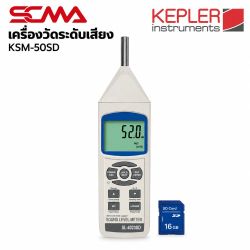
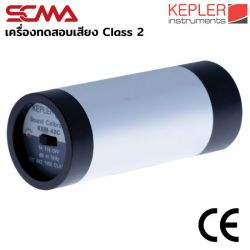 KSM-42C KEPLER Class 2 Sound Level CalibratorSpecial Price THB 7,600.00 Regular Price THB 9,500.00
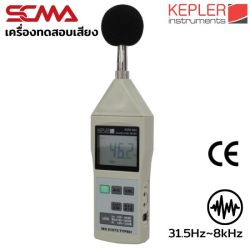 KSM-402 KEPLER Sound level meterSpecial Price THB 4,080.00 Regular Price THB 5,100.00
Delivery: 30 ต.ค. 2569
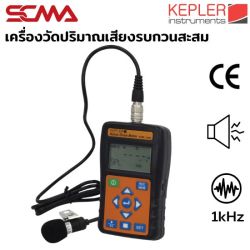 KSM-130N KEPLER Noise Dose MeterSpecial Price THB 18,000.00 Regular Price THB 22,500.00
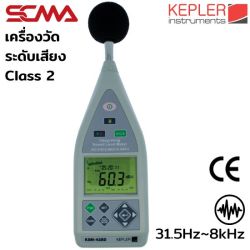 KSM-42SD KEPLER Sound level meterSpecial Price THB 28,240.00 Regular Price THB 35,300.00
Delivery: 30 ต.ค. 2569
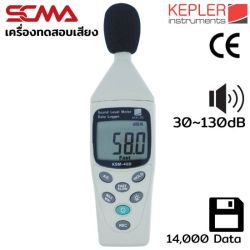 KSM-40D KEPLER Sound level meterSpecial Price THB 7,760.00 Regular Price THB 9,700.00
Delivery: 30 ต.ค. 2569
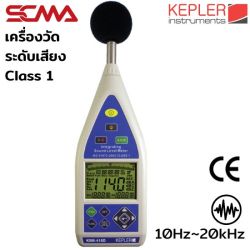 KSM-41SD KEPLER Sound level meterSpecial Price THB 58,400.00 Regular Price THB 73,000.00
Delivery: 30 ต.ค. 2569
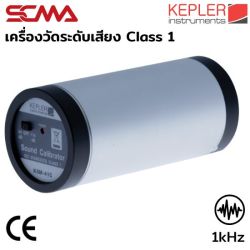 KSM-41C KEPLER Class 1 Sound Level CalibratorSpecial Price THB 22,240.00 Regular Price THB 27,800.00
Delivery: 30 ต.ค. 2569
Sound Level Meter (Sound Level Meter) Guide to Selecting a Sound Measurement Device for Factories
Controlling noise pollution in industrial factories is serious and affects both employee health and legal compliance. Having a standard-compliant sound level meter or noise measuring device is essential for safety officers, maintenance teams to check sound measurements according to ministerial regulations on managing workplace safety, occupational health, and environmental standards. Properly selecting accurate sound meters helps prevent hearing loss and reduces the risk of factory shutdowns.
What is a Sound Level Meter?
A sound level meter is an electronic measuring tool designed to measure sound pressure levels (SPL) in decibels (dB). It simulates human hearing. This device, sometimes called a sound pressure level meter, is the primary tool for conducting sound checks or monitoring noise environments in work areas. Its main function is to convert physical sound waves into readable and recordable numerical values for comparison with safety standards or analysis of noise sources from machinery. The difference from mobile applications lies in its accuracy and ability to calibrate according to international IEC 61672 standards.
Basic Working Principles of Sound Level Meter
The working mechanism of a sound level meter starts with the microphone, which acts as a transducer. When sound waves hit it, the diaphragm inside the microphone vibrates according to changing air pressure. This vibration is converted into a very low-level electrical signal. Then, internal circuits amplify and pass through frequency weighting networks to adjust the response to match human hearing characteristics (such as A-weighting). Finally, an analog-to-digital converter processes and displays the decibel value on the screen.
Why is Measuring Sound Levels Important?
Measuring sound levels with a sound level meter is one of the most important proactive measures for safety management. Exposure to noise over 85 dBA for long periods can permanently damage inner ear hair cells, leading to noise-induced hearing loss (NIHL). Besides health concerns, data from sound measurements are used for machine condition monitoring. Abnormal sounds often signal bearing failure or improper shaft alignment. Accurate data helps plan maintenance and implement effective hearing conservation programs.
Types of Sound Level Meter
Choosing the right type of device is crucial because each sound level meter has different accuracy levels and functions. They can be broadly categorized as follows:
- Class 1 (Precision Grade): High-precision measuring devices with very low error rates, suitable for legal accuracy work, research, calibration, or strict environmental sound measurements. They are standard tools for acoustical engineers and laboratories.
- Class 2 (General Purpose): Noise Meters for general use, with slightly higher error rates than Class 1 but sufficient for industrial safety checks, initial noise surveys, and compliance with most labor laws.
- Integrating-Averaging Sound Level Meter: Can calculate the average sound level over a specified period (Leq), suitable for measuring fluctuating or impact sounds in production lines to assess average exposure during work shifts.
- Noise Dosimeter: A personal noise meter, compact and worn on the shoulder of employees to measure cumulative sound dose throughout working hours. Suitable for workers moving between different areas where handheld meters cannot be used.
Basic Usage Tips for Sound Level Meter to Get Accurate Results
Getting accurate results depends not only on the quality of sound meters but also on correct measurement methods. Key steps include:
- Calibration: Calibrate the device with a sound calibrator before and after each measurement to ensure the microphone is functioning correctly. Without this step, measured values may not be legally valid.
- Frequency Weighting: Set according to purpose; typically use "A-Weighting" (dBA) for human-related noise measurements and safety standards, while "C-Weighting" (dBC) is used for low-frequency or high-impact machinery sounds.
- Time Weighting: Choose "Fast" (125 ms) for general sound measurements with normal level changes, and "Slow" (1 second) for steady sounds or easier averaging. This ensures stable numerical readings.
- Positioning: Hold the sound level meter at least one arm's length away from your body to prevent body reflections, and mount it on a tripod for long-term measurements. The microphone should be at ear level of the operator.
Guide to Purchasing Sound Level Meter
When buying a sound level meter, consider technical factors comprehensively for an effective and cost-efficient tool that meets labor department requirements:
- Accuracy Class: Decide between Class 1 or Class 2 based on your needs. For legal reports or disputes, choose Class 1; for internal monitoring, Class 2 is sufficient and more budget-friendly.
- Measurement Range: The device should cover factory noise levels from 30 to 130 dB, accommodating both quiet office sounds and loud machinery.
- Data Logging Function: For trend analysis or management reports, choose a model that can log data to memory and transfer it to computers for error-free record-keeping.
- Necessary Accessories: Check if the set includes a sound calibrator and windscreen. The windscreen is crucial near vents or air conditioners to reduce wind noise.
Comprehensive Sound Level Meter Solutions from SCMA for All Industries
If your factory needs reliable sound safety solutions, SCMA is a technical partner offering high-quality sound level meters and noise dosimeters from leading global brands. Our expert engineers in Chonburi (EEC) and Lampang provide consultation from selecting compliant equipment to on-site demonstrations and after-sales calibration services for accurate data. Learn more about SCMA Services here.
Summary
Having a standard-compliant sound level meter and proper usage is the first line of defense against noise hazards. Investing in accurate measuring tools not only ensures legal compliance but also reflects responsibility for employee well-being. For deeper advice on sound meters or other safety equipment, consult SCMA immediately.
Frequently Asked Questions
Can Mobile Apps Replace Sound Level Meters?
Not recommended for safety or legal measurements due to mobile phone microphones' lack of precise sound pressure measurement design and standard calibration. Values often have high deviations, especially in very loud or quiet environments.
How Often Should Sound Calibrators Be Calibrated?
Sound calibrators themselves need to be calibrated by a certified laboratory (ISO/IEC 17025) at least once a year to ensure their reference sound level remains accurate.
How Does a Noise Dosimeter Differ from a Sound Level Meter?
A sound level meter measures sound levels at specific points or areas, while a noise dosimeter tracks the actual cumulative sound exposure of individuals throughout their work hours, moving with them across different noisy environments.
This website uses cookies
We use cookies to make the site work properly, to understand how it is used, and to show content that is relevant to you. You choose which types to allow; strictly necessary cookies are always on. Privacy Policy
🤖 AI Assistant
Ask about products, specs and replacement models
Hello 👋 Ask us anything — find products, compare specs, or troubleshoot.
🗑 Clear history