
SPECIAL PROMOTION — Up to 40% off across many product groups, until 31 December 2026 · Click to see all promotion itemsIFM, Sensor, Automation SystemMeasuring / Testing InstrumentsTemp Indicator, Control, T/C, RTD, TimerHeater, SCR Control, Solid State, Power Supply, Control CabinetField Measuring Instruments, Pressure Gauge, Level Control, Flow MeasurementEMC, Pneumatic, Solenoid ValveInspection Test Lamp, Head Light, Automotive Measuring InstrumentWeighing Scales, Marking Machine, PrintersEducational Training SystemsHot Line Tools & Equipment SPECIAL PROMOTION — Up to 40% off across many product groups, until 31 December 2026 · Click to see all promotion itemsIFM, Sensor, Automation SystemMeasuring / Testing InstrumentsTemp Indicator, Control, T/C, RTD, TimerHeater, SCR Control, Solid State, Power Supply, Control CabinetField Measuring Instruments, Pressure Gauge, Level Control, Flow MeasurementEMC, Pneumatic, Solenoid ValveInspection Test Lamp, Head Light, Automotive Measuring InstrumentWeighing Scales, Marking Machine, PrintersEducational Training SystemsHot Line Tools & Equipment View promotion items View all
Thermo-Hygrometer
What is a Thermo-Hygrometer?
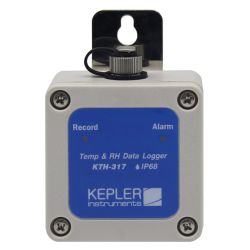
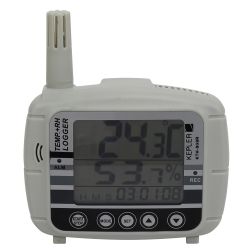
A thermo-hygrometer is an instrument that measures air temperature and humidity. It can measure the range of moisture content and temperature according to heat or cold levels, as well as dew point temperatures. Some models also have data logging capabilities for transferring information to a computer for detailed analysis.
Thermo-Hygrometer Measurement Units
- Temperature measurement values are displayed in degrees Celsius (°C), and some models can display in degrees Fahrenheit (°F).
- Relative humidity is shown as %RH.
Types of Thermo-Hygrometers
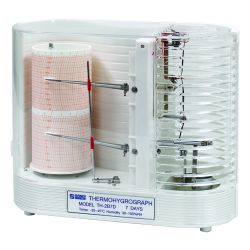
- Analog Thermo Hygrometer - A temperature and humidity measuring device with a needle display.
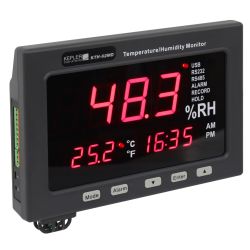
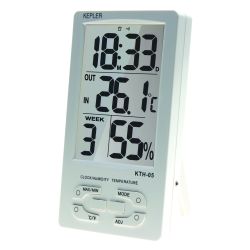
- Digital Thermo Hygrometer - A temperature and humidity measuring device with a digital display showing numerical values.
Industries Using Thermo-Hygrometers
- In the food and beverage industry, to control temperature and humidity during production, storage, and transportation processes.
- In the pharmaceutical and medical industry, for checking and controlling humidity and temperature in laboratories, clean rooms, and drug, vaccine, or medical product storage that require strict environmental conditions.
- In machinery and electronics manufacturing industries, to monitor appropriate moisture and temperature levels to prevent damage to electronic equipment.
- In agriculture and farming industries, for controlling critical humidity and temperature conditions in greenhouses, livestock management, and crop harvesting.
- In the energy and electrical industry, to monitor and control environmental conditions of important equipment.
Famous Brands of Thermo-Hygrometers
- Fluke - A leading American company in electronic measuring tools.
- KEPLER INSTRUMENTS - A brand with a wide range of high-quality and reliable products.
- Trotec - A prominent German brand, Trotec products are often used in work requiring environmental control.
- Vaisala - A Finnish brand specializing in environmental measurement, humidity, and temperature. Vaisala products are commonly used in aviation, medical, and pharmaceutical manufacturing industries.
View Thermo-Hygrometer Catalog : Click here
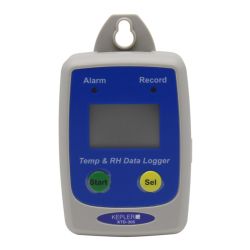
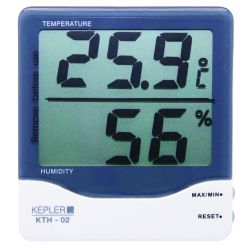
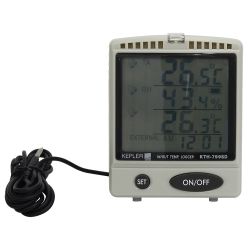
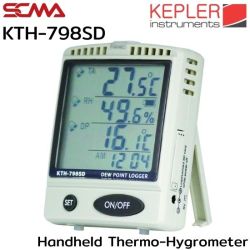
What is a Thermo Hygrometer? A Complete Guide to Buying and Using
What is a Thermo Hygrometer, and how important is it in daily life? If you are looking for an accurate temperature and humidity meter to monitor the health of people at home or control product quality in factories, this article will introduce you to the thermo hygrometer comprehensively, from its working principles, types, to selecting a suitable device based on your needs. Expert advice is also provided to make decision-making easier. For immediate product information, visit SCMA Services
What is a Thermo Hygrometer?
A thermo hygrometer is a measuring tool that combines the functions of a thermometer (measuring temperature) and a hygrometer (measuring relative humidity) in one device to accurately monitor and control environmental conditions. It is suitable for laboratories, food industries, hospitals, and general use where constant temperature and humidity are required for health and product quality.
Simple Definition and Meaning
Simply put, it's a device that tells us immediately "how hot it is now" and "what level of moisture is in the air." The hygrometer is the key component that helps us know the relative humidity (%RH) while the thermometer indicates temperature (°C/°F). Combining these two values allows for a more comprehensive assessment of weather conditions.
Differences Between Thermometer, Hygrometer, and Thermo Hygrometer
A thermometer measures only temperature, while a hygrometer measures only humidity. However, a thermo hygrometer combines the capabilities of both, making it more convenient and space-saving than buying them separately.
Why is Measuring Temperature and Humidity Important? (Benefits of Thermo Hygrometer)
Controlling the environment isn't just about comfort; it directly affects health and property. A temperature and humidity meter helps address unseen issues promptly.
For Home and Living Spaces: Preventing Mold, Allergies, and Creating Comfortable Conditions
Excessive moisture is a breeding ground for mold and dust mites, which are major causes of allergies. On the other hand, too little moisture can cause dry skin and irritation in the throat. Having a humidity meter at home helps adjust the air conditions to be comfortable and healthy.
For Industry: Controlling Quality in Warehouses, Labs, Server Rooms
In industrial settings, relative humidity meters are essential for controlling product quality such as medicines, food, or electronic components that may be damaged if the moisture level is inappropriate. Additionally, server rooms need to remain cool and dry to prevent equipment damage.
For Specialized Work: Agriculture, Greenhouses, Livestock Raising, Product Storage
Farmers use humidity sensors to control greenhouse conditions for optimal plant growth or during temperature-sensitive product transportation (Cold Chain). Accurate data can significantly reduce losses.
Basic Working Principle of Thermo Hygrometer
The basic working principle of the Thermo Hygrometer involves using electronic sensors (such as thermistors, thermocouples) to measure temperature and capacitive or resistive sensors to measure relative humidity. The physical or electrical changes in these sensors are converted into electrical signals, processed, and displayed numerically on a screen. There are separate principles for temperature (expansion/contraction or resistance/voltage change) and humidity (dielectric constant/material polymer resistance change due to water vapor absorption). For more information, see the Thermo Hygrometer Blog
Temperature Sensor
Most commonly, a Thermistor or RTD (Resistance Temperature Detector) is used, which are materials where electrical resistance changes with temperature, allowing for more precise and accurate measurements than traditional mercury types.
Humidity Sensor
A capacitive sensor is typically used, working by measuring the change in electric charge storage according to the amount of water vapor in the air. This allows for quick and responsive humidity measurement. For more details about sensors, see Temperature – Humidity Sensor
How Many Types of Thermo Hygrometer Are There? Which One Is Right for You?
Choosing the right type of humidity and temperature meter helps ensure optimal performance and value.
Analog Type: Advantages, Disadvantages, and Suitable Usage
Needle or wet-dry bulb hygrometer types do not require batteries, are durable, and inexpensive. However, they can be harder to read and may have higher inaccuracies compared to digital models. They are suitable for rough estimates without the need for high precision.
Digital Type: Advantages, Disadvantages, and Current Popularity
They display clear numerical readings on an LCD screen, making them easy to read with high accuracy. They often have additional features such as maximum/minimum recording (Max/Min) functions and are currently the most popular choice for both home and industrial use.
External Probe Type: For Hard-to-Reach Measurement Points
Suitable for refrigerators, ovens, or external building measurements. The unit stays outside while the sensor probe is inserted to measure desired points, making it convenient to read values without opening the appliance.
5 Key Factors to Consider When Buying a Thermo Hygrometer
To get a worthwhile weather measuring tool, you should consider these factors before purchasing.
Measurement Range and Accuracy (Range & Accuracy)
Check the specifications to see if it supports the temperature and humidity range you need, and whether the accuracy level is acceptable (e.g., ±1°C, ±5%RH).
Additional Features You Should Know About (Data Logger, Max/Min, Alarm)
If you need to log data retrospectively, choose a model with Data Logger functionality. If you require alerts when values are abnormal, the Alarm function will be very helpful. See an example of measuring tools at Temperature Humidity Meter
Display and Size of the Device
Choose a display that is easy to read, with clear numbers. Some models have backlight for viewing in dark areas, and an appropriate size for installation space.
Power Source (Battery or Adapter)
Battery-operated models are convenient for portability and installation anywhere, while plug-in types are suitable for permanent installations that require continuous use.
The Importance of Calibration
A good measuring tool should be calibratable to ensure the readings remain accurate. This is especially important in industries requiring certification standards.
If You Are Looking for a Thermo Hygrometer, Think SCMA!
If you are looking for high-quality and precise Thermo Hygrometers suitable for general or industrial use, SCMA offers a wide range of carefully selected products. Our team of expert engineers is ready to provide advice on selecting the most suitable temperature and humidity measuring devices for your needs. You can view all our products at All Products
Summary
Choosing a good Thermo Hygrometer helps you efficiently control your environment, whether it's for home health care or factory quality control. Understanding the working principles and types of tools will help make your decision worthwhile. If you need further consultation, you can contact SCMA experts immediately.
Frequently Asked Questions
Where should the device be placed in a room?
It should be placed in an area with good air circulation, about 1.5 meters above the ground, avoiding direct sunlight and sources of heat such as air conditioners or heaters to ensure it accurately represents the room's conditions.
How often does calibration need to be done?
For general use, annual calibration is recommended. However, for industrial applications with strict requirements, bi-annual calibration or after a significant impact may be necessary.
What is the appropriate humidity level for a typical room?
The relative humidity that is comfortable for humans ranges from about 40-60% RH. Lower than this can cause dry skin, while higher levels may feel oppressive and increase mold risk.
Learn more about how a hygrometer works at MyCElectric
This website uses cookies
We use cookies to make the site work properly, to understand how it is used, and to show content that is relevant to you. You choose which types to allow; strictly necessary cookies are always on. Privacy Policy
🤖 AI Assistant
Ask about products, specs and replacement models
Hello 👋 Ask us anything — find products, compare specs, or troubleshoot.
🗑 Clear history