
SPECIAL PROMOTION — Up to 40% off across many product groups, until 31 December 2026 · Click to see all promotion itemsIFM, Sensor, Automation SystemMeasuring / Testing InstrumentsTemp Indicator, Control, T/C, RTD, TimerHeater, SCR Control, Solid State, Power Supply, Control CabinetField Measuring Instruments, Pressure Gauge, Level Control, Flow MeasurementEMC, Pneumatic, Solenoid ValveInspection Test Lamp, Head Light, Automotive Measuring InstrumentWeighing Scales, Marking Machine, PrintersEducational Training SystemsHot Line Tools & Equipment SPECIAL PROMOTION — Up to 40% off across many product groups, until 31 December 2026 · Click to see all promotion itemsIFM, Sensor, Automation SystemMeasuring / Testing InstrumentsTemp Indicator, Control, T/C, RTD, TimerHeater, SCR Control, Solid State, Power Supply, Control CabinetField Measuring Instruments, Pressure Gauge, Level Control, Flow MeasurementEMC, Pneumatic, Solenoid ValveInspection Test Lamp, Head Light, Automotive Measuring InstrumentWeighing Scales, Marking Machine, PrintersEducational Training SystemsHot Line Tools & Equipment View promotion items View all
Transmitter
What is a Transmitter?
A transmitter is an instrument used to convert signals from sensors and transmit them to control systems or other data processing systems. It is related to the measurement of physical parameters such as temperature, pressure, humidity, liquid flow rate, or liquid level.
How a Transmitter Works
- It starts with measurement, where sensors detect physical parameters and convert them into electrical signals.
- Convert the raw electrical signal from the sensor into a standard signal that the control system can monitor and understand for accurate reading.
- After converting the signal, it sends the signal to the control system for display.
Benefits of Using a Transmitter
- Increases accuracy in measuring physical parameters.
- Helps transmit measurement signals to control systems over long distances without losing accuracy.
- Enables automated control systems to respond immediately to changes in various parameters.
- Monitors and alerts when measured parameter values exceed set limits, helping prevent unexpected incidents.
- Reduces the need for personnel to enter hazardous areas.
- Can be used in a variety of industries.
Famous Transmitter Brands
- E+E Elektronik, a leading brand recognized in the industry.
- Endress+Hauser, a German leader in industrial products.
- KEPLER INSTRUMENTS, with a wide range of high-quality and reliable products.
- SANGI, offering products tailored to various industrial needs.
- Yokogawa, known for its high accuracy, ease of use, and durability.
View the Transmitter Catalog : Click here
 เครื่องแปลงสัญญาณ/เทอร์โมคัพเพิ้ล TT-100A, 0...+100C /Type K, Output 4-20mA /220VACSpecial Price THB 2,805.00 Regular Price THB 3,740.00
Delivery: 30 ต.ค. 2569
- เครื่องแปลงสัญญาณ/เทอร์โมคัพเพิ้ล TT-100A-S, 0...+200C / 24VDCราคาโปรดติดต่อเจ้าหน้าที่
- เครื่องแปลงสัญญาณ/เทอร์โมคัพเพิ้ล Type K 0-1000 C Model TT-100A-Sราคาโปรดติดต่อเจ้าหน้าที่
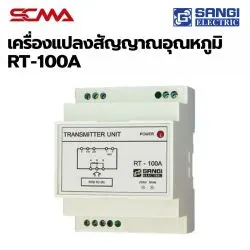 RT-100A Transmitter SANGISpecial Price THB 2,805.00 Regular Price THB 3,740.00
Delivery: 30 ต.ค. 2569
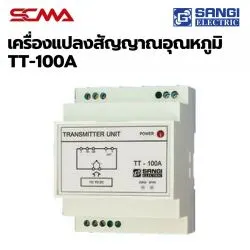 TT-100A Transmitter SANGIราคาโปรดติดต่อเจ้าหน้าที่
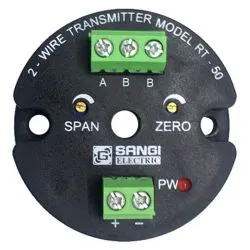 SANGI RT-500~500C PT100 RTD TransmitterSpecial Price THB 3,432.00 Regular Price THB 4,290.00
Delivery: 30 ต.ค. 2569
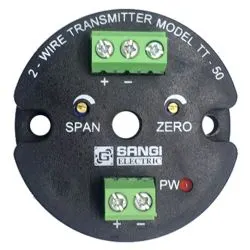 SANGI Thermocouple Transmitter Model TT-50 0-100C TYPE KSpecial Price THB 3,432.00 Regular Price THB 4,290.00
Delivery: 30 ต.ค. 2569
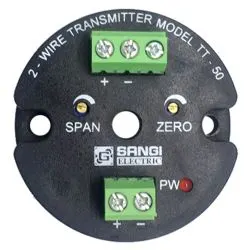 SANGI Thermocouple Transmitter Model TT-50 0-200 C TYPE KSpecial Price THB 3,432.00 Regular Price THB 4,290.00
Delivery: 30 ต.ค. 2569
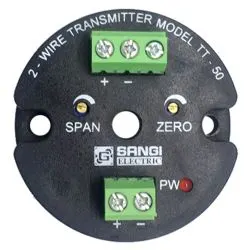 SANGI Thermocouple Transmitter Model TT-50 0-300°C TYPE KSpecial Price THB 3,432.00 Regular Price THB 4,290.00
Delivery: 30 ต.ค. 2569
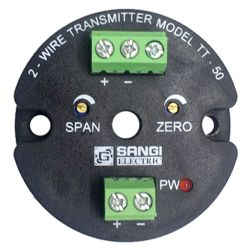 SANGI Thermocouple Transmitter Model TT-50 0-400C TYPE KSpecial Price THB 3,432.00 Regular Price THB 4,290.00
Delivery: 30 ต.ค. 2569
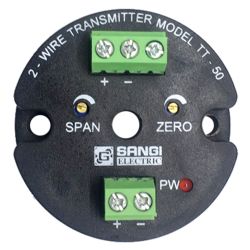 SANGI Thermocouple Transmitter Model TT-50 0-1200C TYPE KSpecial Price THB 3,432.00 Regular Price THB 4,290.00
Delivery: 30 ต.ค. 2569
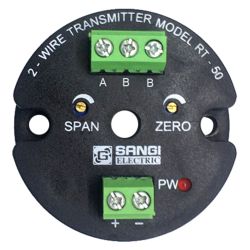 SANGI RTD Transmitter Model RT-50 0~100C PT-100Special Price THB 3,432.00 Regular Price THB 4,290.00
Delivery: 30 ต.ค. 2569
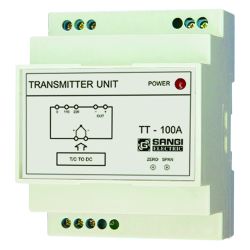 SANGI Thermocouple Transmitter Model TT-100ASpecial Price THB 2,992.00 Regular Price THB 3,740.00
Delivery: 30 ต.ค. 2569
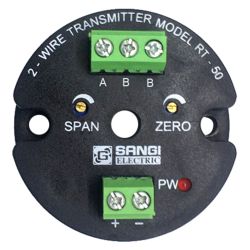 SANGI RTD Transmitter Model RT-50 0~200C PT-100Special Price THB 3,432.00 Regular Price THB 4,290.00
Delivery: 30 ต.ค. 2569
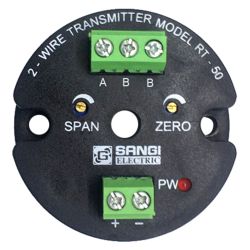 SANGI RTD Transmitter Model RT-50 0~300C PT-100Special Price THB 3,432.00 Regular Price THB 4,290.00
Delivery: 30 ต.ค. 2569
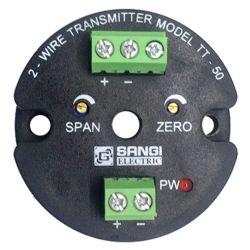 SANGI Thermocouple Transmitter Model TT-50 0-1000C TYPE KSpecial Price THB 3,432.00 Regular Price THB 4,290.00
Delivery: 30 ต.ค. 2569
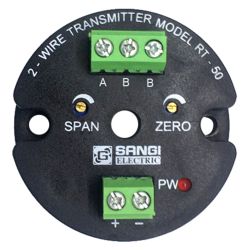 SANGI RTD Transmitter Model RT-50 0~150C PT-100Special Price THB 3,432.00 Regular Price THB 4,290.00
Delivery: 30 ต.ค. 2569
What is a Transmitter? How it Works, Types and Basic Usage
Have you ever wondered what a transmitter is and why this small device is crucial to industries worldwide? Whether measuring pressure, temperature, humidity, voltage, current, vibration, flow rate or liquid level, the transmitter (or transducer) is key in converting these physical values into signals that control systems can understand. This article delves into how transmitters work, different types of transmitters and explains why 4-20mA signal is an indispensable standard. If you need experts to manage your measurement and control system comprehensively, check out SCMA Services
What is a Transmitter?
A transmitter (or transducer) is an electronic device that converts measurable physical parameters from sensors (such as temperature, pressure, flow rate or liquid level) into standard electrical signals (e.g., 4-20mA, 0-10V) or pneumatic signals to be transmitted over long distances to control devices (controllers), PLCs, or display systems without losing accuracy.
Definition and Meaning of Transmitter
The term "transmitter" translates to "sender" in measurement and control engineering, meaning an "signal-sending device" that acts as a translator between the physical environment (hot, pressurized, flowing) and electronic control systems for communication.
The Role of Transmitters in Automation Systems
In the era of Industry 4.0, automation systems require accurate and fast data. Transmitters are like "nervous systems" that send information from real work sites to the "brain" (PLCs/DCS) for processing and commanding machines to operate correctly, enhancing production efficiency, safety, and reducing human errors.
The Difference Between Sensors and Transmitters
Many people often confuse these two terms:
- Sensor (sensor): It functions to "detect" changes and convert them into raw electrical signals (such as changing resistance values), which are often weak and easily disturbed.
- Transmitter (transducer): It functions to "receive signals from sensors," then amplify and convert them into stable standard signals that can be transmitted over long distances and are resistant to interference.
Basic Working Principle of Transmitter
The working principle of a transmitter starts with receiving raw signals from sensors, then passing through electronic circuits to condition the signal (Signal Conditioning), linearize it and amplify it before converting it into standard signals such as 4-20mA or 0-10V for further use.
Process of Converting Physical Values into Electrical Signals
- Sensing: Sensors detect physical values (such as pressure on a diaphragm).
- Transducing: Convert physical values into initial electrical signals (such as mV voltage).
- Processing: Internal circuits of the transmitter refine the signal, compensate for temperature and filter out noise.
- Transmitting: Convert into standard output signals (such as 4-20mA) and send to the control room.
Understanding Standard Analog Signals (4-20mA, 0-10V)
The two main types of output signals commonly used are:
- Current Signal 4-20mA: The most popular standard, where 0% of the measured value equals 4mA and 100% equals 20mA. Often preferred in machinery control systems closer than signals like 0-10V.
- Voltage Signal 0-10V: Commonly used in HVAC or close-range machinery control systems.
Why is the 4-20mA Signal Popular in Factories?
The reason the 4-20mA signal dominates the industrial sector is because:
- Sends far: Current signals do not decrease with distance like voltage signals.
- Resistant to interference: Resistant to electromagnetic interference from heavy machinery.
- Detects line breaks: If the signal line is broken, the current will be 0mA (below 4mA), immediately indicating a system problem (Live Zero).
Popular Types of Transmitters Used in Industrial Applications
There are various types of transmitters, categorized by the variable they measure as follows:
Pressure Transmitter (Pressure Transmitter)
A pressure transmitter is a device that measures the pressure of liquids or gases in pipes or tanks. It is commonly used in water pump systems, steam systems, and hydraulic applications by converting pressure into an electrical signal to maintain constant pressure. For more information, see Temperature Humidity Meter
Temperature Transmitter (Temperature Transmitter)
It works with temperature sensors such as RTD (Pt100 or Pt1000) or Thermocouple (TC), converting resistance or small voltage changes into a stable 4-20mA signal to send oven or cold room temperatures to the controller. For details about sensors, see Temperature – Humidity Sensor
Level Transmitter (Level Transmitter)
Used to measure the level of liquids or solids in silos. There are several technologies such as ultrasonic, radar, or hydrostatic types to prevent overflow or depletion.
Flow Meter Transmitter (Flow Meter Transmitter)
Used to measure the flow rate of water, oil, or gas in pipes. It helps determine resource usage or control chemical mixing rates.
Humidity Transmitter (Humidity Transmitter)
Measures relative humidity in the air, which is crucial in pharmaceutical, food, and cleanroom industries to maintain air quality. For more information, see Temperature Humidity Transmitter
Key Factors in Selecting and Installing a Transmitter
Choosing the right transmitter helps extend its lifespan and ensures accurate readings.
Selecting for the Type of Medium Being Measured
Knowing what medium is being measured (water, oil, acid, gas) allows you to select transmitter materials that are resistant to corrosion, such as stainless steel 316L for general use or Hastelloy for concentrated acids.
Measuring Range and Accuracy
Choose a measuring range that covers your actual usage, avoiding overly wide ranges which can reduce resolution. Accuracy should be appropriate for the job (e.g., ±0.5% for general work, ±0.1% for high-resolution requirements).
Installation Environment (Temperature, Vibration)
If installed in a very hot area or with high vibration, select models specifically designed for these conditions or install additional equipment such as Cooling Towers or Vibration Dampers.
Desired Output Signal Format
Check if the receiving device (Controller/PLC) supports which signal type (4-20mA, 0-10V, RS485 Modbus) to ensure compatibility with your transmitter.
Calibration and Maintenance
All transmitters have drift over time (deviation), so choose models that are easy to calibrate and maintain according to specified intervals.
If You Are Looking for a Transmitter, Think SCMA!
If you're looking for high-quality, accurate, and durable transmitters, whether Pressure, Temperature or Level Transmitters that SCMA offers a full range of products from leading brands, along with expert engineers ready to advise on specifications and installation for the best solutions. You can view all products at All Products
Summary
Transmitters are essential components in transitioning to smart factories. Understanding what transmitters are and using them correctly enhances production processes, reduces losses, and increases competitiveness. Investing in high-quality transmitters and proper installation is a worthwhile long-term investment. For further consultation, the SCMA team is always ready to serve you.
Frequently Asked Questions
Do Transmitters Require Power Supply?
Yes, most require a DC power supply (e.g., 12VDC, 24VDC) to power internal electronics and drive the output signal.
What is Loop Powered Transmitter?
It's a two-wire transmitter that uses a single pair of wires for both power supply and sending back a 4-20mA signal, greatly reducing wiring in installation.
Can We Directly Connect Transmitters to PLCs?
Yes, if the PLC has an analog input module that supports the same type of signal (e.g., 4-20mA), you can connect directly.
This website uses cookies
We use cookies to make the site work properly, to understand how it is used, and to show content that is relevant to you. You choose which types to allow; strictly necessary cookies are always on. Privacy Policy
🤖 AI Assistant
Ask about products, specs and replacement models
Hello 👋 Ask us anything — find products, compare specs, or troubleshoot.
🗑 Clear history