
SPECIAL PROMOTION — Up to 40% off across many product groups, until 31 December 2026 · Click to see all promotion itemsIFM, Sensor, Automation SystemMeasuring / Testing InstrumentsTemp Indicator, Control, T/C, RTD, TimerHeater, SCR Control, Solid State, Power Supply, Control CabinetField Measuring Instruments, Pressure Gauge, Level Control, Flow MeasurementEMC, Pneumatic, Solenoid ValveInspection Test Lamp, Head Light, Automotive Measuring InstrumentWeighing Scales, Marking Machine, PrintersEducational Training SystemsHot Line Tools & Equipment SPECIAL PROMOTION — Up to 40% off across many product groups, until 31 December 2026 · Click to see all promotion itemsIFM, Sensor, Automation SystemMeasuring / Testing InstrumentsTemp Indicator, Control, T/C, RTD, TimerHeater, SCR Control, Solid State, Power Supply, Control CabinetField Measuring Instruments, Pressure Gauge, Level Control, Flow MeasurementEMC, Pneumatic, Solenoid ValveInspection Test Lamp, Head Light, Automotive Measuring InstrumentWeighing Scales, Marking Machine, PrintersEducational Training SystemsHot Line Tools & Equipment View promotion items View all
Infrared Thermometer
What is an Infrared Thermometer?
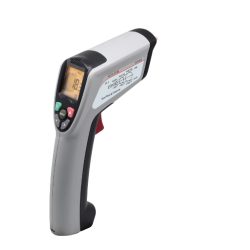
An infrared thermometer is a digital thermometer that measures temperature without contact, using infrared radiation (IR). It measures the heat radiation emitted by objects. Sometimes, infrared thermometers are referred to as non-contact thermometers and can easily measure temperatures.
Selecting an Infrared Thermometer
- Choose a temperature measurement range (Range) that fits your application needs. The higher the range, the more expensive it will be.
- Temperature units (Unit) can be Celsius (ºC), Fahrenheit (ºF), or Kelvin (ºK).
- Adjust the Emissivity setting, which indicates an object's ability to emit heat radiation at any temperature.
- Accuracy depends on the specific requirements of your application. To reduce measurement errors, choose a thermometer with appropriate accuracy.
- Distance to Spot Ratio (D:S) is crucial for accurate measurements. The target object must be larger than the spot size projected by the thermometer. If the target is smaller, you need to get closer. For best results, ensure that the target is at least twice as large as the spot size.
Industries Using Infrared Thermometers
Infrared thermometers are widely used in various industries due to their fast, accurate, and safe non-contact temperature measurement capabilities.
- Manufacturing Industry
- Food and Beverage Industry
- Medical and Health Industry
- Energy and Electrical Industry
- Automotive Industry
- Construction Industry
- Aerospace and Space Industry
- Environmental and Renewable Energy Industry
Famous Brands of Infrared Thermometers
- Aeropak, a brand offering products designed for various industrial applications.
- Guide Sensmart, known for highly accurate and durable products that are easy to use.
- Fluke, an American leader in electronic measurement tools.
- KEPLER INSTRUMENTS, a brand with a wide range of high-quality and reliable products.
- Testo, a German brand renowned for environmental measurement tools, particularly in food, medical, and quality control industries.
View Infrared Thermometer Catalog : Click Here
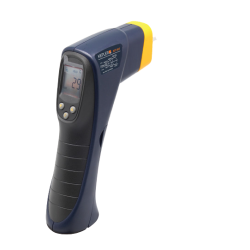
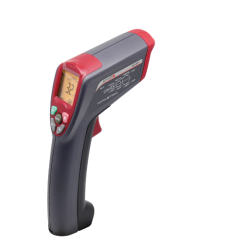
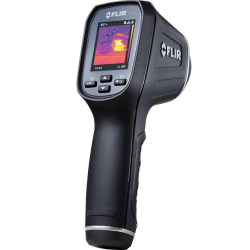
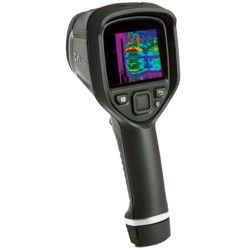
What is an Infrared Thermometer? A Complete Guide to Buying and Using
An Infrared Thermometer, also known as an infrared temperature sensor or thermometer infrared, is a crucial tool in modern industry and healthcare. If you are wondering how an infrared thermometer works, its accuracy, and which non-contact temperature measurement model best suits your needs, this article provides comprehensive answers from the basic principles to selection techniques. This makes measuring heat values easy and accurate. For consultation or service details on measuring tools, please visit SCMA Services
What is an Infrared Thermometer and How Does it Work?
An infrared thermometer (Infrared Thermometer) or commonly referred to as a thermometer infrared, is a non-contact temperature measuring device that measures the surface temperature of objects without physical contact. It works by detecting infrared radiation emitted from all objects above absolute zero. The internal sensor converts this thermal energy into an electrical signal and displays it digitally on the screen. This tool is essential for safely measuring dangerous, hot, or hard-to-reach areas.
The Technology Behind Infrared Measurement
Inside an infrared thermometer, there is a lens system that gathers the infrared radiation from the target object and sends it to the detector. The electronic system compensates for ambient temperature and converts the received radiation into readable temperature values. The hotter the object, the higher the intensity of the emitted infrared radiation, allowing the infrared heat meter to calculate quickly.
Advantages of Non-Contact Temperature Measurement
Using an infrared thermometer offers safety for users, especially when measuring high-temperature objects, rotating machinery, or high-voltage electrical systems. It also reduces contamination risks, making it ideal for food and medical industries that use infrared fever detectors or temperature guns to screen people.
Limitations to Consider Before Purchasing
While highly beneficial, an infrared thermometer has limitations such as the inability to accurately measure temperatures through transparent materials like glass or water (it can only measure the surface temperature of the glass). It may also cause inaccuracies if there is dust, smoke, or steam obstructing the infrared radiation. Proper emissivity settings must be made according to material types.
Popular Types of Infrared Thermometer
There are various types and price ranges of infrared thermometers available in the market, categorized by their usage as follows:
Handheld/Gun Type for General Use
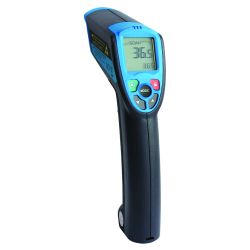
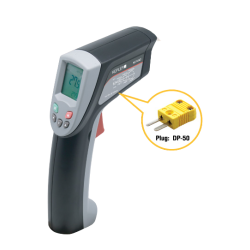
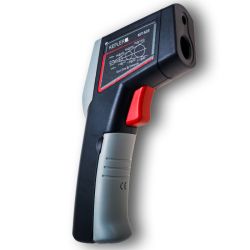
Resembling a gun, it has a trigger to measure temperature and often comes with a laser pointer to indicate the measurement point. Suitable for maintenance work, HVAC system checks, or household use. This type of thermometer is easy to access and convenient to use. For more detailed information, you can read about Infrared Thermometer
Fixed/Mounted Type for Industrial Use
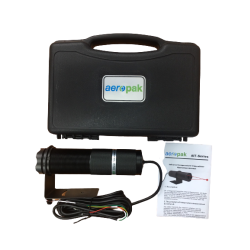
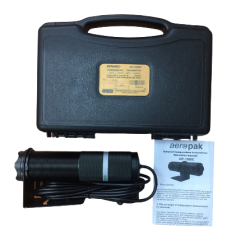
Industrial thermometers of the fixed/mounted type are installed in production lines to monitor product temperatures in real-time, 24/7. They often connect with automatic control systems and offer higher durability and accuracy compared to handheld models.
Medical/Forehead Type for Medical Use
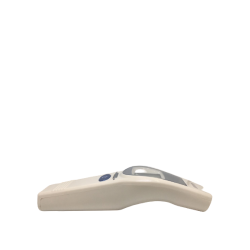
Body temperature thermometers or forehead scanners are designed to accurately measure human body temperatures (32-42°C) according to medical standards. Unlike industrial models with a wider measurement range, the precision in lower temperature ranges may not be sufficient for diagnosis.
Benefits and Applications Across Various Fields
Infrared thermometers are applied across various industries as follows:
Industrial Machinery and Automotive
Used to check heat accumulation in motors, bearings, conveyor belts, or electrical control cabinets to prevent overheating (Overheat) and plan maintenance. For inspections requiring a thermal image view, you can learn more about Thermal Imager.
Cooking and Food Industry (Food Safety)
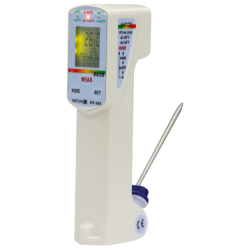
Used to measure the surface temperature of food, pans, or ovens with an infrared thermometer to ensure temperatures are correct according to recipes and safety standards without contaminating the food by touching it.
HVAC Systems and Building Inspection
Infrared temperature measurement tools help technicians quickly locate thermal leaks, insulation gaps, or assess air conditioning efficiency.
Medical and Public Health
Used to screen high fever patients in public places, hospitals, and airports with infrared thermometers for quick detection and reduced risk of disease transmission through contact.
How to Choose the Right Infrared Thermometer for You (Buyer's Guide)
Choosing which infrared thermometer brand or model is best requires considering these technical factors:
1. Temperature Range
Select a temperature range that covers your needs; for general use, -50 to 500°C may be sufficient, but in metal smelting plants, you might need one that measures up to 1000°C or more. The price of the thermometer will increase with the measurement range.
2. Accuracy
Check the specified deviation in the specs; typically, industrial infrared thermometers have an accuracy of around ±1.5% to ±2%, while fever-measuring models should be accurate to within ±0.2°C.
3. Distance-to-Spot Ratio (D:S)
The D:S ratio indicates the size of the measurement spot at different distances; for example, a D:S of 12:1 means that at a distance of 12 inches, the measurement spot will be 1 inch in diameter. If you need to measure small objects from afar, choose one with a high D:S.
What is Emissivity and Why Is It Important?
The emissivity coefficient of different materials varies; cheaper models often have a fixed emissivity set at 0.95, which suits general materials, but for shiny metal surfaces, choose one that allows adjustable emissivity for maximum accuracy. Read more at Thermometer Infrared
Interesting Additional Features (Laser, Data Logger, Alarm Setting)
Features like laser temperature measurement help pinpoint targets accurately; data logging helps in tracking statistics, and alarm settings alert when temperatures exceed limits, enhancing workplace safety.
How to Use and Tips for Maximum Accuracy
Even with a good thermometer, incorrect usage can lead to inaccurate readings.
Correct Measurement Steps
Hold the device steadily, aim at the target within an appropriate distance for your D:S ratio, press and hold the trigger to read the temperature, wait until the numbers stabilize before releasing the trigger (hold).
Common Errors and How to Avoid Them
Avoid measuring through glass, avoid measuring in areas with dense steam or smoke, and be careful not to block objects with your shadow or measure highly reflective surfaces without adjusting the emissivity.
Basic Maintenance Tips for Extended Use
Clean the lens with compressed air or a soft brush; do not use harsh chemical cleaners, and avoid dropping or storing in excessively high temperatures.
If you are looking for an Infrared Thermometer, think of SCMA!
If you are searching for a high-quality Infrared Thermometer or a cost-effective thermometer with reliable after-sales service, at SCMA we offer a wide range of temperature measurement tools to meet all your needs, along with a team of expert engineers ready to advise you on selecting the best irtemp for your work. You can browse our products at Infrared Thermometer Products or view all products at All Products
Summary
Choosing a good Infrared Thermometer can improve the efficiency and safety of your work. Understanding the D:S Ratio and Emissivity values is key to accuracy, whether for maintenance, food processing, or medical applications. SCMA is always ready to advise you on measurement tools.
Frequently Asked Questions
Can an industrial model be used to measure body temperature?
Not recommended, as the industrial models have a temperature measurement error of approximately ±1-2°C, which is too high for medical diagnostics requiring precision. A dedicated fever gun would be best.
Can you measure through glass or liquid?
Cannot measure through glass as the device will read the surface temperature of the glass instead. Liquid surfaces can be measured, but beware of steam interfering with the sensor.
How often do you need to calibrate?
For high-precision work or according to ISO standards, it is recommended to send your Infrared Thermometer for calibration at least once a year or after severe impacts.
Additional references: Wikipedia - Infrared thermometer
This website uses cookies
We use cookies to make the site work properly, to understand how it is used, and to show content that is relevant to you. You choose which types to allow; strictly necessary cookies are always on. Privacy Policy
🤖 AI Assistant
Ask about products, specs and replacement models
Hello 👋 Ask us anything — find products, compare specs, or troubleshoot.
🗑 Clear history