
SPECIAL PROMOTION — Up to 40% off across many product groups, until 31 December 2026 · Click to see all promotion itemsIFM, Sensor, Automation SystemMeasuring / Testing InstrumentsTemp Indicator, Control, T/C, RTD, TimerHeater, SCR Control, Solid State, Power Supply, Control CabinetField Measuring Instruments, Pressure Gauge, Level Control, Flow MeasurementEMC, Pneumatic, Solenoid ValveInspection Test Lamp, Head Light, Automotive Measuring InstrumentWeighing Scales, Marking Machine, PrintersEducational Training SystemsHot Line Tools & Equipment SPECIAL PROMOTION — Up to 40% off across many product groups, until 31 December 2026 · Click to see all promotion itemsIFM, Sensor, Automation SystemMeasuring / Testing InstrumentsTemp Indicator, Control, T/C, RTD, TimerHeater, SCR Control, Solid State, Power Supply, Control CabinetField Measuring Instruments, Pressure Gauge, Level Control, Flow MeasurementEMC, Pneumatic, Solenoid ValveInspection Test Lamp, Head Light, Automotive Measuring InstrumentWeighing Scales, Marking Machine, PrintersEducational Training SystemsHot Line Tools & Equipment View promotion items View all
Heating wire
Heating Wire: A Guide to Selecting and Using for Industrial Applications
In industrial production processes that require high heat, heating wire (Heating Wire) is a crucial component that determines the efficiency of furnaces and machinery. If inappropriate materials are chosen, it may lead to frequent heater wire breakage, energy waste, or production line downtime (Downtime). This article by the SCMA engineering team will guide you through the key factors in selecting heating coil to achieve optimal and durable results.
Properties of Heating Wire
- Model AF wire Ø 0.05~10 mm, flat strip width 0.3~4 mm, capable of heating up to 1400ºC for continuous use
- Model D wire Ø 0.02~8 mm, flat strip width 0.8~4 mm, capable of heating up to 1300ºC for less continuous use
Benefits of Using Heating Wire
Used as a high-temperature heating device in industries such as ceramics, steel surface hardening, metal smelting, and research and development.
View Heating Wire Catalog Click here
 AF/D series, D Ø0.35MM HEATING WIRE KANTHALSpecial Price THB 4,725.00 Regular Price THB 6,300.00
- AF/D series, D Ø0.32MM HEATING WIRE KANTHALราคาโปรดติดต่อเจ้าหน้าที่
- AF/D series, AF Ø5MM HEATING WIRE KANTHALราคาโปรดติดต่อเจ้าหน้าที่
- AF/D series, AF Ø4MM HEATING WIRE KANTHALราคาโปรดติดต่อเจ้าหน้าที่
- AF/D series, AF Ø3.5MM HEATING WIRE KANTHALSpecial Price THB 3,675.00 Regular Price THB 4,900.00
- AF/D series, AF Ø3MM HEATING WIRE KANTHALSpecial Price THB 3,675.00 Regular Price THB 4,900.00
- AF/D series, AF Ø2.5MM HEATING WIRE KANTHALSpecial Price THB 3,750.00 Regular Price THB 5,000.00
- AF/D series, AF Ø2MM HEATING WIRE KANTHALSpecial Price THB 4,275.00 Regular Price THB 5,700.00
- AF/D series, AF Ø1.80MM HEATING WIRE KANTHALSpecial Price THB 4,050.00 Regular Price THB 5,400.00
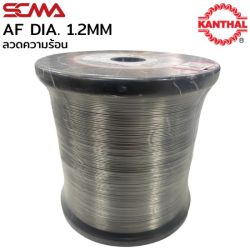 AF DIA. 1.2MM HEATING WIRE KANTHANLSpecial Price THB 4,575.00 Regular Price THB 6,100.00
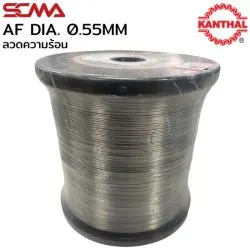 AF DIA. 0.55MM HEATING WIRE KANTHANLSpecial Price THB 4,350.00 Regular Price THB 5,800.00
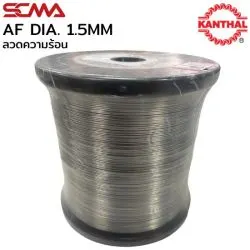 AF DIA. 1.5MM Kanthal HEATING WIRESpecial Price THB 4,200.00 Regular Price THB 5,600.00
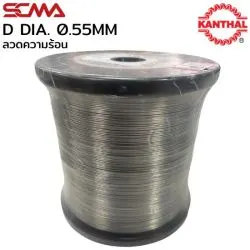 D Dia. 0.55mm Kanthal Heater WireSpecial Price THB 4,350.00 Regular Price THB 5,800.00
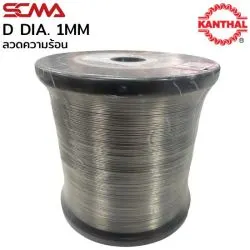 Heat Wire KANTHAL Dia. 1 mmSpecial Price THB 3,825.00 Regular Price THB 5,100.00
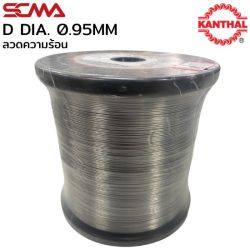 D DIA. 0.95 MM (1.9046 Ohms/m) Kanthal WireSpecial Price THB 2,625.00 Regular Price THB 3,500.00
What is a Heating Wire?
A heating wire is a special type of electrical conductor material with high resistance properties. When an electric current flows through it, it converts electrical energy into thermal energy. The wire must be able to withstand high temperatures without melting or deforming. Common materials used to produce heating wires today are mostly specialized alloy grades such as Nichrome wire or Kanthal wire, which are designed for use in different environments ranging from metal plating ovens to packaging sealing machines.
How Heating Wire Works
The basic principle of how a heating wire works relies on Joule's Law, which describes the relationship between electric current, resistance, and heat generated. The equation is $P = V^2 / R$. When we apply electrical voltage ($V$) to a wire with specific resistance ($R$), an electric current flows through it and is resisted by the material of the wire. The energy lost due to this resistance is converted into thermal energy and radiated out (Radiation) to transfer heat to the target object or workpiece in the furnace. Temperature control therefore depends on accurately calculating the resistance value of the heating wire relative to the applied voltage.
The Importance of Heating Wires in Industry
In industry, heating wires are not just expendable parts but critical components (Critical Component) in thermal processing processes such as drying, metal melting, hardening, or ceramic industries. Using low-quality heating coil wire may result in uneven temperature distribution, causing workpiece damage (Defect) or shortening the lifespan of furnace heaters until they need frequent replacement, directly impacting production costs and company profits. Investing in high-quality wires therefore reduces risks and enhances long-term production process stability.
Types of Heating Wires Popular in Industry
Selecting the right type of wire for the job is the first step towards success. From SCMA's experience, we have found that there are two main types of wires most commonly used:
1. Nichrome Wire (NiCr): Properties and Applications
Nichrome wire is an alloy made from nickel (Nickel) and chromium (Chromium), with the most popular grade being Ni80/Cr20. Its standout features include excellent mechanical properties even at high temperatures, it does not become brittle easily after use, and it has good oxidation resistance. It is suitable for applications up to 1,200°C and where wire toughness is required.
2. Kanthal® Wire (FeCrAl): High Temperature Performance
Kanthal wire or iron-chromium-aluminum alloy (Iron-Chromium-Aluminium) stands out due to its higher heat resistance capability, capable of reaching up to 1,400°C. The surface of the wire forms an aluminum oxide (Alumina Oxide) layer that protects the core, making it more resistant to corrosion in furnace atmospheres compared to Nichrome. However, it may become more brittle than Nichrome after prolonged high-temperature use.
3. Comparison of Advantages and Disadvantages Between Nichrome vs Kanthal
| Properties | Nichrome Wire (Nichrome) | Kanthal Wire (FeCrAl) |
| Maximum Operating Temperature | Up to 1,200°C | Up to 1,400°C |
| Service Life | Heat resistant | Longer service life at constant temperature |
| Density | Higher (Heavier) | Lower (Lighter, better value per kilogram) |
| Magnetic Attraction | Non-magnetic | Magnetic |
| Thermal Expansion | Less | More slightly |
4. Other Materials and Special Applications
In addition to the two main types, there are other materials for specific applications such as tungsten (Tungsten) for high vacuum high-temperature work or molybdenum (Molybdenum). For detailed information about various material types, refer to industry sources like ZMS Cable to compare technical properties at a molecular level.
Key Factors to Consider When Selecting Heating Wire for Your Application
To help you get the most cost-effective heating wire, the SCMA engineering team recommends considering 7 factors before purchasing:
- Maximum Operating Temperature (Max. Operating Temperature): You must account for the element temperature being higher than the furnace temperature at all times. Using Kanthal wire offers an advantage in this regard.
- Electrical Resistance: Accurate calculation of heating wire is necessary to achieve the desired wattage without overloading the wire's surface load capacity.
- Diameter and Form (Diameter and Form): Larger wires (thicker) tend to have a longer lifespan due to their larger cross-sectional area, providing better corrosion resistance.
- Operating Atmosphere: The atmosphere in the furnace, such as oxidizing, reducing or sulfur contamination, directly affects wire grade selection.
- Lifespan and Durability (Lifespan and Durability): Consider the Cost of Ownership or total cost. If you choose cheaper options that need frequent replacement, the overall cost may be higher than using premium-grade products.
- Formability: If it needs to be wound into a spring or bent in limited spaces, material toughness is crucial.
- Budget and Price: Compare price-to-performance ratios. Choosing a reputable brand helps reduce the risk of receiving counterfeit or low-grade products.
If You're Interested in Heating Wire, SCMA Is Ready to Serve You Today!
At SCMA , we are not just distributors but also "technical partners" ready to support you. If you are looking for high-quality heating wire, whether Nichrome or Kanthal wire, our team of expert engineers is available to provide advice on selecting specifications and calculating heating wire that best suits your furnace or machinery. This ensures you get accurate, durable solutions that help reduce long-term maintenance costs. You can view more details about our technical services at Our Services page or read in-depth articles about usage techniques at Blog Post: Heating Wire
Summary
Selecting the right heating wire is the starting point of an efficient production process. Understanding the differences between Nichrome and Kanthal wires, as well as carefully considering environmental factors, will help you extend equipment lifespan and reduce on-site issues. SCMA is ready to advise and deliver quality products to ensure your business runs smoothly and achieves maximum profitability.
Frequently Asked Questions
Why Does Heating Wire Break Often?
The main cause often stems from selecting wire that's too small, leading to excessive surface load (Surface Load) or operating at temperatures beyond the material limit. Chemical contamination in the furnace can also corrode the wire.
Should I Choose Round or Flat Wire?
Flat wire (Ribbon) offers more surface area for heat dissipation compared to round wire of equal weight, making it faster and space-saving for heat dissipation. However, round wire is structurally stronger when exposed to high temperatures.
How Do I Calculate the Appropriate Resistance Value?
You need to know the voltage (Volt) and power (Watt) requirements first. Then use the formula $R = V^2 / P$ to find the total resistance needed, then compare it with the wire's specification table (Ohms/meter) to determine the length required.
This website uses cookies
We use cookies to make the site work properly, to understand how it is used, and to show content that is relevant to you. You choose which types to allow; strictly necessary cookies are always on. Privacy Policy
🤖 AI Assistant
Ask about products, specs and replacement models
Hello 👋 Ask us anything — find products, compare specs, or troubleshoot.
🗑 Clear history