
SPECIAL PROMOTION — Up to 40% off across many product groups, until 31 December 2026 · Click to see all promotion itemsIFM, Sensor, Automation SystemMeasuring / Testing InstrumentsTemp Indicator, Control, T/C, RTD, TimerHeater, SCR Control, Solid State, Power Supply, Control CabinetField Measuring Instruments, Pressure Gauge, Level Control, Flow MeasurementEMC, Pneumatic, Solenoid ValveInspection Test Lamp, Head Light, Automotive Measuring InstrumentWeighing Scales, Marking Machine, PrintersEducational Training SystemsHot Line Tools & Equipment SPECIAL PROMOTION — Up to 40% off across many product groups, until 31 December 2026 · Click to see all promotion itemsIFM, Sensor, Automation SystemMeasuring / Testing InstrumentsTemp Indicator, Control, T/C, RTD, TimerHeater, SCR Control, Solid State, Power Supply, Control CabinetField Measuring Instruments, Pressure Gauge, Level Control, Flow MeasurementEMC, Pneumatic, Solenoid ValveInspection Test Lamp, Head Light, Automotive Measuring InstrumentWeighing Scales, Marking Machine, PrintersEducational Training SystemsHot Line Tools & Equipment View promotion items View all
IIoT
What is IIoT? Everything You Need to Know About Industrial Internet of Things
In an era where data is as valuable as gold for manufacturing, the term IIoT (Industrial Internet of Things) has become a key factor in transforming traditional factories into fully-fledged smart factories. If you are wondering what Industrial Internet of Things is and how it can enhance your competitive edge, this article delves into every aspect, from its definition to the tangible benefits of IIoT that help reduce costs and increase profits for your business.
One of the devices capable of utilizing IIoT is Smart-Box.
What is a Smart-Box?
Smart-Box is an equipment and technology designed to support Industrial 4.0 or IIoT System, enabling users to access data, control, and monitor various industrial devices via the Internet. The device and system are developed on a Cloud Platform with the primary concept of making it convenient for users to develop their factory systems into the era of Industrial 4.0 or Internet of Things without high investment costs but with high efficiency. Users can design systems from small-scale to large-scale, tailored specifically to their factories.
Key Features of Smart-Box
- Data connection from various controllers through serial port communication (RS232/ RS485/ Ethernet)
- Compatibility with PLC and controllers of multiple brands
- Connection to the Cloud via 3G/4G/Ethernet
- Notification through Emails and Messages
- Support for MODBUS, BACNET communication protocols, and others
- Support for user-defined protocol
- Quick and easy setup through Cloud Service, secure and reliable
View IIoT Catalog Click Here
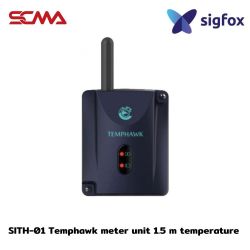 SITH-01 Temphawk meter unit 1.5 m temperature/humidity sensor with magnetic discSpecial Price THB 9,225.00 Regular Price THB 12,300.00
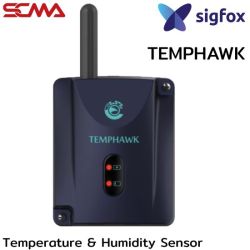 TEMPHAWK Temp & Humi Sensor /-40..125C/0..100%RH/ Wireless Sigfox with Cloud 1 YearSpecial Price THB 10,320.00 Regular Price THB 12,900.00
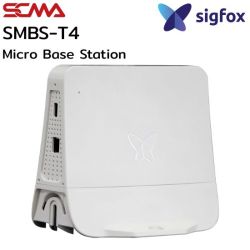 SMBS-T4 Sigfox Micro Base StationSpecial Price THB 23,600.00 Regular Price THB 29,500.00
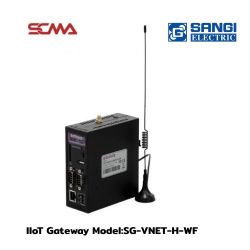 IIoT Gateway Model:SG-VNET-H-WF/3xEthernet/1xSerial Port/2xRS485/WIFISpecial Price THB 8,100.00 Regular Price THB 10,800.00
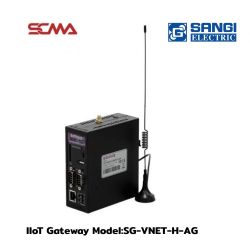 IIoT Gateway Model:SG-VNET-H-AG/3xEthernet/1xSerial Port/2xRS485/4GSpecial Price THB 13,125.00 Regular Price THB 17,500.00
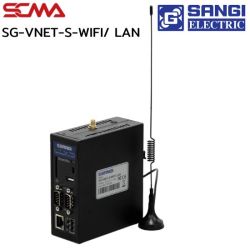 Sangi VNET-S WIFI/LAN IIoT GatewaySpecial Price THB 14,400.00 Regular Price THB 18,000.00
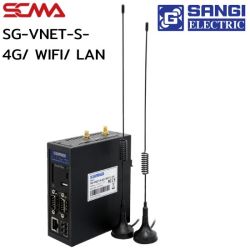 SG-VNET-S-4G/WIFI/LAN IIoT Gateway SANGISpecial Price THB 22,400.00 Regular Price THB 28,000.00
Delivery: 30 ต.ค. 2569
What is IIoT?
IIoT stands for Industrial Internet of Things, which is a network of intelligent devices connected within the industrial sector, including sensors, machines, or various control systems through internet signals to collect and exchange real-time data (Real-time Data). The core of Industrial IoT isn't just about connecting devices but also involves analyzing massive amounts of Big Data generated by machinery operations to improve production processes for maximum efficiency, reduce errors, and create precise automated systems. This is a crucial foundation for truly entering the Industry 4.0 era. If compared in simple terms, IIoT can be likened to "the nervous system" of a factory that senses feelings and sends information to the brain for command actions. For those interested in learning more about definitions and standards of IIoT, you can read additional information from TechTarget.
The Importance of IIoT in the Industrial Era
Why can't modern factories do without IIoT? The answer is "seeing what has never been seen before." In the past, if a machine malfunctioned, we usually only knew when it was broken or had stopped working (Downtime). But with IoT technology in factories, we can now "anticipate" and handle issues promptly.
The importance of Industrial Internet of Things in today's era covers multiple dimensions:
- Seamless Connectivity: Connecting people, data, and processes together
- Data-Driven Decision Making: Reducing guesswork and using real data for production planning
- Faster Response Times: Able to adjust production plans according to market demands or solve on-site issues immediately
- Global Market Competition: Helps reduce production costs and improve product quality, enabling competition at an international level
The Backstage: Key Components of the IIoT System
To make the IIoT system work perfectly, four main components that work in synergy are required:
1. Smart Devices and Sensors (Smart Devices & Sensors)
This is the front line for data collection, acting as "sensory organs" such as temperature sensors, vibration sensors, or electricity meters. These devices convert physical values into digital information to be sent to the system.
2. Communication Network (Connectivity)
Comparable to "nerves," this sends data from sensors to the processing center. In factory IoT systems, wired communication (LAN, Fiber Optic) or wireless (Wi-Fi, 5G, LoRaWAN, NB-IoT) can be used, with stability and security of information being crucial considerations. IIoT Gateways are also used to collect and translate signals from various protocols.
3. Cloud Platform and Data Analytics (Cloud & Data Analytics)
This is the "brain" of the system where massive amounts of data are stored and processed. Technologies such as Cloud Computing and Edge Computing play a significant role in analyzing complex data, like using AI or Machine Learning to find abnormal patterns in machines.
4. User Interface and Applications (User Interface & Applications)
The part where humans communicate with the system, analyzed data is presented in an easy-to-understand format through dashboards on computers, tablets, or smartphones, allowing factory managers to see production overviews and receive alerts immediately.
Benefits of IIoT for Industry
Investing in Industrial Internet of Things isn't just a trend but a worthwhile investment. Here are the tangible benefits of IIoT:
1. Increased Efficiency and Reduced Production Costs
IIoT helps track overall equipment effectiveness (OEE) in real-time, identifying bottlenecks in production processes and tuning machines to full capacity, reducing unnecessary energy and material waste.
2. Predictive Maintenance
This is the trump card of IIoT. Instead of waiting for machines to break down before repairing them (Corrective Maintenance) or maintaining them according to a schedule (Preventive Maintenance), systems analyze data from sensors, such as heat or vibration, to predict when machines will fail, allowing maintenance teams to plan part replacements in advance and significantly reduce unexpected downtime.
3. Enhanced Safety in Factories
The Industrial IoT system can work with gas leak detectors, high-temperature sensors, or dangerous area entry sensors. In case of an anomaly, the system will immediately shut down machines or send danger alerts, reducing risks to employees.
4. Improved Supply Chain Management
Data from IIoT helps warehouses and logistics connect directly with production departments. Systems can automatically order raw material replenishments when stocks are low or track product status throughout the supply chain, making supply chain management smoother and more transparent.
If you're interested in IIoT, SCMA is now available!
Entering the world of Industrial IoT isn't far-fetched anymore. The challenge lies in starting correctly. At SCMA, we are "technical partners" specializing in measurement tool and automation system solutions. We don't just sell equipment but also have a team of engineers ready to consult and design comprehensive Project & Solutions, from selecting high-quality sensors from global brands like ifm or Guide Sensmart, installing Gateway systems, to setting up Dashboard systems for results viewing. If you want to reduce downtime, increase production efficiency, or transform your factory into a Smart Factory, our SCMA team is ready with over a decade of expertise and experience to assist you. You can view all our services at Our Services - SCMA or contact us for free initial consultations.
Summary
IIoT isn't just a temporary trend but a new standard in the industry. Understanding what Industrial Internet of Things is and starting to implement it today will help businesses become more flexible, reduce losses, and be prepared for future competition. Having an expert partner like SCMA can make your digital transformation journey smoothest and most rewarding.
Frequently Asked Questions
What's the difference between IoT and IIoT?
The main difference lies in "risk" and "accuracy." General IoT focuses on consumer convenience, while IIoT emphasizes high accuracy, durability under industrial conditions, and stricter data security. Errors in IIoT could mean life-threatening risks or business damage.
What is an IIoT system?
An ecosystem that connects machines, devices, and sensors within the industry through internet networks to collect and exchange data for analysis, efficiency improvement, and automated production control.
What is an IIoT Gateway?
A translator or bridge that receives data from various brand devices or sensors with different languages (Protocols) and converts them into standard formats to be sent to Cloud systems or central servers.
What are the four components of IoT (including IIoT)?
The main four parts of an IoT system include:
- Device/Sensor: Data collection devices
- Connectivity: Communication channels (Network)
- Data Processing: Data processing (Cloud/Edge)
- User Interface: Display and control interface for users
This website uses cookies
We use cookies to make the site work properly, to understand how it is used, and to show content that is relevant to you. You choose which types to allow; strictly necessary cookies are always on. Privacy Policy
🤖 AI Assistant
Ask about products, specs and replacement models
Hello 👋 Ask us anything — find products, compare specs, or troubleshoot.
🗑 Clear history