
SPECIAL PROMOTION — Up to 40% off across many product groups, until 31 December 2026 · Click to see all promotion itemsIFM, Sensor, Automation SystemMeasuring / Testing InstrumentsTemp Indicator, Control, T/C, RTD, TimerHeater, SCR Control, Solid State, Power Supply, Control CabinetField Measuring Instruments, Pressure Gauge, Level Control, Flow MeasurementEMC, Pneumatic, Solenoid ValveInspection Test Lamp, Head Light, Automotive Measuring InstrumentWeighing Scales, Marking Machine, PrintersEducational Training SystemsHot Line Tools & Equipment SPECIAL PROMOTION — Up to 40% off across many product groups, until 31 December 2026 · Click to see all promotion itemsIFM, Sensor, Automation SystemMeasuring / Testing InstrumentsTemp Indicator, Control, T/C, RTD, TimerHeater, SCR Control, Solid State, Power Supply, Control CabinetField Measuring Instruments, Pressure Gauge, Level Control, Flow MeasurementEMC, Pneumatic, Solenoid ValveInspection Test Lamp, Head Light, Automotive Measuring InstrumentWeighing Scales, Marking Machine, PrintersEducational Training SystemsHot Line Tools & Equipment View promotion items View all
LCR Meters
What are LCR Meters?
LCR Meters are tools used to measure the values of electronic components in circuits, specifically for measuring resistance (Resistor), capacitance (Capacitor), and inductance (Inductor). Their functions include:
- Measuring resistance (Resistance) to determine the resistance value of a resistor, indicating its ability to oppose electrical current.
- Measuring capacitance (Capacitance) to measure the capacitance value of a capacitor, indicating its ability to store electric charge.
- Measuring inductance (Inductance) to measure the inductance value of an inductor, indicating its ability to create a magnetic field when current passes through it.
- Some models of LCR Meters may also have additional functions such as measuring equivalent series resistance (ESR) of capacitors or the accuracy of devices, making them more versatile in use.
Uses of LCR Meters
- Used to test electronic components to ensure they meet specified values.
- Help in analyzing electronic circuits by measuring parameters of various components.
- Used to check the quality of devices to ensure they have not expired.
- Can help control production and testing processes for new equipment to ensure component values remain stable.
Types of LCR Meters
- Analog LCR Meters use a needle display to show measurement values, providing standard accuracy.
- Digital LCR Meters have digital displays showing measurement values with high accuracy and ease of reading. They often come with various measuring functions and can also record data.
- Precision LCR Meters offer high accuracy for measuring parameters of high-quality devices or in research and development.
Interesting Brands of LCR Meters
- Fluke, a well-known brand in the field of testing and measurement equipment related to electrical current.
- GW Instek, a Taiwanese brand producing various types of tools with diverse product options at friendly prices and quality.
- Hioki, a rapidly growing brand from Singapore offering numerous products to meet different needs.
- KEPLER, another top-tier brand known for its reliability and versatility in use.
View LCR Meters Catalog : Click here
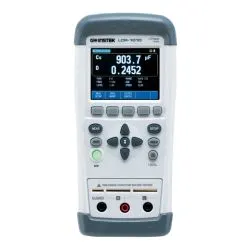 LCR-1100 HANDHELD LCR METER GW INSTEKSpecial Price THB 18,975.00 Regular Price THB 25,300.00
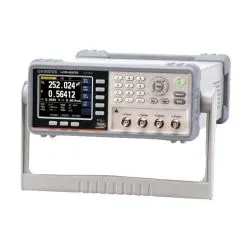 LCR-6000 Series HIGH PRECISION LCR METER GW INSTEKSpecial Price THB 9,900.00 Regular Price THB 13,200.00
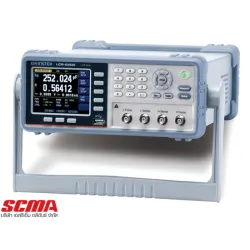 LCR-6020 GW Instek LCR Meters Precision LCR MeterSpecial Price THB 74,850.00 Regular Price THB 99,800.00
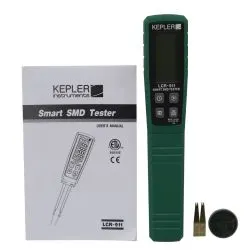 LCR-911 KEPLER LCR Meters LCR Meter SMD TesterSpecial Price THB 2,680.00 Regular Price THB 3,350.00
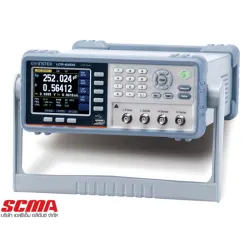 LCR-6002 GW Instek LCR Meters Precision LCR MeterSpecial Price THB 49,875.00 Regular Price THB 66,500.00
Delivery: 30 ต.ค. 2569
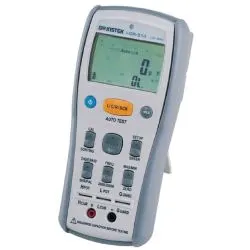 LCR-914 GW Instek LCR Meters Handheld LCR MeterSpecial Price THB 9,920.00 Regular Price THB 12,400.00
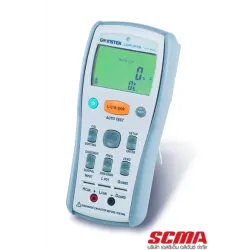 LCR-915 GW Instek LCR Meters Handheld LCR MeterSpecial Price THB 12,800.00 Regular Price THB 16,000.00
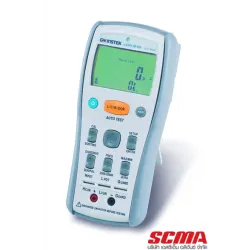 LCR-916GW Instek Handheld LCR MeterSpecial Price THB 18,400.00 Regular Price THB 23,000.00
Delivery: 30 ต.ค. 2569
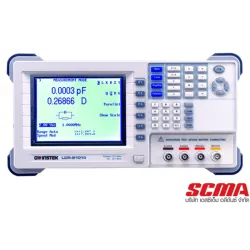 LCR-8101G GW Instek High Precision LCR Meter (Discontinued, Use Model LCR-8201 Instead)Special Price THB 251,944.00 Regular Price THB 314,930.00
Delivery: 30 ต.ค. 2569
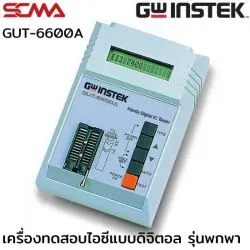 GUT-6600A Digital IC Testers GW InstekSpecial Price THB 19,440.00 Regular Price THB 24,300.00
Delivery: 30 ต.ค. 2569
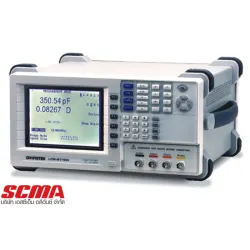 LCR-8110G GW Instek High Precision LCR Meter (Discontinued, Use Model LCR-8210 Instead)Special Price THB 335,368.00 Regular Price THB 419,210.00
Delivery: 30 ต.ค. 2569
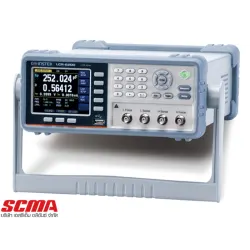 LCR-6100 GW Instek Precision LCR MeterSpecial Price THB 85,500.00 Regular Price THB 114,000.00
Delivery: 30 ต.ค. 2569
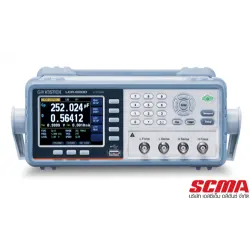 LCR-6200 GW Instek LCR Meters Precision LCR MeterSpecial Price THB 123,000.00 Regular Price THB 164,000.00
Delivery: 30 ต.ค. 2569
What is an LCR Meter? Everything You Need to Know Before Buying
What is an lcr meter and why is it important in electronics work? If you are looking for a high-quality lcr meter or lcr meter device for precise passive component measurements, this article will delve into all the details of LCR meters from how they work to tips on selecting one that offers good value. This ensures your circuit testing is as efficient as possible. For technical advice or if you're seeking international standard measuring tools, contact our expert engineering teamhere
What is an LCR Meter? Get to Know the L, C, R Measuring Tool
An LCR meter is a specialized electronic measuring tool designed for precise measurement of passive component parameters such as inductance (L), capacitance (C) and resistance (R). It offers much higher accuracy and resolution than general multimeters, making it ideal for high-precision work in laboratories or production lines.
The Importance of LCR Meters in Electronics Work
In electronic circuit design and maintenance, knowing the true values of each component is crucial. An lcr meter helps electronics engineers verify that capacitors and inductors are still performing to specification, reducing assembly errors and pinpointing problems accurately. Learn more frominternational sources
How is it Different from General Multimeters?
General multimeters typically use direct current (DC) to measure resistance and may only provide basic capacitance measurements. However, lcr meters use adjustable alternating current (AC) signals for testing, allowing them to measure impedance (Z), phase angle, and real-world losses that a multimeter cannot. Learn more about using multimetershere
What Can an LCR Meter Measure? (L, C, R and More)
The primary function of this tool is to check the electrical properties of electronic components. It can serve as both an inductance meter, a capacitance meter, and a resistance measuring device all at once, while also displaying secondary parameters that indicate the quality of the component in detail.
L - Inductance (Inductance)
Measuring L or inductance of a coil is one of the main functions of an inductance meter. The device measures its ability to store energy in the form of magnetic fields, with units measured in Henry (H), which is crucial for frequency filtering circuits and transformers.
C - Capacitance (Capacitance)
For capacitors, the capacitance meter checks its ability to store electrical charge, with units measured in Farad (F). Measuring at different frequencies helps understand the capacitor's behavior when used in high-frequency circuits.
R - Resistance (Resistance)
Although it functions like an ohmmeter for measuring resistance, AC measurement of R (AC Resistance) helps determine the true internal resistance (ESR) of capacitors or coils, which directly affects energy loss and heat generation in circuits.
Other Important Parameters: ESR, Q Factor, D Factor
In addition to the main values, it also measures ESR (Equivalent Series Resistance), which indicates the condition of old capacitors; Q Factor (Quality Factor), indicating coil quality; and D Factor (Dissipation Factor), indicating losses in capacitors. This data helps accurately filter out degraded components.
Basic Working Principle of an LCR Meter
The working principle of the lcr meter relies on applying a constant frequency and voltage AC signal through the device under test (Device Under Test - DUT). The instrument then measures the voltage drop across and current flowing through the component to calculate Impedance and Phase Angle, which are then converted back into L, C, R values based on equivalent series or parallel circuit models.
Using AC Signals for Measurement
Since inductors and capacitors have varying reactance at different frequencies, using an AC signal is necessary to simulate real operating conditions. Measuring with AC signals allows the LCR meter to clearly distinguish between the real part (actual resistance) and imaginary part (reactive resistance) of components.
The Importance of Test Frequency
The test frequency significantly affects the measured values. Large capacitors are typically tested at low frequencies (e.g., 100Hz/120Hz), while small capacitors or coils with lower values are usually tested at higher frequencies (1kHz and above). Choosing the correct frequency ensures the most accurate measurements according to manufacturing standards.
Types of LCR Meter: Portable vs. Desktop
In the market, there are mainly two types of lcr meter to choose from: portable (Handheld) and desktop (Benchtop). Each type is designed for different purposes, and users should consider their working environment when selecting.
Portable LCR Meter (Handheld): Advantages and Limitations
The portable model is compact, battery-powered, suitable for on-site maintenance or quick checks. Its advantages include high mobility and lower cost compared to desktop models. However, it may have less accuracy and test frequency range than desktop models, and advanced measurement functions might be limited. Read more about handheld measuring tools here.
Desktop LCR Meter (Benchtop): Advantages and Limitations
The desktop model offers high precision, supports a wider frequency range, and often has programmable functions for manufacturing. It is suitable for R&D labs or production QC lines. Its advantages include stability and comprehensive features, but it is larger, harder to move around, and more expensive.
Comparison Table: Which One Is Right for You?
The choice depends on the requirements. If convenience in carrying out on-site measurements is a priority, then the Handheld lcr meter would be the answer. However, if laboratory-level precision or special high-frequency measurement is needed, the Benchtop model will offer better value for deep analysis over time.
What Specifications Should You Consider When Buying an LCR Meter?
When purchasing lcr meters, it is important to carefully consider technical specifications to ensure that the tool can support your work, whether it's general repairs or high-level research.
Accuracy and Resolution
The basic accuracy value indicates the reliability of measurement results. Typically, portable models have an accuracy range of about 0.2% - 0.5%, while benchtop models may reach up to 0.05%. Screen resolution is also important for clearly seeing small changes in values.
Measurement Range
Check if the device can measure L, C, R values across a range that meets your needs, especially very low or high values. Some models may also measure insulation resistance, which you can learn more about here.
Test Frequency Suitable for the Job
Frequency is crucial. If your work involves high-frequency circuits, choose a device that can test up to 100kHz or 1MHz and above. However, for general tasks, standard frequencies of 100Hz, 120Hz, 1kHz, 10kHz are usually sufficient.
Additional Features to Look For (e.g., Data Logging, PC Connectivity)
Data logging functions help track continuous measurement results. Connecting via USB or RS-232 makes reporting and controlling measurements through software more convenient. Some models may also include additional testing capabilities for devices like transistor testers.
Budget and Reliable Brands
Set a budget that aligns with your needs. For general repairs, a few thousand to ten thousand is usually sufficient, but research work may require higher budgets based on performance. Reliable brands offer good warranties and after-sales service, as well as easily obtainable test leads.
Real-World Applications of LCR Meters
The application of lcr meters is highly diverse in the electronics industry, from material selection processes to final product inspections.
Quality Inspection of Capacitors and Inductors
Manufacturers or users can use this tool to check if capacitance and inductance values meet specifications, including measuring loss for grading components before assembly into audio circuits or power supply circuits.
Electronics Circuit Board Maintenance
Repair technicians can use it to check electrolytic capacitors that often degrade (reduced capacitance or high ESR), which are the main cause of failures in electrical appliances. Measuring with an lcr meter immediately identifies faulty components without needing to remove them.
Component Sorting and Measurement
In production lines where many components are used, the comparator function in the meter compares measured values against standard ones and provides immediate pass/fail notifications, making component sorting quick and accurate.
If you are looking for an LCR Meter, think of SCMA!
Accuracy in measurement is the heart of electronics work. If you are searching for high-quality lcr meters or electrical measuring instruments from leading brands, SCMA is ready to advise and supply products that best meet your needs. We have a team of engineers available to provide reliable advice and after-sales service. You can visit all productshere.
Summary
An LCR Meter is an essential tool for those seeking precise measurements of passive component values. Selecting the appropriate instrument based on job characteristics and frequency used will significantly enhance repair quality and circuit design work. If you need further advice on purchasing or have questions about coil wire prices and other equipment, contact SCMAhere.
Frequently Asked Questions
Is it necessary to calibrate (Calibrate) an LCR Meter?
Absolutely essential, to ensure the accuracy of measurements. It is recommended to perform Open/Short Correction before each measurement to eliminate lead resistance and stray capacitance, and the instrument should be sent for calibration at regular intervals (e.g., annually).
Can it measure values in a powered circuit?
Absolutely not recommended and strictly prohibited. Measuring components while they are powered or have residual charge (in capacitors) can immediately damage the internal circuits of the lcr meter. Always discharge capacitors and turn off power in the circuit before measuring.
How much does an LCR Meter cost?
The price range for lcr meters is extensive, from thousands of baht for portable basic function models to hundreds of thousands of baht for high-precision benchtop models with high frequency ranges. This varies based on brand, features, and supported frequency bands.
This website uses cookies
We use cookies to make the site work properly, to understand how it is used, and to show content that is relevant to you. You choose which types to allow; strictly necessary cookies are always on. Privacy Policy
🤖 AI Assistant
Ask about products, specs and replacement models
Hello 👋 Ask us anything — find products, compare specs, or troubleshoot.
🗑 Clear history