
SPECIAL PROMOTION — Up to 40% off across many product groups, until 31 December 2026 · Click to see all promotion itemsIFM, Sensor, Automation SystemMeasuring / Testing InstrumentsTemp Indicator, Control, T/C, RTD, TimerHeater, SCR Control, Solid State, Power Supply, Control CabinetField Measuring Instruments, Pressure Gauge, Level Control, Flow MeasurementEMC, Pneumatic, Solenoid ValveInspection Test Lamp, Head Light, Automotive Measuring InstrumentWeighing Scales, Marking Machine, PrintersEducational Training SystemsHot Line Tools & Equipment SPECIAL PROMOTION — Up to 40% off across many product groups, until 31 December 2026 · Click to see all promotion itemsIFM, Sensor, Automation SystemMeasuring / Testing InstrumentsTemp Indicator, Control, T/C, RTD, TimerHeater, SCR Control, Solid State, Power Supply, Control CabinetField Measuring Instruments, Pressure Gauge, Level Control, Flow MeasurementEMC, Pneumatic, Solenoid ValveInspection Test Lamp, Head Light, Automotive Measuring InstrumentWeighing Scales, Marking Machine, PrintersEducational Training SystemsHot Line Tools & Equipment View promotion items View all
RFID UHF
What is RFID UHF?
RFID UHF stands for Ultra-High Frequency, operating in the frequency range of 860-960 MHz. This high-frequency band allows for long-range reading and fast data transmission, making it popular in industries that require object or person identification over longer distances and in large volumes.
Features of RFID UHF
- Long read range with a distance of up to 1-12 meters, depending on the tag type and reader. This makes it suitable for applications requiring long-range detection.
- High-frequency operation enables fast data transmission and supports simultaneous reading of multiple tags (Anti-collision).
- RFID UHF performs well in environments with little metal or liquid, as these can interfere with communication.
- It adheres to the internationally recognized standard EPCglobal Gen 2 (ISO 18000-6C) and is used across various industries worldwide.
Benefits and Applications of RFID UHF
- Inventory Management in warehouses, factories, and retail stores for quick and efficient stock counting. Supports simultaneous reading of hundreds of tags at once.
- Logistics & Supply Chain tracking of goods and materials moving between locations, such as tagging items during transportation for real-time tracking.
- Asset Tracking suitable for monitoring large assets or easily movable equipment in factories or hospitals.
- Vehicle Identification used in toll collection systems, parking management, or access control at various locations.
- Event Management for RFID UHF tagged cards/tickets to check entry and exit at trade shows or concerts.
- Counterfeit Prevention tracking and verifying the authenticity of high-value products such as electronics or luxury goods.
Advantages of RFID UHF
- Suitable for applications requiring long-range object identification in wide areas.
- Efficient simultaneous reading of multiple tags at once.
- UHF tags are cheaper compared to those in other frequency bands.
Limitations of RFID UHF
- Signals can be easily disrupted by nearby metal or liquid, affecting tag reading stability.
- Long-range data reading requires more power compared to LF or HF RFID.
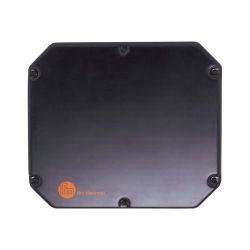 DTE810 \ efector 190 \ DMC/RFID \ DTEUHFE_ABRWEIUS04 \ DESpecial Price THB 274,500.00 Regular Price THB 366,000.00
Delivery: 30 ต.ค. 2569
 ANT805 \ efector 190 \ RFID \ DTRUHFE ACRWETTN04 \ DESpecial Price THB 22,575.00 Regular Price THB 30,100.00
Delivery: 30 ต.ค. 2569
This website uses cookies
We use cookies to make the site work properly, to understand how it is used, and to show content that is relevant to you. You choose which types to allow; strictly necessary cookies are always on. Privacy Policy
🤖 AI Assistant
Ask about products, specs and replacement models
Hello 👋 Ask us anything — find products, compare specs, or troubleshoot.
🗑 Clear history