
SPECIAL PROMOTION — Up to 40% off across many product groups, until 31 December 2026 · Click to see all promotion itemsIFM, Sensor, Automation SystemMeasuring / Testing InstrumentsTemp Indicator, Control, T/C, RTD, TimerHeater, SCR Control, Solid State, Power Supply, Control CabinetField Measuring Instruments, Pressure Gauge, Level Control, Flow MeasurementEMC, Pneumatic, Solenoid ValveInspection Test Lamp, Head Light, Automotive Measuring InstrumentWeighing Scales, Marking Machine, PrintersEducational Training SystemsHot Line Tools & Equipment SPECIAL PROMOTION — Up to 40% off across many product groups, until 31 December 2026 · Click to see all promotion itemsIFM, Sensor, Automation SystemMeasuring / Testing InstrumentsTemp Indicator, Control, T/C, RTD, TimerHeater, SCR Control, Solid State, Power Supply, Control CabinetField Measuring Instruments, Pressure Gauge, Level Control, Flow MeasurementEMC, Pneumatic, Solenoid ValveInspection Test Lamp, Head Light, Automotive Measuring InstrumentWeighing Scales, Marking Machine, PrintersEducational Training SystemsHot Line Tools & Equipment View promotion items View all
Temperature sensors
What are Temperature Sensors?
Temperature sensors are devices used to measure or detect temperature levels continuously in a desired area, for the purpose of controlling heating or cooling processes. In addition to measurement, they can be integrated into computer systems to provide automatic temperature control (Automatic Control) and immediately alert the system when temperatures deviate from set values.
Types of Temperature Sensors
- Thermistor is a type of semiconductor material that offers high accuracy and cost-effectiveness for temperature measurement.
- RTD (Resistance Temperature Detector) operates similarly to the above type but has a wider temperature range and can measure extremely high temperatures.
- Thermocouple consists of two different metal wires connected at one end, used for measuring temperature. It requires a compatible temperature measurement device to function properly.
- IR (Infrared) type measures by infrared radiation without the need to physically touch the object being measured, offering great convenience and ease of use.
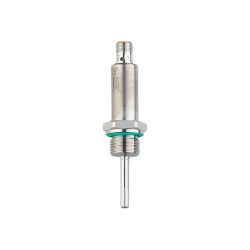 TA2415 \ efector 600 \ Temp sensor \ TA-050CLER12-A-ZVG/US \ USSpecial Price THB 8,475.00 Regular Price THB 11,300.00
Delivery: 30 ต.ค. 2569
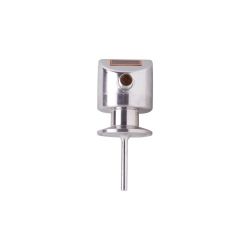 TD2817 \ efector 600 \ Temp sensor \ TD-050CFEC01-A-ZVG/US \ USSpecial Price THB 11,925.00 Regular Price THB 15,900.00
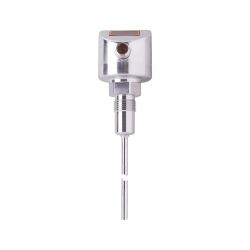 TD2507 \ efector 600 \ Temp sensor \ TD-030CFER12-A-ZVG/US \ USSpecial Price THB 12,450.00 Regular Price THB 16,600.00
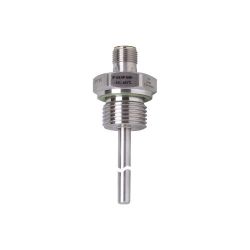 TM4441 \ efector 600 \ Temp sensor \ TM-150KFBR12- /US/ \ USSpecial Price THB 5,175.00 Regular Price THB 6,900.00
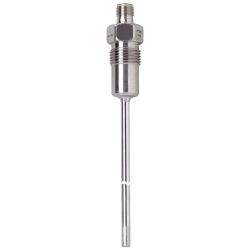 TM4511 \ efector 600 \ Temp sensor \ TM-050KFER12- /US/ \ USSpecial Price THB 6,000.00 Regular Price THB 8,000.00
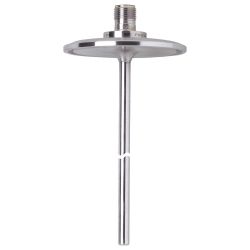 TM4911 \ efector 600 \ Temp sensor \ TM-050KFEC02- /US/ \ USSpecial Price THB 6,000.00 Regular Price THB 8,000.00
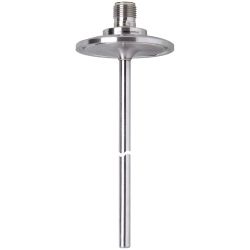 TM4811 \ efector 600 \ Temp sensor \ TM-050KFEC01- /US/ \ USSpecial Price THB 5,475.00 Regular Price THB 7,300.00
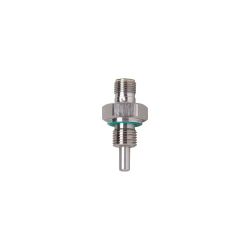 TM4101 \ efector 600 \ Temp sensor \ TM-025KFBR14- /US/ \ USSpecial Price THB 4,350.00 Regular Price THB 5,800.00
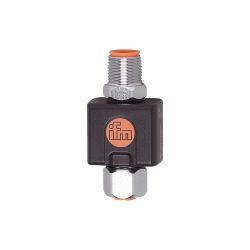 TP9237 \ efector 600 \ Temperature sensor \ TP-CEC-B-DVG/US/ \ USSpecial Price THB 4,950.00 Regular Price THB 6,600.00
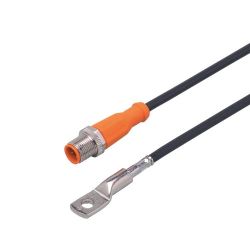 TS2229 \ efector 600 \ Temp sensor \ TS-PT100 CONTACT SENSOR \ DESpecial Price THB 2,850.00 Regular Price THB 3,800.00
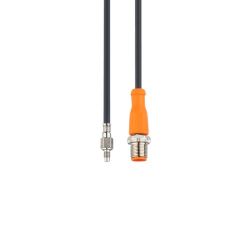 TS2789 efector 600 Temp sensor TS-PT100-SCREW-IN M5/2M PUR DESpecial Price THB 3,075.00 Regular Price THB 4,100.00
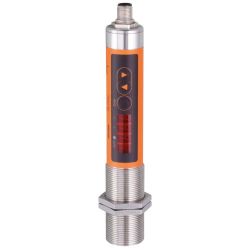 TW2000 \ efector 600 \ Temp sensor \ TW-030KLBM30-KFDKG/US \ DESpecial Price THB 55,575.00 Regular Price THB 74,100.00
Delivery: 30 ต.ค. 2569
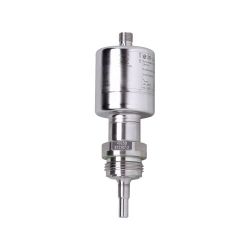 TAD981 \ efector 600 \ Temp sensor \TAD033KLES30-A-ZKG/US \ DESpecial Price THB 29,700.00 Regular Price THB 39,600.00
Delivery: 30 ต.ค. 2569
 TM4431 \ efector 600 \ Temp sensor \ TM-100KFBR12- /US/ \ USSpecial Price THB 5,025.00 Regular Price THB 6,700.00
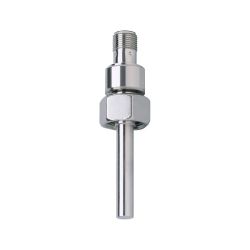 TM9950 \ efector 600 \ Temp sensor \ TM-045-BEM18 /US \ USSpecial Price THB 5,475.00 Regular Price THB 7,300.00
Delivery: 30 ต.ค. 2569
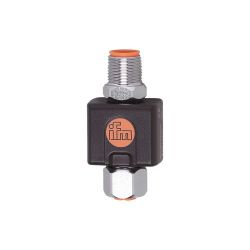 TP3232 \ efector 600 \ Temperature Sensor (TP- CEC -A-ZVG/US/ \ US)Special Price THB 4,950.00 Regular Price THB 6,600.00
Delivery: 30 ต.ค. 2569
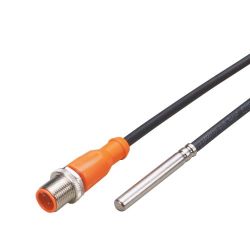 TS2269 \ efector 600 \ Temperature Sensor (TS-200KLKD6-............../US/) \ DESpecial Price THB 2,625.00 Regular Price THB 3,500.00
Delivery: 30 ต.ค. 2569
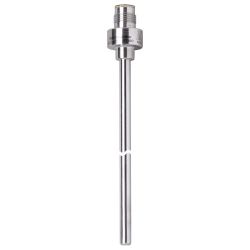 TT2291 \ efector 600 \ Temp sensor \ TT-250KFED06- /US/ \ USSpecial Price THB 4,725.00 Regular Price THB 6,300.00
Delivery: 30 ต.ค. 2569
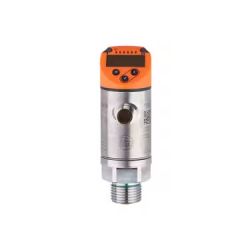 TY7439 \ efector 600 \ Temperature sensors \ TR-000KDBM12-QFPKG/US/ \ USSpecial Price THB 13,350.00 Regular Price THB 17,800.00
Delivery: 30 ต.ค. 2569
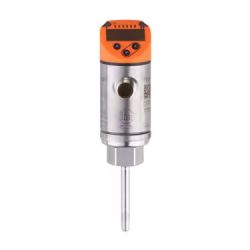 TY2511 \ efector 600 \ Temperature sensors \ TN-045KCBD18-MFPKG/US/ \ US \Special Price THB 17,625.00 Regular Price THB 23,500.00
Delivery: 30 ต.ค. 2569
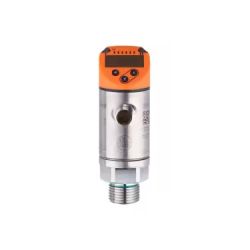 TY2439 \ efector 600 \ Temperature sensors \ TR-000KDBM12-MFPKG/US/ \ US \Special Price THB 15,300.00 Regular Price THB 20,400.00
Delivery: 30 ต.ค. 2569
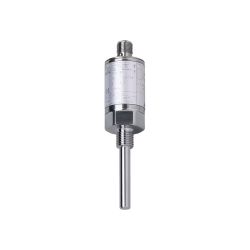 TAA131 \ efector 600 \ Temperature sensors \ TAA060CCDR14-ASIVG/US \ DE \Special Price THB 15,330.00 Regular Price THB 21,900.00
Delivery: 30 ต.ค. 2569
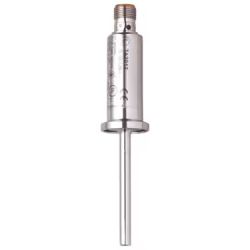 TA2012 \ effecter 600 \ Temperature sensors \ TA-060CLEC34- - /US \ US \Special Price THB 9,000.00 Regular Price THB 12,000.00
Delivery: 30 ต.ค. 2569
What are Temperature Sensors? A Complete Guide to Types and Selection
What are Temperature Sensors, and why have these temperature measuring sensors become an indispensable tool in almost every industry? This article delves into all aspects of temperature measurement technology, from the types of Temperature Sensors, how they work, to selecting them to "match" diverse requirements. If you need technical consultation or are looking for specialized sensors, contact our engineering team here.
What is a Temperature Sensor and Why Is It Important?
A Temperature Sensor, or temperature measuring sensor, is an electronic device that detects changes in the level of heat or coldness in objects or environments and converts these physical values into readable electrical signals (such as voltage or resistance) for further processing in control systems, display systems, or alerting systems. The importance of this equipment ranges from maintaining product quality during production processes to preventing machinery damage due to accumulated heat, all the way to everyday safety such as fever detection or automatic fire suppression systems.
The Meaning and Function of Temperature Sensors
The primary function of temperature sensors is not just to indicate hot or cold but to provide accurate and reliable quantitative data for decision-making or process control. For example, in industrial plants, data from temperature sensors are sent to controllers to command the on/off operation of heaters or cooling systems to maintain a constant set point.
Role in Everyday Life and Industry
In everyday life, we encounter temperature detectors in close-to-hand devices such as air conditioners, refrigerators, smartwatches, or fever thermometers. In industry, sensors of all types related to heat play a massive role, from food safety industries (Food Safety) and automotive (Engine Management), petrochemicals, to research laboratories requiring decimal precision.
Basic Working Principle of Temperature Sensor
The basic working principle of a Temperature Sensor involves detecting changes in the physical properties of materials when they are heated, such as changes in electrical resistance in metals (RTD) or semiconductors (Thermistor), generation of thermoelectric voltage when different metals come into contact (Thermocouple), or infrared radiation emitted from objects (IR Sensor). The ability to convert these physical reactions into stable electrical signals is the core of temperature sensor technology.
Converting Temperature to Electrical Signal
When a sensor receives heat, its internal properties change. For example, in PT100 resistance increases as temperature rises. Electronic circuits measure this changed resistance and calculate it back into temperature values, or in the case of Thermocouple, measuring the voltage (in millivolts) generated from the potential difference between hot and cold junctions, which varies directly with temperature. Read more about working principleshere.
Factors Affecting Measurement
The accuracy of measurement does not depend solely on the temperature sensor itself but also on environmental factors such as installation (Installation), response time (Response Time), thermal conductivity of materials that the sensor contacts (Thermal Conductivity), and electrical noise interference. Proper positioning during installation and using shielded signal cables are therefore essential.
Get to Know Various Types of Temperature Sensors in Use
There are numerous types of temperature sensors available on the market, each with its own strengths and limitations. Choosing the right type is crucial for achieving accurate measurements.
Thermocouple
This is the most commonly used sensor in industrial settings due to its affordability, durability, and wide temperature range (from below freezing to over 1,000°C). It operates based on the Seebeck Effect, which occurs when two different metal wires are connected. Suitable for high-temperature applications such as furnaces or engines. Learn morehere.
RTD (Resistance Temperature Detector) Such as PT100
RTDs measure temperature by detecting changes in the resistance of a metal wire coil (usually platinum). The PT100 is the most popular model (with a resistance of 100 ohms at 0°C). Its key advantage over thermocouples is higher accuracy and long-term stability, making it ideal for applications requiring precision such as laboratories or food industries. Read morehere.
Thermistor - NTC and PTC
Made from semiconducting materials, thermistors are highly sensitive to temperature changes. They come in two types: NTC (resistance decreases as it gets hotter) and PTC (resistance increases as it gets hotter). Commonly used in electronics, appliances, and HVAC systems due to their small size and quick response time, though they have a narrower measurement range compared to RTDs and thermocouples.
Non-Contact Infrared Sensor
This type of sensor measures temperature without touching the object by detecting infrared radiation emitted from it. Ideal for moving objects, high-voltage environments, or hard-to-reach areas. Its advantage is real-time measurement, though accuracy may decrease if the surface reflects light strongly.
Semiconductor-based Sensors
These sensors are built on integrated circuit (IC) chips such as LM35 and provide an output voltage that varies directly with temperature (e.g., 10mV/°C). They are easy to use, cost-effective, and suitable for measuring temperatures on electronic boards or portable devices. However, they may not be durable enough for heavy industrial applications.
Comparison Table for Each Type of Temperature Sensor
Choosing the right Temperature Sensors is like selecting a tool that fits the job. The table below summarizes the strengths and limitations of the three most popular types of sensors to help with decision-making.
Comparison by Temperature Range
- Thermocouple: Widest (-270°C to +1800°C)
- RTD (PT100): Medium (-200°C to +850°C)
- Thermistor: Narrow (-50°C to +150°C)
Comparison by Accuracy
- Thermocouple: Low to Medium
- RTD (PT100): Very High (High Accuracy)
- Thermistor: Medium
Comparison by Price
- Thermocouple: Cheapest (Low Cost)
- RTD (PT100): More Expensive
- Thermistor: Economical (for general use)
Comparison by Application Suitability
- Thermocouple: General industrial use, furnaces, high-temperature measurement
- RTD (PT100): Labs, food and pharmaceuticals, precision work
- Thermistor: Household appliances, air conditioning, electronic circuits
Applications of Temperature Sensors in Various Industries
Temperature sensors are the heart of automation and IoT systems in today's era. Every industry relies on temperature data to enhance efficiency and reduce losses.
The Food and Pharmaceutical Industry
In pasteurization processes or vaccine storage, temperature is critical. High-temperature probes and RTDs are used to record and monitor temperatures throughout the production chain to ensure product safety and meet regulatory standards.
The Automotive Industry
A single car has temperature sensors at multiple points, such as coolant temperature sensors, oil temperature sensors, or intake air temperature sensors. This data is sent to the ECU to adjust fuel injection and ignition timing for optimal engine performance.
HVAC Systems and Smart Buildings
Controlling temperatures in office buildings or shopping malls requires thermistors or temperature humidity sensors, which measure both temperature and humidity to coordinate HVAC systems for energy savings and occupant comfort.
Usage in Laboratories and Research
Research demands precision at the decimal level. High-resolution core temperature probes like RTDs or thermistors are essential tools for chemical and physics experiments to control temperature variables.
How to Choose a Temperature Sensor That Fits Your Needs
Choosing the cheapest temperature sensor may not always be the best option. Considering engineering factors comprehensively will help you find a cost-effective and reliable solution in the long run.
Consider the Temperature Range You Need to Measure
If your work involves temperatures above 600°C, options are often limited to thermocouples or infrared sensors. However, for room or refrigerator temperature measurements, RTDs or thermistors provide better results.
Accuracy and Stability
Ask yourself, "How much error can you tolerate?" If ±0.1°C accuracy is required, choose an RTD; otherwise, a thermocouple will suffice for ±1°C or more.
Installation and Usage Environment
If the installation point has high vibration, a thermocouple is more durable than an RTD. If there are corrosive chemicals, choose probe materials (such as stainless steel 316 or Teflon) that resist those substances. See here for more information on RTD sensors.
Budget and Maintenance Costs
The ratio of temperature sensor cost to benefit is a consideration. While RTDs may be expensive upfront, they can save production waste costs compared to cheaper thermocouples that need frequent replacement or provide inaccurate readings.
If you are looking for Temperature Sensors, think of SCMA!
If your factory or project requires high-quality Temperature Sensors with expert advice, SCMA is ready to provide the answer. We offer all types of sensors including Thermocouple, RTD, PT100, and custom-made temperature sensors to best "match" your specific application needs, whether it's for high-temperature work, food processing, or cold rooms. Our team of engineers is available to consult and design the most cost-effective solutions. See all productshere.
Summary
Temperature Sensors are the eyes of thermal control systems. Understanding the differences between Thermocouple, RTD, and Thermistor will help engineers and users select the right tools accurately, enhance production efficiency, and reduce risks from damage. SCMA hopes this article serves as a guide to confidently choose sensors. If you need more information,contact usimmediately.
Frequently Asked Questions
What is the difference between PT100 and Thermocouple?
PT100 is an RTD sensor offering higher accuracy and stability, suitable for low to moderate temperature ranges. On the other hand, Thermocouples are cheaper, respond faster, and measure much higher temperatures but with less precision. For a detailed comparison,see here.
Which type of temperature sensor is the most accurate?
Among commonly used industrial sensors, RTD (such as PT100, PT1000) are considered to have the highest accuracy and stability, especially those in Class A or AA.
Is it necessary to calibrate Temperature Sensors?
It is crucial because all types of sensors experience drift over time and use. Calibration at least once a year will confirm the accuracy of measured values and meet various ISO quality standards.
This website uses cookies
We use cookies to make the site work properly, to understand how it is used, and to show content that is relevant to you. You choose which types to allow; strictly necessary cookies are always on. Privacy Policy
🤖 AI Assistant
Ask about products, specs and replacement models
Hello 👋 Ask us anything — find products, compare specs, or troubleshoot.
🗑 Clear history