
SPECIAL PROMOTION — Up to 40% off across many product groups, until 31 December 2026 · Click to see all promotion itemsIFM, Sensor, Automation SystemMeasuring / Testing InstrumentsTemp Indicator, Control, T/C, RTD, TimerHeater, SCR Control, Solid State, Power Supply, Control CabinetField Measuring Instruments, Pressure Gauge, Level Control, Flow MeasurementEMC, Pneumatic, Solenoid ValveInspection Test Lamp, Head Light, Automotive Measuring InstrumentWeighing Scales, Marking Machine, PrintersEducational Training SystemsHot Line Tools & Equipment SPECIAL PROMOTION — Up to 40% off across many product groups, until 31 December 2026 · Click to see all promotion itemsIFM, Sensor, Automation SystemMeasuring / Testing InstrumentsTemp Indicator, Control, T/C, RTD, TimerHeater, SCR Control, Solid State, Power Supply, Control CabinetField Measuring Instruments, Pressure Gauge, Level Control, Flow MeasurementEMC, Pneumatic, Solenoid ValveInspection Test Lamp, Head Light, Automotive Measuring InstrumentWeighing Scales, Marking Machine, PrintersEducational Training SystemsHot Line Tools & Equipment View promotion items View all
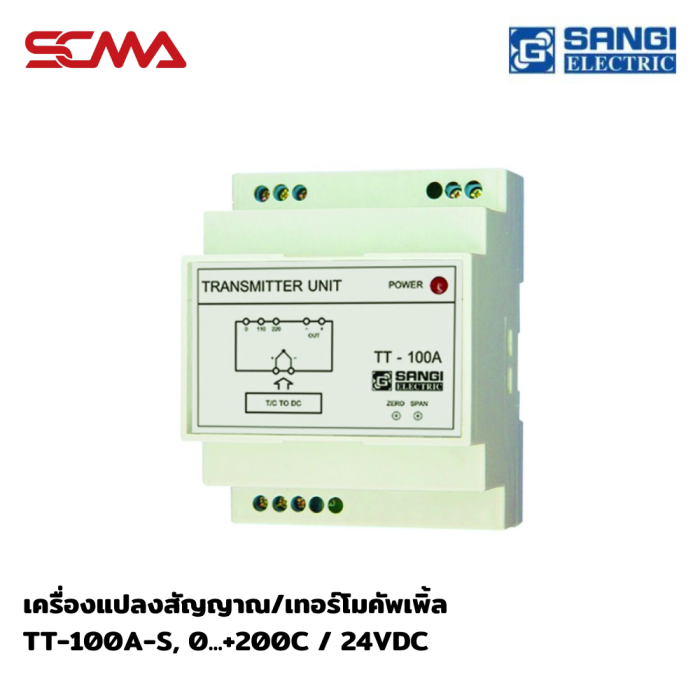
Signal conditioner/thermocouple TT-100A-S, 0...+200C / 24VDC
Price on request – please contact us
Out of stock
SKU
040201
Out of stock

TT-100A-S, SANGI, Thermocouple Transmitter, Temperature Transmitter, Thermocouple Type K, 0-200°C, 24VDC, Thermocouple Signal Converter, TC Signal Converter, Temperature Signal Converter, Industrial Temperature Measurement, Thermocouple Signal Converter, Temperature Transmitter, Type K Thermocouple Converter, 0-200°C Thermocouple Converter, 24VDC Power Supply Signal Converter, Temperature Sensor Signal Converter
*Price does not include VAT
SANGI TT-100A-S Thermocouple Signal Converter 0 to +200°C 24VDC Power Supply
SANGI TT-100A-S Thermocouple Transmitter is a temperature signal converter for receiving electrical signals from a thermocouple (Thermocouple) sensor. This model is set for an input temperature range of 0 to +200°C and uses a 24VDC power supply.
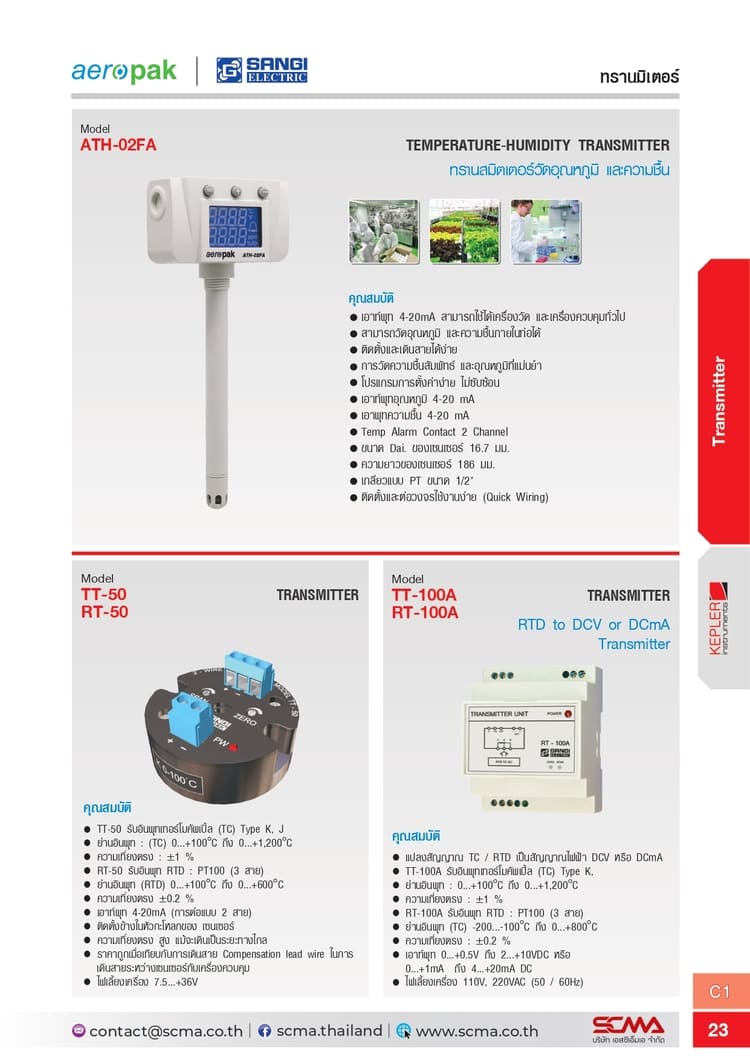
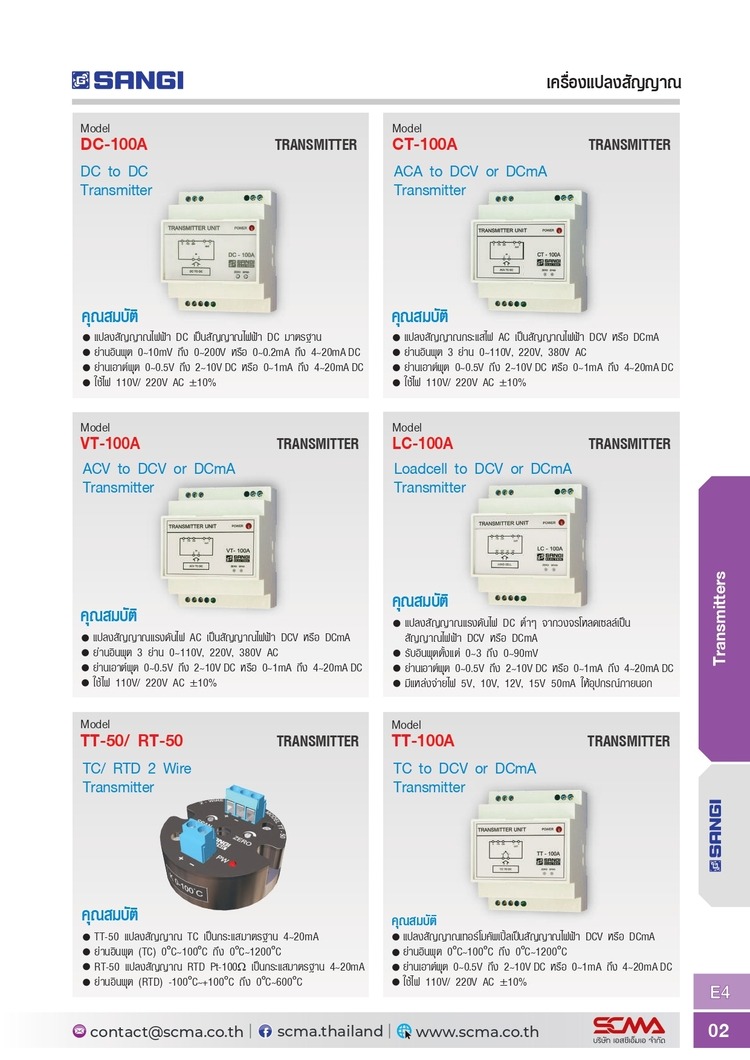
The TT-100A series signal converter supports Type K thermocouples and is used for
converting temperature sensor signals into DC voltage or DC current signals for display devices and industrial control systems. It is important to check the output format of the TT-100A-S model before connecting and using it.
General Features
- Product Model: TT-100A-S
- Brand: SANGI
- Product Type: Thermocouple Transmitter
- Input Type for TT-100A Series: Thermocouple Type K
- Temperature Input Range: 0 to +200°C
- Power Supply: 24VDC
- Converts thermocouple signals for use with measuring devices and control systems
Technical Specifications
| Model | TT-100A-S |
| Brand | SANGI |
| Product Type | Thermocouple Transmitter |
| Temperature Input Range | 0 to +200°C |
| Power Supply | 24VDC |
| Input Sensor (TT-100A Series) | Thermocouple Type K |
| Signal Conversion | Thermocouple to DC Electrical Signal |
Operating Principle
A thermocouple (Thermocouple) is a temperature sensor that relies on the principle of generating an electrical voltage from the temperature difference between the measurement point and the reference point. The signal converter receives the voltage signal from the sensor and converts it into an appropriate electrical signal format for measurement and control systems.
The TT-100A-S model is set for a measurement range from 0 to +200°C and uses a 24VDC power supply. The type and range of the output signal must be checked from the specific model technical documentation.
Temperature Measurement Range
The specified temperature input range for this model is 0 to +200°C, suitable for applications requiring temperature signals from thermocouples within this range.
Examples and Application Guidelines
- Convert signals from thermocouples for temperature measurement systems
- Apply in industrial machine temperature monitoring systems
- Use in temperature measurement systems for ovens or heating equipment with appropriate operating ranges
- Connect to display devices or temperature control systems that support the output signal type of the device
- Use in production process temperature monitoring systems that require a signal converter with 24VDC power supply
Considerations
- For model TT-100A-S, this item specifies a temperature input range of 0 to +200°C and 24VDC power supply
- Confirm the thermocouple type of the sub-model with the supplier before installation
- Check the type and range of the output signal before connecting to a PLC or temperature controller
- Verify the 24VDC power terminals and thermocouple input terminals according to the manual
- Select a thermocouple sensor suitable for the temperature and environmental conditions at the measurement point
- The input range of 0 to +200°C is not the ambient temperature range that the signal converter can withstand
Write Your Own Review
This website uses cookies
We use cookies to make the site work properly, to understand how it is used, and to show content that is relevant to you. You choose which types to allow; strictly necessary cookies are always on. Privacy Policy
🤖 AI Assistant
Ask about products, specs and replacement models
Hello 👋 Ask us anything — find products, compare specs, or troubleshoot.
🗑 Clear history