
Air Filter, Regulator & Lubricator
E.MC Air Filter, Regulator & Lubricator
The E.MC Air Filter, Regulator & Lubricator (FRL Unit) is a quality improvement set for compressed air produced by the brand E.MC. It is an essential component in pneumatic systems, tasked with preparing compressed air to meet appropriate standards before it is used in various equipment. This ensures that the compressed air is clean, has consistent pressure, and receives proper lubrication, which is crucial for maintaining system efficiency and extending the lifespan of all pneumatic devices.
What's Included in E.MC Air Filter, Regulator & Lubricator?
F: Air Filter (Air Filter Set)
- Purpose: Filters out contaminants from compressed air coming from the air compressor, such as dust particles, rust, and importantly, water (condensed moisture) and oil that may be present.
- Importance: Contaminants like water and dirt in the compressed air system can cause wear and tear, corrosion, reduce equipment efficiency, and shorten its lifespan.
R: Air Regulator (Air Pressure Regulator)
- Purpose: Adjusts and controls the pressure of the compressed air being sent out to maintain a consistent and steady output as per set values.
- Importance: The pressure from an air compressor is often inconsistent and may be too high. Properly adjusting the pressure prevents damage to pneumatic equipment, ensuring precise and stable operation of machinery.
L: Air Lubricator (Air Oil Injector)
- Purpose: Mixes oil lubricant droplets into the compressed air stream for delivery to moving parts within pneumatic devices such as air cylinders or certain types of valves that require lubrication.
- Importance: Lubrication reduces friction, minimizes wear and tear, and extends equipment lifespan.
View E.MC Air Filter, Regulator & Lubricator Catalog Click Here
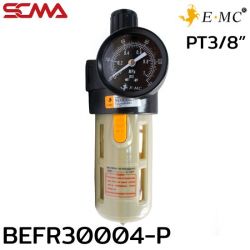 BEFR30004-P \ Air Preparation Unit \ Filter Regulator / PT3/8” \ E.MCSpecial Price THB 427.50 Regular Price THB 570.00
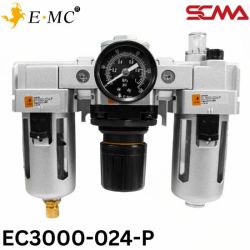 EC3000-024-P \ Air Preparation Unit \ Filter+Regulator+Lubricator / PT1/4” \ E.MCSpecial Price THB 1,245.00 Regular Price THB 1,660.00
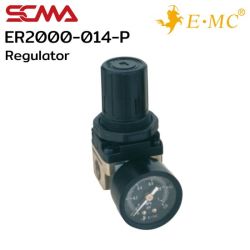 ER2000-014-P \ Air Preparation Unit \ Regulator / PT1/8” \ E.MCSpecial Price THB 337.50 Regular Price THB 450.00
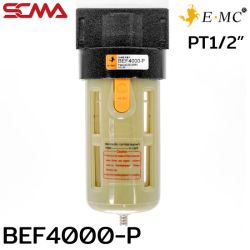 BEF4000-P \ Air Preparation Unit \ Filter / PT1/2” \ E.MCSpecial Price THB 270.00 Regular Price THB 360.00
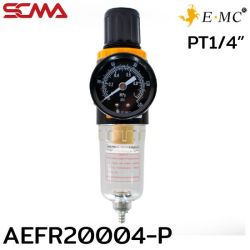 AEFR20004-P \ Air Preparation Unit \ Filter Regulator / PT1/4” \ E.MCSpecial Price THB 255.00 Regular Price THB 340.00
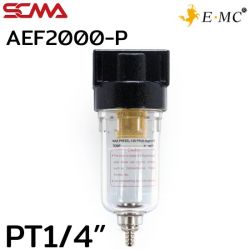 AEF2000-P \ Air Preparation Unit \ Filter / PT1/4” \ E.MCSpecial Price THB 135.00 Regular Price THB 180.00
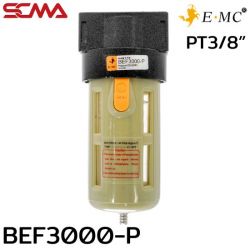 BEF3000-P \ Air Preparation Unit \ Filter / PT3/8” \ E.MCSpecial Price THB 270.00 Regular Price THB 360.00
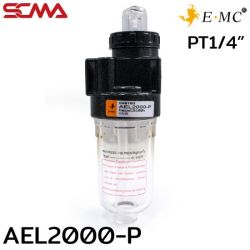 AEL2000-P \ Air Preparation Unit \ Lubricator / PT1/4” \ E.MCSpecial Price THB 135.00 Regular Price THB 180.00
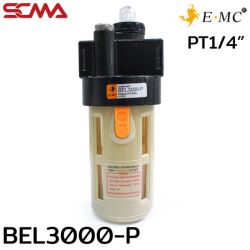 BEL3000-P \ Air Preparation Unit \ Lubricator / PT3/8” \ E.MCSpecial Price THB 270.00 Regular Price THB 360.00
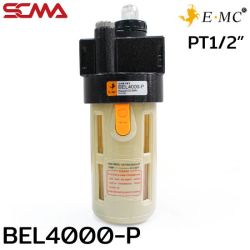 BEL4000-P \ Air Preparation Unit \ Lubricator / PT1/2” \ E.MCSpecial Price THB 270.00 Regular Price THB 360.00
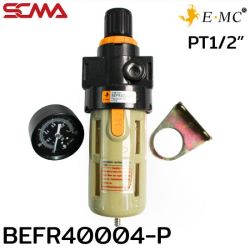 BEFR40004-P \ Air Preparation Unit \ Filter Regulator / PT1/2” \ E.MCSpecial Price THB 435.00 Regular Price THB 580.00
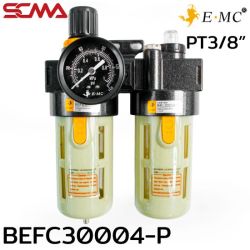 BEFC30004-P \ Air Preparation Unit \ Filter / PT3/8” \ E.MCSpecial Price THB 727.50 Regular Price THB 970.00
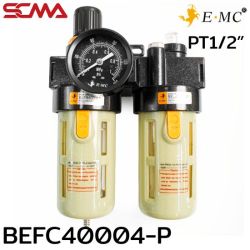 BEFC40004-P \ Air Preparation Unit \ Filter / PT1/2” \ E.MCSpecial Price THB 735.00 Regular Price THB 980.00
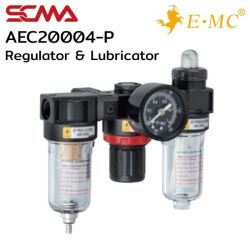 AEC20004-P \ Air Preparation Unit \ Filter Regulator+Lubricator / PT1/4” \ E.MCSpecial Price THB 495.00 Regular Price THB 660.00
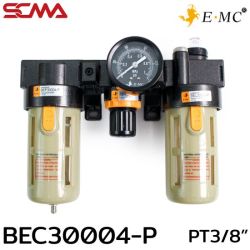 BEC30004-P \ Air Preparation Unit \ Filter Regulator+Lubricator / PT3/8” \ E.MCSpecial Price THB 862.50 Regular Price THB 1,150.00
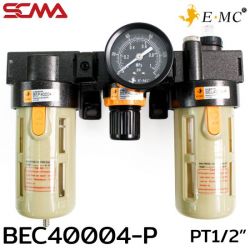 BEC40004-P \ Air Preparation Unit \ Filter Regulator+Lubricator / PT1/2” \ E.MCSpecial Price THB 870.00 Regular Price THB 1,160.00
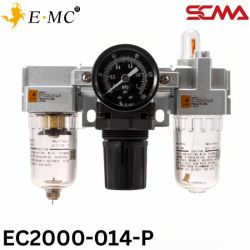 EC2000-014-P \ Air Preparation Unit \ Filter+Regulator+Lubricator / PT1/8” \ E.MCSpecial Price THB 810.00 Regular Price THB 1,080.00
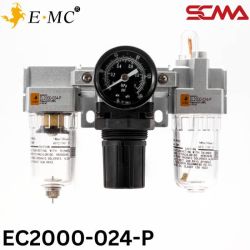 EC2000-024-P \ Air Preparation Unit \ Filter+Regulator+Lubricator / PT1/4” \ E.MCSpecial Price THB 810.00 Regular Price THB 1,080.00
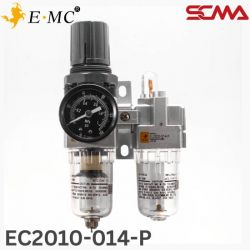 EC2010-014-P \ Air Preparation Unit \ Filter+Regulator+Lubricator / PT1/8” \ E.MCSpecial Price THB 735.00 Regular Price THB 980.00
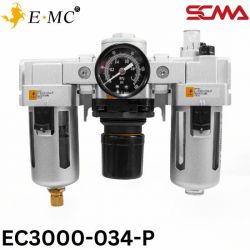 EC3000-034-P \ Air Preparation Unit \ Filter+Regulator+Lubricator / PT3/8” \ E.MCSpecial Price THB 1,245.00 Regular Price THB 1,660.00
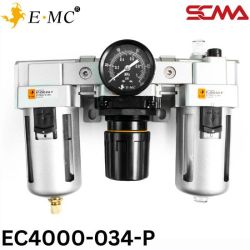 EC4000-034-P \ Air Preparation Unit \ Filter+Regulator+Lubricator / PT3/8” \ E.MCSpecial Price THB 1,672.50 Regular Price THB 2,230.00
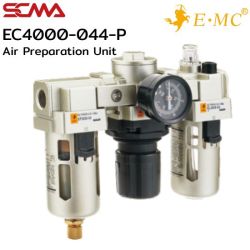 EC4000-044-P \ Air Preparation Unit \ Filter+Regulator+Lubricator / PT1/2” \ E.MCSpecial Price THB 1,672.50 Regular Price THB 2,230.00
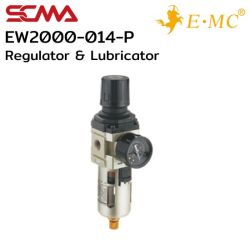 EW2000-014-P \ Air Preparation Unit \ Filter Regulator / PT1/8” \ E.MCSpecial Price THB 487.50 Regular Price THB 650.00
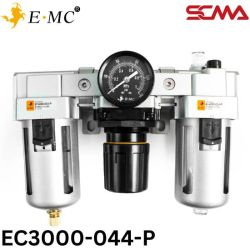 EC3000-044-P \ Air Preparation Unit \ Filter+Regulator+Lubricator / PT1/2” \ E.MCSpecial Price THB 1,245.00 Regular Price THB 1,660.00
What is an Air Filter Regulator? Complete Guide on How to Choose and Maintain It
Have you ever wondered why the Air Filter Regulator is called a crucial component of pneumatic systems, and how these systems would function without it? This article delves into every aspect of air filters and pressure regulators, from basic definitions to complex working principles, all the way to professional tips on selection and maintenance. A thorough understanding of this equipment not only extends the lifespan of machinery but also significantly reduces maintenance costs and boosts production efficiency. If you need immediate consultation regarding pneumatic systems issues, contact us here.
What is an Air Filter Regulator?
Air Filter Regulator, often abbreviated as F.R. (Filter Regulator), is a device that combines the functions of "filtering" and "regulating pressure" into one unit. It serves as a critical front-line component in improving compressed air quality before it enters pneumatic systems by removing contaminants such as dust particles, rust, and moisture from the air while also controlling air pressure to remain constant and suitable for end devices. The operation of this equipment is akin to the kidneys and heart of an air system that cleanses blood and maintains steady pressure, ensuring pneumatics operate smoothly and at peak efficiency.
Meaning and Primary Functions
The primary function of a combined unit (Combination Unit) air filter is to prepare compressed air to be clean and have the correct pressure. The Filter component captures solid particles and water droplets mixed with the air, which could damage rubber seals and cylinders, while the regulator adjusts the pressure from the air pump (Primary Pressure) to a constant working pressure (Secondary Pressure), regardless of input pressure fluctuations. This equipment is crucial in protecting sensitive end devices.
Why Every Factory and Workshop Needs It?
In industrial factories and auto repair shops, compressed air is the fourth source of power after electricity, water, and gas. Pneumatic tools such as impact wrenches, spray guns, or automated machinery all require clean and stable pressure air. Without an Air Pressure Regulator, excessive pressure could cause equipment to explode or break down instantly, while high moisture levels can lead to rust in the tubing system and internal parts. Installing an Air Filter Regulator is a worthwhile investment for protecting expensive assets and ensuring quality work.
Consequences of Not Having an Air Filter in the System
Neglecting to install an air filter often leads to chronic problems that are hard to resolve. Dust particles and water that seep through will mix with lubricating oil, forming sticky sludge (Sludge) that clogs valves and cylinders, causing machinery to malfunction or shut down (Downtime). Additionally, unstable pressure results in substandard output, such as inconsistent pump force or uneven paint spray, which can cost much more than the price of an air filter.
Deep Dive into the Main Components of an F.R.L. Unit
An air compressor service set, or F.R.L. unit, consists of three main components that work in tandem: Filter (F), Regulator (R), and Lubricator (L). Although there are models that combine F and R into an Air Filter Regulator, understanding the functions of all three parts is still crucial, especially for the regulator which controls system balance. The lubricator helps supply oil to equipment requiring special maintenance. Choosing the correct F.R.L. according to job type can significantly extend the lifespan of pneumatic systems.
Air Filter: The First Line of Defense
The air filter catches contaminants with a filter element, which ranges in fineness from 5 microns to as low as 0.01 micron for high-purity applications such as food and pharmaceuticals. Additionally, it is designed with baffles that create centrifugal force to spin water and dust down into the bottom of the filter cup before being drained out through Auto Drain or Manual Drain. Regular maintenance of the filter element is essential; see more herehere.
Regulator: Maintaining Pressure Stability
The regulator adjusts air pressure by maintaining a balance of forces between the spring and diaphragm. When air is used, outlet pressure drops, causing the spring to push the valve open further to replenish lost pressure. Conversely, if pressure exceeds the set point, the valve releases excess air through an exhaust port to prevent damage. This mechanism ensures that machinery receives consistent power without sudden surges.
Lubricator: Essential for Certain Equipment
For high-speed moving parts in pneumatic tools, such as air motors or large cylinders, oil lubrication is essential. The lubricator sprays oil into the compressed air stream in a mist form to coat internal components, reducing friction, preventing rust, and extending rubber seal life. However, many modern devices use oil-free materials, so it's always advisable to check equipment specifications before installation.
Simple Working Principle of Air Filter Regulator
The working principle of an air filter regulator begins when compressed air flows into the inlet (Inlet). The air is forced to spin with directional plates, creating a centrifugal force that throws water and large particles against the cup wall and drops them down. Then, the air passes through the filter to capture fine dust before passing through the pressure control valve which adjusts and maintains the outlet pressure (Outlet) at a constant value as set. This mechanism operates continuously and quickly to ensure that pneumatic systems receive high-quality air at all times.
Dust and Moisture Filtering Process
The filtering process starts by separating water and coarse dust using the centrifugal effect (Cyclone Effect), which is highly effective in removing up to 90% of water. The remaining particles are captured by a fine porous filter. Accumulated dirt causes an increase in pressure drop (Pressure Drop). If you notice that air pressure drops abnormally, it's a warning sign to clean or replace the filter; otherwise, it may lead to filter rupture and allow contaminants into the system.
Pressure Adjustment and Maintenance Mechanism
Adjusting pressure is done by turning a knob (Knob) which presses a spring, pushing down on the diaphragm to open an air intake valve. When outlet pressure rises enough to overcome the spring force, the diaphragm lifts and closes the valve, maintaining constant pressure. If outlet pressure becomes too high (e.g., due to backpressure from an air cylinder), the diaphragm will lift further to open a relief port (Relief Port) for venting air, ensuring system safety. This precise operation relies on quality pressure regulators; learn more about pneumatic systems here.
How to Professionally Select the Right Air Filter Regulator for Your Application
Selecting the correct air filter regulator involves more than just pipe size; it requires considering several engineering factors to achieve maximum efficiency and cost-effectiveness. Choosing specifications that are too low can result in insufficient airflow, pressure drop, and machinery malfunction, while choosing specifications that are too high is wasteful of budget without cause. Key considerations include flow rate (Flow Rate), operating pressure range, and filtration fineness.
Selecting the Right Port Size to Match Flow Rate
Thread size (such as 1/4", 3/8", 1/2") directly affects the amount of air that can flow through. You must check the total air consumption of all equipment in the circuit and select an air filter regulator that supports a flow rate at least 20-30% higher than the requirement to account for pressure drop. Relying solely on existing pipe size may not be sufficient if additional equipment is added later.
Selecting the Appropriate Pressure Range
Check the maximum pressure produced by the air pump (Supply Pressure) and the operating pressure required by machinery. Generally, standard air regulators can be adjusted in a range of 0.5 - 8.5 bar. However, if used with tools requiring high or low pressure specifically, select models that support those ranges (Specific Range). Choosing springs within the correct range will help achieve more precise and accurate pressure adjustment.
Types of Drain: Manual vs. Auto
Manual Drain (manual type) is cost-effective but requires manual drainage daily, suitable for applications with regular maintenance. Auto Drain (automatic type) drains water automatically when the level reaches a set point, ideal for hard-to-reach installation points or factories operating 24/7. Choosing incorrectly may cause water to overflow from the filter cup and enter the system, causing significant damage.
Material of Housing and Filter Cup
The housing is typically made of aluminum alloy for strength, while standard filter cups are made of polycarbonate (Polycarbonate), which withstands pressure well but may be vulnerable to certain chemicals such as thinner or synthetic oil. In chemical environments, metal or nylon filter cups should be chosen to prevent cup cracking or bursting.
Consider Brand and Reliability (SMC, Festo, etc.)
Brands like Festo thai and SMC are renowned for quality and durability, offering good spare parts support and after-sales service. Although prices may be slightly higher than general brands, they offer long-term value. The question of whether Festo is good has a resounding yes in terms of technology and precision; however, if budget constraints exist, there are other brands with similar quality to choose from.
Comparison Table of Popular Air Filter Regulator Models
Comparing specifications and prices can help make decisions easier, especially when choosing between economical models and high-performance ones. The air regulator price and Festo hose price may change with promotions, but this table will provide an overview of the current market.
Comparison of Specifications, Prices, and Highlights
|
Brand/Model |
Port Size |
Filtration Fineness |
Pressure Range |
Highlights |
Aproximate Price |
|
SMC (AC Series) |
1/4" - 1" |
5 micron |
0.5 - 8.5 bar |
Popular, Easy to find replacement parts, Double cup design |
1,xxx - 5,xxx |
|
Festo (MS Series) |
1/4" - 1" |
5 / 40 micron |
0.5 - 12 bar |
Durable, Modular design, High flow rate |
2,xxx - 8,xxx |
|
Parker |
1/4" - 3/4" |
5 micron |
0 - 10 bar |
Sturdy, European brand |
1,xxx - 4,xxx |
|
AirTac |
1/4" - 1/2" |
40 micron |
1.5 - 9 bar |
Economical, Good value for money |
5xx - 2,xxx |
Recommended Models for DIY and Industrial Work
For DIY projects or general painting work, the Compact model from AirTac or a smaller SMC model would suffice. However, for continuous industrial operations, we recommend the Heavy Duty models from Festo or SMC with an Auto Drain system and digital pressure gauge for easy monitoring and maintenance.
Installation and Maintenance Steps to Extend Lifespan
Proper installation and regular maintenance are the keys to ensuring that Air Filter Regulator operates efficiently for a long time. Neglecting even minor details can quickly turn an expensive piece of equipment into waste.
Correct Installation Position
Install the air filter assembly as close to the point of use as possible to minimize pressure drop in the piping. It must always be installed vertically, with the bowl at the bottom for proper drainage. Leave a clearance of at least 5-10 cm below the bowl to facilitate easy removal for cleaning or replacing the element. Check the direction of airflow (Flow Direction) according to the arrow on the body and never install it backwards.
Checking and Cleaning the Filter Element
Check the water level in the bowl daily (for Manual Drain) and drain before it reaches the filter element. For the filter element, blow out with reverse air every 2-4 weeks and replace every 6 months or when pressure drop exceeds 0.7 bar. Using a clogged filter will make the compressor work harder and consume more power. Learn about maintaining other pneumatic equipmenthere.
Setting Appropriate Pressure
Adjust the pressure when air is flowing (Dynamic Pressure) to get accurate working pressure. Pull up the knob to unlock, turn clockwise to increase pressure and counterclockwise to decrease it. Once set, push down the knob to lock in place to prevent movement from vibration. For pneumatic cylinder applications, see how to select and sethere.
If You Are Looking for an Air Filter Regulator, Think SCMA!
If you are looking for high-quality Air Filter Regulators or need advice on selecting the right air filter set for your machinery, SCMA is ready to provide engineering consultation. We offer a wide range of leading brands and expert teams available to answer all questions and assist with on-site issues, whether it's spec comparison, installation, or maintenance to ensure your pneumatic system operates perfectly. See our full product linehere.
Summary
An Air Filter Regulator is the best investment for protecting your pneumatic system. Choosing the right equipment, proper installation, and consistent maintenance will ensure optimal performance of machinery, reduce damage, and save costs in the long run. SCMA hopes this article serves as a guide to help you understand and use air filter sets professionally. For any further questions,contact us.
Frequently Asked Questions
Is a Lubricator Necessary?
Not always necessary, most new pneumatic equipment uses high-quality seal materials and lubricants that allow them to operate without oil (Oil-free). Adding oil in unnecessary systems may wash away the existing lubricant and cause damage. It is advisable to check the end device manual before deciding to install a Lubricator.
How Often Should Filters Be Replaced?
Generally, filters should be replaced every 6 months to 1 year depending on the quality of compressed air and environmental conditions. If there is high humidity or dust in the air, replacement may need to occur more frequently. This can be observed from changes in filter color or a noticeable drop in air pressure. Regularly replacing filters helps save energy for air compressors.
What Can Cause Air Pressure Drops?
The main cause of low pressure is usually clogged filters, making it difficult for air to pass through. Secondary causes include the filter system being too small compared to the volume of air used or leaks at connections and air lines. Initial checks can be done by observing the pressure gauge before and after the filter; if there's a significant difference, the filter may have an issue. Learn more about pressure regulators here.
🤖 IFM Product Assistant
Ask about products, specs and replacement models
Hello 👋 I can answer your questions about IFM efector products.
Examples:
• What is the replacement model for PN2021?
• Which pressure sensor models cover 250 bar?
Examples:
• What is the replacement model for PN2021?
• Which pressure sensor models cover 250 bar?
🗑 Clear history