
Level measurement & control
Level Measurement
Level measurement is a crucial process for checking the position of materials, whether liquid or solid, within tanks, silos, or other containers in various industries. Accurate level measurement systems help maintain production efficiency, ensure safety, and support effective inventory management. At SCMA, we offer comprehensive level measurement solutions from leading global brands, along with a team of expert engineers ready to consult and assist you in selecting the right system for every industry.
Benefits of Level Measurement & Control
- Increase safety, prevent overfilling, and reduce risks.
- Enhance production process efficiency with precise and continuous operation.
- Control material usage appropriately, reducing unnecessary overfilling or draining.
- Improve liquid and material management, allowing immediate tracking and control of levels.
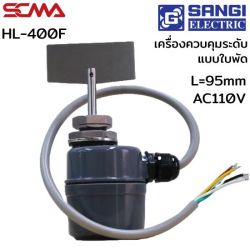 HL-400F L=95mm AC110V Level switch Rotary paddle SANGISpecial Price THB 4,200.00 Regular Price THB 5,600.00
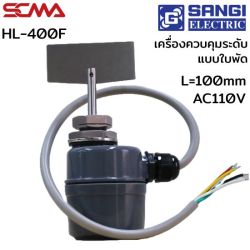 HL-400F L=100mm AC110V Level switch Rotary paddle SANGISpecial Price THB 4,275.00 Regular Price THB 5,700.00
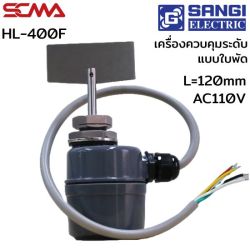 HL-400F L=120mm AC110V Level switch Rotary paddle SANGISpecial Price THB 4,350.00 Regular Price THB 5,800.00
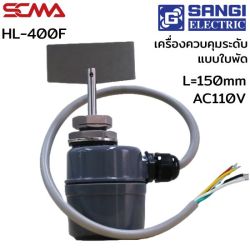 HL-400F L=150mm AC110V Level switch Rotary paddle SANGISpecial Price THB 4,575.00 Regular Price THB 6,100.00
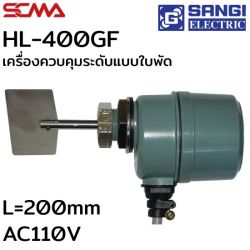 HL-400GF L=200mm AC110V Level switch Rotary paddle SANGISpecial Price THB 5,550.00 Regular Price THB 7,400.00
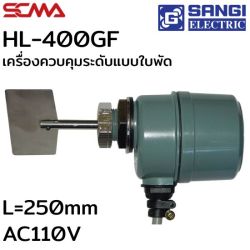 HL-400GF L=250mm AC110V Level switch Rotary paddle SANGISpecial Price THB 5,775.00 Regular Price THB 7,700.00
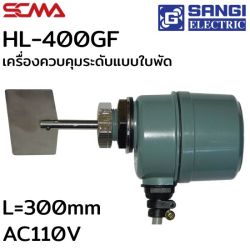 HL-400GF L=300mm AC110V Level switch Rotary paddle SANGISpecial Price THB 6,000.00 Regular Price THB 8,000.00
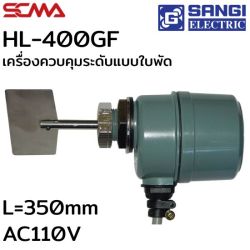 HL-400GF L=350mm AC110V Level switch Rotary paddle SANGISpecial Price THB 6,225.00 Regular Price THB 8,300.00
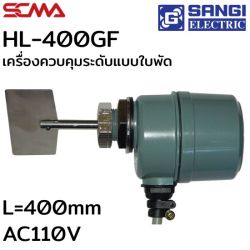 HL-400GF L=400mm AC110V Level switch Rotary paddle SANGISpecial Price THB 6,450.00 Regular Price THB 8,600.00
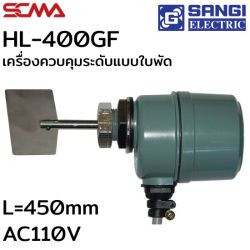 HL-400GF L=450mm AC110V Level switch Rotary paddle SANGISpecial Price THB 6,675.00 Regular Price THB 8,900.00
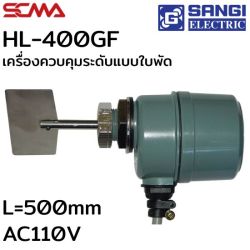 HL-400GF L=500mm AC110V Level switch Rotary paddle SANGISpecial Price THB 6,900.00 Regular Price THB 9,200.00
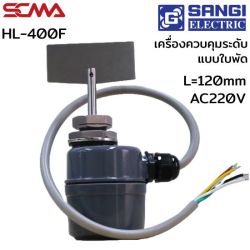 HL-400F L=120mm AC220V Level switch Rotary paddle SANGISpecial Price THB 3,975.00 Regular Price THB 5,300.00
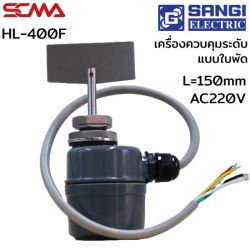 HL-400F L=150mm AC220V Level switch Rotary paddle SANGISpecial Price THB 4,200.00 Regular Price THB 5,600.00
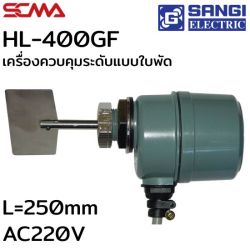 HL-400GF L=250mm AC220V Level switch Rotary paddle SANGISpecial Price THB 5,400.00 Regular Price THB 7,200.00
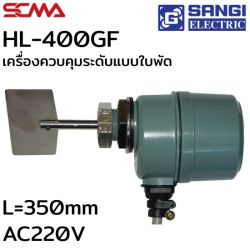 HL-400GF L=350mm AC220V Level switch Rotary paddle SANGISpecial Price THB 5,850.00 Regular Price THB 7,800.00
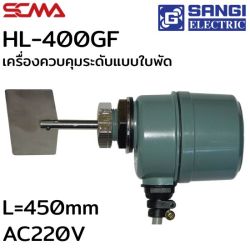 HL-400GF L=450mm AC220V Level switch Rotary paddle SANGISpecial Price THB 6,300.00 Regular Price THB 8,400.00
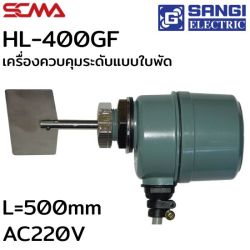 HL-400GF L=500mm AC220V Level switch Rotary paddle SANGISpecial Price THB 6,525.00 Regular Price THB 8,700.00
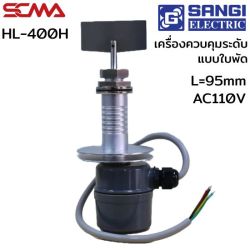 HL-400H L=95mm AC110V Level switch Rotary paddle SANGISpecial Price THB 5,250.00 Regular Price THB 7,000.00
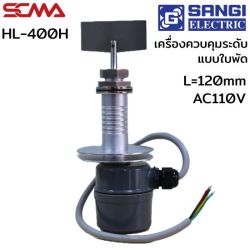 HL-400H L=120mm AC110V Level switch Rotary paddle SANGISpecial Price THB 5,475.00 Regular Price THB 7,300.00
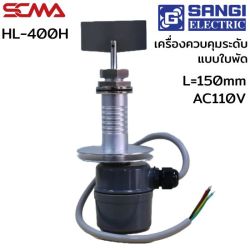 HL-400H L=150mm AC110V Level switch Rotary paddle SANGISpecial Price THB 5,775.00 Regular Price THB 7,700.00
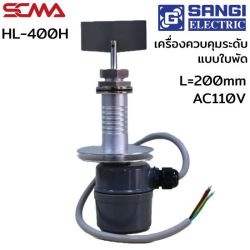 HL-400H L=200mm AC110V Level switch Rotary paddle SANGISpecial Price THB 6,150.00 Regular Price THB 8,200.00
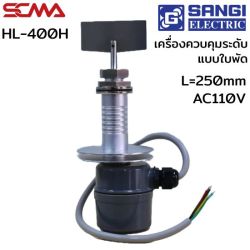 HL-400H L=250mm AC110V Level switch Rotary paddle SANGISpecial Price THB 6,525.00 Regular Price THB 8,700.00
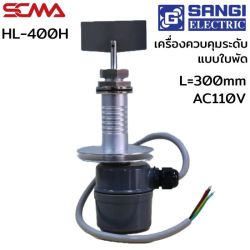 HL-400H L=300mm AC110V Level switch Rotary paddle SANGISpecial Price THB 6,900.00 Regular Price THB 9,200.00
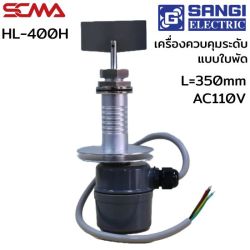 HL-400H L=350mm AC110V Level switch Rotary paddle SANGISpecial Price THB 7,275.00 Regular Price THB 9,700.00
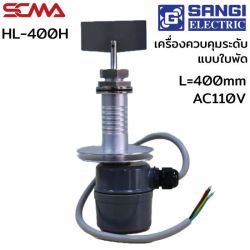 HL-400H L=400mm AC110V Level switch Rotary paddle SANGISpecial Price THB 7,650.00 Regular Price THB 10,200.00
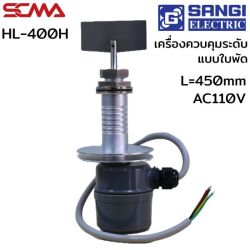 HL-400H L=450mm AC110V Level switch Rotary paddle SANGISpecial Price THB 8,025.00 Regular Price THB 10,700.00
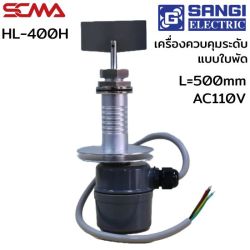 HL-400H L=500mm AC110V Level switch Rotary paddle SANGISpecial Price THB 8,400.00 Regular Price THB 11,200.00
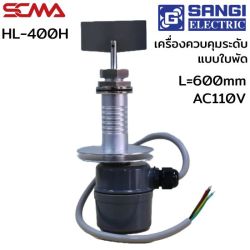 HL-400H L=600mm AC110V Level switch Rotary paddle SANGISpecial Price THB 9,150.00 Regular Price THB 12,200.00
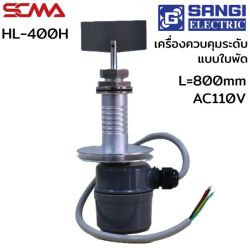 HL-400H L=800mm AC110V Level switch Rotary paddle SANGISpecial Price THB 10,650.00 Regular Price THB 14,200.00
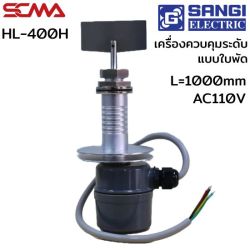 HL-400H L=1000mm AC110V Level switch Rotary paddle SANGISpecial Price THB 12,150.00 Regular Price THB 16,200.00
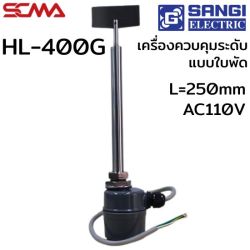 HL-400G L=250mm AC110V Level switch Rotary paddle SANGISpecial Price THB 5,025.00 Regular Price THB 6,700.00
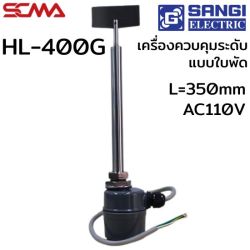 HL-400G L=350mm AC110V Level switch Rotary paddle SANGISpecial Price THB 5,475.00 Regular Price THB 7,300.00
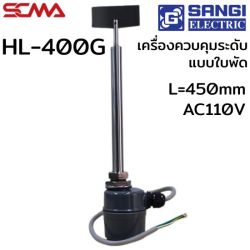 HL-400G L=450mm AC110V Level switch Rotary paddle SANGISpecial Price THB 5,925.00 Regular Price THB 7,900.00
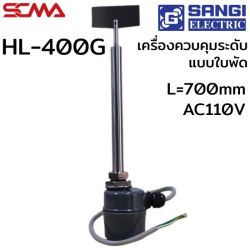 HL-400G L=700mm AC110V Level switch Rotary paddle SANGISpecial Price THB 6,900.00 Regular Price THB 9,200.00
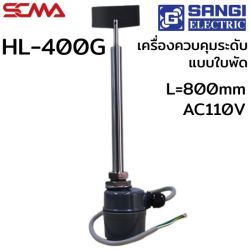 HL-400G L=800mm AC110V Level switch Rotary paddle SANGISpecial Price THB 7,275.00 Regular Price THB 9,700.00
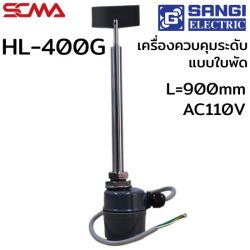 HL-400G L=900mm AC110V Level switch Rotary paddle SANGISpecial Price THB 7,650.00 Regular Price THB 10,200.00
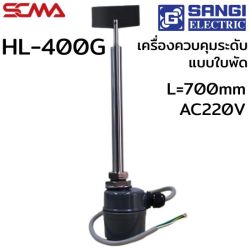 HL-400G L=700mm AC220V Level switch Rotary paddle SANGISpecial Price THB 6,525.00 Regular Price THB 8,700.00
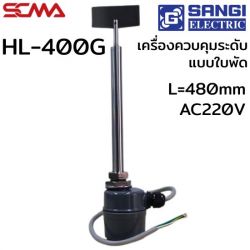 HL-400G L=480mm AC220V Level switch Rotary paddle SANGISpecial Price THB 5,685.00 Regular Price THB 7,580.00
What is Level Measurement?
Level measurement refers to the process of measuring the height of material inside a container relative to a specified reference point, which may be liquid, solution, powder, or granular solid. Level Measurement plays a crucial role in controlling automated production processes, preventing overflow or shortages of materials, and enhancing inventory management efficiency. A good level measurement system enables operators to track and control processes in real-time, reduce losses, and increase operational safety. To learn more about the types of level sensors available on the market.
Types of Level Measurement
Level measurement can be categorized into two main types based on usage characteristics: point level measurement and continuous level measurement. Each type of Level Measurement has distinct advantages and applications:
Point Level Measurement
Point level measurement is used to detect whether material in a container reaches a predetermined level, signaling an alert when the set point is reached, such as "full," "empty," or "warning" levels. This type is suitable for initial control and preventing various issues.
There are several types of point-level systems available to choose from based on material characteristics and environmental conditions:
- Float Switch - Utilizes buoyancy principles, where the float moves with liquid level changes and triggers an automatic switch. Suitable for clean liquids without high viscosity.
- Conductive Sensor - Uses electrodes to detect conductive liquids, suitable for liquids primarily composed of water.
- Vibrating Sensor - A vibrating fork changes frequency or stops vibrating when covered by material, suitable for powders and fine solids.
Point level measurement is commonly used in various applications such as:
- Overflow prevention – Alerts immediately when the tank is nearing full capacity.
- Pump control – Automatically turns pumps on/off based on low/high levels.
- Safety assurance – Ensures hazardous materials are at safe levels according to standards.
Continuous Level Measurement
Continuous level measurement involves monitoring the exact material level throughout the height of a container, providing real-time data about the quantity of material present. This can be displayed as percentage, volume, or height, suitable for high-precision control systems requiring real-time tracking. For further understanding on selecting appropriate sensors for specific applications.
Continuous level measurement sensors come in various technologies:
- Ultrasonic Sensor - Emits sound waves that reflect off the material surface; calculates level based on reflection time, suitable for liquids and solids.
- Radar Sensor - Sends high-frequency radar signals reflected from materials, durable in harsh environments, vapor, or pressurized tanks.
- Hydrostatic Sensor - Measures pressure exerted by material at the bottom of a tank to calculate level, suitable for liquids with constant density.
- Guided Microwave Sensor - Sends microwaves through a waveguide; unaffected by temperature, pressure, or vapor.
The primary applications of continuous level measurement cover multiple aspects:
- Inventory management – Tracks tank levels for efficient replenishment and storage planning.
- Process control – Ensures consistent material flow in production lines.
- Safety systems – Prevents overfilling or depletion of critical materials.
- Batching and quantity measurement – Accurately measures quantities for consistent quality production.
Level Measurement Technology: Contact and Non-Contact Types
Selecting the appropriate Level Measurement technology is crucial, divided into two main groups based on their contact nature with materials, namely contact sensors and non-contact sensors. Each type has its own advantages depending on material types, environmental conditions, and maintenance requirements. For more information about how level measurement works, you can study it.
Contact Level Sensor
A contact level sensor is a device that directly contacts the material, suitable for clean and stable liquids or solids without causing excessive wear. Common types include float switches, conductive probes, and hydrostatic pressure sensors.
Contact sensors have several advantages suited for general applications:
- Cost-effective with lower initial costs than non-contact sensors
- High accuracy in suitable conditions
- Simplistic design that is easy to install and use
- Fits simple systems well
However, certain limitations should be considered before selection:
- Requires more frequent maintenance due to direct contact
- Might wear out faster in harsh environments
- Inappropriate for corrosive, sticky, or easily accumulating materials
Non-Contact Level Sensor
A non-contact level sensor measures levels without directly contacting the material using technologies such as ultrasonic, radar, or laser. This makes it an excellent choice for challenging level measurement tasks, especially for corrosive, sticky, or high-temperature materials.
The key advantages of non-contact sensors are:
- High durability and low maintenance costs
- No wear from material contact
- Suitable for harsh environments or those requiring high hygiene standards
- Works with a variety of materials, including corrosive or hazardous ones
Considerations for using non-contact sensors:
- Higher costs than contact sensors
- Possibility of reduced accuracy due to obstructions such as foam, dust, or vapor
- Requires obstruction-free signal paths
Types of Level Measurement Equipment Based on Usage
To better understand the selection of level measurement equipment, at SCMA we categorize devices into three main groups based on their usage characteristics, each with different roles and suitability:
Level Indicator
A level indicator or gauge is a device that displays liquid levels within tanks for on-site monitoring. Suitable for monitoring in work areas but cannot send signals to automatic systems or control other devices. For example, Sight Glass allows operators to directly check the level with their eyes.
Level Switch
A level switch is an equipment that detects and sends alerts when materials reach a predetermined level. It can send signals to central control systems for use in automated processes such as turning pumps or valves on/off, or sending alarms to SCADA systems to prevent overflow or material shortages.
Level Transmitter
A level transmitter is a continuous measurement tool that converts sensor readings into analog (4-20mA, 0-10V) or digital signals (Foundation Fieldbus, Modbus). It can send signals to data logging systems or controllers. Suitable for complex control systems requiring real-time data for decision-making and automated control.
Level Transmitter Technology
There are various technologies for level measurement transmitters to meet the different needs of each industry. Each technology has unique operating principles and advantages:
Float Level Transmitter
Works by using the buoyancy force of a float that moves according to the liquid level, suitable for liquids with constant density. Easy installation, cost-effective, and provides good accuracy under normal conditions. However, it should be avoided for use with highly viscous or sediment-laden fluids.
Radar Level Transmitter
Sends microwave or electromagnetic waves to the surface of the material and calculates the level from the time it takes for the wave to reflect back. It is unaffected by temperature, pressure, or vapor, making it suitable for harsh environments and a highly popular technology in current level measurement.
Ultrasonic Level Transmitter
Uses high-frequency sound waves to measure, relying on air as the medium for wave propagation. Therefore, it may be affected by weather conditions, dust, humidity, or vapor. However, it is priced appropriately and easy to install, suitable for measuring liquids and solids under normal conditions.
Hydrostatic Level Transmitter
Measures pressure at the bottom of a tank to calculate level; as material quantity increases, so does the pressure proportionally. Requires constant density of the material for accuracy. It is a common technology in industries and priced reasonably.
Capacitance Level Transmitter
Bases on creating an electric field and detecting changes when materials enter the electric field area. Can measure both liquids, powders, solids, including low-conductive materials. Suitable for diverse applications and works with highly viscous materials.
Magnetic Level Transmitter
Uses magnets attached to a float within a narrow column to limit movement; when the float moves according to liquid level, the magnet sends signals to the transmitter, providing consistent and accurate measurement. However, it requires constant density of liquids.
Guided Microwave Level Transmitter
Sends microwave waves through a probe immersed in material, unaffected by temperature, pressure, density, or vapor. Can measure even with foam or uneven surfaces. Suitable for complex measurements including interface level measurement.
Nuclear Level Transmitter
Uses gamma radiation to penetrate the tank and materials to calculate levels. Suitable for tanks without internal mounting points or processes with extremely high pressure and temperature, such as reactor vessels, due to its ability to be installed externally without contacting the process. However, strict safety controls are required.
Comprehensive Level Measurement System Services by SCMA
At SCMA, we are not just equipment suppliers or level gauge providers but technical partners working alongside you at every step of level measurement. With over 40 years of experience in the automation industry, our team of engineers and experts is ready to provide consultation and installation services for selecting appropriate level measuring technologies that fit your processes, designing measurement systems tailored to specific needs, installing and testing systems to achieve maximum efficiency, and offering comprehensive after-sales service including maintenance, system updates, and quick problem resolution.
Summary
Selecting the appropriate level measurement system is a crucial factor in ensuring that your production process operates efficiently, safely, and cost-effectively. Whether you opt for basic level gauges or advanced Level Measurement systems, SCMA Company Limited is ready to be your trusted partner in choosing and installing the right level measurement solution tailored to your needs. With over 40 years of experience, representing leading brands worldwide, and a team of expert engineers providing close support, we are committed to delivering precise and sustainable solutions that meet your requirements.
Frequently Asked Questions
What is the difference between point level measurement and continuous level measurement?
Point level measurement involves detecting whether material has reached a specified level such as "full," "empty," or "warning." It is suitable for basic control, like turning pumps on or off, often used in conjunction with level gauges for monitoring. Continuous level measurement provides precise real-time data about the exact level, which can be displayed as percentages or height readings. This type of measurement is ideal for complex control systems.
Should I choose contact or non-contact level sensors?
The choice between contact and non-contact level sensors depends on the nature of the material and environment. Contact sensors are suitable for clean, stable liquids or solids, cost-effective but require more maintenance. Non-contact sensors are better suited for corrosive materials, viscous substances, or high-temperature environments; they are durable with less maintenance needed but come at a higher price point. The SCMA team of experts can provide specific advice to help you choose the best equipment.
Which level measurement technology is most suitable for the food industry?
The food and beverage industry requires equipment that meets high hygiene standards. Non-contact sensors such as ultrasonic or radar, or contact sensors made from food-grade materials like optical switches, capacitive switches, or magnetic senders with stainless steel 316 components or CIP-compatible materials are recommended. Some plants also use sight glass level gauges in addition to these.
🤖 IFM Product Assistant
Ask about products, specs and replacement models
Hello 👋 I can answer your questions about IFM efector products.
Examples:
• What is the replacement model for PN2021?
• Which pressure sensor models cover 250 bar?
Examples:
• What is the replacement model for PN2021?
• Which pressure sensor models cover 250 bar?
🗑 Clear history