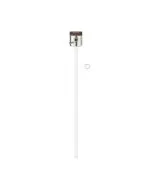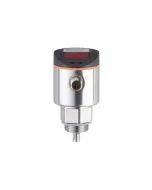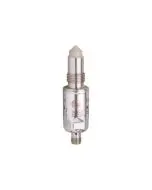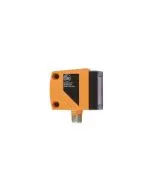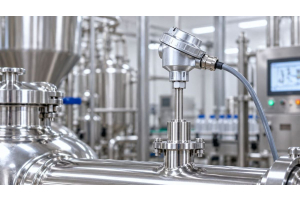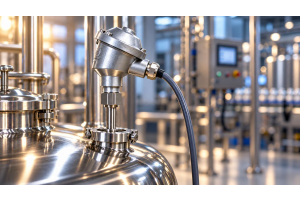

Level Sensors, or level measurement sensors, are crucial devices in controlling the flow of various substances such as liquids, powders, and solid granules. Level Sensors help monitor levels and send electrical signals to control valves according to requirements. Suitable for use across a variety of industries.SCMA provides consultation and services regarding Level Sensors that meet every need, with expertise and high-quality products.
What are Level Sensors?

Level Sensors are devices used to measure and control the levels of various substances within tanks or containers, whether liquids, fine powders, or solid granules. They send electrical signals to open or close control valves according to preset level values. Level sensors play a crucial role in liquid control systems, providing accurate positioning, level, and distribution information for various applications and environments.
How do Level Sensors Work?

Each type of Level Sensor has different working principles and measurement technologies to suit various applications, divided into contact and non-contact types with the substance being measured, such as:
- Optical sensors use reflection or refraction of light when it hits the surface of the material.
- Capacitive sensors use an electric field to detect levels non-invasively.
- Ultrasonic sensors send high-frequency sound waves to the surface of liquids and measure the time it takes for the wave to bounce back.
Types of Level Sensors

Optical Level Sensors
Optical level sensors, which use visible light, laser, or infrared beams to detect the surface of a liquid and are reflected back to be detected by photodiodes, are easy-to-use and reliable devices. They offer fast response times and high accuracy.
Microwave and Radar Level Sensors
Microwave or radar level sensors use electromagnetic waves for measurement, making them suitable for high temperatures and steam environments. They are ideal for conductive materials and can adjust accuracy by using different frequencies.
Ultrasonic Level Sensors
Ultrasonic level sensors emit high-frequency sound waves to the surface of a liquid, calculate the travel time for measurement. They are highly accurate but may be affected by pressure, temperature, turbulence, and humidity.
Vibrating and Tuning Fork Level Sensors
Vibrating or tuning fork level sensors have a vibrating element that oscillates at high frequency continuously. When the sensor comes into contact with material, it changes the vibration used for measurement. They are suitable for both liquids and granular solids and can prevent overflow.
Capacitive Level Sensors
Capacitive level sensors detect capacitance without contact, using an electric field to read the level. They work accurately even with dirt buildup and can indicate whether a container is empty or full but must be positioned precisely.
Usage of Level Sensors

Level sensors are widely used in various industries and processes related to the control of fluid levels in tanks or containers. They help manage flow rates, provide accurate data, and connect with large-scale control systems such as detecting levels, leaks, alerting when a set level is reached, stopping filling once full, and controlling interface levels between different substances. Level sensors are used across multiple industries including food and beverages, pharmaceuticals, energy production, chemical processing, and marine applications.
How do Different Level Detection Methods Differ?
Level measuring sensors come in both contact and non-contact types with the substance being measured. For example, ultrasonic and radar methods that do not require contact, compared to optical, float, or electrical conductivity sensors which need direct contact. Each type has its own advantages and disadvantages, so it is necessary to choose one that suits specific application requirements and properties of different liquids.
Advancements in level detection technology have made previously difficult and expensive processes easier. With new innovations being more durable, accurate, and easy to install, they can now easily detect challenging fluids such as viscous substances like soap foam, milk, glue, thanks to the advanced measurement technologies available today.
If you are interested in Level Sensors, contact SCMA today!
If you are looking for Level Sensors or level measurement sensors for various industrial applications, SCMA can provide comprehensive solutions. We specialize in level measuring equipment and are ready to offer close consultation regardless of the type of level sensor or substance you need. SCMA is happy to recommend the best suitable Level Sensors.
We have a wide range of high-quality Level Sensors from leading brands worldwide, along with a team of expert engineers and service teams ready to support you throughout the product's lifecycle. If you are looking for reliable Level Sensors at an affordable price, contact SCMA today We are ready to provide the best advice and services.
Summary
As mentioned, Level Sensors or level measurement sensors are crucial for controlling the levels of various substances in industries and diverse applications. They come in different types such as Optical, Ultrasonic, Radar, Capacitive, and Vibrating, depending on their suitability with the substance and application.
SCMA is knowledgeable and ready to offer close consultation for choosing Level Sensors that best meet your needs. If you are looking for level measurement sensor solutions, contact SCMA today. You can be assured of quality products and excellent services to ensure accurate, safe, and reliable level measurements in all situations.
Frequently Asked Questions
What is a Level Sensor?
A level sensor or Level Sensors is a device used to monitor and control the levels of various substances, whether liquids, solids, or granular materials within tanks or containers. It sends electrical signals to operate valves to open or close according to desired levels.
How many types of level sensors are there?
There are several types of level sensors, such as Optical, Capacitive, Conductive, Ultrasonic, Vibrating, and Radar level sensors. The choice depends on the type of substance, environmental conditions, and job requirements.
What can a level sensor do?
Level Sensors are used to measure and control levels in tanks or containers, detect leaks, alert on levels, stop filling when limits are reached, and manage interface levels between different substances. They provide accurate real-time level data for flow rate management and efficient integration with large-scale control systems.
What types of sensors are there?
Generally, sensors can be divided into two main categories:
- Contact Sensors (Touch sensors) such as float level sensors and conductive level sensors that must directly touch the substance to measure.
- Non-contact Sensors (Distance sensors) such as ultrasonic, radar, microwave, optical sensors that can measure long distances without touching the material being measured. They use various technologies like sound waves, electromagnetic waves, or light to detect.
However, in recent times, Level Sensors have become more diverse and advanced, allowing for the integration of mixed technologies to suit increasingly challenging tasks such as working with special liquids, harsh environments, or continuous level measurement requiring high accuracy.
SCMA is ready to provide a wide range of Level Sensor advice and services to meet different needs. You can contact our experts for consultation; we are happy to provide information and recommend the best Level Sensors for your specific requirements, ensuring optimal performance, cost-effectiveness, and reliability over time.