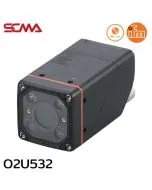
In the world of photography, "3D cameras" are an interesting technology that opens up new horizons for photography enthusiasts. SCMA Company, a leader in measurement tools and industrial automation solutions, is presenting information about 3D cameras to help you understand their functionality, benefits, and importance before making a decision on which one to use.
What are 3D Cameras?

A 3D camera, also known as a three-dimensional imaging camera (3D Cameras), is capable of recording images in three dimensions—width, length, and depth. Unlike regular cameras that produce two-dimensional images, 3D cameras capture images with depth, making them more realistic and interesting. The technology behind 3D cameras simulates human vision by using both eyes to perceive objects and the brain to merge these perceptions into a sense of depth.
How do you take 3D photos?

Taking 3D photos can be done using a 3D camera with two lenses that are slightly offset to capture an object from different angles, similar to human eyes. The images captured by both lenses are then combined into a 3D image through the processing of the camera or computer software.
In addition to using a direct 3D camera, we can also take 3D photos with a regular camera. By taking two pictures from slightly offset positions and overlaying them in an image editing program, you can create a 3D image.
A key aspect of taking 3D photos is creating clear distinctions between the foreground, middle ground, and background to achieve depth. This can be done by emphasizing lighting on the main object or using a close-up lens to blur the background, making the 3D image appear even more three-dimensional.
What are the types of 3D images?

3D images are primarily divided into four types:
- Oblique
- Dimetric
- Isometric
- Perspective
1. Oblique
An oblique image has a profile consisting of three lines, namely horizontal, vertical, and diagonal at 45 degrees. The width and height of the image are equal to reality, but the depth is only half of reality. Hidden parts are shown with dashed lines.
2. Dimetric
A dimetric image has a profile consisting of three lines, namely vertical, diagonal at 7 degrees, and diagonal at 42 degrees. The width and height are equal to reality, while the depth is half of reality. Hidden parts are shown with dashed lines. Dimetric images provide high realism but are difficult to draw.
3. Isometric
An isometric image has a profile consisting of one vertical line and two diagonal lines at 30 degrees. The width, height, and depth of the image are equal to reality. Hidden parts are shown with dashed lines. Isometric images clearly convey the shape of objects and are easy to understand.
4. Perspective
Perspective images provide the most realistic feel, similar to what we see in real life. Objects closer appear larger while distant ones appear smaller. The profile has two diagonal lines converging at a vanishing point (Vanishing Point). This type of image is commonly used in architectural design.
The Difference Between 3D Cameras and 360-Degree Cameras
3D Camera
A 3D camera captures an object from two viewpoints, mimicking the human eye, then combines these images to create a 3D image. This allows for viewing the depth of objects and sensing the distance between surfaces.
360-Degree Camera
A 360-degree camera captures images horizontally at 360 degrees and vertically at 180 degrees, providing a complete panoramic view. It is suitable for photographing locations or used with VR glasses to create an immersive experience. However, the image lacks depth compared to a 3D camera.
What Can A 3D Camera Do?

A 3D camera offers the opportunity to create more realistic and impressive images. The application of a 3D camera is diverse, including:
- Creating 3D product models so customers can see the details of products more clearly.
- Photographing houses for sale to give a feeling as if walking through the actual house.
- Using it with robots and drones to detect obstacles and distances more accurately.
- Quality control of products and inventory management in factories.
- Using a 3D camera to measure hard-to-reach wounds, helping doctors plan better treatments.
Benefits of 3D Cameras
3D Cameras have created a new dimension for photography and usage in various fields. The key benefits of 3D cameras include:
- Capturing realistic images that give the feeling of seeing actual objects, including shape, size, distance, and surface texture.
- Helping to present products and services more attractively, increasing opportunities to draw in customers.
- Useful for creating virtual content such as AR/VR for learning, travel, entertainment.
- Applicable to various automation systems to enhance the accuracy of machine vision similar to human sight.
- Adaptable for medical use, aiding in planning treatments and surgeries appropriately and safely.
If you are interested in 3D cameras, contact SCMA today!
If you are interested in 3D cameras to create impressive photographic works or for use in your business and industry, SCMA is ready to provide professional consultation and services related to 3D photography.
Whether you need a 3D camera for personal projects, business projects, or industrial factories, our team of experts is ready to offer advice and design solutions that meet your needs, along with excellent after-sales support. You can be confident that your investment will yield worthwhile returns.
For inquiries,please contact us for more information about products and services. You can call at 02-615-4888 or visit our website SCMA.CO.TH. We are ready to serve you with enthusiasm, meeting all your needs comprehensively so that you can fully benefit from this 3D camera technology.
Summary
A 3D camera is a new photography technology that helps record the appearance of objects more realistically than general 2D images. A 3D camera captures an object from two different viewpoints and processes both images to create depth, making it look more lifelike. There are various types of 3D images such as oblique, dimetric, isometric, and perspective. 3D cameras have many benefits and can be applied in multiple areas, ranging from general photography to advanced automation systems.
If you are interested in using a 3D camera but unsure of how to start or which model suits your work best, SCMA is ready to provide comprehensive consultation and solutions for 3D cameras. With our experience and expertise in this field, we are confident that we can meet your needs perfectly and help you maximize the benefits from this technology investment. If you are interested in 3D cameras, do not hesitate to contact SCMA today!
Frequently Asked Questions
What is a 3D camera or stereoscope?
A 3D camera, also known as a stereoscope, has two lenses that function like the left and right eyes of humans. The two cameras capture images of the same object from different angles, then combine them to form a 3D image. When viewed through special glasses or screens, the image appears vividly three-dimensional, similar to looking at real objects.
How do 2D and 3D images differ?
A 2D image is flat on a single plane with width and length but no depth. In contrast, a 3D image includes three planes—width, height, and depth—which makes the distance of objects clear to see, thus appearing more dimensional and interesting than 2D images. Good 3D images make viewers feel like objects are coming out of the screen or looking at real things.
What benefits does a 3D camera offer?
A 3D camera can capture realistic 3D images, enhancing the appeal of photographs and making products stand out to attract customers. Additionally, 3D cameras help various automated systems such as robots and drones see their environment in three dimensions, similar to human vision, allowing for more precise movement and operation. They are also used in medical applications to assist with surgical planning, measuring wound sizes, etc.
What does a 3D camera work with?
A 3D camera needs to be paired with equipment for displaying 3D images such as 3D glasses that help each eye see different angles, allowing the brain to combine them into a 3D image. Alternatively, it can use a 3D screen that rapidly alternates left and right images, making the picture appear to pop out of the screen. For specialized applications like object detection in factories, additional software programs for image analysis may also be required.