Experiencing heat issues in an uneven production process? Coil Heater may be the ideal solution for your industry. The engineering team at SCMA, experts in automated control systems, is ready to provide service with consultation and design of heating solutions. This article will take you deep into every aspect, from the working principle to the best ways to use this type of equipment to get the most value.

What is a Coil Heater?
A Coil Heater is a high-efficiency heating device that converts electrical energy into thermal energy through a coiled resistance wire. This type of device is commonly used to quickly heat air or liquids in production processes, meeting the needs of applications in industrial ovens, packaging operations, and specialized machinery.

Principle of Operation of Coil Heaters
Understanding the principle of operation of coil heaters will help you design heating systems efficiently. The SCMA team has summarized the main operating process according to the In-Depth Guide to Operating Principles into the following 3 steps:
Energy Conversion Process (Joule Heating)
When current flows through the resistance wire, electrical energy is converted into heat in the wire according to the principle of Joule Heating. Power and heat transfer depend on the design and installation conditions.
Heat Distribution
Coiling the wire helps adjust the wire length to fit the installation area. The uniformity of temperature also depends on the spacing of the coils, contact with the workpiece, or air distribution according to the type of heater.
Heat Transfer
Heat energy from the Coil Heater can be transferred to the target workpiece in various ways. The device can heat through conduction, convection, or radiation, depending on the installation characteristics with sensors in each type of machine.

How many types of coil heaters are there?
Selecting the appropriate shape for the application is the key to temperature control. Coil heaters (Coil Heater) are divided into 3 main types according to the installation characteristics as follows
Hot Air Coil Heater
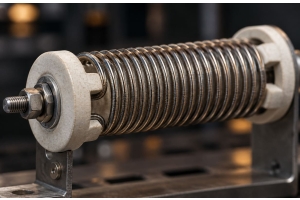
This type of coil heater has a spring coil structure installed through a mica insulation plate for safety. This structure is designed for hot air blowing, drying, and moisture removal in systems. Therefore, the hot air coil heater is ideal for industries that require continuous high-temperature air
Coil Heater / Wire Heating Element
This model uses nickel wire wound into a coil and installed through a specially durable ceramic insulation. This type of coil heater is suitable for ovens requiring very high temperatures. Industrial factories use it excellently in plastic cutting or work forming processes
Coil Finned Heater
This type of coil heater involves shaping a heating tube into a spring shape and attaching metal fins. These fins serve to increase the heat dissipation area. It is very suitable for use in heat transfer systems, such as air conditioners
Maintenance of Coil Heaters
Based on the experience of SCMA's engineering team, proper maintenance can significantly extend the lifespan of the equipment. The following checklist is a step-by-step guide for coil heater maintenance that you can perform yourself.
Regularly Clean the Electrical Terminals
Disconnect the power supply and wait for the heater to cool down before inspecting the terminals. Check for burn marks, loose points, and insulation of the wires. Then clean or replace parts according to the manual.
Temperature Control (Thermostat)
Installation and inspection of the temperature controller are essential for the operation of coil heaters. Accurate temperature sensors help prevent the equipment from working too hard, which can cause problems such as wire breakage due to accumulated heat.
Inspect Insulation and Cracks
If cracks, burn marks, or damaged insulation are found, stop using the equipment and check the cause. Coil heaters can only be used with liquids specified by the manufacturer for immersion use, along with appropriate material specifications and liquid levels.
Tighten Flanges or Mounting Points
The installation position of the coil heater must be stable and strong. All nuts and mounting points must be tightened securely. Secure fastening helps prevent damage from machine vibrations during the production process.
Moisture Removal
If the coil heater has not been used for a long time, moisture may accumulate inside the insulation. Before running the equipment at full capacity, warm up the device by supplying low voltage to remove the moisture. This method effectively prevents electrical leakage.
Application of Coil Heaters
Coil Heaters play an important role in various industries due to their ability to precisely control temperature. The main applications in industrial settings are as follows:
Plastic Industry
In the plastic injection process, coil heaters function as heat nozzles for the Hot Runner system. Stable heat allows molten plastic to flow smoothly into the mold, helping to reduce issues where the finished product does not have the desired shape.
Packaging and Sealing
Packaging machines use coil heaters to generate heat for sealing bag openings. Rapid and uniform temperature helps melt plastic to bond tightly, resulting in high-quality seals that effectively prevent leakage.
Drying and Heating
Industrial ovens use coil heaters for drying agricultural products or electronic components. Even heat distribution quickly removes moisture from the workpiece, ensuring a continuous and uninterrupted production process.
Heating, Ventilation, and Air Conditioning (HVAC) Systems
Aside from direct heating, coil heaters are also installed in the cooling coils of HVAC systems. The device functions to melt ice that accumulates on the cooling panels (Defrost), allowing the cooling system to operate efficiently at all times.
Advantages of Coil Heaters
Selecting the appropriate heating equipment can help reduce long-term costs. Coil heaters (Coil Heater) have several features that meet various industrial needs as follows
Fast Heating
The lightweight structure of coil heaters allows the device to respond quickly to power supply. The temperature can rise to the required point in a short time. This advantage helps reduce the time needed to warm up the machine, thereby increasing the total output per day
High Durability
The materials used to manufacture coil heaters are designed to be durable in a variety of operating environments. The device can handle high temperatures, vibrations from heavy machinery, as well as excellent corrosion resistance from certain chemicals
Compact and Flexible Size
The installation area inside some machine models has size and shape limitations. Coil heaters solve this problem with the ability to bend or shape according to the working area, helping engineers to design and install the heating system in accordance with the characteristics of the machine and its usage
Even Heat Distribution
The spring-like coiled shape helps distribute heat evenly around. This allows the workpiece near the coil heater to receive heat evenly, helping to reduce problems of uneven heating and uneven melting
Easy Installation and Maintenance
The system of coil heaters is not complicated, allowing technicians to install and replace them easily. The maintenance process only involves cleaning and inspecting the electrical terminals, helping to reduce the time the machine needs to be out of operation
How to Choose a Coil Heater
Investing in heaters requires careful consideration of engineering factors to obtain a cost-effective Coil Heater. The SCMA team recommends checking the following checklist:
- Size and Shape (Dimension & Shape): Measure the actual installation area in detail, specify the inner diameter (I.D.), outer diameter (O.D.), and total length, so that the coil heater fits perfectly onto the mold block.
- Power and Voltage (Wattage & Voltage): Check the voltage rating and select the power suitable for the thermal load. Consider the air flow limitations for hot air applications orthe insertion length for contact heat transfer applications
- Temperature Control: Choose the type and position of the sensor according to the point that needs control. An inbuilt thermocouple is one option, and for applications with risks, the system should have an over-temperature cut-off as per the design
- Cable Type and Sheathing: Assess the working environment to select durable cable sheathing. If used in areas with friction, stainless steel mesh sheathed cables should be selected for safety.
SCMA, Experts in Measuring Instruments and Automatic Control Systems
For the heater to function perfectly, it requires an accurate control system. SCMA Co., Ltd. is ready to be your partner in supplying equipment and designing solutions for your factory.
- Complete Solution (Project & Solutions): Our engineering team specializes in designing temperature control systems for Coil Heaters to work seamlessly with industrial sensors.
- World-Class Measuring and Control Equipment: We are authorized distributors of leading brands, offering measuring instruments and internationally standardized temperature control equipment.
- After-sales Service and Calibration: Ensure accuracy with calibration services for measuring instruments, along with a maintenance team ready to quickly access industrial sites.
Summary
Coil Heater is a high-efficiency electrical-to-thermal energy conversion device, distinguished by its fast heating, durability, and applicability in the plastic, packaging, and HVAC industries. If you need experts to design heating systems and industrial measuring instruments, the SCMA engineering team is ready to provide consultation and comprehensive solution services.
Interested in purchasing or consulting via LINE Official: @SCMA
If you want to buy a Coil Heater, you can purchase it from SCMA today!
Choosing non-standard heating equipment may lead to machine downtime and enormous cost losses. SCMA Company presents Coil Heater (Coil Heater) of high quality with precise automatic measuring and control systems. You can contact our engineering team to receive services to optimize your factory's heating system for maximum efficiency.
Frequently Asked Questions
How long is the lifespan of a Coil Heater?
The lifespan depends on maintenance and temperature control. Using it with a precise thermostat can extend its life by several years.
Can Coil Heaters be custom-made to the required size?
They can be manufactured to match the diameter and length of the machine, ensuring the best fit for the installation site.
What is the main cause of heater coil wire breakage?
The main cause is allowing the device to work too hard (overheating) or having dirt buildup that prevents heat dissipation.
Can Coil Heaters be used for heating water?
They can be used, but you must choose a type with a waterproof coating and corrosion resistance for maximum system safety.
How often should the heater be cleaned?
It should be inspected and cleaned, including the electrical connectors and the coil, every time the machine is serviced according to the regular maintenance schedule.