Having trouble with uneven heat distribution during the production process? Flat Plate Heater (Strip Heater) is the solution that meets your needs. SCMA Company is ready to provide precise automatic control system installation design. This article will take you through the working principle, advantages, as well as a checklist for selecting this type of heating equipment to maximize value for your industrial factory.

What is a Flat Plate Heater?
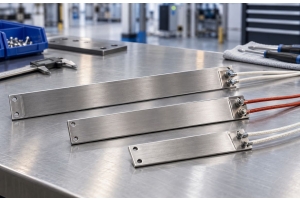
Flat Plate Heater or Strip Heater is a heating device that converts electrical energy into thermal energy. It is designed in the form of a flat metal plate, with resistance coils embedded inside to generate temperature according to specified coordinates. This type of heating equipment operates by closely adhering to the surface of the workpiece, allowing efficient heat transfer to the target object.

Principle of Operation of Flat Plate Heaters
The operation of Strip Heater relies on the supply of electric current through a resistance coil to generate heat. The thermal energy is then transmitted through the insulation plate to the surface of the device to directly heat the workpiece.
Conversion of Electrical Energy into Heat
When electric current is supplied into the resistance coil inside the flat heater, the current is immediately converted into thermal energy. The wire commonly used to produce this type of heat conductor is nickel-chrome wire, which has outstanding properties in terms of high continuous temperature resistance.
Heat Conduction through Insulating Materials
Materials such as mica or ceramic separate the section with current from the metal surface and transfer heat to the plate. Grounding systems and protective devices must be installed according to the specifications and design of the system.
Heat Distribution of the Outer Shell
The outer shell of the heater functions to receive heat through insulating materials. The materials used to produce the outer casing are mostly stainless steel or zinc-coated steel plates. This external structure helps distribute the heat evenly across the entire plate before transmitting it to the target workpiece.
Heat Transfer to the Target
In the final stage, heat is directly transferred to the workpiece, machine, or mold by installing the heating plate tightly against the surface of the object, in order to improve the efficiency of heat transfer and minimize energy loss during the heat transfer process as much as possible.

Flat Plate Heater: How Many Types Are There?
The types of flat plate heaters used in the industrial sector can be categorized based on the heating method and the main structural material. According to the experience of SCMA's engineering team, there are 2 popular types.
Metal Strip Heater
The external structure is made from stainless steel or zinc sheets, and the interior contains high-quality heating coils. This type is suitable for direct attachment to the workpiece. The industries that mainly use this type include packaging machines and plastic bag sealing machines.
Ceramic Strip Heater
In some models of flat plate heaters, the ceramic serves as an internal electrical insulator. For surface-mounted models, the main heat transfer to the workpiece is through conduction. Infrared radiation devices are designed to transfer heat through gaps.
Maintenance of Flat Plate Heaters
Before inspecting the flat plate heater, disconnect the power source and wait for the device to cool down. Check the mounting points and contact surfaces according to the manual. Read more in SCMA Flat Plate Heater Manual
Install the Heater to Be in Close Contact with the Workpiece
Check that the surface is clean, smooth, and attached to the workpiece according to the manufacturer's mounting method. Use the tightening force and expansion allowance as specified in the manual. Air gaps may cause some areas to overheat.
Clean the Electrical Connector
Disconnect the power source and wait for the heater to cool down before inspecting the connector. Check for loose connections, burn marks, or damaged insulation, and use the cleaning method specified by the manufacturer.
Inspect the Temperature Control Device
The heating system must be used in conjunction with a thermostat or a high-accuracy temperature sensor. These control devices should always be in a ready-to-use condition to prevent the temperature from exceeding the maximum limit specified in the heater's specifications.
Avoid Contact with Moisture
In wet or humid areas, check the moisture rating of the heater, wiring connections, and housing. Thermal insulation is not waterproof, and covering may increase the device's temperature.
Application of Flat Plate Heaters
Flat plate heaters (Strip Heater) are electrical heating devices specifically designed to be mounted tightly against the smooth surface of workpieces. The outstanding feature is the even and widespread heat distribution. The application in the industrial sector is diverse as follows
Packaging and Sealing Operations
They are commonly installed together with sealing machines, packaging machines, and plastic nozzles in the product packaging process. This device provides appropriate heat to melt plastic or adhesive, ensuring the sealed bag is tightly and beautifully formed
Ovens and Heat Storage Tanks
They can be applied as supplementary heating plates by attaching them to oven walls or food dryers. In the chemical industry, they are often placed alongside chemical storage tanks and oil tanks to control the temperature of liquids and prevent them from solidifying when ambient temperatures drop
Plastics Industry
They are an important component for heating molds (Mold), plastic extrusion (Extruder) operations. Attaching the heating plate to the machine helps maintain a constant temperature, resulting in the plastic parts being melted and formed perfectly
Moisture and Condensation Prevention
Engineers often install them inside electrical control cabinets (Enclosure Heater), switchgear cabinets to maintain an appropriate temperature level. Using mild heat helps remove moisture and reduce the risk of water droplets forming inside sensitive electronic equipment
Heating Rubber Molds
In the production of rubber parts, this device heats the mold to the standard temperature, making the rubber softer, resulting in easier and faster molding into various products, significantly reducing the waste rate in the production line
Advantages of Flat Plate Heaters
Heat Up Quickly and Distribute Heat Evenly
When the flat plate heater is in good contact with the workpiece, heat is transferred through conduction. The uniformity depends on the contact surface, positioning, power per area, and temperature measurement location.
Energy Efficient
Since heat is directly transferred to the target object through contact, it helps reduce the rate of heat loss into the air. This high-efficiency operation results in energy savings and long-term sustainable reduction of production costs.
Compact Size, Saves Installation Space
The flat shape is suitable for installation on flat surfaces with limited space. The heating performance depends on the material, contact surface, and power distribution suitable for the workpiece.
Supports Diverse Applications
This is a highly flexible device that can be applied to a wide range of uses, from the food industry, packaging machines, container heating, bag sealing machines, to various types of ovens. It is a valuable investment for factories with diverse machinery.
How to Choose a Flat Plate Heater
When selecting the appropriate Flat Plate Heater (Strip Heater), consider the installation area size and the desired heat transfer characteristics to obtain a durable and cost-effective device. Here are some basic guidelines for selection:
- Material of the housing and insulation: Check the specifications of the metal housing, such as stainless steel, and the internal electrical insulation material, such as mica or ceramic, to match the temperature, chemicals, and working conditions.
- Surface area and power: Choose the plate size to fit the workpiece snugly. Calculate the power (watts) in relation to the area. If the wattage is too high for a small area, it may easily cause the heating wire to burn out and be damaged.
- Electrical system and connector type: Clearly check the on-site voltage to determine whether it uses 220V or 380V. Choose the type of electrical connector that is safe and convenient for installation, such as a wire-out connector or a screw-type connector.
- Choose a reliable manufacturer: Consider a supplier with expertise in SCMA Heater Products that meets standards and provides consulting services to accurately calculate the correct usage specifications.
Precautions for Using Flat Plate Heaters
Although Flat Plate Heaters are designed to be highly durable, improper usage may cause damage. Operators should be aware of important precautions to maintain the performance of the Strip Heater in optimal condition.
- Be cautious of air gaps : It is strictly prohibited to allow any gap between the heating plate and the workpiece, as accumulated heat will cause the internal coil to break rapidly.
- For models designed to be in contact with the surface, install them on the workpiece according to the manual before powering on. Models designed for heating air have their own requirements regarding airflow and installation distance.
- Regularly inspect the wiring : Accumulated heat may cause the insulation covering the wires to crack. Replace the heat-resistant wiring immediately upon discovering any damage to prevent short circuits.
- Install temperature control systems and overheating protection devices according to the specifications and manual of the model. Have qualified personnel who design circuits and test operations perform the checks before starting the system.
Summary
Flat Plate Heater (Strip Heater) is a crucial component that helps evenly distribute heat throughout various types of machinery in the industry. If your factory is looking for an efficient heating system solution, the engineering team from SCMA is ready to provide design consultation to perfect your production line.
Interested in purchasing or consulting via LINE Official: @SCMA
If you want to buy flat plate heaters, you can buy from SCMA today!
Selecting a flat plate heater that meets the standard helps improve heating efficiency and consistency, which affects product quality, and also helps reduce downtime of the machine and increase the continuity of the production process. SCMA, a leader in industrial technology solutions has a list of heaters to choose from, along with calibration services and solution design by expert engineering teams. You can visit SCMA website. We are ready to be a true partner that helps elevate the reliability of your production process.
Frequently Asked Questions
Which industries are flat plate heaters suitable for?
They are very suitable for packaging industries, plastic injection molding, bag sealing, and even heating rubber molds that require even heat distribution on flat surfaces.
What materials are the external parts of the flat plate heater made of?
The casing may be stainless steel or metal depending on the design. The mica and ceramic are usually internal insulation. Please check the contact materials and temperature ratings from the specifications.
What are the main reasons that cause flat plate heaters to fail?
The main problem occurs when the installation is not tight against the workpiece, causing air gaps that prevent heat dissipation, as well as selecting a wattage that is too high for a small area.
Can flat plate heaters be custom-made according to the machine's area size?
The factory can produce this type of heating equipment according to the size, shape, power, and specified wiring connection style to fit the working area constraints as much as possible.
How often should flat plate heaters be inspected?
You should inspect the wiring connection points, clean dirt regularly, and check the installation tightness on a monthly basis to extend the service life and prevent the risk of electrical short circuits.