Have you ever encountered problems such as raw materials overflowing the silo or machinery stalling due to empty tanks without any warning? Choosing the appropriate Rotary Paddle Level Switch or rotating paddle level switch is the precise solution to address this issue. As SCMA is a leader in measurement, testing, and control automation systems, we are ready to be your technical partner in designing comprehensive solutions to prevent production errors. This article will take you through everything you need to know, from operating principles, types, maintenance methods, to techniques for selecting the most cost-effective level measuring instruments

What is a Rotary Paddle Level Switch?
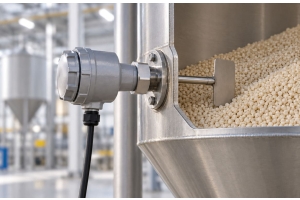
Rotary Paddle Level Switch (rotating paddle level switch) is a device used to detect the level of solids inside silos or storage tanks. This type of device operates based on the rotation of the paddle to come into contact with raw materials such as flour, plastic pellets, or grains. When the material level rises and obstructs the paddle, the system will immediately send a high or low level alert signal to prevent tank overflow problems.

Principle of Operation of Rotary Paddle Level Switch
Understanding the principle of operation of this type of level measuring instrument will help engineers plan the installation with maximum efficiency. The internal mechanism is designed to respond accurately to the resistance of dry material that comes into contact with the paddle.
Normal Condition When No Material is in Contact
When the material has not reached the paddle, the motor rotates the paddle slowly at the speed specified by the manufacturer. The position of the paddle is therefore used to indicate the material level detection point in the silo.
Condition When Material Reaches the Set Level
When raw materials are filled into the storage tank until the level rises to touch the rotary paddle level switch, these materials create mechanical resistance. This resistance will hinder the movement, causing the paddle to stop rotating immediately. This mechanism is carefully designed to respond appropriately to the density of each type of material.
Signal Transmission for Alarm
As soon as the paddle stops rotating, the torque from the motor will push the internal spring assembly to move and press against the Micro Switch. The change in the switch's operating state will generate an electrical signal directly to the central control room. The system will notify the user, shut down the motor operation, or automatically stop the material from being discharged into the tank.
Condition When Material Level Drops
When the production process draws raw materials out of the tank until the level drops below the installation position, the resistance acting on the paddle will disappear. The internal spring will quickly pull the entire mechanism back to its initial position. The motor will resume operation, rotating the paddle again to prepare for detecting the material level during the next filling cycle.

How many types of Rotary Paddle Level Switch are there?
Selecting the appropriate type of level detection device to match the working environment is important for extending the service life. Rotary paddle level switches are divided into 2 main types according to their temperature resistance capability.
Standard Type
Detect temperature ratings of both the material and the surrounding environment of the unit. The standard type may be installed horizontally or vertically according to the manual. Select the shaft length and paddle size from the options provided by the manufacturer and the total density of the material.
High Temperature Type
For industries where the production process generates accumulated heat, the high temperature type is an option that enhances safety. The unit is manufactured from special materials that are durable in environments with abnormally high temperatures. SCMA engineers recommend using this type in work areas with heat radiation to prevent damage to the internal motor.
How to Maintain the Rotary Paddle Level Switch
Proper maintenance will help the rotary paddle level switch operate accurately and prevent machine stoppages. The technical team should regularly inspect the external mechanism together with routine cleaning.
Inspect Rotation and Clean (Every 1-3 Months)
The system administrator should check the movement of the paddle to ensure it can rotate freely without obstruction from debris. Cleaning dust that accumulates around the rotating shaft is essential. Neglecting cleaning may cause the motor to work excessively hard, leading to overheating and short circuits.
Check the Tightness of Connection Points (Every 3-6 Months)
Vibrations from factory machinery may cause the sensor's flange mounting points to loosen over time. Use appropriate tools to tighten all connections to prevent dust and foreign particles from entering the system. Regularly check the wires at the Terminal to ensure they are in good condition and not loose for stable signal transmission.
Inspect and Replace Dust or Oil Seal (Oil/Dust Seal)
The environment inside the silo is densely filled with dust, which can damage the motor mechanism. The rubber seal that prevents these foreign substances has a limited lifespan. Regularly inspect for signs of wear and replace the seal immediately if cracks or leaks are found to keep the internal system clean and safe at all times.
Spring Torque Adjustment
When changing materials, check the total density, paddle size, and settings supported by the model. If adjustment or cover removal is required, disconnect the power supply and follow the manual. Then test the state switching both when material is present and when it passes over the paddle.
Application of Rotary Paddle Level Switch
Rotary Paddle Level Switch is a device that allows users to automatically control the flow of materials within a closed system. It can be applied in various ways to alert about the level of solids at different stages of the production line.
Overfill Protection
Set the high-level alarm point according to the operating height of the silo and the buffer distance before overfilling. When the material blocks the paddle, the switch will change its status at that point. If used to stop the conveyor belt, test the operation together with the control system and response when power is lost according to the on-site plan.
Empty/Low-Level Alarm
Installing the sensor at the lowest level of the hopper allows the team to know the status before the material runs out. The alarm will sound when the raw material is used until it drops below the paddle. This process allows the operator to have time to prepare and continuously feed raw materials into the production line without interruption.
Conveyor/Feeder Control
Engineers can connect the level switch to the pump or conveyor motor control system to automatically issue commands. The system will receive a signal to feed raw materials when the level in the tank drops below the lower sensor position. When the level rises and touches the upper sensor position, the system will immediately stop feeding to maintain the balance of production quantity.
Advantages of Rotary Paddle Level Switch
Using a rotary paddle level switch in industrial facilities effectively reduces human error. This device is distinguished by its cost-effectiveness and durability, accurately meeting the requirements for controlling solid levels.
Cost-effective and a good investment
This type of level measuring device has an easily accessible cost compared to other sensor technologies in the market. Its long lifespan combined with low maintenance costs makes the return on investment highly valuable. Many businesses trust and choose this technology to save budget without compromising measurement performance.
Supports use with various materials
The standout feature is its ability to detect solids comprehensively, ranging from fine powders, small granules, to bulk raw materials such as flour, rice, animal feed, cement, or plastic pellets. The paddle mechanism can operate stably. This flexibility allows a single device to be adapted for use in various manufacturing industries.
Quick and easy sensitivity adjustment
Users can easily adjust the sensitivity level of the resistance detection to match the weight of the raw material. Simply changing the position of the spring located at the back of the device can increase or decrease the tension of the mechanism. This function helps reduce the problem of false alarm signals when used with particularly lightweight materials.
Compact design, easy installation and space-saving
The device is designed to be small and lightweight, not a burden to the structure of silo tanks or hopper walls. Operators can perform maintenance on the head unit components without having to remove all internal parts from the tank. This easy dismantling process greatly reduces machine downtime during maintenance cycles.
High safety standards, dust protection
For areas where dust is flammable, check the area classification and select only models with certifications and coordinates that match the installation. Dust protection and hazardous area certification are separate requirements.
How to Choose a Rotary Paddle Level Switch
To get a device that best meets the production process requirements, carefully considering the specifications of the rotary paddle level switch is essential. The SCMA engineering team recommends the following preliminary checklist to use as a basis for evaluation and purchase rotary paddle level switch as follows:
- Analyze the type of material: Assess whether the solid to be measured is powder, granules, or lump to select an appropriate paddle size for resistance
- Operating temperature: Check the temperature of the material in contact with the rod and paddle, as well as the ambient temperature around the head, and select the device according to the specifications and installation method of the model
- Assess the length of the measuring rod: Choose the measuring rod length to be deep enough to touch the material at the point where precise notification is required
- Check the protection standard (IP Rating): The external unit should have a sufficiently high IP value to prevent dense dust from damaging the motor mechanism
- After-sales service and calibration: You should choose a distributor who is knowledgeable and ready to provide advice, design sustainable solutions
Installation Precautions for Rotary Paddle Level Switch
Improper installation can shorten the sensor's lifespan and cause signal deviation from the actual condition. Before installing the rotary paddle level switch on the tank wall, operators should consider important precautions for safety.
- Avoid areas where material falls directly: Do not install the paddle in areas where raw material drops into, as the impact can bend the probe or damage the motor.
- Baffle (if installation cannot avoid the falling path of the material, usethe specified type and distance by the manufacturer to prevent impact without obstructing the paddle's material reception.
- Side installation: Secure the direction, angle, and distance of the probe according to the user manual, and avoid areas where material accumulates or flows and strikes the paddle.
- Be cautious of cable tension: When routing the cable to the terminal, leave a slight slack to prevent the cable from coming loose due to factory vibrations.
- Consult an expert: If the tank shape is complex, contact the engineering team for guidance on finding the most accurate position.
Summary
The Rotary Paddle Level Switch is an important tool for measuring solid levels to maintain standards and control raw material quantities in the manufacturing industry. Understanding the sensor's operating principles along with proper maintenance will help extend the device's lifespan. If you are looking for a solution to prevent material overflow in tanks, the SCMA engineering team is ready to provide consultation and design systems with the most precise technology for you.
Interested in purchasing or consulting via LINE Official: @SCMA
If you want to buy a Rotary Paddle Level Switch, you can buy it from SCMA today!
The content in this article has been compiled to provide accurate engineering knowledge, helping you truly understand how the Rotary Paddle Level Switch works. Choosing equipment from real experts will help you design automated solutions efficiently, reducing waste and eliminating worries about system interruptions. SCMA Company offers global quality measurement tools with comprehensive after-sales service. You can contact us immediately to receive consultation.
Frequently Asked Questions
Can the Rotary Paddle Level Switch be used to measure liquids?
No, it is not suitable. This type of device is designed to create resistance against solid dry materials, powders, or granules only. Using it to measure liquids will result in insufficient resistance to stop the paddle from operating normally.
Can you adjust the paddle size yourself?
It can be done only on models that support paddle replacement. Choose from the sizes specified by the manufacturer and the combined density value of the material. After replacement, test the signal before using it again.
Why does the paddle keep spinning even when there is material covering it?
Check whether the material has reached the paddle and whether the density is within the range of the model. Other causes may come from the paddle size, settings, or mechanical jamming. Disconnect the power supply and follow the manual before turning on or adjusting the device.
What is the average lifespan of the motor?
If maintained and cleaned properly, the motor can last for many years. Factors that cause the device to fail sooner than expected include allowing dust to accumulate or being directly impacted by solid objects.
Where can you contact SCMA to request installation services?
You can contact us directly through the main website to order paddle-type level measuring instruments or receive technical consultation. We have service branches covering both the Eastern and Northern industrial zones for quick assistance.