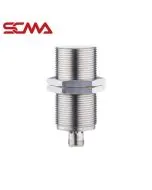
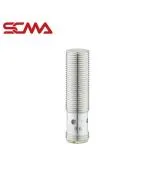
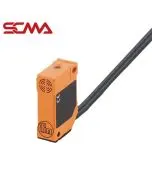
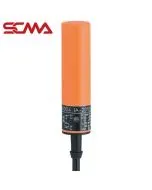
Inductive Proximity Sensor is a widely used sensor in industrial applications, playing a crucial role in controlling and monitoring production processes. However, many people may still wonder how this type of inductive sensor works, what types there are, and which ones suit specific tasks. This article by the SCMA team aims to clarify questions about Inductive Proximity Sensors while introducing related products and services to help readers make appropriate choices.
What is an Inductive Proximity Sensor?
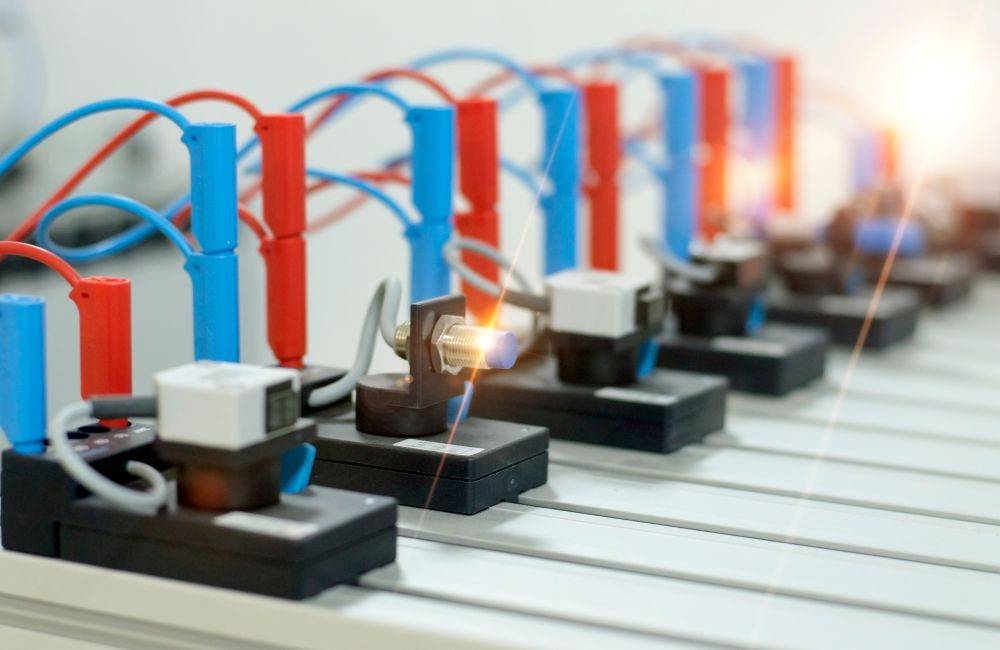
An Inductive Proximity Sensor is a sensor specifically designed to detect metal objects, using the principle of electromagnetic fields for operation. It can detect objects without direct contact, with detection range varying according to the size and type of metal. The Inductive Proximity Sensor performs well even in humid, dusty, or dirty conditions, suitable for various industrial applications, particularly in steel and automotive industries.
Inductive Proximity Sensor
An Inductive Proximity Sensor, also known as a "metal detector," operates on the principle of electromagnetic induction with a coil connected to an oscillator circuit. When power is supplied to the coil, it generates an electromagnetic field around it. As metal moves into this magnetic field, the sensor activates and sends an output signal indicating detection of metal. It responds best to iron, while stainless steel, brass, aluminum have progressively lower detection ranges.
Capacitive Proximity Sensor
A Capacitive Proximity Sensor is another type of proximity sensor that works on the principle of electrical capacitance. It can detect both metal and non-metallic objects such as plastic, glass, paper, liquids, etc. The Capacitive Proximity Sensor is suitable for tasks requiring liquid level measurement or detecting objects through plastic or glass containers.
Types of Inductive Proximity Sensor

How many types of Inductive Proximity Sensors are there? In addition to being categorized by their external shape into cylindrical and rectangular forms, Inductive Proximity Sensors can also be classified based on specific functional properties as follows:
Special Functions
- High pressure - High-pressure resistant type, suitable for detecting the position of hydraulic cylinders.
- High temperature - High-temperature resistant type, commonly used in steel industries or automotive casting operations.
- Constant detection - Constant distance detection type, providing consistent detection results for all types of metal.
- Food grade - Food-grade type, featuring materials designed for easy cleaning and preventing bacterial buildup.
- Very Small - Extra-small size type, suitable for use in narrow confined spaces.
Each type has specific properties tailored to its application in different industrial settings.
How an Inductive Proximity Sensor Works
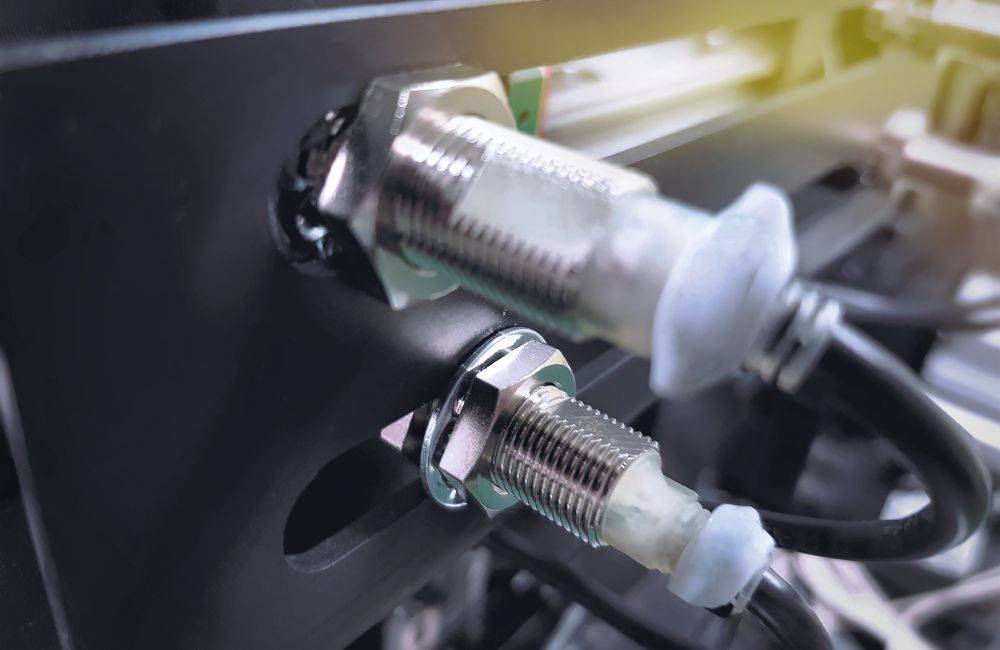
An Inductive Proximity Sensor operates on the principle of electromagnetic fields to detect metallic objects. The working process is as follows:
- When power is supplied, an oscillator generates a high-frequency signal.
- This high-frequency signal is sent to the sensor coil, creating an electromagnetic field around the sensor face.
- When a metal object moves into this electromagnetic field, it causes an imbalance in capacitance values, leading to a change in the oscillator's resistance value.
- The sensor detection circuit compares this changed resistance value with a reference value. If the change falls within a specified range, it triggers a status change in the circuit.
- When the trigger circuit activates, it sends a signal to an amplifier to boost the current for driving the output to switch states as required, such as from OFF to ON or changing voltage from 0V to 24V.
Components of Inductive Proximity Sensor
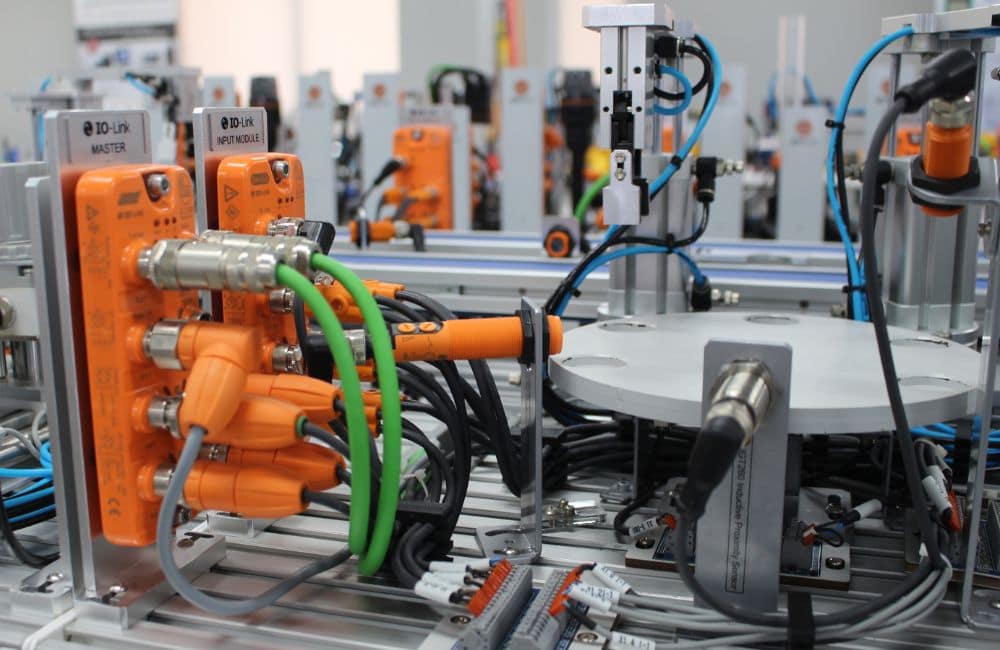
An Inductive Proximity Sensor consists of the following important components:
- Coil : This is an inductive coil that generates an electromagnetic field when electric current flows through it, serving as a crucial part for detecting metal targets.
- Trigger : It detects changes in the oscillator's resistance compared to the reference value and sends signals to change the output status accordingly.
- Oscillator : A high-frequency signal generator that forms the basis for creating an electromagnetic field through the coil. The generated signals are not constant and vary depending on metal objects entering the magnetic field.
- Amplifier : It amplifies the trigger signal to a sufficient strength to drive the output driver circuit.
- Output Driver : This is an equipment that drives current or voltage, responsible for changing the sensor's output status according to the detection of metal objects.
Contact SCMA today for Inductive Proximity Sensor inquiries!
SCMA is an expert in industrial automation systems. We have a team of engineers ready to consult on selecting the appropriate Inductive Proximity Sensor for each customer's specific needs, starting from assessing the suitable type of Inductive Proximity Sensor, designing detection and positioning control systems, through installation and maintenance.
Moreover, SCMA is an authorized distributor of high-quality Inductive Proximity Sensors and other sensor products from leading global brands. We carefully select items that have passed industrial standard tests and certifications to ensure customers receive durable and fully functional products with quality assurance andexcellent after-sales service because we understand the critical importance of accurate and continuous automated system operation to our customers' businesses.
Customers can browse and purchase all SCMA products, including Inductive Proximity Sensors, through our online website or contact our sales team for more information during business hours. We are happy to provide advice and help select the right product for your specific needs.
Summary
Inductive Proximity Sensor or "Inductive Sensor" is a widely used proximity sensor in industrial applications, particularly for detecting the position or distance of metal objects such as iron, stainless steel, aluminum, etc., without direct contact. It works based on the principle of an electromagnetic field through an induction coil combined with various electronic circuits inside the sensor.
Selecting the appropriate Inductive Proximity Sensor for each type of work is crucial to ensuring that the automatic system operates accurately and efficiently. If you are planning to upgrade or install a new automatic system in your factory, please consult with SCMA's expert team who are ready to serve you closely.
Frequently Asked Questions
What is an Inductive Proximity Sensor used for?
An Inductive Proximity Sensor is used to detect the position and movement of metallic objects. It is commonly used for:
- Detecting shaft rotation
- Controlling the position of hydraulic or pneumatic cylinders
- Counting workpieces
- Preventing collisions of parts or robot arms
What are the features of a proximity switch?
- No direct contact with the detected object is required
- Fast and accurate detection
- Durable against dirt, dust, and oil
- Long service life
What is a proximity sensor?
A Proximity Sensor is a type of sensor that detects objects at close range without physical contact. It can be divided into two main types:
- Inductive Proximity Sensor Detects only metallic objects using electromagnetic induction principles.
- Capacitive Proximity Sensor Can detect both metal and non-metallic objects, utilizing capacitance principles.
How many types of proximity sensors are there?
Proximity sensors can be further categorized into several types based on their usage patterns such as cylindrical, rectangular, two-wire, three-wire, flush head, non-flush head, tube detection, heat-resistant, pressure-resistant, etc. Each type is suitable for different applications.