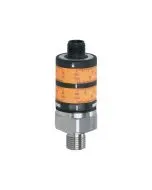
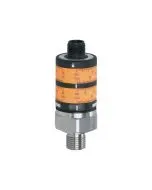
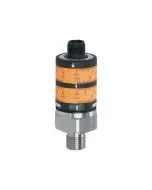
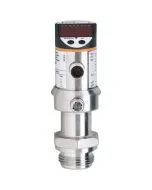
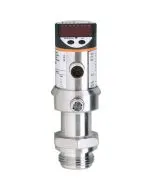
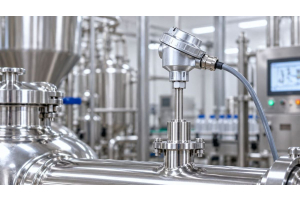
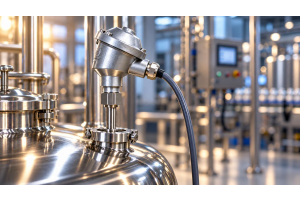
Pressure sensors are crucial devices in today's manufacturing industry, enabling accurate and efficient measurement and control of liquid or gas pressure. At SCMA, we are distributors of leading global brand pressure sensors, providing consultation and after-sales service to ensure our customers receive maximum benefit.
What is a Pressure Sensor?

A pressure sensor is a device used to measure and convert detected pressure into an electrical signal, which can be utilized for display, data recording, or process control in automatic manufacturing systems within industries.
How Pressure Sensors Work
Pressure sensors work by receiving pressure at the sensing element, which may consist of a thin film, diaphragm, or bourdon tube. When pressure changes occur, it causes the sensing element to deform, resulting in proportional changes in resistance or capacitance values. The internal processing system of the pressure sensor calculates the pressure from these changes and outputs an electrical signal corresponding to the pressure.
What types of pressure sensors are there?
Pressure Gauge (pressure gauge)
A Pressure Gauge, or a pressure gauge sensor, is a type of pressure sensor that directly measures and displays the pressure value in units. It usually shows results analogically with a needle or digitally as numbers on digital pressure gauges. Pressure Gauges are relatively inexpensive and easy to install, but reading the gauge has limited accuracy and it's difficult to apply them to other systems. The main principle of operation for a Pressure Gauge relies on the movement of the needle or digits according to the direct pressure.
Pressure Switch (pressure control switch)
The working principle of a Pressure Switch is similar to that of an ordinary electrical switch, where when the pressure reaches the set value, it will connect or disconnect the circuit. It can be used to control electrical equipment that operates according to pressure, such as water pumps and compressors. The main function of a Pressure Switch is to control On-Off based on the specified pressure but cannot directly measure or display the pressure.
Pressure Transmitter (pressure measuring device)
A Pressure Transmitter is a highly accurate and functional pressure measurement device that can measure pressure, convert it into standard electrical signals such as 4-20mA, and transmit the data for display or connection to other control systems like PLCs and DCS. Pressure Transmitters are commonly used in industrial applications requiring high accuracy in measurement and control.

Applications of Pressure Sensors
Pressure sensors are used in a variety of industrial applications, for example:
- Refrigeration/Air Conditioning Systems: Measure the pressure of refrigerants to detect leaks, efficiency, and abnormalities.
- Petrochemical/Refineries: Monitor pressure in storage tanks, pipelines, pumps, valves to control production processes and prevent accidents.
- Medical Field: Used to measure blood pressure, lung pressure, or fluid pressure within the body.
- Water Systems: Installed at water pumps and control valves to regulate water pressure, prevent pump dry-out, and pipe bursts.
- Automotive Industry: Measure tire air pressure, engine oil pressure, brake pressure to maintain driving performance.
These are just a few examples. Almost every industrial sector relies on pressure sensors to help control production processes, monitor quality, and ensure safety.
Selecting the Right Pressure Sensor
The key principle in selecting an appropriate pressure sensor (Pressure Sensor) is to understand the characteristics of the medium (liquid, gas), the range of pressures to be measured (vacuum, low pressure, high pressure), acceptable accuracy levels, and the installation environment such as temperature, vibration, humidity, etc., which affect the lifespan and quality of measurement.
Additionally, budget considerations, ease of installation and maintenance, and compatibility with existing systems must also be taken into account. Choosing inappropriate equipment can lead to problems in the future and negatively impact overall performance.
It is clear that selecting a pressure sensor involves many factors to consider. Without adequate knowledge and understanding, it's easy to make mistakes. Therefore, consulting with experts specializing in pressure sensors can help ensure you get the most suitable and cost-effective equipment.

If you are interested in Pressure Sensors, contact SCMA today!
SCMA Co., Ltd. offers consultation, recommendations, and the sale of high-quality pressure sensors from leading manufacturers worldwide. Regardless of your industrial needs, we are ready to advise you and provide the best solutions with our team of experienced engineers who understand pressure measurement technology.
We trust in the quality of our products and services by selecting only Pressure Sensors from internationally recognized brands, thoroughly tested according to industry standards. Additionally, we offer long-term warranties to ensure the value of your investment.
If you have any questions or need more details about Pressure Sensors, feel free to contact us anytime. Our team is always ready to serve you with enthusiasm. Join our growing list of customers who trust SCMA for their pressure sensor needs.

Summary
A Pressure Sensor is a crucial device for modern manufacturing industry development, enabling accurate pressure measurement and control. This directly impacts product quality, production efficiency, and overall process safety.
SCMA Co., Ltd. specializes in pressure sensors and offers comprehensive consultation and services from recommendation, selection, supply of suitable sensors to warranty and after-sales service, ensuring the maximum benefit for your investment in pressure measurement technology.
Frequently Asked Questions
How many types of pressure sensors are there?
Pressure Sensor can be broadly categorized into three main types: Pressure Gauge, which measures analog pressure using a needle; Pressure Switch, which switches electrical circuits based on set pressure levels; and Pressure Transmitter, the most accurate type that measures pressure and sends signals to control other systems.
How does a Pressure Sensor work?
Pressure Sensor receives external pressure through the sensing element, such as a thin membrane or diaphragm, which changes shape according to the applied pressure. This causes a change in electrical resistance or capacitance within the sensor. The internal circuit then converts this change into an electrical signal proportional to the pressure.
What types of data collection are used with Pressure Sensor tools?
Pressure Transmitter measurement tools provide standard electrical signals for pressure readings, such as 4-20mA or 0-5V. These can be easily connected to data logging systems or production process control systems, making it convenient to analyze and use the pressure data in digital formats.
How many types of Pressure Switch are there?
Pressure Switches generally come in two main types: NO (Normally Open), where the switch closes a circuit when the pressure reaches a set level, and NC (Normally Closed), where the switch opens a circuit when the pressure reaches a specified level. Each type is suitable for controlling different kinds of equipment.