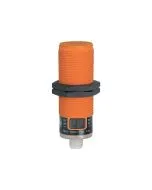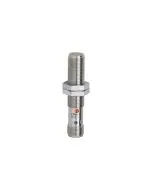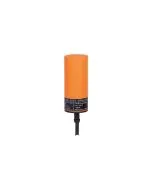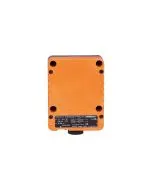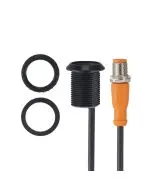

In today's industry, Capacitive Sensors are highly popular electronic devices for detecting objects and controlling production processes. SCMA, a leader in sensor and automation systems, offers consulting services, sales, and system design for Capacitive Sensors that meet the needs of various industries. Let's get to know Capacitive Sensors better, including their working principles, types, and applications.
What are Capacitive Sensors?

A Capacitive Sensor is a type of sensor that detects the presence of objects using the principle of an electric field from a capacitor. It can detect both "metallic, non-metallic, and liquid" objects without direct physical contact with the object, making it suitable for use with delicate or easily breakable items.
Advantages of Capacitive Sensors
- They can detect objects without physical contact, preventing damage to the object.
- They are more resistant to dust, water, and oil compared to other types of sensors.
- They can detect a variety of objects including metal, non-metallic, and liquid materials.
- There are multiple forms and sizes available to suit different usage scenarios.
- They have a higher response speed compared to contact sensors.
- They are durable in a wide temperature range, from -25 to 70 degrees Celsius.
How Capacitive Proximity Sensor Works
A Capacitive Proximity Sensor has an internal structure consisting of a parallel capacitor with metal plates. When an object moves close to the front area of the sensor, which is within the electric field range, there will be a physical change in the electric field between the capacitors. Then, the internal circuit converts this capacitance change into a direct current signal and sends it to the Output, such as turning on or off machinery.

What does a Capacitance Level Switch consist of?
A Capacitance Level Switch is one type of liquid level detector inside a tank that relies on the principle of a capacitive sensor. It consists of several components:
- Detection probe set made from conductive material such as stainless steel.
- Cable connecting the probe to the signal amplification circuit.
- Signal amplification circuit that converts capacitance values into electrical signals.
- Relay or control device to switch the pump or valve circuits.
When liquid in the tank touches the probe, it causes a change in capacitance value. When this capacitance reaches a set level, the circuit sends a signal for further control actions.
What types of capacitive sensors are there?
Capacitive sensors can be divided into several types based on their usage, as follows
Insertion type liquid level sensor
This is a sensor that is inserted into a container to detect the liquid level. The sensor directly contacts the liquid and can be used with containers holding non-corrosive liquids. It is suitable for detecting a single level or two points, such as maximum-minimum levels.
Submerged liquid level sensor
This is a capacitive sensor installed by submerging it in the container of liquid. It has an external insulation layer, making it suitable for corrosive liquids. It can measure the liquid level continuously at every point within the container with high accuracy but costs more than the Insertion type.
In addition, capacitive sensors also have types designed to detect bulk materials or powders, types installed externally on silos, and types installed on conveyor belts for counting or sorting parts, among others.

What Are the Differences Between Capacitive and Inductive Proximity Sensors?
Capacitive Sensor and Inductive Proximity Sensor are both types of non-contact object detection sensors, but they have different working principles and characteristics as follows:
Capacitive Sensor
- Uses the principle of capacitance within a circuit
- Can detect both metallic and non-metallic objects, as well as liquids, without depending on the magnetic properties of the object
- Has a shorter detection range compared to Inductive sensors
- Is more expensive but has greater detection capabilities
- Suitable for fragile objects, liquid level detection, use in food, pharmaceuticals, chemicals, etc.
Inductive Proximity Sensor
- Relies on the electromagnetic induction principle from coils in a circuit
- Can only detect metallic objects, depending on their magnetic properties
- Has a longer detection range compared to Capacitive sensors
- Is cheaper but has more limitations in detection capabilities
- Suitable for separating metal parts, detecting gear speed, use with conveyor belts, etc.
If you are interested in Capacitive Sensors, contact SCMA today!
SCMA is an expert in automation systems and sensors, especially Capacitive Sensors in all forms, including object detection, liquid level measurement, or part counting. We have a team of engineers to help recommend models, design installations, and solve various issues during actual use, as well as after-sales service and warranty. Customers can be confident about the efficiency and value for money, which helps increase productivity and reduce waste in production. For more information, please contact SCMA through our various channels today.

Summary
Capacitive Sensor is a basic device for automation and control that helps increase production efficiency by detecting various types of objects, making its usage highly flexible. If you are interested in high-quality Capacitive Sensors with consultation from selection to after-sales service, please contact SCMA We are happy to servewith our team of experts and ready to be your partner in achieving business success.
Frequently Asked Questions
How does a Capacitive Proximity Sensor work?
A Capacitive Proximity Sensor operates on the principle of capacitance. When an object enters the electric field area, it causes a change in electrical capacitance. The internal circuit converts this capacitance value into an electrical signal to control subsequent operations, capable of detecting both metallic and non-metallic objects as well as liquids.
What is a Proximity Sensor?
A Proximity Sensor is used for object detection without physical contact, also known as a Proximity Switch. There are Inductive types that detect only metallic objects and Capacitive types that can detect both metals, non-metals, and liquids by utilizing electromagnetic or electric charge fields.
What are the advantages of capacitive sensors?
The advantages of Capacitive Sensors include:
- Ability to detect a variety of objects including metals, non-metals, and liquids.
- No direct contact with the object, preventing damage.
- High tolerance to dust, water, and oil compared to other types of sensors.
- Available in various shapes and sizes for different applications.
- High response speed with wide temperature tolerance.
What is an Inductive Sensor?
An Inductive Proximity Sensor, or inductive sensor, operates on the principle of electromagnetic induction for detection. It can only detect metallic objects or those with magnetic properties. Its detection range is longer than that of capacitive sensors but it has limitations as it works exclusively with metals. Suitable for workpiece separation or detecting gear and pulley speeds.