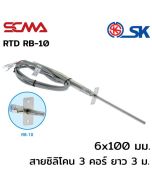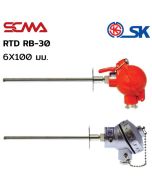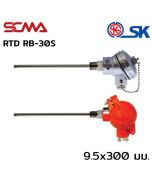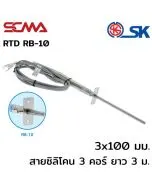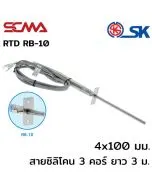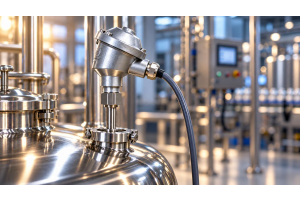

Is the temperature reading in your factory's measuring equipment inaccurate? This issue can be resolved by choosing to use a Pt100 Sensor, which is an industrial-grade Pt100 Temperature Sensor that provides high accuracy. The team of engineers at SCMA is ready to consult and design a complete system connection with the Temperature Transmitter. This article will guide you through understanding how it works, its types, all the way to maintenance checklists for extending its lifespan as cost-effectively as possible.
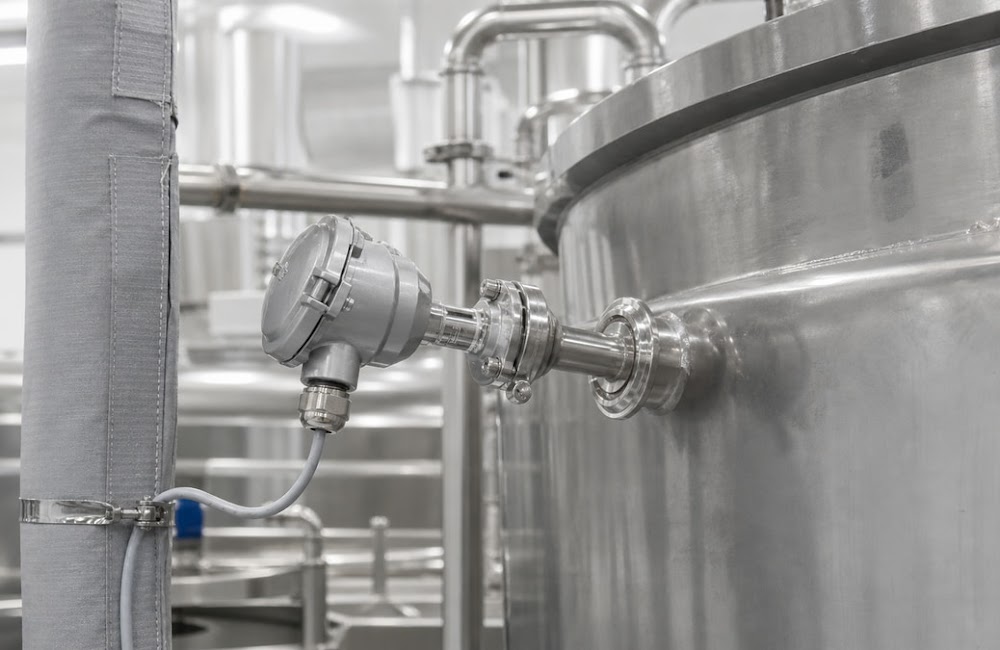
What is a Pt100 Sensor?
A Pt100 Sensor is a type of temperature measuring device known as an RTD (Resistance Temperature Detector), made from pure platinum, with an electrical resistance value of 100 ohms at 0 degrees Celsius. The Pt100 Temperature Sensor is the most popular in industry due to its linear change characteristics and stability, capable of sending signals to a Temperature Transmitter for precise control of production processes.
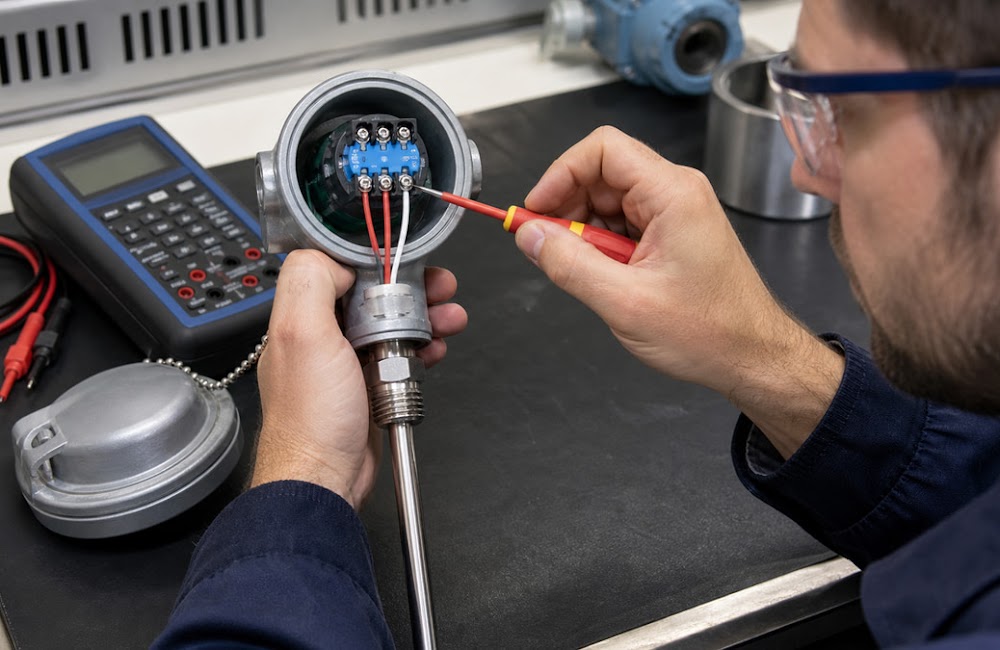
How Pt100 Sensor Works
The Pt100 Temperature Sensor operates based on the fundamental physics principle of electrical resistance changing with temperature. When used in conjunction with a Temperature Transmitter, it enables complete system processing.
Electrical Resistance Change
The probe of this temperature sensor is made from platinum, which has a property that its resistance varies directly with temperature. As the heat increases, the ohm value will increase proportionally; conversely, as the temperature decreases, the resistance value will decrease accordingly.
Signal Conversion for Display
The measuring instrument supplies a constant electric current through the probe. Then, according to Ohm's law, the system measures the voltage drop across it to calculate the true resistance value. At this step, the Temperature Transmitter takes on the role of converting the aforementioned resistance value into a standard signal for onward transmission to the main control system.
How Many Types of Pt100 Sensors Are There?
Based on the experience of the SCMA engineering team, we categorize Pt100 Temperature Sensor types according to their engineering structure into two main ways. The selection must be appropriate for the Temperature Transmitter that your factory has.
Categorized by Number of Wires (Wiring Configuration)
- 2-Wire Type: Suitable for short installation distances, cost-effective but may have cumulative wire resistance error included in the measured value.
- 3-Wire Type: The most commonly used Pt100 Sensor type in industry, with a system to compensate for wire resistance, making it efficient when connected to a Temperature Transmitter.
- 4-Wire Type: Provides the highest laboratory-level accuracy, fully compensates for wire resistance, suitable for work requiring extremely high precision.
Categorized by Accuracy Class (Class Accuracy)
- Class AA: Pt100 Temperature Sensor with the highest accuracy, having very little deviation, suitable for temperature-sensitive production processes.
- Class A: High accuracy, commonly used in work requiring strict temperature control, works stably with Temperature Transmitter.
- Class B: General standard of accuracy widely used in most industrial factories.
- Class C: Has the widest range of deviation, used for basic temperature measurement that does not require high precision.
Maintenance of Pt100 Sensor
A regular maintenance checklist for the Pt100 Temperature Sensor helps reduce the risk of production lines coming to a halt. Proper care ensures that signal transmission to the Temperature Transmitter remains accurate at all times.
Physical Condition Inspection (Visual Inspection)
The maintenance team should regularly check for cracks, corrosion, or scratches on the probe body and signal wires. They must also ensure that connection points in terminal blocks are not loose to prevent signal interference. This care helps keep the Temperature Transmitter readings stable.
Cleaning (Proper Cleaning)
Oil or dust buildup on the probe head can slow down the sensor's response to temperature changes. Use a damp cloth with appropriate cleaning solution to gently remove dirt, preserving the Pt100 Temperature Sensor's performance.
Initial Resistance Check (Resistance Check)
Use a multimeter to measure resistance between signal wires at room temperature; it should read close to 100 ohms. If the reading is 0 ohms, there's likely a short circuit. If no measurement can be taken, the wire may be broken, necessitating an immediate replacement of the Pt100 Sensor.
Instrument Calibration (Calibration)
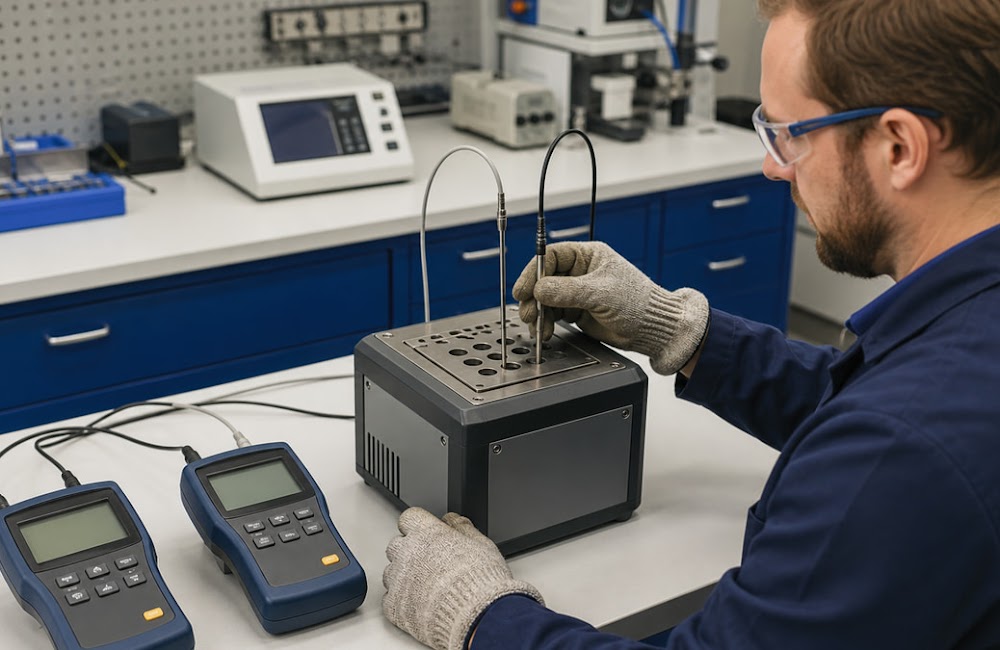
We recommend sending the equipment for calibration with reference standards at least once a year. Calibration checks for drift or accumulated errors over time. If abnormalities are detected, adjustments can be made to the Temperature Transmitter to correct and bring it back in line.
Usage of Pt100 Sensor
Due to its durable characteristics, the Pt100 Temperature Sensor is installed in a variety of environments. Its use with high-quality temperature transmitters meets the needs of the following industries.
Food and Beverage Industry
The food production process requires precise temperature control to ensure nutritional safety. The Pt100 Sensor is commonly used in large pasteurization ovens as well as cooling rooms, ensuring that products meet the required standards.
Petrochemical and Chemical Industry
Refineries or chemical production plants have harsh environments with high temperature fluctuations. The stainless steel probe structure provides excellent corrosion resistance. Accurate signals are transmitted through a Temperature Transmitter to prevent accidents from accumulated heat.
Factory Automation Systems (Factory Automation)
Modern machinery requires real-time temperature data for processing operations. The Pt100 Temperature Sensor serves as the front line in capturing heat from motors or hydraulic systems, with all data fully integrated into the factory's PLC system.
Advantages of Pt100 Sensor
The main highlight of the Pt100 Sensor is its wide temperature measurement range from negative 200 to positive 850 degrees Celsius, making it suitable for corrosive environments in factories. Reference data from Peak Sensors. Additionally, it offers higher accuracy than general thermocouples and works stably with Temperature Transmitter, meeting measurement tool solutions at an international level.
How to Choose a Pt100 Sensor
Selecting a Pt100 Temperature Sensor that is worth the investment requires considering compatibility with existing systems. The team recommends evaluating 4 key factors before deciding to purchase and integrate it with a Temperature Transmitter:
- Operating temperature range: Choose specifications that support maximum temperatures not exceeding 600 degrees Celsius for stability, suitable for cold rooms or food production lines.
- Required accuracy (Class): Assess the acceptable deviation in the manufacturing process and select Class AA, A, B, or C according to your budget.
- Mounting type: Check on-site which thread connection is required; options include pipe insertion, surface mounting, or flange mount.
- Wiring configuration: Choose between 2-wire, 3-wire, or 4-wire to match the input signal receiver of your control equipment.
Connecting a Pt100 Sensor to Control Systems
To bring data from the field into the display system, correct wiring connections are necessary. When connecting a Pt100 Sensor to a Temperature Transmitter, there are points of caution to avoid signal drop:
- Wire matching: Check wire colors according to the equipment manual; 3-wire probes have two wires of the same color for resistance compensation.
- Wiring distance: If the measurement point is far from the control room, install a Temperature Transmitter near the sensor head to convert signals into 4-20mA and reduce signal interference.
- Signal shielding: In areas with high electromagnetic interference, use shielded wires and properly ground them for accurate readings of the Pt100 Temperature Sensor.
Summary
Understanding the proper functioning and maintenance of Pt100 Sensor can significantly reduce downtime in production lines. High-quality Pt100 Temperature Sensor, when used with a Temperature Transmitter, provides superior accuracy. If your factory is looking for industrial products, the SCMA team is ready to provide consultation and deliver the best solutions for you.
If you want to buy Pt100 Sensor, you can purchase from SCMA today!
We at SCMA are leading importers and distributors of industrial sensors, trusted by engineers across the country. You can order high-quality, responsive, and durable Pt100 Sensor. Our team of expert engineers is ready to provide advice on selecting Pt100 Temperature Sensor and designing a system connection with a Temperature Transmitter, specifically tailored for your factory.
Frequently Asked Questions
What is the maximum temperature that Pt100 Sensor can withstand?
This type of sensor supports temperatures up to approximately 850 degrees Celsius. It is recommended to use it within a range not exceeding 600 degrees Celsius to maintain optimal stability.
What's the difference between 3-wire and 4-wire types?
The 3-wire type has one compensation wire sufficient for general work, while the 4-wire type provides perfect compensation, ideal for laboratories.
If a sensor cable breaks, can it be spliced by yourself?
It is not recommended to splice wires yourself as this will create joints that increase resistance in the circuit, leading to inaccurate temperature readings.
Why does the temperature reading fluctuate and never stabilize?
This may be due to loose terminal block connections or electromagnetic interference caused by proximity of signal cables to high-voltage power lines.
How often should measuring instruments be calibrated?
Experts recommend sending equipment to the lab for standard calibration at least once a year, or more frequently if used in harsh environments.