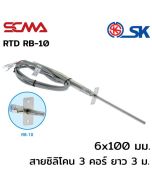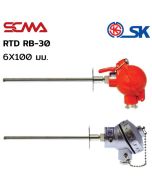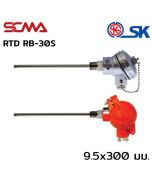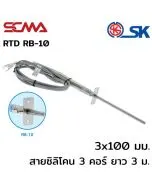
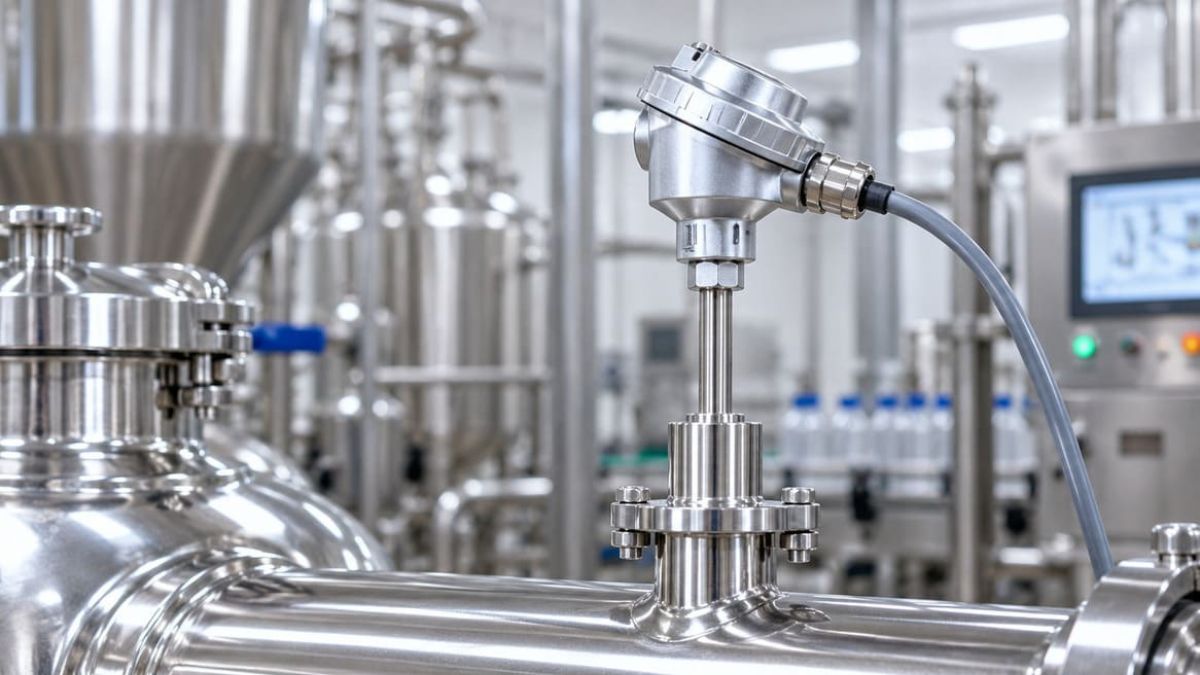
Is inaccurate temperature in your production line damaging the quality of your products? Understanding what a Resistance Thermometer or RTD is will help you achieve the highest level of control over your manufacturing process. SCMA is ready to provide high-quality RTD Sensor distribution, along with a team of expert engineers who offer consultation, design solutions, and comprehensive calibration services. Reading this article will help you understand how it works, its types, and correct purchasing methods to reduce production downtime (downtime) in practical terms.
What is a Resistance Thermometer?
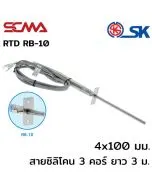
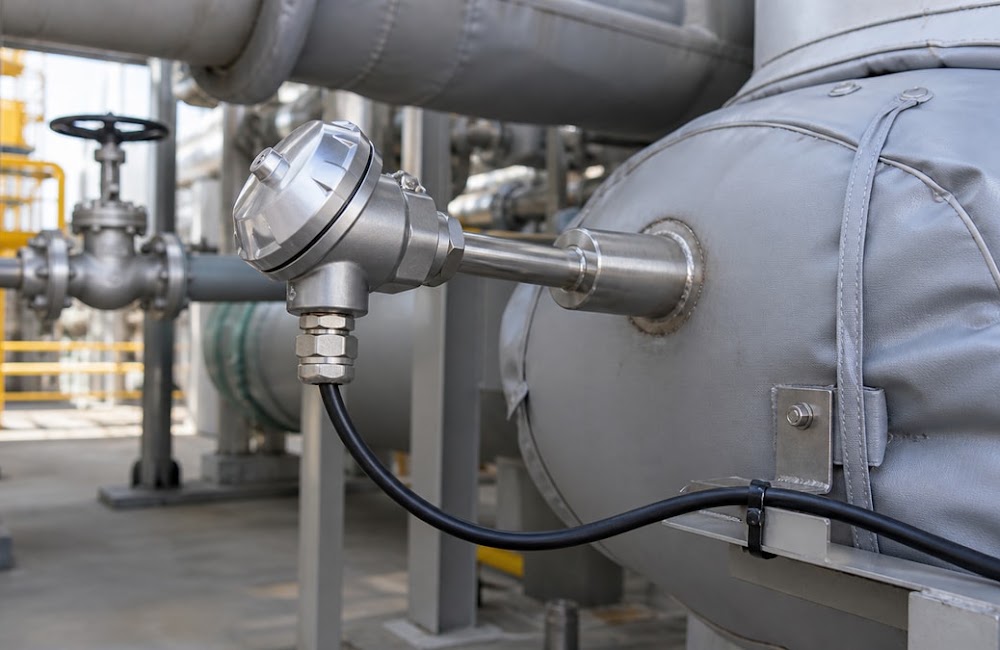
Resistance Thermometer, or RTD (Resistance Temperature Detector), is a temperature sensor that operates based on the principle of electrical resistance changes in pure metals. As surrounding temperatures rise, the resistance value within the sensor increases proportionally and linearly. The most commonly used metal for this purpose is platinum (Platinum). The measuring instrument reads these resistance values, processes them to convert into highly accurate temperature readings, meeting the stringent requirements of industrial applications.
How a Resistance Thermometer Works
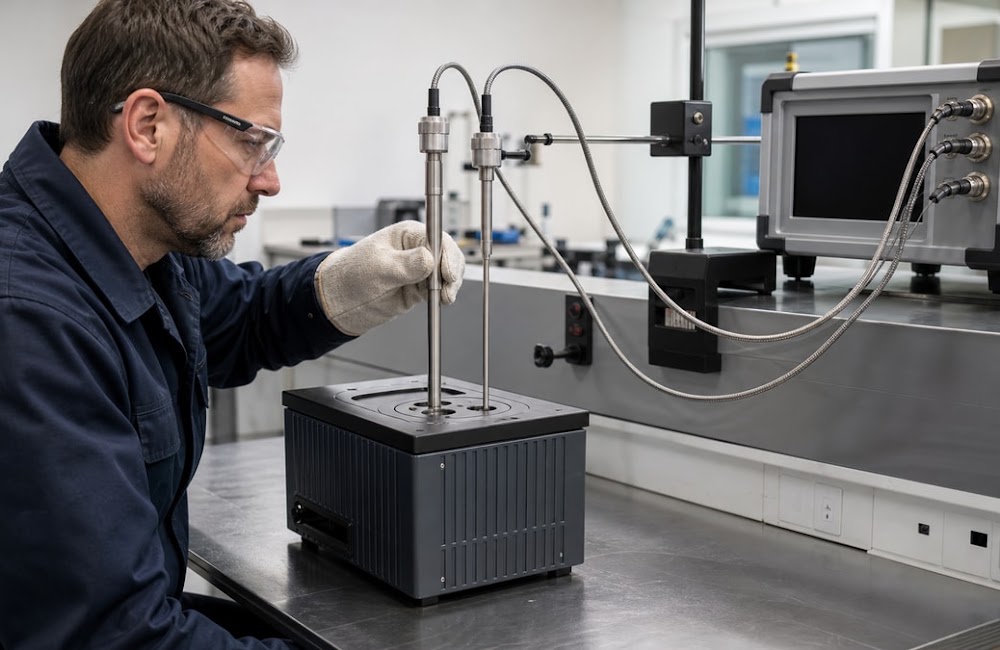
Understanding how an RTD works will help engineers apply it correctly in factories. The working process of this type of sensor can be divided into three main steps that work together systematically to deliver accurate temperature readings.
Heat Sensing (Sensing)
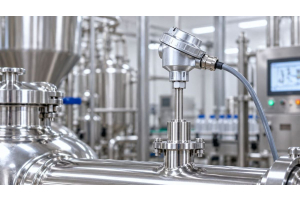
The tip of the RTD Sensor has a probe containing pure metal wire, with platinum being the standard material providing the best results. When the probe comes into contact with liquid, air, or the surface to be measured, the metal inside begins to absorb heat into its electrical conductor. This step requires proper installation for the sensor to quickly detect changes in temperature.
Electrical Change
When production temperatures change, platinum metal will experience a change in electrical resistance measured in ohms. This change is linear, meaning that resistance values increase or decrease consistently with changing temperatures. This characteristic is the key feature that makes RTD sensors more accurate than other types of temperature sensors.
Conversion and Output
The temperature controller supplies a very low electrical current through the Resistance Thermometer. The system then measures the resulting resistance, calculates it using mathematical equations to convert the electrical signal into temperature values. The result is displayed on the display screen and sent into the PLC system to control subsequent machine operations.
How Many Types of Resistance Thermometer Are There?
Resistance Thermometer can be categorized into three main types based on the wiring structure to accommodate different cable lengths. The SCMA engineering team recommends considering the following connection types to align with the accuracy requirements for each application.
Type 2-Wire
The 2-wire RTD sensor connection is the simplest in terms of construction, suitable for general use where wiring distances are relatively short. The limitation of this system is that the resistance in the copper wires will be included with the sensor's resistance, resulting in a slight temperature reading error. This type is therefore best suited for industrial applications that do not require the highest level of precision and focus on cost savings during installation.
Type 3-Wire
The 3-wire system is the most popular standard in industrial plants because it adds a third wire to compensate for resistance. The internal circuitry of the measuring instrument uses the value from the third wire to offset the resistance of the first two wires, resulting in a temperature reading that accurately reflects the true resistance thermometer value. This structure provides a balance between high accuracy and appropriate installation costs, allowing signal wiring over longer distances.
Type 4-Wire
The 4-wire connection is considered to provide the most accurate temperature measurement results. It is commonly used in calibration laboratories, research work, or pharmaceutical industries. The system separates the power supply circuit from the voltage measuring circuit completely, eliminating cable resistance issues entirely. Although the installation cost of a 4-wire sensor is higher than other types, for processes where even a 0.1 degree deviation has an impact, this investment is worthwhile.
Is a Resistance Thermometer Necessary?
Many factory managers may wonder whether switching to high-resolution sensors like the Resistance Thermometer is necessary for their production lines. Based on SCMA's consulting experience, we find that this equipment is a crucial variable in reducing losses from waste, for the following reasons:
Precision and Stability (High Accuracy & Stability)
RTD sensors provide extremely low deviation compared to other types of sensors, allowing precise temperature control within ovens. The readings are highly stable and do not fluctuate even after prolonged continuous use over several years. This ensures that production engineers can be confident that every piece of product going through the heating process will meet the same standards.
Durability
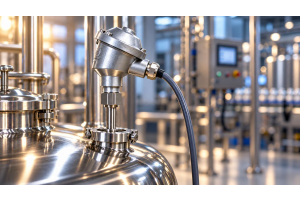
The external structure of most probes is made from industrial-grade stainless steel, making them resistant to pressure, vibration, and chemical corrosion in factories. The internal platinum conductor is well-sealed for protection, extending the lifespan of the sensor and reducing maintenance team workload. Choosing appropriate insulation materials suited to specific applications further extends the operational life of RTD sensors, providing good value for investment.
Linear Output Signal
The direct relationship between temperature and resistance simplifies signal conversion processes in controllers. This advantage reduces programming complexity by eliminating the need for complex compensation equations, leading to faster system response times. It is this linear stability that makes the Resistance Thermometer an international standard for temperature calibration work.
Wide Temperature Range
Although it cannot withstand extremely high temperatures like a thermocouple can, its operational range from -200°C to 500°C covers most applications, including food industry, cold storage freezing systems, air conditioning systems, and plastic melting processes. Selecting probes designed specifically for certain temperature ranges will ensure the highest measurement accuracy at actual working points.
Maintenance of Resistance Thermometer
Proper maintenance of a resistance thermometer is crucial to ensure the accuracy of the device and extend its lifespan as much as possible. Users should develop a preventive maintenance plan based on a checklist of five main steps, as follows:
Probe Inspection and Cleaning (Probe Cleaning)
The stainless steel sheath of the RTD sensor should be cleaned regularly to remove scale, soot, or chemical residues that may accumulate externally. Abrasive materials such as sandpaper, wire brushes, or harsh cleaning agents must not be used because they can cause scratches and affect heat transfer. It is recommended to use a soft cloth dampened with mild cleaner to carefully wipe the sensor, ensuring it remains responsive to temperature changes.
Vibration Check at Installation Location (Vibration Check)
Installing sensors on pipes, air ducts, or machinery that experiences high vibration continuously can cause internal platinum wire coils to break. Regular inspection of installation points is necessary; if excessive vibrations are detected, additional shock-absorbing equipment should be considered. Moving the sensor to a more stable location will help protect against mechanical damage.
Wire and Terminal Inspection (Wiring & Terminal)
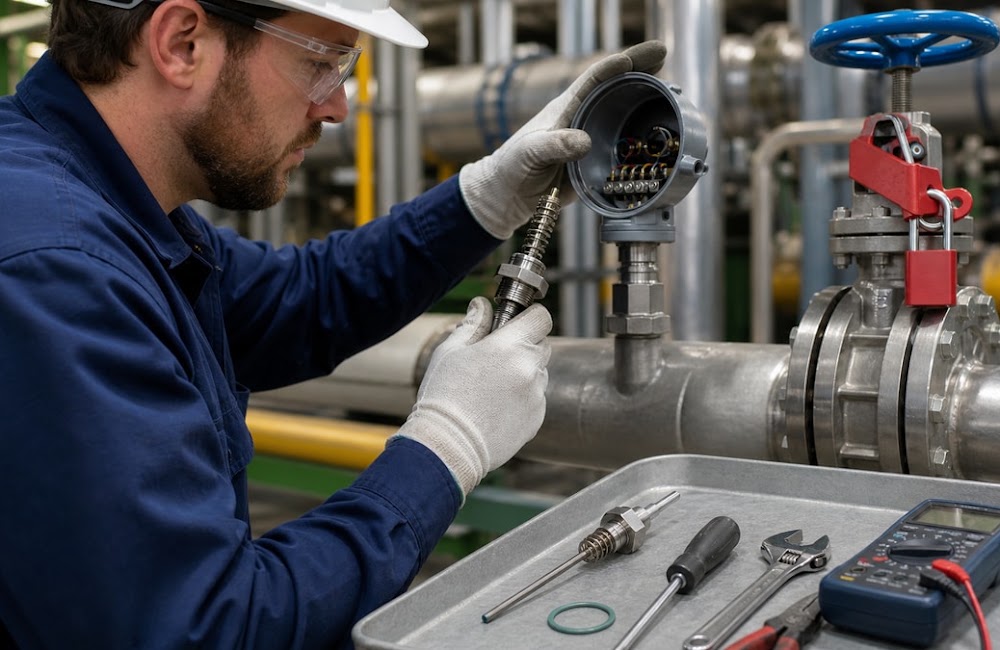
The cable of the sensor is its most vulnerable part and must be checked regularly for cuts, burns, or points where wires are bent. Open up terminal boxes to check that wire screws are tight and free from corrosion at contact points. Even minor abnormalities in terminals can create excess resistance, leading to inaccurate temperature readings.
Calibration of the Instrument (Calibration)
Sending a Resistance Thermometer for calibration by an accredited laboratory annually is essential. Calibration ensures that sensor readings remain accurate and comply with international standards such as SCMA. Our team of engineers provides instrument calibration services to ensure you are confident in every quality control process.
Proper Storage of Equipment (Proper Storage)
If the equipment needs to be removed from the system for storage, wait until the probe cools down to room temperature to prevent sudden temperature changes. Store sensors in shockproof foam boxes or dust-proof bags and place them in dry areas free from moisture and chemical fumes. Signal wires should be wound loosely; never fold cables sharply to avoid damaging internal copper wiring.
Usage of Resistance Thermometer
Currently, the use of RTD Sensor has become widely popular in factories across the country due to its ability to meet high-standard requirements. We can see this equipment being applied in various industries based on control characteristics as follows:
Temperature Measurement in Industrial Systems (Industrial Measurement)
Serves as a front-line detector for monitoring heat in coolant water, hydraulic oil, hot air within large machinery pipelines. The sensor converts physical heat into resistance signals and sends them directly to analysis tools in the control room. Engineers can use this data to monitor and prevent equipment from overheating, which could lead to damage.
Production Process Control (Process Control)
In food, pharmaceuticals, chemical industries, maintaining a constant temperature throughout production is crucial for product quality according to formulas. Resistance Thermometer works in conjunction with closed-loop controllers to automatically adjust steam valves and heaters to increase or decrease heat as needed. This closed control system helps maintain consistent conditions during the manufacturing process, effectively reducing waste.
High Precision Applications
Semiconductor industry, research laboratories, calibration labs all require sensors with decimal-level accuracy. These sensors can respond to temperature changes of just 0.1 degrees Celsius quickly, allowing users to detect abnormalities immediately. Long-term stability in operation makes resistance-type sensors the top choice for advanced engineering work.
How to Choose a Resistance Thermometer
When considering the purchase of All Products in the temperature measurement tools category, decisions should be based on engineering principles to ensure cost-effective equipment. The SCMA team summarizes key factors for selecting a Resistance Thermometer as follows:
- Temperature Range: Check the lowest and highest actual working temperatures; if they fall between -200°C to 500°C, choosing an RTD is the best option.
- Accuracy Tolerance: Select accuracy classes that match the work requirements, such as Class A for high-precision tasks and Class B for general manufacturing processes.
- Wiring System: Choose a 2-wire system for short distances, a 3-wire system for general industrial applications, and a 4-wire system for laboratories requiring the highest precision.
- Probe Type & Fitting: Consider insulation materials such as stainless steel 316L for food industry applications. Choose thread or flange types to fit installation points.
- Response Time: For quick RTD sensor readings, select probes with smaller diameters for faster heat transfer.
Summary
In summary, a Resistance Thermometer (RTD Sensor) is an essential device that enhances accuracy and stability in your factory production processes. Choosing an RTD sensor structure suitable for the environment helps reduce machine downtime and ensures consistent product quality. SCMA is pleased to provide consultation and design services Our Services, covering everything from sales to after-sales service, including comprehensive calibration.
If you want to buy a Resistance Thermometer, SCMA is now available!
If your factory is facing temperature fluctuation problems or inaccurate measurements, investing in high-quality Resistance Thermometer is the most cost-effective solution. As experts in automation systems and industrial measurement tools, SCMA offers a variety of RTD Sensor models to meet every challenge on your production line. Our team of engineers is ready to visit your site for an assessment and provide integrated solutions tailored to your needs to help you increase production efficiency and reduce long-term hidden costs.
Frequently Asked Questions
1. How does RTD differ from Thermocouple?
RTD offers much higher accuracy and stability within a temperature range of up to 500°C, while thermocouples are cheaper and can measure temperatures in the thousands of degrees but with lower accuracy.
2. What is PT100? How does it relate to Resistance Thermometer?
PT100 is a popular type of sensor made from platinum (Pt) wire, where the number 100 indicates that this sensor has a resistance value of 100 ohms at 0°C.
3. How is a three-wire sensor better than a two-wire one?
A three-wire sensor includes an additional wire to compensate for the internal cable resistance, making it more accurate in measuring temperature over long distances compared to a two-wire sensor.
4. How long is the lifespan of RTD Sensor?
If installed and used correctly in appropriate environments, the equipment can last 5-10 years. Users should send their measurement tools for calibration every year to ensure that resistance values are not off.
5. Can a broken probe or cut wire be repaired?
If the internal platinum probe component is damaged, it cannot be repaired to meet original standards. Engineers recommend replacing the entire sensor set for safety and reliability of the control system.