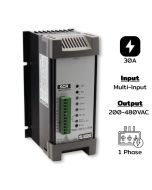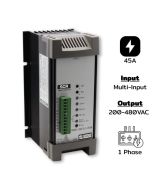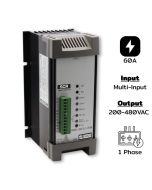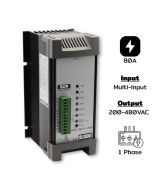
SCR or Silicon Controlled Rectifier is a thyristor type power electronic device that is highly important in electrical systems andelectronics industry, as SCR circuits can efficiently control large electric motor loads, are easy to use, and have high durability.
What is an SCR?

How does an SCR work?
The SCR circuit operates using a controlled diode structure, consisting of three main terminals - Anode, Cathode, and Gate. It works through a four-layer semiconductor (P-N-P-N) structure. To initiate current flow, start by applying current to the Gate to open the circuit for current from the Anode to flow to the Cathode. Even after stopping the current at the Gate, SCR continues conducting until the voltage at the Anode drops below that of the Cathode or the main current falls below the Holding Current value. The circuit closes when there is no current input at the Gate, causing SCR to stop conducting, making it suitable for high current control in industrial applications.
What types of SCR are there?
Choosing the appropriate type of SCR can enhance the efficiency and stability of the electrical system.
- Phase Control SCR: Used for controlling AC current to adjust voltage levels. Suitable for motor control circuits, dimming lights, and heater control. It has high current endurance capability and low power loss rate.
What are the advantages of an SCR Power Adjuster?
An SCR power adjuster offers several advantages over traditional power control systems. With advanced power electronics technology, SCR provides high accuracy, safety, and efficiency in controlling electrical power for industrial applications, making it a suitable choice for systems requiring high stability and reliability.
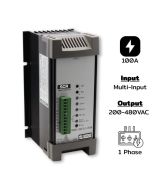
- Wide Operating Range: Supports main voltage for loads from 200~480VAC and can handle up to 720 amps, allowing it to be used with a variety of electrical systems.
- Flexible Input: Accepts multiple types of input signals within the same unit such as 420mA, 020mA, 15VDC, 05VDC, 210VDC, 010VDC, and Dry Contact, enabling connection to various control systems without additional signal conversion devices.
- Automatic Frequency Detection: Automatically detects frequency from the power source at 50~60 Hz without needing to select or change frequencies, with protection systems for abnormal frequency and buffer systems that reduce voltage spikes.
- Flexible Adjustment: Features VR buttons to adjust the maximum output voltage (Maximum Output) and VR SFS (Buffer Time) buttons for adjusting the delay of the output voltage, allowing customization according to specific needs.
- Separated Control Circuit: The power supply feeds the control circuit board independently from the power circuit and the trigger circuit is separated from the mainboard, enhancing safety and reducing potential damage to the control system.
- Automatic Protection System: When abnormal situations occur such as overheating, fuse failure, or incomplete phase voltage, the system will shut down and send an immediate warning signal to prevent damage to equipment and systems.
- High Durability: There are no mechanical contact switches in the SCR circuit breaker, so there is no risk of sparking or contact melting, resulting in a long service life and silent operation without noise.
Guidelines for Selecting SCR
Selecting the right SCR requires considering several important factors, including specific system requirements, environmental durability, and desired current control ratings to achieve optimal performance. At the same time, regular maintenance of SCR according to schedule, such as checking connections, cooling systems, and cleaning, will extend its lifespan and maintain long-term efficiency.
Before Installation, Consult SCMA Today for Your SCR Needs!
If you are planning to install or upgrade a system that uses SCR, our company SCMA has expert teams ready to provide consultation and advice on selecting the right SCR to meet your needs. We have experience in designing and installing power control systems using SCR and are here to help you achieve the highest efficiency.
Our Services:
- Technical consultation on SCR
- Design of control circuits using SCR
- Supply high-quality equipment from leading manufacturers
- Maintenance and system inspection services
Contact us today for a free consultation!
Summary
SCR (Silicon Controlled Rectifier) is a powerful electronic device that plays a crucial role in controlling electrical power in industrial and commercial systems. With the characteristics of SCR circuits, they control large motors with small control signals, offering high efficiency and durability, making SCR an appropriate choice for various applications.
Selecting the right SCR involves considering multiple factors, from electrical ratings to environmental conditions. SCMA provides comprehensive services ranging from consultation, system design, to equipment procurement to ensure your electrical systems operate efficiently and safely.
Whether you need to install a new SCR system or upgrade an existing one, SCMA is ready to be your trusted partner for all your SCR needs. Contact us today to start enhancing your electrical systems!
Frequently Asked Questions
When considering the use of SCR in electrical and electronic systems, there are often recurring questions that users have. Below are answers to common queries about the features and operation of SCRs.
What is an SCR? What does it do?
SCR or Silicon Controlled Rectifier is a type of thyristor semiconductor device with a four-layer (PNPN) structure. It functions as a switch to control unidirectional electric current, allowing the current to flow from anode to cathode when triggered at the gate terminal and will continue to conduct even without further gate signals until the current drops below the holding level.
What is the Holding Current of an SCR?
Holding Current (HC) is the minimum current value that must flow through the SCR to keep it in a conducting state. If the current flowing through the SCR drops below this level, the SCR will automatically revert to its off-state. This holding current parameter is an important specification listed in each SCR's technical data.
What does SCR stand for?
SCR stands not for a value but the name of a type of electronic device. However, each model of SCR has important parameters specified in its technical documentation such as maximum working voltage (VWM), maximum working current (ITSM), gate current (IGT), holding current (IH) and response time.
How many types of SCR biasing are there?
SCR biasing can be done in two main ways:
- DC Biasing - Uses direct current voltage and current to trigger the gate of the SCR. Suitable for applications requiring simple on-off control of SCRs.
- Pulse Biasing - Uses pulse signals to trigger the gate of the SCR, suitable for controlling the timing operation of SCRs in systems requiring high precision such as phase control in AC circuits.
Both methods have their advantages and disadvantages. The choice depends on the nature of use and requirements of the system.