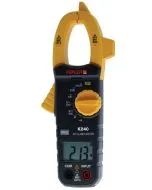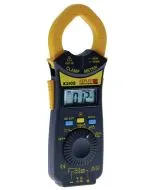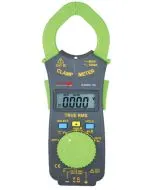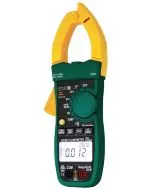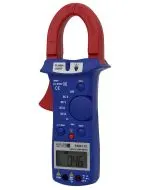

When working with electrical systems, measuring current is essential to determine how much current various electrical equipment are using and whether the system's current is normal. However, measuring current can be difficult as it often requires cutting wires to insert an ammeter in series, which wastes time, poses safety risks, and may require temporarily shutting down the power system. This led to the development of "clamp meters" or Clamp Meters that SCMA introduces along with consultation services and product offerings tailored to your needs.
What is a Clamp Meter?

A clamp meter is an electrical measuring device designed to measure the amount of current flowing through a conductor or wire without needing to cut or disconnect any circuits. Simply clamping the jaws of the clamp meter around the wire allows for quick and accurate readings.
Clamp meters thus make measuring currents much more convenient compared to traditional ammeters that require cutting or unplugging wires for measurement. Additionally, most clamp meters also feature additional measurement functions such as voltage and resistance, similar to general multimeters, making them versatile in various scenarios.
How does a Clamp Meter work?

A clamp meter operates based on the principle of electromagnetic fields. When electrical current flows through a conductor, it generates an electromagnetic field around that conductor. If another coil is placed near this field, it induces voltage and current in the coil.
Inside the jaws of a clamp meter, there is a coil wound around a ferrite core. When you clamp the meter around an electrical wire, the magnetic field from the current flowing through the wire induces a current in the coil within the meter, allowing for measurement of the current in that wire without direct contact with the conductor.
Types of Clamp Meters

Clamp meters (Clamp Meters) can be categorized into three main types based on their operating principles:
- Current Transformer Clamp Meter: This type of clamp meter is used to measure alternating current (AC) only, as it relies on the principle of a current transformer.
- Hall Effect Clamp Meter: This type measures both alternating current (AC) and direct current (DC), using Hall effect sensors to detect magnetic fields and convert them into electrical signals.
- Flexible Clamp Meter: This is a flexible clamp meter suitable for narrow spaces or large wires, designed to measure alternating current only.
Additionally, we can classify them based on display type into two categories: analog clamp meters and digital clamp meters.
Clamp Meter Usage Patterns

A clamp meter is a highly useful tool for measuring electrical current in systems. There are both traditional analog needle types and digital display types available, each with their own advantages and disadvantages. Let's explore the usage patterns of different types of clamp meters.
Analog Clamp Meter
An analog clamp meter or needle-type clamp meter is a classic model that is easy to use, with readings taken from the movement of the needle. It can measure direct current voltage and temperature with special probes, but it offers less accuracy than digital models.
Digital Clamp Meter
A digital clamp meter or numeric display clamp meter is suitable for high-precision applications. It can measure a variety of parameters, with easy-to-read numerical displays. Additional functions such as data logging and overvoltage warnings make electrical current measurement and analysis more convenient.
Contact SCMA Today for More Details!
Choose SCMA Services to get high-quality clamp meters that best meet your needs. Our expert team is ready to provide consultation on which brand of clamp meter is right for you, usage methods, and purchasing recommendations, as well as reliable after-sales services. Contact us today to get more details. SCMA is the leading supplier of measurement tools and industrial solutions.
Summary
SCMA introduces the "Clamp Meter," a tool that makes measuring electrical current easier, convenient, quick, and safe without needing to cut or splice wires. It is an essential device for working with electrical systems. If you have any further questions, whether about what a clamp meter can measure or how to use it, feel free to contact SCMA experts today for additional information and product consultation!
Frequently Asked Questions
What does a Clamp Meter do?
Clamp Meter or clamp meter is used to measure the electrical current flowing through a wire without needing to cut or stop the circuit. Simply clamp the jaws of the meter around the wire, and you can read the current value immediately.
How does a Clamp Meter differ from Multimeters?
Clamp Meters and multimeters both aim to measure electrical parameters. However, clamp meters are designed primarily for measuring current without needing to cut into the circuit, while multimeters can measure voltage, current, resistance, but require connection to the circuit to take readings.
What is a Multimeter?
A multimeter or digital multimeter is a basic electrical measurement tool that can measure voltage, current, resistance, diodes, and continuity in one device. However, it cannot directly measure current like a clamp meter.
Can Clamp Meters Measure DC Current?
Some digital clamp meters can measure direct current (DC), specifically Hall Effect type clamp meters that use Hall sensors to detect signals. However, standard clamp meters using induction methods only measure alternating current (AC). Therefore, it's important to check the specifications before purchasing a clamp meter.