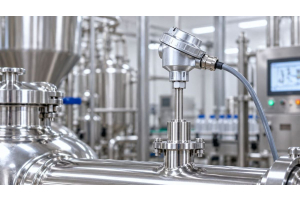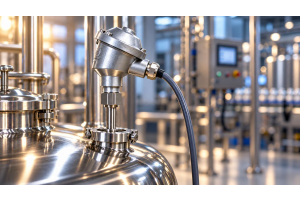

Are load cells (Load Cell), also known as weight sensors, becoming increasingly popular in today's manufacturing industry? This article will guide you through understanding what Load Cells are, how they work, their various types, and their diverse applications to help you choose the right weight sensor for your business needs.
What is a Weight Sensor?

Weight sensors or load cells (Load Cell) are signal converters that transform mechanical force or weight into an electrical signal. Load Cells use strain gauges arranged in a Wheatstone bridge circuit, capable of measuring both compression and tension forces. Weight sensors send electric signals proportional to the applied force to display screens or control systems, making them crucial components in all weighing systems.
How does a Load Cell Work?
Load Cell works by dividing into two main parts, the external circuit and the internal circuit. In terms of electrical systems, a Load Cell is an instrument that converts mechanical force signals to electrical signals through changes in resistance from Strain Gauge.
External Circuit
The external circuit of the Load Cell consists of Strain Gauges and resistors arranged as an unbalanced bridge circuit. When a Load Cell receives mechanical force, the Strain Gauge stretches or contracts causing resistance changes which result in varying voltage signals proportional to the applied weight. This circuit is the heart of the Load Cell Sensor that enables accurate weight measurement. Typically, four Strain Gauges are connected in a Full Bridge configuration for maximum sensitivity and accuracy.
Internal Circuit
The internal circuit of Load Cell is in the Weighing Indicator section, which processes signals from the external circuit and displays them. Load Cells send mV/V level signals to a signal amplifier circuit, then convert these into digital signals with high-resolution A/D Converters. The processing unit performs Linearization and Temperature Compensation to ensure accurate weight readings under all operating conditions.
Input Section
The input section of the Weight Measurement Sensor System receives voltage signals from Load Cells, typically around 2-3 mV/V of reference voltage. These signals are then amplified by an Instrumentation Amplifier with high CMRR to eliminate noise. This section also includes a Filter circuit to remove unwanted high-frequency signals before sending them to A/D Converters with at least 24-bit resolution. For the user, this means that Load Cells can measure weight accurately down to the gram level in ton-scale scales.
Processing Unit
The processing unit is the brain of the system, weighing sensor that takes digital values from the A/D Converter and calculates them into weight using various algorithms such as Digital Filtering to reduce noise, Calibration Algorithm to convert ADC values into units of weight, and Load Cell main operation. In terms of Zero Tracking, it continuously adjusts the zero point automatically. Additionally, there are functions like Tare, Hold, Peak Hold, and statistical calculations that help make Load Cells versatile.
Output Unit
The output unit of the load cell serves to send processed results for use. It includes a Display screen showing weight values, Analog Output 4-20mA or 0-10V for connecting with PLCs, Digital Output via RS232/RS485/Ethernet for sending data to computers, and Relay Output for controlling external devices such as motors, valves, or alarm signals. This makes the Load Cell Sensor capable of working seamlessly with automated systems.
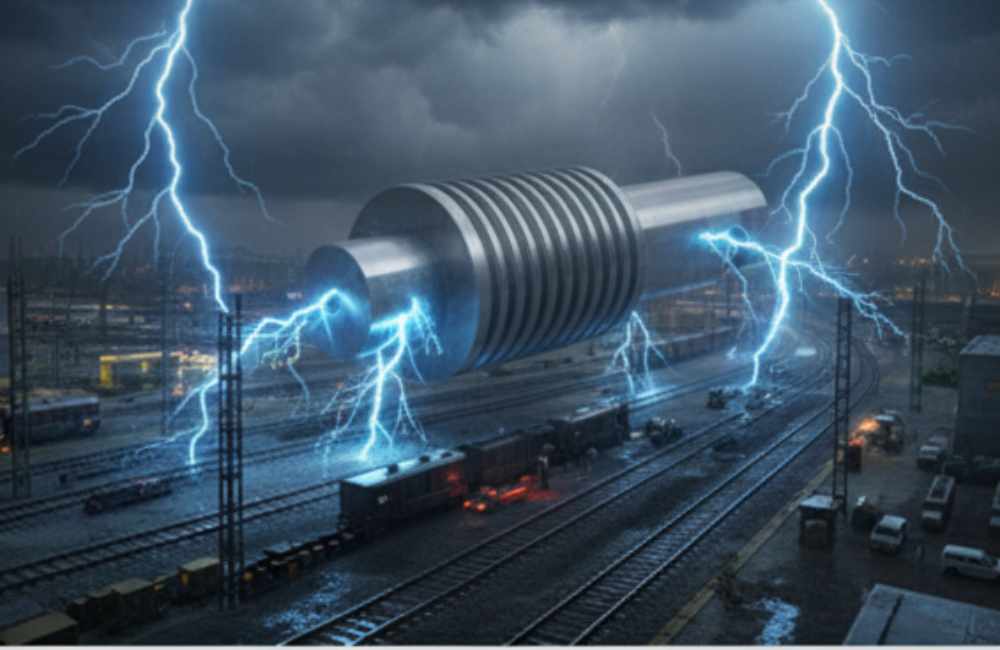
What are Load Cell Sensors used for?
Load cell sensors are important devices used to measure and control weight in various manufacturing processes and services. Load cells play a crucial role in enhancing efficiency, accuracy, and safety in operations. Load Cell technology helps automate and accurately measure weight.
- Measure compression, tension, or shear forces - Load cell sensors can measure forces in various directions from grams to several hundred tons. They are used for material and component strength testing.
- Industrial weighing systems - Weight sensors are key components in all types of scales, from platform scales to truck scales and silo tank scales.
- Quality control in production lines - Weight sensors are used for real-time product weight inspection, automatically separating non-standard products from the production line.
- Component testing in engineering - Load cells are used in tensile testers, compression testers, press fit tests, and material fatigue tests.
- Automated control systems - For automated systems, load cells are sensors that send signals to PLCs to control operations based on predefined weight values.
What are Load Cell Sensors made of?
Load cell sensors are manufactured from materials with suitable mechanical properties. Most load cells are made from stainless steel 17-4PH or high-strength aluminum alloys. Load cells must be stable in temperature and resistant to corrosion. Inside a load cell sensor, there is a strain gauge made of special metal foil bonded with epoxy adhesive. High-quality weight sensors have moisture-proof coatings and IP65-IP68 enclosures to ensure accurate operation in all environments.
What are the types of load cells?
Load cells come in various forms depending on their usage. Each type is designed to measure force in different directions and sizes. Choosing the right Load Cell can help achieve accurate measurements and a longer lifespan.
What are the types of compression load cells?
Compression Load Cell Sensor is the most commonly used type in industries for general weighing tasks. This sensor is designed to measure vertical force and has a robust structure.
Shear Beam Load Cell
The Shear Beam Load Cell is popularly used in tank and silo weighing applications, where one end is attached to the base while the other end bears the weight. For Shear Beam, it measures shear force within its structure with a capacity ranging from 250 kg to 10 tons. It is suitable for construction materials, animal feed, and chemicals weighing tasks. This sensor type can withstand lateral forces well, making it ideal for installations that may experience vibrations.
Truck Scale Load Cell
Truck Scale Load Cells are Double Ended Shear Beam types with a central load-bearing point, which makes them more accurate than standard Shear Beams. This sensor type has a capacity ranging from 10 tons to 50 tons and is used in truck scales and large tank weighing systems. Installation uses Rocker Pin and Ball Cup systems allowing the tanks to expand due to temperature changes without affecting the measurement. The Truck Scale Load Cell works with more Strain Gauges than other types, providing excellent precision and repeatability.
Single Point Load Cell
The Single Point Load Cell is designed for weighing tasks using small to medium-sized platforms by installing a single Load Cell Sensor at the center. It has a special feature called Moment Insensitive, allowing accurate measurements even when weight is not placed centrally. With a capacity ranging from 2 kg to 800 kg, it is suitable for bench scales, filling machines, and checkweighers in production lines.
Bending Beam Load cell
Bending Beam load cell has a structure similar to that of a spring and operates by measuring the bending force when weight is applied at the end of the sensor. This type of load cell is highly sensitive in low weight ranges, with capacities from 25 kilograms to 500 kilograms. It is cost-effective and suitable for laboratory weighing, pharmacy scales, and applications requiring high precision but not heavy loads.
Pancake Load cell
Pancake Load Cell has a flat circular shape like a pancake and can be used for both compression and tension forces. In Pancake load cells, there are numerous Strain Gauges arranged in a circle, providing high accuracy up to 0.05% Linearity with capacities from 500 kilograms to 500 tons. It is commonly used in material testing machines such as Universal Testing Machines and applications requiring extremely high precision.
Canister Load cell
Canister Load Cells have a cylindrical shape like a canister, designed to withstand vertical compression forces. They offer an accuracy of 0.05% and high stability with capacities ranging from 200 kilograms to 20 tons. These load cells are popular in truck scales, medium-sized tank scales, and weighing systems requiring high precision. The robust design is also resistant to overloading.
What types of tension load cell sensors are there?
Tension Load Cell Sensors are used for hanging containers or materials and must be strong with secure mounting points.
S Beam Load cell
S Beam load cells have an S-shaped design, capable of handling both compression and tension forces. Installation uses Rod End Bearings allowing for slight movement without affecting the weighing accuracy. This type of sensor has capacities from 2 kilograms to 5 tons and is commonly used in hanging scales, crane scales, and systems requiring suspended S Beams. The simple principle of operation, easy installation, and minimal maintenance make it popular across various industries.

Applications of Load Cell Sensors
Load cell sensors are widely used in all industries due to their high accuracy and reliability. Load cells are crucial components that enhance production efficiency and service quality. They can work seamlessly with automated systems.
- Industrial Scales - Load cell sensors are the heart of all types of scales, from platform scales to crane scales and truck scales. They are used in logistics, warehouses, and transportation.
- Automated Manufacturing - Weight sensors control the quantity of raw materials during production processes such as mixing formulas, packaging, and checkweighing to maintain product quality.
- Medical and Health - Weight sensors are used in patient beds, dialysis machines, drug pumps, and patient lifting equipment. They must be highly accurate and safe.
- Automotive - Load cells measure braking force, steering torque, passenger weight for airbag systems, and automotive component testing.
- Retail - In stores, load cells are the sensors in product scales, self-checkout systems, and postal scales.
- Agriculture - Weight sensors are used in automatic feeding systems, grain silos, and agricultural yield weighing.
- Laboratories - High-resolution load cells are used in analytical scales for research and development requiring microgram accuracy.
- Vehicle Weighing - Load cell sensors are used in onboard weighing systems for trucks to prevent overloading.
- Aerospace - Weight sensors measure cargo and fuel weight on aircraft. They must be extremely accurate for balance calculations.
- Robots and Automated Systems - Weight sensors are used in robot arms to control gripping force and lifting, ensuring safe operation of robots.
If you are looking for "high-quality weight sensors," think of SCMA!
Choosing and maintaining weight sensors correctly will help extend their lifespan and maintain measurement accuracy. SCMA sells high-quality load cells from leading brands, covering all types and sizes to meet every need. We have load cell sensors that are calibrated according to OIML R60 standards with certification. Our weight measuring sensors come with comprehensive after-sales service including installation, calibration, and maintenance.Our team of expert engineers is ready to provide consultation on load cell functionality and selecting the right sensor that meets your requirements.
Summary
Weight sensors are a crucial technology that ensures accurate and efficient weight measurement in industries. Understanding how load cells work, their types, and applications will help you choose the right one for your needs. High-quality load cells provide precise measurements with long lifespans.SCMA is a partner in the field of load cell technology, an expert that will help you use the best weighing technology with quality products and comprehensive services to ensure your weighing system operates at maximum efficiency.
Frequently Asked Questions
What is a Load Cell?
A load cell is a transducer that converts force or weight into measurable electrical signals. A load cell works by using strain gauges, which change resistance when subjected to force, thereby generating an electric signal proportional to the weight. Load cell sensors are essential components in all types of digital scales, from laboratory balances to large industrial scales.
How many types of Load Cells are there?
Load cells can be categorized based on their force application and shape. The commonly used load cell sensors in the industry include:
- Compression Types - Shear Beam, Single Point, Canister, Pancake, Bending Beam for general weighing applications.
- Tension Types - S Beam, Tension Link for hanging scales.
- Universal Types - Capable of handling both compression and tension forces such as S Beam, Pancake.
- Special Types - Button Load Cell, Donut Load Cell, Miniature Load Cell for specific applications.
What is a load cell in a scale?
A load cell in a scale is the sensor that converts the weight of an object placed on its platform into electrical signals. The load cell sensor sends these signals to the Weight Indicator for processing and displaying the weight on the screen. Every digital scale must have weight measurement sensors as a key component, with the number and size of load cells depending on the weighing capacity and scale size.
What is a Strain Gauge Load Cell?
The principle of operation for strain gauge type load cells involves using thin metal foil (strain gauge) that changes electrical resistance when stretched or compressed. These sensors have four strain gauges attached to a metal structure forming a Wheatstone bridge circuit. When force is applied, the strain gauges stretch or compress, changing their resistance and generating an electric voltage signal proportional to the weight. This technology is widely used due to its high accuracy and relatively low cost.