
A sweetness meter is a crucial device in the food and beverage industry, agriculture, and scientific research. This tool allows users to accurately measure the sugar content or sweetness of liquids. This article will explain everything you need to know about sweetness meters, from how they work, their benefits, types, to usage methods.
What is a Sweetness Meter?
A Brix Refractometer is a device used to measure and evaluate the sweetness (sugar content) in units of Brix % Brix. The Brix scale or Brix value is widely accepted across various industries such as food, beverages, agriculture, and scientific research. This tool works on the principle of light refraction to measure the sucrose concentration in a solution. A 1 Brix value represents a solution containing 1 gram of sucrose per 100 grams of liquid.

How a Sweetness Meter Works
A sweetness meter operates by using the refraction of light through a prism to read values on a scale. The degree of light refraction changes according to the amount of sugar in the liquid. When the liquid has a higher concentration of sugar, the light bends more than it does with liquids that have lower concentrations. This causes the boundary between bright and dark areas to move along the scale. The meter converts this refractive index value into sweetness values in Brix units, which represent the percentage of sugar in the solution.
Benefits of a Sugar Refractometer
The Brix Sugar meter is a highly useful device in many industries, capable of measuring the sugar content of solutions through light refraction, providing accurate results in percent Brix (%Brix) and specific gravity. This tool operates similarly to a hydrometer but offers greater convenience, making it an excellent choice for quality control of High Brix in food, beverage, agriculture, and scientific research industries.
Types of Sweetness Meters
Brix meters are important devices used to measure the sugar content in liquids, displaying results as degrees Brix (°Bx), which is a standard unit of measurement across many industries. These meters come in various types, each designed for specific applications such as field work, laboratory use, or industrial settings.
- Traditional Analog Sweetness Meter (with eyepiece): This is the most basic type of meter that uses a refractive system to measure liquid samples. Users look through an eyepiece to read the scale where the line intersects, indicating Brix values. These meters are easy to use and cost-effective, making them suitable for field work, agriculture, horticulture, and wine production due to their reliable indication of fruit ripeness and beverage quality. Despite lacking automatic temperature compensation systems, their simplicity and durability make them popular tools for basic sweetness measurement.
- Digital Sweetness Meter: A more modern version that displays Brix values digitally, making readings easier and more accurate. They often come with an automatic temperature compensation (ATC) system, ensuring precise measurements even in varying temperatures. These meters offer several advantages over analog models, including high accuracy suitable for quality control, ease of use without needing to interpret scales, ATC systems guaranteeing accurate readings at all temperatures, and some models can store measurement data for later analysis.
- Abbe Brix Sweetness Meter: A large benchtop device designed for laboratory use, providing high accuracy suitable for research and high-level quality control.
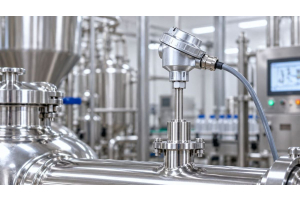
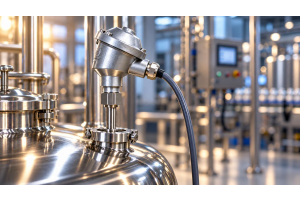
- In-line Sweetness Meter: Designed to be installed in industrial production lines to continuously monitor sugar content in liquids in real-time.
- Portable Sweetness Meter: Compact and lightweight devices suitable for field work, agriculture, and wine production.
- Dual-function Sweetness and Salinity Meter (2 IN 1): Designed to measure both salinity in marine applications and aquariums, as well as sugar content in food and beverages.

Basic Usage of a Sweetness Meter
Sweetness Meter is an easy-to-use, convenient, and quick tool that can be operated with one hand. It suits users of all levels, whether experts or beginners. The usage steps are not complicated and provide accurate results quickly, making it a highly efficient tool for measuring sweetness across various industries.
- Drop Sample on the Measuring Head: Drop approximately 2-3 drops of the liquid sample to be measured onto the measuring head (prism) of the refractometer, ensuring it covers the entire surface.
- Start Measurement: Press the Start button to begin the measurement process. The result will be displayed quickly within just 3 seconds.
- Read Measurement Result: View the digital display showing the measurement in %Brix units, which is a standard unit indicating the percentage of sugar in the solution.
- Clean After Use: Clean easily with clean water after use. The meter has an IP65 waterproof standard, so there's no need to worry about damage from cleaning.
Setting Up the Sweetness Meter
Calibration is a crucial step that should be performed before using the sugar content meter to ensure accurate and reliable measurement results. This process ensures that the measuring instrument is in good working condition and provides correct measurements, especially after long periods of non-use or when used in different environments. Calibration can be easily done by following these steps:
- Drop distilled water on the prism: Lift the plate up and drop approximately 2-3 drops of pure distilled water onto the glass prism. Then lower the plate to cover, ensuring that the water spreads evenly across the entire surface. Be careful not to create air bubbles which can cause reading errors.
- Wait for temperature equilibrium: Allow the water to remain on the glass surface for about 15 seconds, so that the temperature of the water adjusts to balance with the ambient temperature around the Refractometer. This will help improve measurement accuracy.
- Check and adjust the scale: Look at the distilled water sample, where the line between the white and blue areas should be at level 0 on the scale. If not, use the screwdriver included in the set to turn and adjust until the line is exactly at level 0.
- Ready for use: Once the scale adjustment is complete, the sugar content meter is ready to be used immediately. You can clean off the distilled water and start measuring real samples.
How to Measure Brix Refractometer Values
Measuring sweetness with a Brix refractometer is a simple and quick process. Drop the solution you want to measure onto the prism plate, close the lid, then look through the viewing window in well-lit conditions. You will see a scale with colored bands; read the numerical value according to the scale, which measures in %Brix. The measured value indicates the percentage of sugar in the solution, an important indicator of sweetness for various products ranging from fruits and honey to beverages and processed foods.
Interested in Sweetness Meters? Buy from SCMA Today!
SCMA offers high-quality sweetness meters that meet the needs of businesses and food and beverage industries with the latest technology providing accurate and reliable results. Our sweetness meters come in portable and digital models, easy to use, durable, and backed by quality assurance and excellent after-sales service. Our team of experts is ready to consult and recommend products tailored to your specific business needs, whether you are a farm, food manufacturing plant, or research laboratory. SCMA has the right sweetness meter for every application.

Summary
A sweetness meter is a crucial tool in many industries, particularly in the food and beverage industry, agriculture, and scientific research. The principle of operation relies on light refraction to measure the concentration of solutions, especially sugar content. Sweetness meters come in various types, from portable models to automatic laboratory versions. Proper use and maintenance will ensure accuracy and longevity of the equipment.
For those seeking high-quality sweetness meters, SCMA is ready to serve witha range of modelsthat meet every need. We offer professional consultation services, calibration, and maintenance. Contact us today for more information and special offers for new customers!
Frequently Asked Questions
What is a Brix refractometer?
A refractometer is a scientific instrument used to measure the refractive index of liquids or transparent solids. When light travels from air into a solution, it changes direction or bends, and the degree of bending depends on the concentration of the solution. Besides measuring sweetness, refractometers are also used in other industries such as oil production, pharmaceutical manufacturing, and jewelry making.
What is a Refractometer?
A refractometer is a scientific instrument used to measure the refractive index of liquids or transparent solids. When light travels from air into a solution, it changes direction or bends, and the degree of bending depends on the concentration of the solution. Besides measuring sweetness, refractometers are also used in other industries such as oil production, pharmaceutical manufacturing, and jewelry making.
How does a Brix Meter work?
A Brix meter works based on the principle of light refraction. When light passes from one medium to another with different densities, it changes direction. The instrument sends light through a sample solution and measures the angle at which the light bends. The higher the concentration of the solution (the more sugar content), the greater the angle of refraction. The meter converts this angle into Brix values, indicating the amount of sugar in the solution.
What is a Sweetness Tester?
A sweetness tester or sugar content meter is an instrument used to measure the level of sweetness or sugar concentration in food and beverages. There are several types, such as refractometers, hydrometers, and digital sugar meters, each with different operating principles but all aimed at measuring the concentration of sugar solutions. Sweetness testers are crucial tools for quality control in the food and beverage industry, as well as for assessing fruit ripeness.