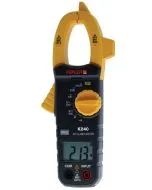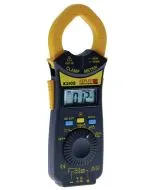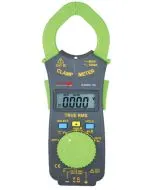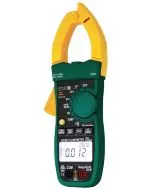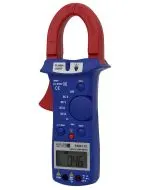

A Clamp Meter, also known in Thai as "แคล้มป์มิเตอร์", is a crucial electrical measuring tool for electricians, engineers, and those working with electrical systems. This device is designed to measure current without interrupting the circuit or directly touching live parts, thus enhancing safety and convenience during work. This article will provide you with an in-depth introduction to Clamp Meters, including their operating principles, types, and usage scenarios.
What is a Clamp Meter?
What is a Clamp Meter A clamp meter is a measuring tool used to measure the level of current flowing through wires and can also measure other values without needing to stop electrical equipment or machinery from operating. With its plier-like shape designed for easy clamping around single wires, it allows for quick and safe measurement of current without interrupting circuits or directly touching live parts. Available in both digital models displaying numerical results and analog models with needle displays, they come equipped with various functions such as voltage measurement, resistance testing, and circuit continuity checks, making them essential tools for electricians, engineers, and those working with electrical systems in buildings, homes, and industrial factories.
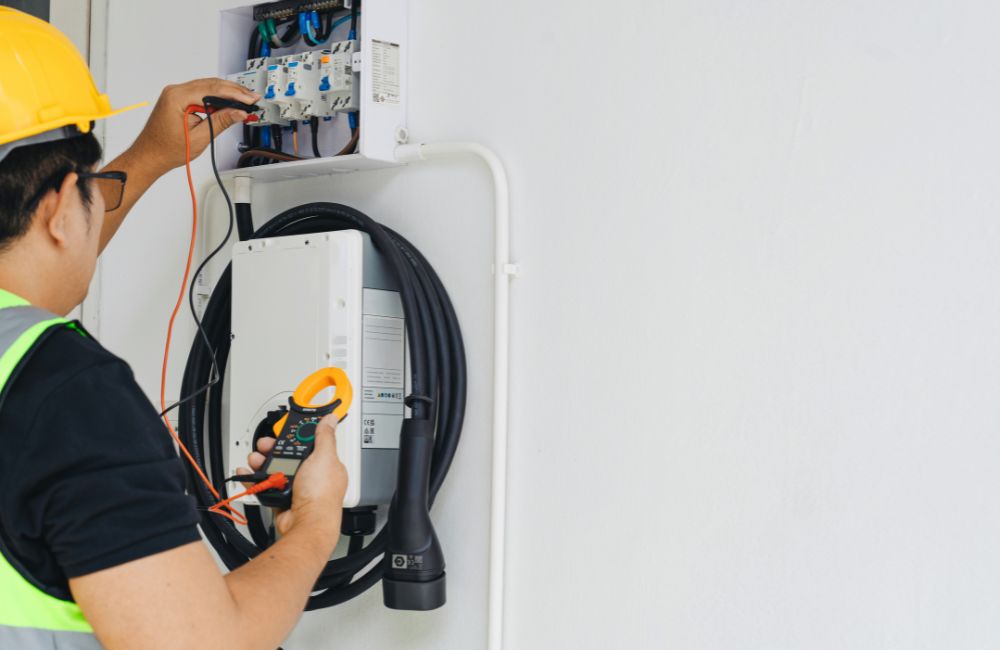
How Clamp Meter Works
Clamp meter (Clamp Meter) is a measuring tool used to measure the level of electrical current flowing through wires and can also measure other values without needing to stop the operation of electrical devices or machinery. With a shape similar to pliers designed to easily clamp around a single wire, it allows for quick and safe measurement of amperage without having to cut circuits or directly touch electrified parts. Available in both digital models that display numerical results and analog models that show readings with needles, they come equipped with various functions such as measuring voltage, resistance, and circuit continuity, making them an essential tool for electricians, engineers, and those working on electrical systems in buildings, homes, and various industrial factories.
How Many Types of Clamp Meters Are There?
Clamp meters come in various types designed to meet specific needs for different electrical applications. Choosing the right type can help ensure that electrical measurements are as accurate and safe as possible, and they can be categorized into the following popular types:
- Analog AC Clamp Meter — The original type that displays results with a needle on an analog dial, measuring only alternating current (AC). Its advantages include affordability, durability, and minimal battery usage.
- Digital AC Clamp Meter — Displays results as numbers on a digital screen, measuring alternating current (AC), and often includes additional functions such as voltage measurement and resistance.
- Digital AC/DC Clamp Meter — Can measure both alternating current (AC) and direct current (DC) using Hall effect sensors, suitable for work involving multiple types of electrical systems.
- Digital AC/DC Clamp Meter RMS — Accurately measures true RMS (Root Mean Square) values even with non-sinusoidal signals, ideal for measuring in systems with active electronic components.
- Leakage Current Clamp Meter — Specifically designed to measure small leakage currents (milliamps), used for checking the safety of electrical systems.
- AC Power Clamp Meter — In addition to measuring current and voltage, it can also measure power (watts) and power factor, suitable for analyzing energy efficiency.
Types of Clamp Meter Usage
Clamp meters are designed to suit different working environments and safety conditions, which can be categorized according to the CAT (Measurement Category) standards that define varying levels of safety limits for electrical measurements. These range from CAT I for low-energy electrical equipment to CAT IV for measuring electricity at main distribution points or building entrances. Users should select an appropriate type and have their meter calibrated regularly every 6 months or annually to ensure maximum accuracy and safety. Each type of clamp meter has specific characteristics as follows:
Analog AC Clamp Meter
An analog clamp meter is the traditional model that has been widely used for a long time, distinguished by its needle display on a clear scale dial, allowing continuous observation of electrical current changes. The advantages of this type include affordability, ease of use, minimal battery dependence, and durability in various working conditions, making it ideal for field work requiring high durability. However, compared to digital models, it has limitations regarding accuracy and functionality.
Digital AC Clamp Meter
Digital clamp meters are highly popular today due to their clear and accurate numerical display on a digital screen. This type of electrical current meter offers additional functions beyond measuring current, such as voltage measurement, resistance testing, circuit continuity checks, and special features like peak hold and data hold functions, which make working in difficult areas more convenient. It is suitable for electricians and engineers who require high accuracy and diverse functionality.
Digital AC/DC Clamp Meter
Digital AC/DC clamp meters represent a significant advancement in electrical measuring tools, utilizing Hall effect sensors to measure both direct current (DC) and alternating current (AC) with one device. This versatility makes them highly suitable for working with various electrical systems, including automotive electrical systems, solar cell systems, or other electronic systems. However, these devices are more expensive than those that only measure AC currents and require zero adjustment before measuring DC current to ensure accuracy.

AC/DC True RMS Clamp Meter (Digital AC/DC Clamp Meter RMS)
The AC/DC True RMS clamp meter, also known as a digital AC/DC clamp meter RMS, is a high-precision measuring tool capable of accurately measuring true RMS (Root Mean Square) values even in complex electrical systems such as inverters or motor speed control systems that have distorted waveforms. Its key advantage lies in its superior measurement accuracy compared to standard clamp meters, making it ideal for electrical engineers, advanced technicians, and applications requiring high precision, such as analyzing industrial power quality or troubleshooting complex electrical systems.
Leakage Current Clamp Meter
The leakage current clamp meter is a specialized tool designed specifically to detect small levels of leaking currents in the milliampere or microampere range. With high sensitivity and an external magnetic field interference reduction design, it can accurately measure leakage currents even in environments with high noise levels. This type of equipment plays a crucial role in electrical system safety checks, detecting leaks in electrical devices, and testing residual current devices (RCD/GFCI) which are essential components of building and factory safety systems.
AC Power Clamp Meter
The AC power clamp meter is an advanced measuring tool that not only measures current and voltage but also calculates and displays comprehensive power values, including real power (Active Power, Watts), apparent power (Apparent Power, VA), reactive power (Reactive Power, VAR), and power factor. This information is crucial for analyzing electrical system efficiency, energy usage audits, and resolving low power factor issues. As such, this type of measuring tool is highly sought after by electrical engineers, energy consultants, and technicians working on energy conservation and improving the efficiency of electrical systems.
What functions does a Clamp Meter have?
What does a clamp meter measure? Clamp Meter is a versatile measuring tool that comes with more functions than just measuring electrical current. New models of clamp meters can measure voltage and both direct current (DC) and alternating current (AC), resistance, diodes, capacitors. With this comprehensive capability, electricians and engineers can easily use them for various types of work. Using the clamp meter is simple; rotate the Rotary Switch to the desired function, adjust the zero setting if necessary, then clip around the wire to read the value without interrupting the electrical device's operation, making troubleshooting and problem-solving in electrical systems quick and safe.
Interested in Clamp Meters? You can buy them from SCMA today!
SCMA offers high-quality clamp meters that meet international safety standards, catering to the needs of both professional electricians and beginners. With experience in the electrical measuring tools industry, we select only top brands with high accuracy and durability, along with expert consultation services to recommend suitable equipment for your work. SCMA provides comprehensive after-sales service; contact us today to receive special offers and nationwide delivery!
Summary
A clamp meter, or Clamp Meter, is a crucial electrical measuring tool for installation, inspection, and maintenance of electrical systems. With its ability to measure current without interrupting the circuit or directly touching live parts, this tool ensures safety and convenience in use. There are various types of Clamp Meters, ranging from basic models that measure only alternating current (AC) to advanced ones capable of measuring both AC and direct current (DC), as well as other electrical values such as voltage, resistance, and power.
Selecting the appropriate Clamp Meter for a specific job enhances efficiency and accuracy. Considerations should include the type of current to be measured, measurement range, precision, and necessary functions for the task at hand.
SCMA is a high-quality supplier of Clamp Meters that meet safety standards, offering comprehensive consultation and after-sales services. We are committed to providing quality measuring tools tailored to the needs of every customer. Contact SCMA today for advice and special offers on Clamp Meters that meet your requirements!
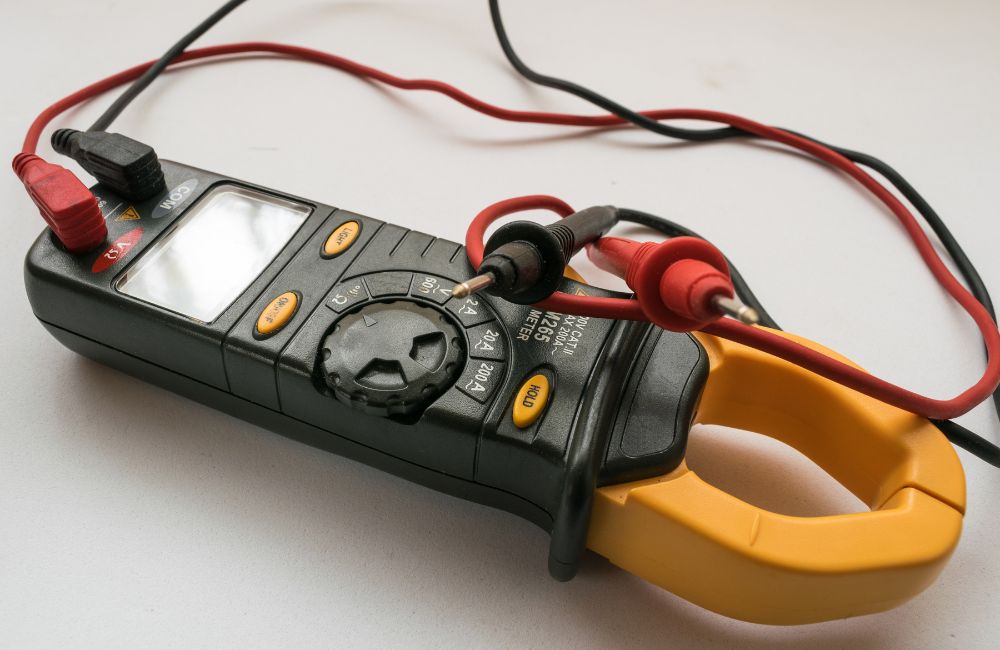
Frequently Asked Questions
How is a Clamp Meter different from a Multimeter?
A clamp meter (Clamp Meter) and a multimeter (Multimeter) differ primarily in how they measure electrical current. A clamp meter can measure electrical current by clamping around an electrical wire without needing to cut into the circuit or directly connect the tool to it, whereas a multimeter requires connecting in series with the circuit to measure current, which means cutting into the circuit and inserting the tool.
Additionally, clamp meters often have higher current measurement capabilities compared to standard multimeters. While multimeters may be more accurate for measuring voltage and resistance, there are now many models of clamp meters that incorporate the functions of a multimeter, allowing them to measure various electrical values beyond just current.
Can Clamp Meter Measure DC Current?
Some models of clamp meters can measure direct current (DC), but not all. Basic clamp meters that use a current transformer will only measure alternating current (AC) because the current transformer operates on the principle of electromagnetic induction, which requires changing electrical currents.
For clamp meters capable of measuring DC current, they use Hall Effect sensors, which can directly detect magnetic field strength. This allows them to measure both AC and DC currents. These types of clamp meters are typically labeled as "AC/DC Clamp Meters" and are more expensive than single-purpose AC clamp meters.
What is an Electric Clamp Meter?
An electric clamp meter, also known in English as an Electric Clamp Meter or Electrical Clamp Meter, is an electrical measuring tool that resembles a pair of pliers and is designed to clamp around an electrical wire to measure the current flowing through it without needing to cut into the circuit or directly touch the live parts.
This tool operates based on the principle of electromagnetic induction, where an electric current flowing through a conductor creates a magnetic field around that conductor. When using a clamp meter to clip around a wire, this magnetic field is detected and converted into an electrical current value displayed on the device's screen. In addition to measuring electrical current, modern clamp meters also have the capability to measure other electrical values such as voltage, resistance, and power.
What can a clamp meter measure?
Modern clamp meters can measure a variety of electrical values depending on the model and type. Generally, clamp meters can measure the following:
- Current: Can measure alternating current (AC) in all models, and some models can also measure direct current (DC).
- Voltage: Measure AC and DC voltage using test leads.
- Resistance: Measure the resistance of equipment or electrical circuits.
- Continuity: Check if an electrical circuit is continuous.
- Diode Test: Check the functionality of diodes.
- Capacitance: Measure the capacitance of capacitors.
- Frequency: Measure the frequency of AC signals.
- Temperature: Measure temperature using an external temperature sensor.
- Power: Measure real power (watts), apparent power (VA), reactive power (VAR), and power factor in models that are Power Clamp Meters.
- Harmonics: Analyze and display harmonic values in the electrical system in models with this function.
Moreover, some models of clamp meters also have the ability to log data and connect to a computer or smartphone for additional data analysis.