Are you experiencing communication network problems in your factory without knowing the cause? SCMA as an expert in industrial technology solutions is ready to help you understand digital communication systems through testing tools. This article will take you through the introduction of Protocol Analyzer, its working principles, advantages, maintenance, as well as how to use it appropriately.
What is a Protocol Analyzer?
Protocol Analyzer is a hardware device or software program that captures, monitors, and decodes data passing through computer networks and industrial networks. This tool is like a closed-circuit television camera that helps engineers see the details of data transmission behind the scenes, resulting in precise identification of network system faults.
How the Protocol Analyzer Works
The operation of the protocol analyzer relies on the process of capturing and processing digital signal data to interpret it in a way that is easy for users to understand.

Signal Capture
The device will receive radio frequency signals or broadband digital data from the signal cable or air. This data capture includes Non-Orthogonal technology through the test port to collect all data sets currently running in the network at that moment.
Sparsity Detection
The tool will enter the stage of checking the low density of user-specific codebook sets. The system will map the incoming data bits to prepare for calculation and distinguish overlapping signal sequences.
Message Passing Algorithm (MPA) Processing
The system will simulate the iterative decoding process on the Factor Graph structure to separate the signals of each user overlapping in the same time resource. This algorithm helps reduce computational complexity, enabling quick and accurate data retrieval.
Result Visualization
Decoded data will be converted into clear electrical parameters and visible signals, such as Symbol Error Magnitude (EVM - Error Vector Magnitude), Constellation Diagram, as well as actual data transfer rate.
How many types of Protocol Analyzer are there?
Currently, network protocol analyzers can be classified into two main types based on device structure and application: hardware-based and software-based analyzers.
Hardware-based Analyzer
A specialized hardware device designed to connect directly to network signal cables. The device has high-speed processing capabilities, is durable, and is suitable for industrial field network analysis in harsh environmental conditions.

Software-based Analyzer
Software installed on a computer to capture data. A popular example of such software is Wireshark. This type of software facilitates convenient analysis of data packets, is cost-effective, and is suitable for general network system checks.
Maintenance of Protocol Analyzer
Maintaining the analyzer is important to ensure measurement accuracy and extend the lifespan of the device.
Software and Database Maintenance
Users should regularly update the software version and the protocol decoder database to keep them up to date. Backing up configuration files and deleting old packet log files will help prevent memory full issues.
Hardware and Device Maintenance
Clean the device body, dust on the fan vents, and signal port connectors regularly. Check the condition of cables, network interface ports, and power systems to ensure they are in good working condition and always ready for use.
Application of Protocol Analyzer in Industry
Industrial networks require high stability, so protocol analyzers play an important role in controlling and managing communication systems within factories.

Network Troubleshooting
Engineers use this tool to find errors when devices stop responding, helping to check what commands the master device sends and how the slave device responds in real-time.
Cybersecurity Analysis
Monitoring data traffic helps identify anomalies or attempts to hack into the Operational Technology (OT) network. The tool will alert when abnormal data packets that may cause damage to the system are detected.
Performance Optimization
Helps measure latency and check data density on the industrial network. The data obtained is used to improve speed and enhance the stability and efficiency of data transmission between devices.
System Commissioning
Used to analyze the accuracy of data transmission through various protocols such as Modbus, Profinet, or EtherNet/IP during the installation of a new system, ensuring that machines and SCADA systems communicate fully before actual operation begins.
Advantages of Protocol Analyzer
Choosing a network signal analysis tool helps enhance the performance of engineering teams and reduce risks caused by network system failures
Network Troubleshooting
Helps engineers delve into the packet level of data, clearly see errors within the signal structure, reduce the time needed to find the cause of problems, fix connection failures, and precisely identify bottleneck points
Safety and Monitoring
Serves as a cyber threat monitoring system, helping detect abnormal behavior in the network and verifying the authenticity of authentication in the system, preventing important data from leaking out of the organization
Planning and Development
Helps developers and system administrators analyze real usage data to plan future network expansion, as well as for debugging code programs to ensure that data transmission through protocols works correctly according to standards
How to Purchase a Protocol Analyzer
Purchasing a signal analysis tool or measurement device in the factory through SCMA should consider technical factors that are suitable for the original structure of the Factory Automation system as follows
- Type of Protocol: Check whether the device supports the protocols used in the factory, such as Modbus RTU, Profibus DP, BACnet or CANopen
- Connection Characteristics: Consider compatibility with protocol converter devices and field data recording devices
- Environmental Durability: Choose a model that has dust and water protection levels and is resistant to electromagnetic interference in industrial areas
- Consult with Engineers: Contact SCMA's expert team to help assess hardware specifications to match actual needs
Essential electrical signal analysis tools for factories
Along with network communication systems, industrial factories also require high-performance measuring and testing equipment for safety, in terms of electrical and frequency wave signals
- Spectrum Analyzer: A spectrum analyzer that helps measure radio frequency and electromagnetic wave signals. You can learn more about what a Spectrum Analyzer is to choose the right one for your work
- Spectrum Analyzers: Spectrum analyzer devices for inspecting interference signals in the system
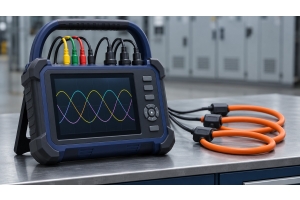
- Power Analyzer: An electrical power analyzer for measuring electrical parameters, evaluating electrical quality, and helping plan energy savings in factories
Summary
Protocol Analyzer is an important tool for measuring, capturing, and analyzing data packets in industrial network systems, helping to accurately perform network troubleshooting, cyber security protection, and performance improvement. For organizations looking to upgrade their testing and measurement systems, you can view all products or receive consultation services through our services from SCMA immediately
Interested in purchasing or consulting via LINE Official: @SCMA
If you want to buy a Protocol Analyzer, you can buy it from SCMA today!
Although SCMA (SCMA) focuses on the distribution of industrial and electrical measuring instruments, such as Power Analyzer and spectrum analyzer, we have a team of engineers ready to advise on all types of measuring equipment. The company has been operating for more than 10 years, with branches in the EEC Chonburi and Lampoon areas, ready to deliver measurement and testing services that are accurate, safe, and internationally standardized.
Frequently Asked Questions
How is a Protocol Analyzer different from a Network Monitor?
A Protocol Analyzer decodes data down to the Packet level, while a Network Monitor focuses on monitoring the overall traffic and network performance.
What type of Protocol Analyzer is Wireshark?
Wireshark is a popular Software-based Protocol Analyzer that is used through installation on a computer.
What industrial protocols does this tool support?
Most industrial instruments support Modbus, Profinet, EtherNet/IP, Profibus, and CANopen according to the device structure.
How often should the software system be updated?
You should regularly update the program and Decoder Database when new versions are released, in order to support the latest protocol versions.
What services does SCMA provide regarding measuring and testing equipment?
SCMA provides services for the sale of electrical, pneumatic, sensor measuring equipment, as well as calibration, maintenance, and engineering solution design services.