Pneumatic safety valves are essential equipment that your factory has to prevent accidents caused by overpressure, right? SCMA Co., Ltd. (SCMA), an expert in automation systems and measuring instruments, is ready to supply and design safe pneumatic systems for the industry. In this article, the SCMA engineering team will take you through the working principles, types, and a checklist for correctly selecting a safety valve or pneumatic safety valve to ensure your production line runs smoothly.
What is a Pneumatic Safety Valve?
A pneumatic safety valve (Pneumatic Safety Valve) in this article refers to a valve that automatically vents compressed air when the pressure reaches the set opening pressure. It is used to prevent overpressure in air receiver tanks or parts of the system designed to be protected by the valve. The set opening pressure and vent size must be suitable for the system.
Working Principle of Pneumatic Safety Valves
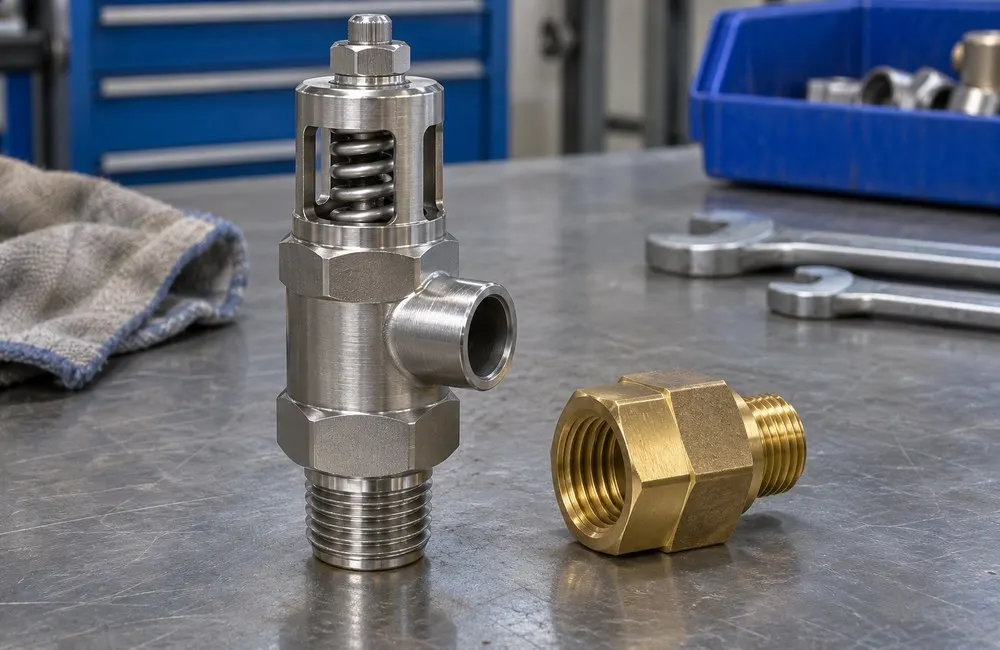
Based on real field experience, the working principle of a safety valve relies on the mechanism that balances air pressure with spring force, automatically venting excess pressure in case of an emergency.
Normal Condition
When the pressure is below the opening range specified in the specs, the valve mechanism pushes the disc against the valve seat. The air used to supply the equipment flows through the main passage of the system, while the safety valve is connected to the vent line.
Emergency or Overpressure Condition
When the pressure reaches the set opening pressure, the safety valve mechanism begins to open according to the operating characteristics of the model. The venting capacity must be related to the amount of air that may enter the protected part of the system.
Venting and Re-closing
The valve vents excess air through the vent port and re-closes when the pressure drops to the closing level specified in the specs. This type of valve vents pressure; systems that require cutting off the air supply must use a separate air source device as per the design.
How is a safety valve different from other types of air valves?
Selecting the right device starts with distinguishing between pressure protection, rapid air release from the cylinder, source separation, and preventing backflow. These functions require different types of devices as follows:
1. Safety Valve or Pressure Relief Valve (Safety / Relief Valve)
This device automatically releases air when it reaches the set opening pressure to limit overpressure in the air receiver or protected parts of the system. You must select a model suitable for compressed air and with a discharge rating according to design criteria.
2. Quick Exhaust Valve and Shut-off Valve (Quick Exhaust / Shut-off Valve)
The quick exhaust valve helps release air near the cylinder to reduce exhaust time, while the shut-off valve is used for source separation. Models with a discharge port may help release air at the end point according to the design. Emergency stop functions must use devices and circuits that have been evaluated for safety. The system may control the supply with Pneumatic Solenoid Valve according to the circuit type. Both functions are separate from overpressure protection.
3. Pneumatic Check Valve (Pneumatic Check Valve)
The pneumatic check valve is used to prevent backflow by allowing air to flow only in the designated direction. For tanks or parts of the system that are at risk of overpressure, you still need a pressure relief device designed for that function.
Maintenance of Air System Safety Valves
Proper maintenance of the Safety Valve helps extend the life of the machinery. Operators should regularly inspect for leaks and clean according to the standards.
Inspection According to Maintenance Schedule
The maintenance team should regularly listen for air leaks around the safety valve area, check for signs of rust or accumulated moisture that may be present on the outside. Regular preliminary inspections help reduce the risk of the valve malfunctioning.
Manual Testing with the Test Lever
Only valves that the manufacturer permits to be tested with a lever can be tested this way. The person responsible for testing should follow the instructions in the product manual and the approved procedures. Check the pressure conditions and the safety of the discharge path before testing, and ensure no one is in the path of the discharged air.
Cleaning
Before removing or cleaning, the responsible person should isolate the air supply source, prevent re-activation of the supply, and vent the system, confirming that there is no residual pressure according to the factory procedure. Internal disassembly work should be carried out according to the manual or sent to an authorized service provider by the manufacturer.
Calibration and Pressure Setting Adjustment
The responsible person should check the opening setpoint according to the schedule specified in the manual and system requirements. Adjustment of the opening setpoint and repairs must be carried out by personnel qualified according to the requirements, without changing the setpoint on-site.
Application of Air Pressure Safety Valves in Industry
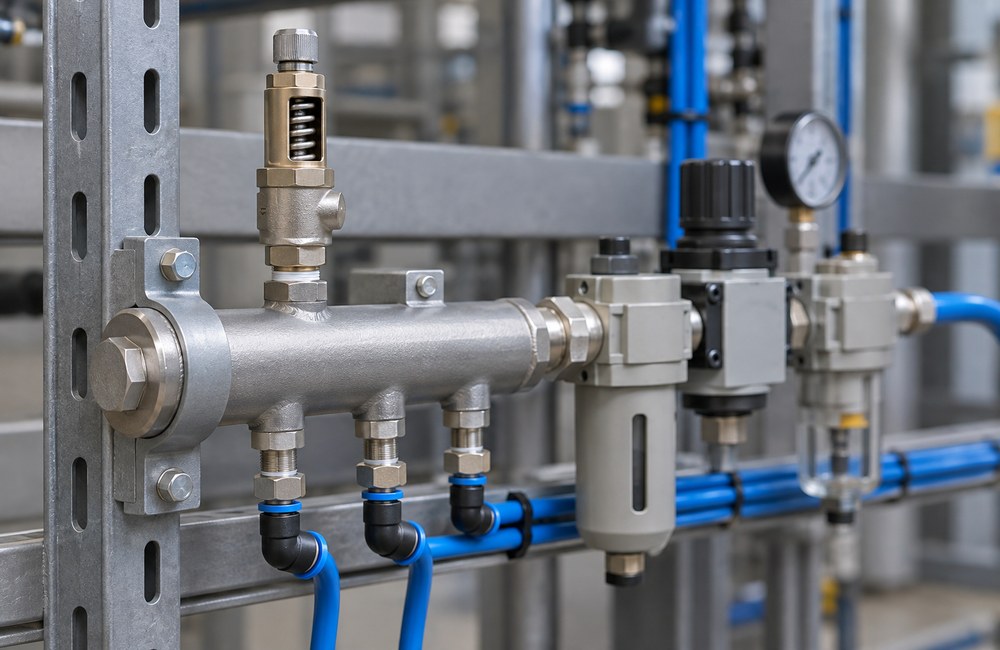
Air pressure safety valves are installed in many parts of the production process, functioning to release emergency pressure in a tight manner to protect personnel as well as the factory structure.
Air Receiver Tank
The air receiver tank must have overpressure protection devices according to the tank's applicable specifications. Select the opening setting according to the tank's maximum allowable operating pressure, and ensure sufficient discharge capacity for overpressure conditions used in the design.
Pneumatic Systems
Within the factory's air line conduits, safety valves control the safety of all air-driven equipment. The coordinated operation helps the 5/2 Way Valve to operate stably without damage.
Production Process Systems
In complex production lines, pressure relief devices protect machinery from overload conditions. Timely pressure release helps reduce production line downtime, keeping the factory's assets safe.
Advantages of Pneumatic Safety Valves
Installing an overpressure relief valve provides a valuable return on investment. This device offers several advantages that help improve the performance of the compressed air system.
Prevent Overpressure
The main benefit is the ability to quickly release accumulated air pressure that exceeds the set pressure (Set Pressure) from the air tank. This mechanism helps control the conditions inside the compressed air pipeline system to remain safe for operations.
Reduce Accident Risks
Having a fully functional safety valve prevents air tanks or equipment from exploding due to excessive pressure. This is an effective way to reduce the risk of serious accidents that could cause loss of life and property.
Automatic Operation
The device is designed to activate its mechanism immediately when the pressure reaches the preset level without requiring human control commands. This self-reliant system effectively eliminates potential errors on-site.
Extend Equipment Lifespan
Limiting overpressure reduces the chance of equipment being subjected to pressure beyond its rating. Maintaining normal operating pressure is the responsibility of the pressure controller and system design. See the article Pressure Control Valve for details on the equipment used to control normal operation.
Rapid Response
This type of valve is particularly suitable for compressible fluids such as gas or air. With a specially designed internal structure, the valve opens widely to quickly and promptly release excess air when reaching a critical point.
How to Choose an Air System Safety Valve
Deciding on a cost-effective and safe air system safety valve requires users to ensure the specifications match the compressed air system. Based on field experience from SCMA's engineering team, we recommend the following 5 checklist items:
Set the opening pressure (Set Pressure) according to the pressure rating on the tank or equipment and the system requirements. The person responsible should determine the pressure range and confirm that the set pressure is within the allowable range.
Check the relieving capacity (Relieving Capacity). The person responsible for the design should calculate the overpressure scenarios and check the certified relieving capacity for compressed air, including the effects of piping and backpressure.
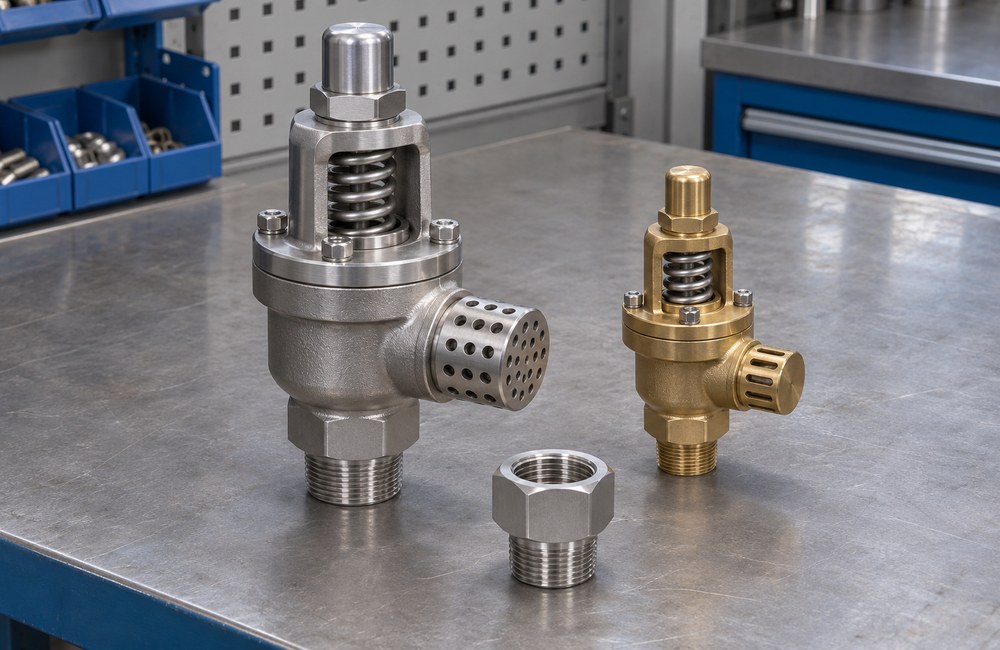
Select the valve body material (Valve Material): For general compressed air systems, brass valves are commonly used because they are durable and affordable. If in a corrosive environment, consider using stainless steel.
Check the connection size (Connection Size): Measure the inlet and outlet pipe sizes to ensure they match, to prevent installation issues and air leaks.
Check whether a handle is required according to the specifications and manual of the model. Choose equipment with a suitable inspection method for the system and ensure safe relief for the operators.
Internal Structure Information of the Air System Safety Valve
If you want to go deeper into the internal components, understanding the internal structure of the safety valve will help you analyze on-site problems more sharply.
Adjusting Spring (Adjusting Spring): This is the main component that resists the air pressure. If you want to learn more about this component, you can read more at How the Internal Structure of the Safety Valve Works
Valve Seat and Disc (Seat and Disc): They are responsible for sealing to prevent compressed air from leaking under normal conditions. The contact surface must be smooth to ensure a perfect seal.
Valve Spindle (Spindle): It is the guide rod that allows the valve disc to move up and down centrally, helping to prevent valve sticking during the relief of compressed air pressure.
Summary
Pneumatic safety valves play a crucial role in releasing excess pressure to prevent accidents in industrial factories. Choosing a safety valve that meets standards and maintaining it regularly can effectively extend the lifespan of pneumatic systems. If you are looking for a technical partner specializing in measuring instruments and automated systems, the SCMA engineering team is ready to provide advice, design integrated solutions to reduce downtime, and help achieve long-term success for your business.
Interested in purchasing or consulting via LINE Official: @SCMA
If you want to buy a pneumatic safety valve, you can purchase it from SCMA today!
Investing in high-quality pneumatic safety valves is buying safety for workers' operations and protecting company assets. SCMA Co., Ltd. (SCMA), as a specialized technical partner, offers comprehensive services and products ranging from sensors to complete pneumatic solutions. Let us take care of your system to fully enhance the reliability and performance of your production process.
Frequently Asked Questions
What is the difference between a pneumatic safety valve and a directional control valve?
The safety valve is used to release excess pressure for safety, while the directional control valve is used to determine the direction of air flow to the actuator.
How often should the safety valve be tested by pulling the lever?
Use the frequency and method specified in the product manual, relevant specifications, and system maintenance plan. If the manual does not allow or the test conditions are unsafe, the responsible person should choose an approved inspection method.
Can a leaking pneumatic safety valve be repaired?
If internal components are worn and cause leakage, it is recommended to replace the valve for maximum safety. Do not attempt to modify or repair it yourself.
Can the set pressure of the valve be set higher than the air tank's specifications?
The opening pressure setting of the valve for tank protection must follow the maximum allowable operating pressure on the tank label and system requirements. The responsible person should check both the opening pressure setting and the relief capability before use.
Does SCMA offer pneumatic system consulting services?
The SCMA engineering team is ready to provide consulting, design pneumatic systems from selecting appropriate equipment to comprehensive after-sales service.
References
Emerson Kunkle – Safety Valve Installation and Maintenance Manual
Festo – Quick Exhaust Valve Document
OSHA – Compressed Air Tank Requirements 1910.169 (United States)