When a cable is broken, shorted, or has an insulation fault, the fault may be located in the conduit or underground. A Cable Fault Locator helps assess the distance from the device's end to the fault point. The maintenance team can then use the measurement results together with the cable route information to narrow down the inspection area.

What does a Cable Fault Locator do?
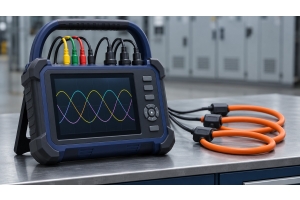
A Cable Fault Locator is a tool or set of equipment used to locate faults in cables. The portable device uses the TDR principle, suitable for faults that reflect pulses clearly, such as breaks or certain types of short circuits. For power cables with high resistance faults or intermittent faults, specialized equipment and measurement methods may be required View Megger's troubleshooting guide

How does TDR measure the distance to the fault?
A Time Domain Reflectometer (TDR) sends a short electrical pulse into the cable. When the signal encounters a point where the impedance changes, part of the pulse is reflected back. The device uses the travel time to and from the fault, together with the signal propagation speed in the cable, to calculate the distance from the device. The formula is: Distance = Signal Propagation Speed × Round Trip Time ÷ 2
The cable end, connections, and changes in cable type can all cause reflected signals. When present, it is advisable to compare the waveform with the map, cable data, or reference waveform. If the signal propagation speed is set inaccurately, the distance displayed by the device will also be inaccurate Read the TDR principle from Megger

From the device to the actual repair location
The distance obtained from TDR is measured according to the actual cable length. Cables that are bent, at different levels, or have extra length may have a distance different from that measured on the ground. The team should compare the results with the confirmed cable route and use the method of identifying the location on-site according to the type of fault. One example is detecting signal interference together with electromagnetic signals in underground power cable work, which is suitable for this method View example of fault location from Megger
Power cable testing must be performed by qualified personnel using separate circuit procedures, confirming voltage absence, and grounding according to on-site requirements and manufacturer manuals before connecting the device. High-voltage pulse testing methods must use specialized equipment and area control measures.
How to choose a cable fault locator?
Start with the type of cable, voltage rating, length, and the fault symptoms to be tested. Check whether the device supports the required distance range and resolution, and whether it can adjust the signal propagation speed to match the cable. For work requiring repeated result readings, consider waveform recording and data export capabilities as well.
If underground power cable repair is required, both distance measurement methods, along-the-cable methods, and fault confirmation methods should be evaluated, as the appropriate tool set depends on the type of fault and on-site accessibility. For along-the-cable work or identifying which cable is in the bundle, choose a Cable Tracer. For insulation condition testing according to standards, use an insulation resistance tester.
Frequently Asked Questions
Can TDR be used for all types of faults?
Some types of faults have weak reflected signals, such as certain cases of high resistance faults. These must be evaluated together with other test results and the appropriate fault location method should be selected based on the cable and fault symptoms.
Can I dig directly based on the measured distance?
Confirm the cable route and on-site repair location first, because the distance displayed by the device is the distance along the cable from the connection point, and the actual cable may bend, change levels, or have extra length.
If you need to select a tool for maintenance work, inform the SCMA team about the type of cable, length range, and the characteristics of the fault found to assist in the consideration View SCMA services