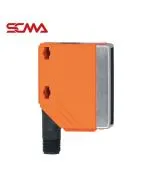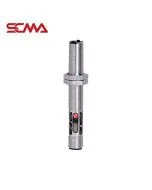

Have you ever been concerned about controlling distances and detecting objects in manufacturing lines that require high precision? These issues can be resolved by selecting the appropriate Photoelectric Sensors, which SCMA is ready to partner with you as an expert consultant and supplier of high-quality equipment. In this article, we will introduce you to how photoelectric sensors work, what types there are, and how to choose them for maximum benefit in your manufacturing process.
What Are Photoelectric Sensors?
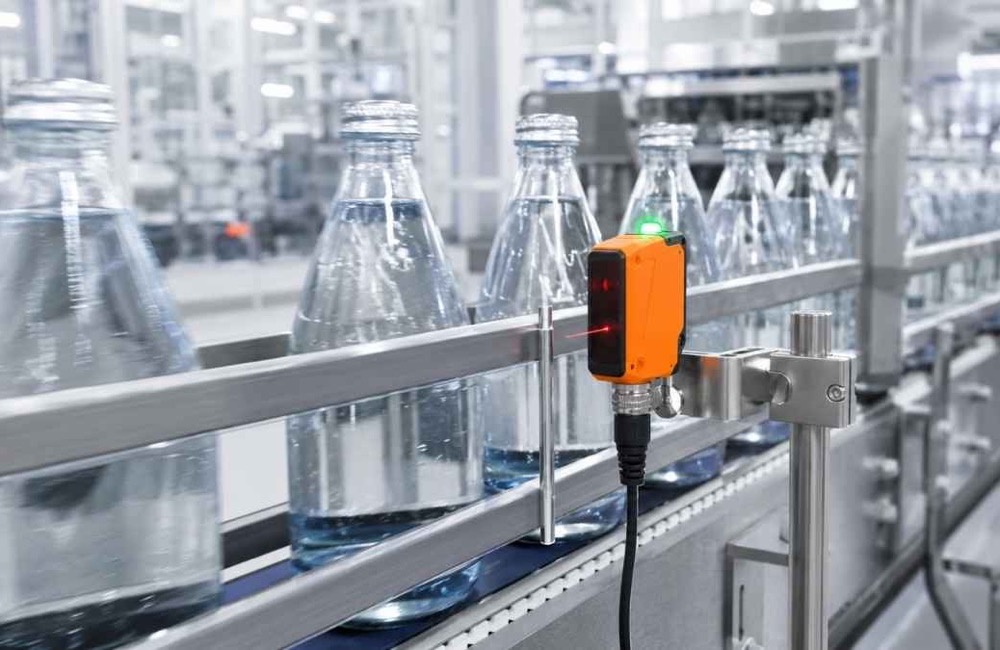
Photoelectric sensors are devices used to detect objects without contact, capable of accurately controlling distances. In the industrial world, leading brands such as SCMA and ifm are commonly preferred. Additionally, there are light intensity measurement tools and lighting equipment that meet various application needs to enhance production efficiency and reduce errors.
How Photoelectric Sensors Work
Photoelectric sensors from SCMA work by utilizing the properties of light in conjunction with photodiodes (Photodiode). When light hits the lens, the device converts light energy into an electrical signal, allowing control systems (such as PLC) to process light intensity or detect object presence immediately. This is how photoelectric sensors operate.
How many types of light sensors are there?
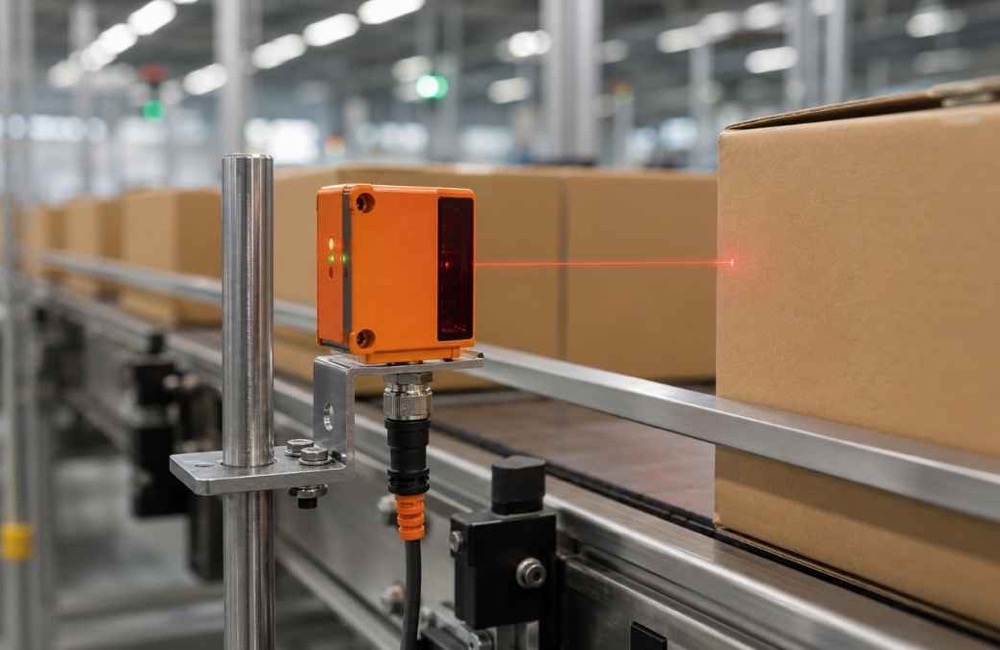
If you are wondering what types of light sensors there are, we can categorize them based on their working characteristics as follows:
Photo Sensors
Photo Sensors use light as a medium to detect objects and are commonly used in automatic systems. There are three main types: Opposed Mode (separate transmitter and receiver), Retroreflective Mode (with reflective plate), and Diffuse Mode (direct reflection from the object). The working principle of light sensors depends on these modes, and slightly adjusting the context can help make Long-tail Keyword insertion look natural and less forced.
Fiber Optic Sensors
Fiber optic sensors are suitable for narrow spaces or environments where normal detection equipment cannot reach. They rely on the working principle of light sensors to transmit and receive light accurately, even in limited conditions.
Lux Meter (Light Measurement Tool)
In addition to object detection, other types of light sensors include Lux Meters used for measuring light intensity to ensure that work areas or production processes have appropriate and standardized lighting.
Maintenance of Light Sensors
To ensure accurate operation and long service life of light sensors, proper maintenance is crucial.
Regular Cleaning
The maintenance of light sensors (photo sensors or light intensity meters) should focus on regular lens cleaning to prevent dirt or dust buildup, which can cause sensor malfunctions or instability.
Proper Storage and Environment
Based on the experience of SCMA's engineering team, light sensor equipment should be stored in an appropriate environment, avoiding excessive humidity or heat to prevent damage to electronic components and extend their lifespan.
Usage of Light Sensors
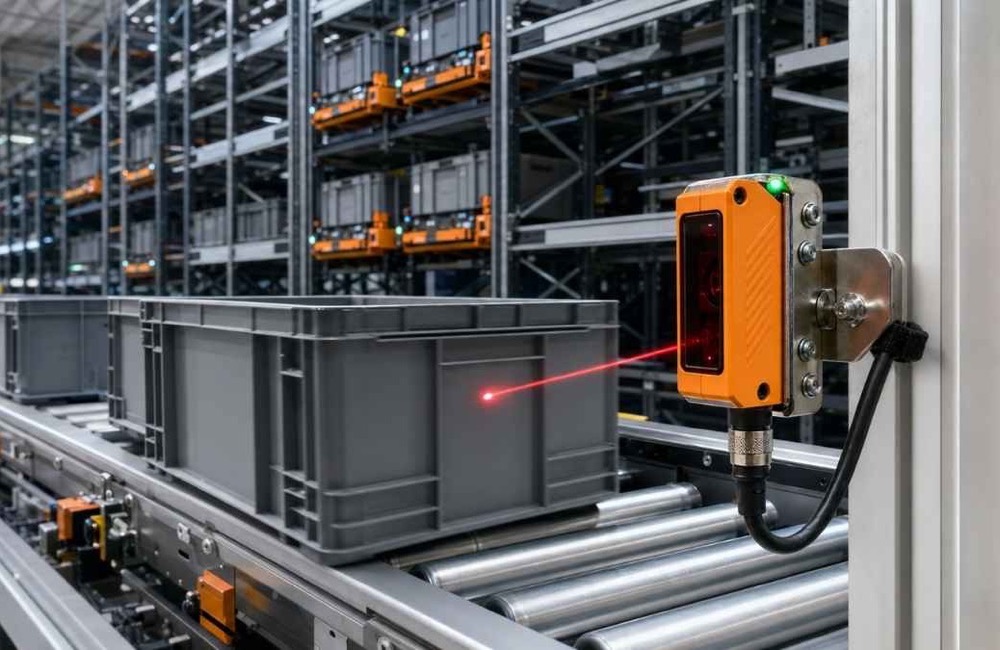
The application of light sensors is diverse, covering everything from control tasks to quality inspection.
Object Detection
Photoelectric sensors are commonly used for object detection on production conveyor belts, such as transparent or opaque objects and small parts. They can be installed in through-beam, retro-reflective, or diffuse-reflective configurations, which helps us understand how light sensors work in real-world applications, making the sentences more robust and allowing keywords to flow smoothly with technical content.
Automatic On/Off Control (Light Sensor Switch)
This is used for automatically controlling lighting or machinery based on sunlight conditions. The sensor will turn the lights on when ambient light falls below a set threshold and off when there's sufficient light, helping to save energy. This is another example of how light sensors are applied in terms of functionality.
Lux Meter in Factories
For research or environmental monitoring within factories, using a lux meter ensures that work areas have adequate lighting and meet standards for safety and optimal performance.
Application with Vision Sensors (Vision Sensor)
This is used for imaging objects or working with illumination to analyze parts and check quality. Light sensors play a crucial role in providing consistent light for accurate image processing.
Fiber Optic Sensor Usage
Fiber optic sensors are suitable for narrow spaces or environments where standard detection equipment cannot reach, using the principle of sending and receiving light to read values, making the operation of light sensors efficient even under difficult conditions.
How to Choose a Light Sensor
To ensure that you get the most suitable and efficient equipment for your needs, when purchasing light sensors, you should consider the following important factors:
- Understanding how light sensors work: You should choose the type of sensor (such as Through-beam, Retro-reflective, Diffuse) that matches the characteristics of the workpiece and detection range.
- Knowing what types of light sensors are available in the market: Consider reputable brands such as ifm to get high-quality light sensors with a long service life.
- Working environment conditions: Check the dust, water, or heat resistance (IP Rating) of the light sensor to ensure it is suitable for the installation environment.
- Aftersales service: You should purchase from a company that provides expert advice, such as SCMA, to ensure that the light sensors can be installed and used efficiently with existing systems.
Summary
Light sensors play an important role in industrial automation systems by helping production processes become accurate and efficient. If you understand how light sensors work and what types of light sensors are available, it will help you choose the right one for your needs. In this regard, SCMA is ready to be a partner providing expert solutions for high-quality light sensors as well as other services in full.
If you want to buy light sensors, you can purchase them from SCMA today!
With our expertise in industrial technology solutions, we at SCMA offer internationally quality light sensors such as the ifm brand that are ready to meet all your needs. Whether you're looking for answers about how light sensors work or what types of light sensors are available, our team of engineers is ready to provide consultation and system design to reduce downtime and increase production efficiency. You can view product details and all services on our website.
Frequently Asked Questions
What is a light sensor?
A light sensor is an equipment used to detect objects, measure the intensity of light, or control automatic on-off operations based on changes in light.
How many types of photo sensors are there?
The main types include 3 kinds: Opposed Mode (separate transmitter and receiver), Retroreflective Mode (reflected by a reflector plate), and Diffuse Mode (direct reflection from an object).
How does a light sensor work?
It works by receiving light through a lens, using a photodiode to convert it into an electrical signal for processing detection of objects or measuring light intensity.
Which brand of light sensors does SCMA recommend?
SCMA recommends high-quality German brands such as ifm, known for their accuracy and durability in industrial applications.
What services does SCMA offer related to light sensors?
We provide comprehensive services including consultation, distribution of quality light sensors, solution design, calibration services, and technical support.